New Year at a glance: day by day
お正月 (oshōgatsu, New Year) is the most important celebration of the Japanese year and is often called Shōgatsu for short. Only 1 January is a public holiday, but government offices and many businesses close from 29 December to 3 January. The table lines up the days from the end of 2026 to mid-January 2027 and shows what this means for your trip.
| Date | What happens | What it means for you |
|---|---|---|
| Fri 25 December to Tue 5 January | All Nozomi trains on the Tokaido and Sanyo Shinkansen run with reserved seats only | Reserve a seat early, without a reservation you can only stand |
| Tue 29 and Wed 30 December | National government offices close, Himeji Castle is closed, JR East runs a holiday timetable from 30 December | Get cash and any paperwork done beforehand, check castles and museums one by one |
| Thu 31 December | New Year's Eve (Omisoka): banks closed, toshikoshi soba, temple bells, overnight trains on JR East, Meiji Jingu open all night | Decide early whether you spend the night at a shrine, at a temple or in your hotel |
| Fri 1 January | Public holiday, hatsumode, first sunrise at 6:50 in Tokyo, many shops closed, convenience stores open | Expect crowds at big shrines and closed restaurants |
| Sat 2 January | New Year's greeting at the Imperial Palace, Hakone Ekiden (day 1), first sales day for department stores with fukubukuro | A shopping day, expect traffic controls along the Ekiden route |
| Sun 3 January | Hakone Ekiden (day 2), last day of the break for government offices and banks | Return trips to the cities, crowded trains |
| Mon 4 and Tue 5 January | Banks and government offices work again, the Nozomi reservation rule ends on 5 January | Handle post, money matters and paperwork now |
| Thu 7 January | Rice porridge with seven herbs, the New Year season ends in many places | Kadomatsu and shimekazari disappear |
| Sat 9 to Mon 11 January | Nozomi reservation-only again, on 11 January Seijin no Hi (Coming of Age Day) and Kagami Biraki | A long weekend, reserve beforehand |
| Fri 15 January | Little New Year (Koshōgatsu), dondo-yaki in many places | Old New Year decorations are burned at shrines |
The weekdays are correct for 2026 and 2027. The year 2027 starts on a Friday.
What is closed, what stays open
- Government offices: National government offices and many businesses are closed from 29 December to 3 January. For city halls and local offices, ask locally beforehand.
- Banks: Branch counters are legally closed from 31 December to 3 January. That affects counter service, not cash machines.
- Cash machines: Seven Bank describes its ATMs as generally available around the clock, 365 days a year, including long holiday blocks. At Japan Post Bank over New Year 2025/26, the large ATMs were unavailable from 21:00 on 31 December to 7:00 on 1 January, and some small ATMs charged fees all day from 1 to 4 January. The notice for 2027 was not out yet. Withdraw cash before 29 December anyway, you need coins for the offering box at a shrine.
- Convenience stores and restaurants: Convenience stores and some restaurants stay open on 1 January, as our konbini guide shows. Many restaurants and facilities close or shorten their hours, especially small businesses.
- Department stores: Many big stores are closed on 1 January and start their New Year sales on 2 January. A few branches opened only on 3 January in 2026.
- Museums and castles: The rules differ a lot. Himeji Castle is closed on 29 and 30 December. The Tokyo National Museum opened on 1 January 2026 only at 13:00 with its New Year programme. For 2027, the notice of each venue counts, so check its website first.
- Shrines and temples: They are the main event in these days and are open. Meiji Jingu stays open all night on the night into 1 January.
- Trains: JR East runs a holiday timetable from 30 December to 3 January. Tokyo Metro and Toei remain without overnight service on New Year's Eve as things stand, more below.
New Year's Eve: bells, soba and countdowns
On the evening of 31 December, people eat 年越しそば (toshikoshi soba, year-crossing noodles). The long buckwheat noodles see off the old year and stand for a long life. As a visitor, find a soba restaurant that is open on 31 December and ask about hours beforehand.
At the turn of the year, temples all over Japan ring the 除夜の鐘 (joya no kane, New Year's Eve bells) 108 times. The number stands for the 108 worldly desires in Buddhism, and each strike is meant to drive one of them away. Every temple decides its own start. At Chion-in in Kyoto the ringing began at 22:40 in 2024, and it takes 17 monks to work the bell. You can read more about the city in our Kyoto guide.

Ringing along is rare. Most temples limit the ringing to monks. A few hand out numbered tickets or take reservations. Over New Year 2025/26 in Tokyo, Ikegami Honmonji gave out free numbered tickets from 23:00 for 600 people, and Honzan Higashi Honganji in Asakusa took free reservations for 108 people. At Sensoji, visitors may not ring the bell. At Zojoji the tickets to ring were sold out in 2025, but you could still watch the ceremony. Zojoji stays open all night, and around 23:00 a fire is lit there in which old lucky charms are burned. The rules change every year, so ask the temple.
There has been no official countdown at Shibuya Crossing for years. Shibuya ward cancelled the event for the turn of 2025 to 2026 for the sixth time in a row. Over New Year 2025/26 the Hachiko statue was fenced off from 6:00 on 31 December to 1:00 on 1 January, drinking in public was banned from 18:00 to 5:00, and convenience stores paused alcohol sales for a while. The cancellation came on 3 December that time. For the turn of 2026 to 2027, no announcement was out by 2 November, so do not build your evening around the scramble.
Overnight trains on New Year's Eve
On 22 October 2026, JR East announced overnight service for the night into 1 January 2027 on six lines in the Tokyo area:
- Yamanote Line: in both directions from about 1:00 to 4:50, every 10 to 30 minutes.
- Keihin-Tohoku and Negishi Line: Sakuragicho to Omiya, about 1:00 to 4:00.
- Chuo-Sobu Line (local): Mitaka to Chiba, from about 0:10 to about 4:40.
- Chuo Rapid, Yokosuka Line, Sobu and Narita Line: only a few trains per direction. The Sobu and Narita Line trains do not stop at Higashi-Chiba.
JR East says the exact timetables appear from 7 December in the digital timetable and the app. All times are approximate. Tokyo Metro dropped its overnight service completely at the end of 2022, and the Toei subway reported neither overnight service nor extended hours for 2025. For 2026 no different announcement was out by 2 November, so expect the last train at the normal time. Outside Tokyo the situation differs: the city of Nagoya runs five subway lines through the night on New Year's Eve (the Higashiyama Line about every 30 minutes).
Hatsumode: the first shrine visit
初詣 (hatsumōde, first shrine or temple visit of the year) is, according to nippon.com, one of the most important customs of the first days. People go late on New Year's Eve or on 1, 2 or 3 January and ask for luck and health. A visit does not have to be on 1 January: Meiji Jingu runs its hatsumode period until mid-January, and Sensoji from 1 to 7 January.
- Meiji Jingu (Harajuku): The Japan National Tourism Organization (JNTO) cites about three million visitors for hatsumode alone, and GO TOKYO writes of several million between New Year's Eve and 3 January. The shrine stays open all night on New Year's Eve. Around Harajuku Station, traffic controls apply from 31 December to 3 January, and the desks for charms and fortunes stood in front of the Meiji Jingu Kaikan over New Year 2025/26. JNTO suggests arriving around 4 a.m. when the crowds thin out. Before midnight, the approach roads are especially crowded.
- Sensoji (Asakusa): According to the temple, hatsumode runs from 1 to 7 January. On New Year's Eve 2025, Nakamise-dori was one-way with a queue at Kaminarimon.
- Other destinations: Kawasaki Daishi, Narita-san and Fushimi Inari in Kyoto are among the well-known destinations. JR East runs special trains to Narita-san.
If you dislike crowds, visit a shrine on a later day, because it gets calmer with each day, or go to a smaller shrine near you.
A visit to a shrine goes like this:

- Bow at the torii: Bow once before you pass through the gate, and do not walk through the middle.
- Purification: At the water basin, you rinse your hands, then your mouth, then your hands again. You scoop with your right hand first and pour water over your left. The ladle never touches your mouth.
- Praying: Toss coins into the offering box and ring the bell where there is one. Then bow twice, clap twice and bow once. At a Buddhist temple you pray silently instead, without clapping.
- Photos: At the main sanctuary of Meiji Jingu, photos and videos are not allowed, and neither are drones.

You get the lucky charms at the shrine office. An おみくじ (omikuji, fortune slip) usually costs 100 to 200 yen. You pick a numbered stick and receive the slip with the matching number, and at some shrines it comes from a vending machine. The results range from great bad luck to great good luck. Take good slips home. Tie bad slips to the racks provided, people used to hang them in trees. Wooden prayer plaques (ema) cost about 500 to 1,000 yen, and you write your wish on the back. There are also amulets (omamori) and hamaya, decorative arrows meant to ward off misfortune at home. New Year is a popular time to get new amulets. Shrines and temples take old amulets back and burn them in a ceremony. You can collect seals from temples and shrines with our stamp guide. More on good manners is in our etiquette guide.
Hatsuhinode: the first sunrise
初日の出 (hatsuhinode, first sunrise of the year) is part of 1 January for many people. In Tokyo the sun rises at 6:50 on 1 January 2027 and sets at 16:38. Whether you see the sunrise depends on the weather.
- Tokyo Skytree: On 1 January 2027 the tower opens from 5:30 to 7:30 for 800 people, with admission from 5:30 to 6:00. A ticket costs 11,000 yen. Online there are 580 tickets in a lottery, at most 5 per application. Registration runs from 5 November, 12:00, to 26 November, 23:59, and results arrive by email on 1 December. There is no refund for rain or clouds. From 8:00 normal operations resume.
- Takao-san: At Yakuo-in a ceremony for the first light starts around 6:30. In clear weather you can see the sun rise from the direction of Yokohama. GO TOKYO warns that it is often very crowded.
- Inubosaki (Chiba): Cape Inubo counts among the earliest places for the sunrise, apart from mountains and islands. JR East runs special trains for it: "Inubo Hatsuhinode" no. 1 leaves Takao at 1:30 and reaches Choshi at 4:08 according to the announcement, no. 3 leaves Omiya at 2:15 and arrives at 5:05. All seats are reserved.
Customs you will see on the way
- Kadomatsu: The 門松 (kadomatsu, gate pine) consists of pine branches and bamboo and usually stands in front of buildings between 1 and 7 January. Above doors hang the straw ropes of the shimekazari.

- Kagami mochi: The 鏡餅 (kagami mochi, mirror rice cake) is two stacked rice cakes with a bitter orange on top. It stands for family and generations and goes into a display alcove or onto the household altar at home.
- Osechi and ozoni: Osechi ryōri is the New Year meal in stacked lacquer boxes. The dishes keep well and are eaten cold over the first three days. Department stores sell complete sets. Ozoni is a soup with mochi, and the ingredients and seasoning differ by region.

- Otoshidama: Adults give children お年玉 (otoshidama, New Year money) in small decorated envelopes.
- Nengajo: New Year cards arrive on 1 January. Japan Post accepts cards for 2027 from 20 December 2026 and delivers them on 1 January if they are posted by 27 December.
Fukubukuro and the New Year sales
2 January is traditionally the first business day, and the 福袋 (fukubukuro, lucky bag) is part of it. The bags are pre-packed, and you cannot see what is inside. According to JNTO they cost about one third of the value of the contents, and prices range from a few thousand yen to more than 10,000 yen. They are usually sold from 1 to 3 January. Some bags are gone within minutes.
- Where: Department stores, fashion chains, cosmetics brands, electronics stores and cafés such as Starbucks, whose bags cost less than 4,000 yen.
- Tips: Pick brands you know, check the size for clothing, ask about an advance ticket (maeuri-ken), join the queue at the sign for the end of the line and dress warmly for waiting outside.
- Limits: Some shops sell only one bag per customer, others hand out numbered tickets. For bigger purchases, our tax-free guide helps.
Dates after New Year
- 2 January, New Year's greeting at the Imperial Palace: The public may enter the palace grounds. In 2026 it went like this: entry only through the main gate (Nijubashi) from 9:30 to 14:10, five appearances of the imperial family on the balcony of the Chowaden hall at about 10:10, 11:00, 11:50, 13:30 and 14:20, a baggage check at the gate, flagpoles and drones banned. As of 2 November, the Imperial Household Agency had not yet published the schedule for 2027.
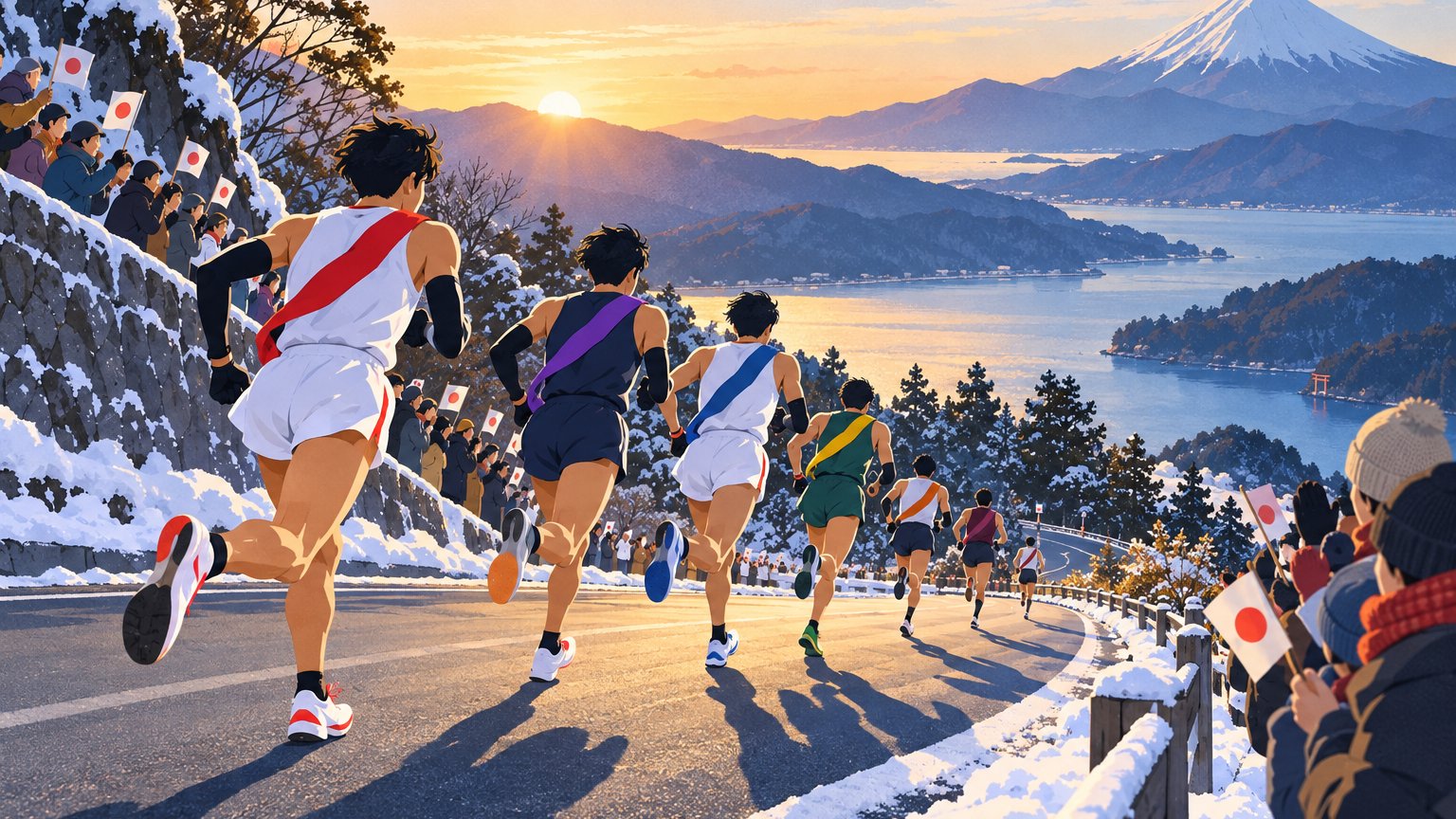
- 2 and 3 January, Hakone Ekiden: The relay race between Tokyo and Hakone runs on Saturday and Sunday in 2027. Everything important is in our Hakone Ekiden guide.
- 7 January: People eat rice porridge with seven herbs for good health.
- 11 January, Seijin no Hi and Kagami Biraki: The second Monday of January is Coming of Age Day, in 2027 it is 11 January. On the same day the kagami mochi is broken up and eaten. People break it by hand or with a mallet, it is not cut, and it often goes into shiruko or ozoni.
- 15 January, dondo-yaki: For Little New Year, many places burn New Year decorations at shrines and temples. Warming yourself at the fire is said to keep you healthy all year. In Tokyo it takes place at Torikoe Shrine.
You can find more dates in our Japan events calendar.
Travel practice for the New Year days
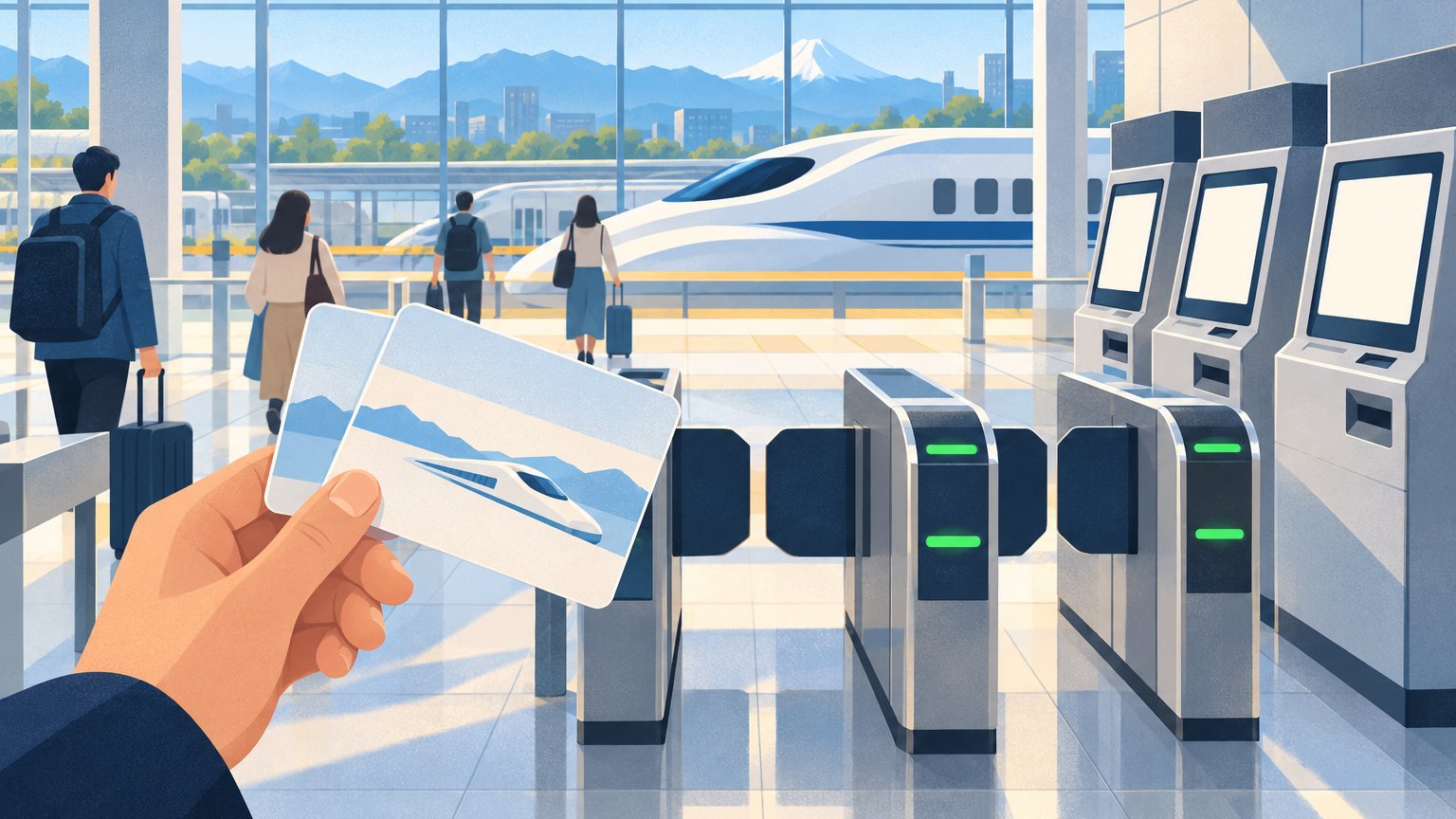
- Nozomi reserved only: From 25 December 2026 to 5 January 2027, there are no unreserved cars on the Nozomi on the Tokaido and Sanyo Shinkansen. The Nozomi also run reserved-only from 9 to 11 January. Hikari and Kodama keep their unreserved cars, which can then get crowded. A ticket without a seat is valid on the Nozomi for standing only. Sales of reserved seats start one month before the trip at 10:00, so for 29 December on 29 November. The JR Pass is not valid on Nozomi and Mizuho. More in our Shinkansen ticket guide.
- The Golden Week counterpart: The same rule applies in other travel peaks such as Golden Week. How that looks is in our Golden Week guide.
- Hotels: Book early and prefer rates that can be cancelled. This is especially true if your plan depends on a lottery like the Skytree or on a Nozomi reservation. Our hotel vs. ryokan guide helps with the choice.
- Weather: In January the highs in Tokyo are around 11.6 degrees Celsius and the lows around 2.6 degrees. According to GO TOKYO it gets particularly cold from mid to late January. With sunrise at 6:50 and sunset at 16:38, the days are short.
Frequently asked questions
What is closed in Japan at New Year?
National government offices and many businesses are closed from 29 December to 3 January, and bank counters are closed from 31 December to 3 January. Many restaurants and museums close or shorten their hours. Convenience stores and shrines stay open, and big department stores often open only on 2 January.
Do trains run on New Year's Eve night?
JR East runs six lines in the Tokyo area on the night into 1 January 2027, the Yamanote Line from about 1:00 to 4:50. Tokyo Metro dropped its overnight service at the end of 2022. Check the timetables from 7 December.
When is the best time for hatsumode?
The night into 1 January and 1 January itself are the busiest. Meiji Jingu is open all night on New Year's Eve, and JNTO suggests a visit around 4 a.m. It gets calmer with each day, and the hatsumode period runs to mid-January at many shrines.
Do I need a reservation for the Shinkansen at New Year?
Yes, if you take the Nozomi on the Tokaido and Sanyo Shinkansen. From 25 December 2026 to 5 January 2027, all Nozomi run with reserved seats only. Hikari and Kodama still have unreserved cars, which can be crowded.
Is there a countdown at Shibuya Crossing?
No, Shibuya ward cancelled the event for the turn of 2025 to 2026 for the sixth time in a row. Over New Year 2025/26 there were barriers and a ban on drinking in public. For 2026 to 2027, no announcement was out by 2 November.
Sources
- nippon.com: Shōgatsu, Japanese New Year
- nippon.com: Mutsuki, Traditional Annual Events in January
- nippon.com: Customs, Festivals, and Observances, The Japanese Year
- nippon.com: Omikuji and Ema
- nippon.com: Omamori, Lucky Amulets for All Occasions
- nippon.com: Shamusho, The Shrine Office
- JNTO: New Year Celebrations Done the Japanese Way
- JNTO: Countdowns, Hatsuuri and Hatsumode
- JNTO: Hatsu-uri and Fukubukuro
- JNTO: How to celebrate New Year like a Tokyo local
- JNTO: Shrine and Temple Visits, Best Practices
- GO TOKYO: Hatsumode
- GO TOKYO: Best Things to Do and See in Tokyo in January
- GO TOKYO: Mt. Takao Light-Welcoming Festival
- Meiji Jingu: Temizu and Sampai, Etiquette
- Senso-ji: official site
- Chion-in: Joya no Kane
- Time Out Tokyo: Tokyo's top ten New Year's Eve bells
- Time Out Tokyo: Shibuya cancels its New Year's Eve countdown again
- Time Out Japan: Tokyo Metro and overnight trains (Japanese)
- watabi: Tokyo New Year Guide
- JR East: winter extra trains 2026 (Japanese), Inubo Hatsuhinode
- 8and: JR East overnight trains 2026 (Japanese), Rail blog: overview of overnight service
- City of Nagoya: overnight subway service 2026 (Japanese)
- JR Central: reserved-only Nozomi (Japanese), English page
- Cabinet Office: national holidays (Japanese)
- Financial Services Agency: bank holidays (Japanese)
- Seven Bank: ATMs (Japanese)
- Japan Post Bank: ATMs over the New Year (Japanese)
- Japan Post: New Year cards 2027 (Japanese)
- Himeji Castle: official site
- Tokyo National Museum: New Year programme 2026 (Japanese)
- Tokyo Skytree: special opening for the first sunrise of 2027
- National Astronomical Observatory: Tokyo sunrise 2027 (Japanese)
- Imperial Household Agency: New Year Greeting 2026
- Highlighting Japan: The Burning of New Year's Decorations
- Web Japan: Partaking of Decorative Mochi
- Web Japan: Pochi Bukuro
- Sportiva: Hakone Ekiden 2027 (Japanese)
- Wikimedia Commons: photos Chion-in Temple 19-20 New year (Leung Ming Ho, CC BY-SA 4.0), Kadomatsu at Kabuki-za (Tak1701d, public domain), Omikuji at Namba Yasaka Shrine Osaka (Ian G Shingler, CC BY-SA 4.0), Osechi 001 (Ocdp, CC0), Hatsumoude, New Year's visits to a shrine (Yoshikazu Takada, CC BY 2.0): commons.wikimedia.org