
At a glance: six kinds of stamps
| Type | Where | Cost | Book |
|---|---|---|---|
| Eki stamps (stations) | in the station, usually outside the ticket gates | free | any notebook or a railway stamp book (from 880 yen) |
| Goshuin (temples, shrines) | counter on the grounds | usually 300 to 500 yen | goshuinchō, usually 1,000 to 1,500 yen, or a single sheet |
| Michi-no-eki (roadside stations) | inside the station, during opening hours | regional book | regional book, a few hundred yen |
| Castles | at the castles on the two "100" lists | sometimes inside the paid area | official stamp book, combined edition 1,300 yen |
| Observation decks | e.g. Tokyo Skytree, floor 345 | deck admission | your own notebook or a postcard |
| Stamp rallies | stations, sights, apps | you pay your own fares | rally booklet, often free, or an app |
Eki stamps: the station classic
Many stations have their own stamp, the 駅スタンプ (eki sutanpu, station stamp). It is free. According to JR East, most of its stamps are outside the ticket gates, so you can use them without a ticket. Some are kept at the ticket office or inside the gates. If you cannot see one, ask the staff.
Morioka station shows how much this varies: one stamp with an ink pad stands outside the gates by the south exit, a second one sits behind the Shinkansen gates next to the waiting room. For that one you need a 入場券 (nyūjōken, platform ticket) or a train ticket. No paper is provided, so bring your own book.

The ink pads often see heavy use, so prints can come out faint. Press firmly and straight, and test on a scrap of paper if you are unsure. The first eki stamp is said to come from Fukui station in 1931; no older one is known.
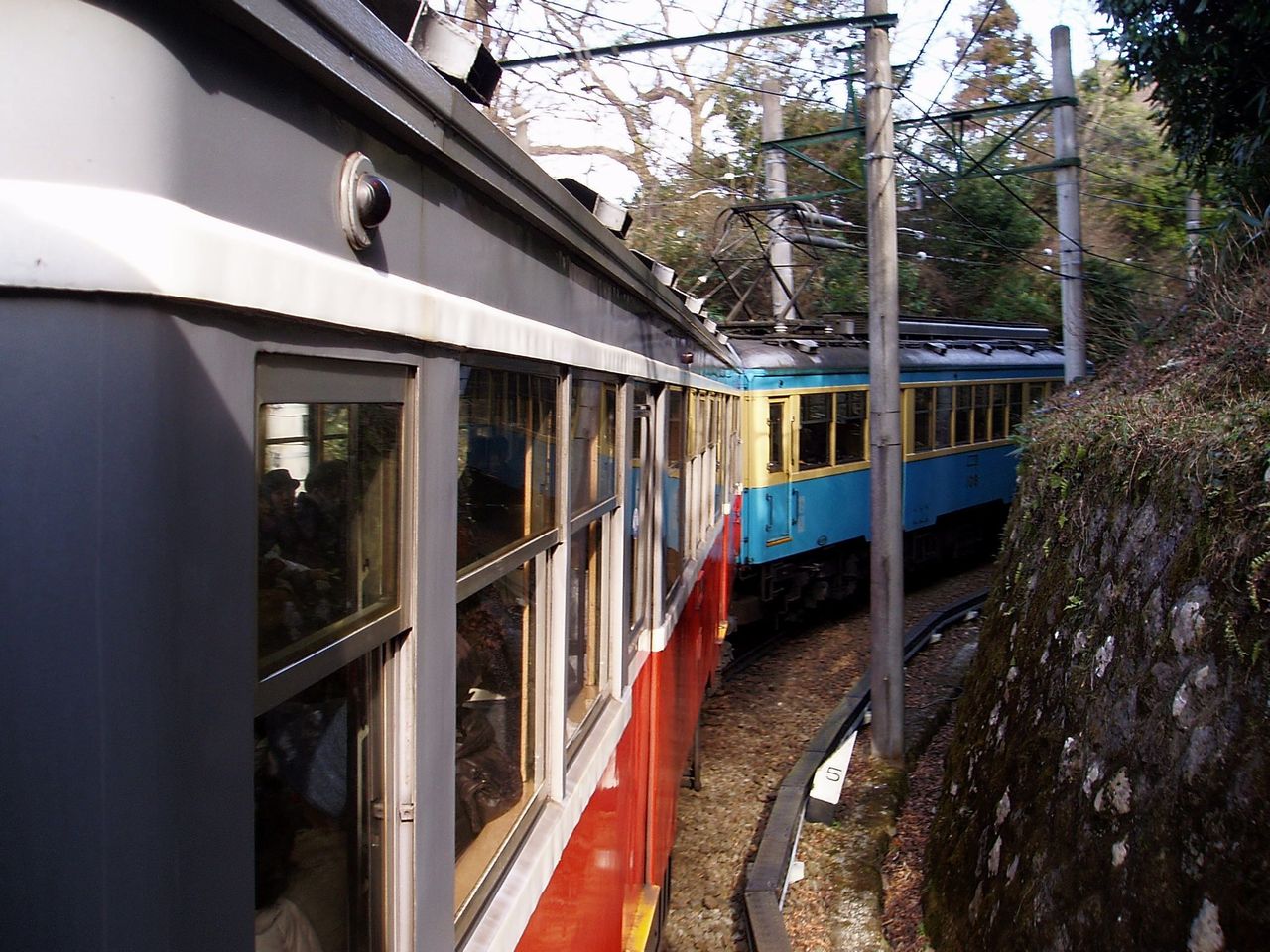
There is also a digital version: with "Ekitag" you hold your phone to an NFC tag in the station and the stamp lands on your phone. Since 31 March 2026 you can collect one at the Hakone Tozan cable car, for example.
Goshuin: seals from temples and shrines
A 御朱印 (goshuin, temple or shrine seal) is not a souvenir stamp. It records your visit: a red seal, the name of the temple or shrine brushed in black ink, and the date. Originally it confirmed that you had copied out a sutra.
A goshuin usually costs 300 to 500 yen, special editions more. Japan's transport ministry gives a range of 300 to 1,000 yen. Two examples: at Meiji Jingu in Tokyo a seal on a single sheet costs 500 yen, at Tōdai-ji in Nara it is 300 yen per seal. Bring cash; the goshuin counter at Meiji Jingu does not take credit cards.
You get it at a counter on the grounds. At shrines it is often called the 授与所 (juyosho, shrine counter), at temples the 納経所 (nōkyōsho, temple seal office). Counters keep their own hours. At Meiji Jingu they start at 9:00, at Hakone Shrine the counter is normally open from 8:15 to 17:00. Large complexes have several counters: Tōdai-ji gives seals at different halls, including the Great Buddha Hall.

The seals go into a dedicated book, the 御朱印帳 (goshuinchō, seal book). You usually buy it at the shrine or temple itself, and some stationery and book shops stock them too. Expect 1,000 to 1,500 yen. Meiji Jingu's own book costs 1,500 yen, Tōdai-ji sells them for 900 to 2,000 yen depending on the design, and Hakone Shrine's costs 1,500 yen with the first seal already inside.
Without a book you get the seal on a single sheet, the 書き置き (kakioki, pre-written sheet). Some places only hand out sheets, such as Hakone Motomiya, one of the four shrines that belong to Hakone Shrine. Temples of the Jōdo Shinshū school usually do not offer goshuin.
How to get a goshuin the right way
- Pray first, then ask for the seal. The goshuin records your visit, so the visit comes first.
- Have small change ready. You pay in cash at the counter.
- Hand over your book. When it is busy you leave it and pick it up later, so allow some time.
- Keep separate books. Use a different notebook for station and sightseeing stamps so your goshuinchō stays reserved for temple and shrine seals.
Michi-no-eki: roadside station stamps
If you travel by rental car, you will pass 道の駅 (michi no eki, roadside station). Japan's transport ministry lists 1,234 of them (as of 4 September 2026). Stamp rallies run by region, and each region has its own book. The national association's price list gives 300 to 550 yen depending on the region, with no price listed for Kinki.
Stamping is basically limited to the station's opening hours, and each person keeps only one book. In Hokkaido you may stick a photo into the book if a station is closed, for up to ten stations. Since 1 July 2026 a three-year trial also offers GPS-based digital stamps in the "MOBILA" app, starting with 257 stations and requiring registration.
Castle stamps: Japan's 100 fine castles
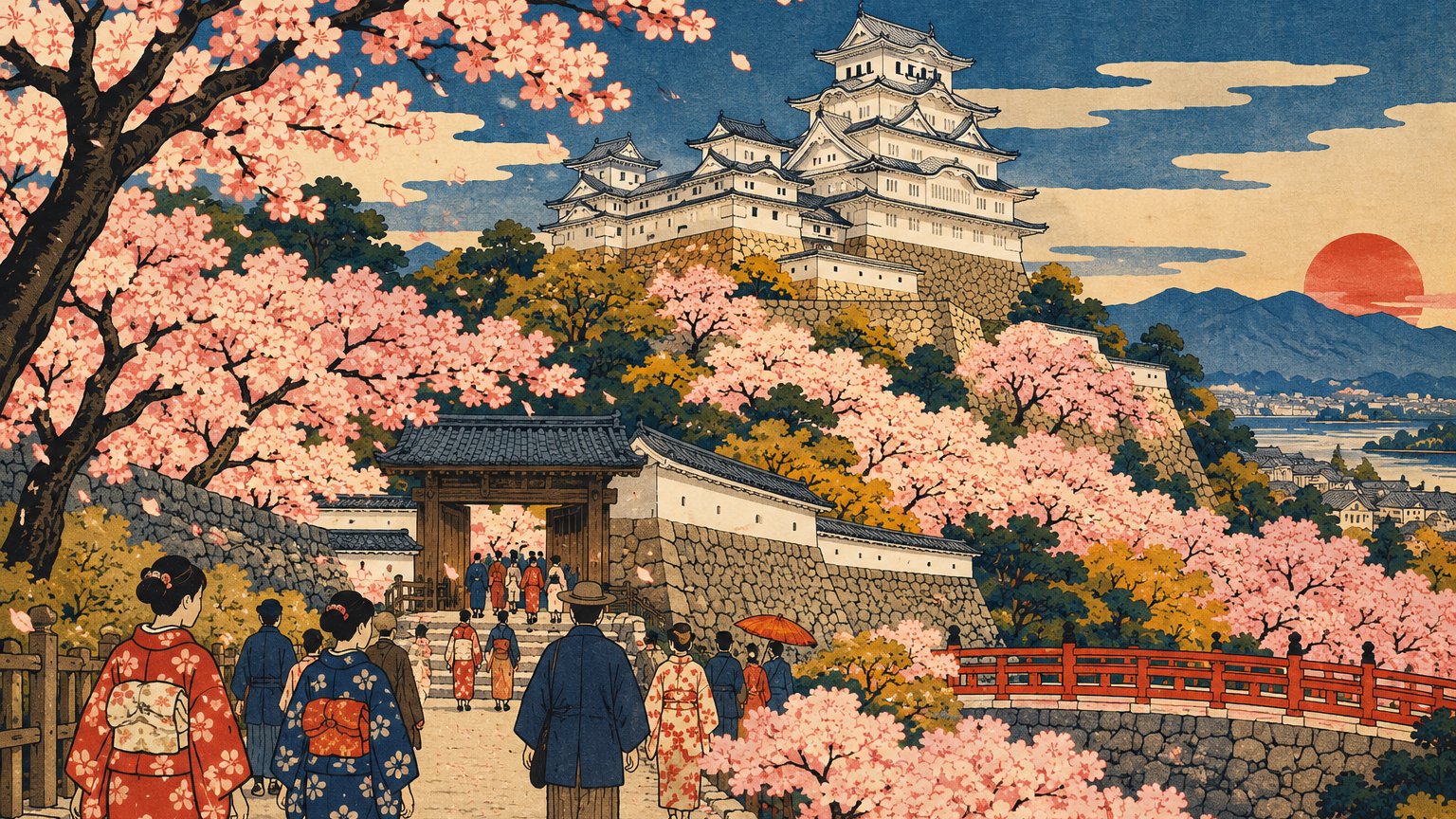
The Japan Castle Foundation announced the 日本100名城 (Nihon hyaku meijō, Japan's 100 fine castles) in 2006, and a stamp rally has run since 2007. A second list of another 100 castles followed in 2017, with its rally starting on 6 April 2018. That makes 200 stamps in total.
Only stamps in the official stamp book count. It comes inside guidebooks from the publisher One Publishing; the combined edition for both lists costs 1,300 yen. Pre-stamped sheets glued into the book are not accepted. Stamps are only available during opening hours, their spot can change at weekends, and sometimes they sit inside the paid area. The foundation's free app "Nippon Shiro Meguri" shows where.
Once you have finished a list, you post the book with a stamped return envelope to the foundation; you cannot hand it in in person. The names of everyone recognised are listed on the foundation's website. There is no time limit. For a big castle visit, see our Himeji Castle guide.
Observation decks and sights
Sights have their own stamps too. At Tokyo Skytree, a commemorative stamp at "Skytree Post" on floor 345 of the Tembo Deck lets you stamp postcards. From 5 November to 25 December 2026 there is also a Christmas stamp at the exit on floor 5.
At Mount Takao near Tokyo, the 2026 stamp hike ran digitally from 25 April to 30 June: with the hiking app YAMASTA you scanned QR codes at five Keio stations outside the ticket gates.
Stamp rallies: seasonal and digital
A スタンプラリー (sutanpu rarī, stamp rally) links several stamp spots into a route, often with a prize at the end. A well-known one is JR East's Pokémon rally in summer. In 2026 it started on 16 July, with free rally booklets at major stations around Tokyo and at the Shinkansen stamp stations. Media reports counted 36 stamp stations around Tokyo plus 7 Shinkansen stations, ending on 31 August. You pay your own fares. Read more in our articles on the Tokyo Pokémon stamp rally and the Shinkansen station rally.
More and more rallies go digital. In Hakone, a rally ran from 18 July to 30 September 2026 at stops such as Hakone-Yumoto, Gōra, Sōunzan and Owakudani, with no app and no registration needed. For a nationwide digital example, see the Golden Route Digital Stamp Rally. Rallies are almost always time-limited, so check what is on before you travel.
Where to buy stamp books
For station and sightseeing stamps, any notebook with smooth, sturdy paper works. Many railway companies sell their own stamp books:
- Seibu: 880 yen, at the "Tomoni" station shops and online, designed for 91 Seibu stamps.
- JR East, Sōbu Line: 2,000 yen, sold in limited numbers at NewDays shops along the line since December 2024.
- JR Morioka station: its own book at the station concierge, 1,000 yen.
Buy your goshuinchō at the first shrine or temple of your trip. The castle stamp book comes inside the guidebook (combined edition 1,300 yen), and michi-no-eki books are sold by region.
Sample day: Tokyo to Hakone
Here is how to combine several kinds of stamps in one day:
- Morning at Meiji Jingu (Harajuku): goshuin from 9:00 at the counter in front of the Kaguraden, 500 yen on a single sheet, cash only.
- On to Hakone: ask at the station counters along the way whether they have a stamp. How to split the day in Hakone is covered in our Hakone Loop guide.
- Hakone Tozan cable car: digital Ekitag stamp on your phone.
- Ropeway to Owakudani: the station runs from 9:00 to 17:00 from February to November and until 16:15 in December and January. More in our Hakone Ropeway guide.
- Hakone Shrine: the counter normally closes at 17:00. The shrine's goshuinchō costs 1,500 yen with the first seal already inside.
If you keep travelling by train in the days after, our JR Pass guide helps you work out the fares.
Frequently asked questions
How much do station stamps in Japan cost?
Nothing. Eki stamps are free, and most are outside the ticket gates. All you need is a book. Railway stamp books cost, for example, 880 yen (Seibu) or 2,000 yen (JR East, Sōbu Line).
How much does a goshuin cost?
Usually 300 to 500 yen, special editions more. Meiji Jingu in Tokyo charges 500 yen for a single sheet, Tōdai-ji in Nara 300 yen per seal. Bring cash.
Do I need a goshuinchō?
No. Without a book you get the seal on a single sheet. You can buy a goshuinchō at the shrine or temple, usually for 1,000 to 1,500 yen.
Do I have to go through the ticket gates for a station stamp?
Usually not; at JR East most stamps are outside. If one is inside, you need a platform ticket or a train ticket, or you can ask the staff.
How does recognition for the 100 castles work?
Only stamps in the official stamp book count. Once a list is complete, you post the book with a return envelope to the Japan Castle Foundation. Your name then appears on the foundation's website.
Sources
- JR East: station stamp guide (Japanese), accessed 2 Nov 2026: media.jreast.co.jp
- JR East: Morioka station stamps and stamp book (Japanese), June 2026, accessed 2 Nov 2026: media.jreast.co.jp
- JR East: Sōbu Line stamp book (Japanese), December 2024, accessed 2 Nov 2026: media.jreast.co.jp
- JR East: Pokémon stamp rally 2026 (Japanese), 24 Aug 2026, accessed 2 Nov 2026: media.jreast.co.jp
- SoraNews24: Tokyo's giant Pokémon stamp rally is back for 2026, 7 Jul 2026, accessed 2 Nov 2026: soranews24.com
- Seibu Railway: stamp book (Japanese), accessed 2 Nov 2026: seiburailway.jp
- Hakone Navi: Ekitag at the Hakone Tozan cable car (Japanese), 1 Apr 2026, accessed 2 Nov 2026: hakonenavi.jp
- Hakone Navi: digital stamp rally summer 2026 (Japanese), accessed 2 Nov 2026: hakonenavi.jp
- Hakone Navi: Owakudani ropeway station (Japanese), accessed 2 Nov 2026: hakonenavi.jp
- JNTO: Collecting goshuin, shrine and temple stamps, accessed 2 Nov 2026: japan.travel
- Japan Ministry of Land, Infrastructure, Transport and Tourism, multilingual database: goshuin, accessed 2 Nov 2026: mlit.go.jp
- nippon.com: goshuin, 23 Jun 2026, accessed 2 Nov 2026: nippon.com
- Meiji Jingu: goshuin and goshuinchō, accessed 2 Nov 2026: meijijingu.or.jp
- Meiji Jingu: counter location and hours (Japanese), accessed 2 Nov 2026: meijijingu.or.jp
- Tōdai-ji: goshuin and goshuinchō, accessed 2 Nov 2026: todaiji.or.jp
- Hakone Shrine: amulets and goshuin (Japanese), accessed 2 Nov 2026: hakonejinja.or.jp
- Japan Ministry of Land, Infrastructure, Transport and Tourism: list of michi-no-eki, as of 4 Sep 2026 (Japanese), accessed 2 Nov 2026: mlit.go.jp
- National Michi-no-Eki Liaison Council: stamp rallies (Japanese), accessed 2 Nov 2026: michi-no-eki.jp
- National Michi-no-Eki Liaison Council: digital stamps by app (Japanese), accessed 2 Nov 2026: michi-no-eki.jp
- Hokkaido Michi-no-Eki: rule for closed stations (Japanese), accessed 2 Nov 2026: hokkaido-michinoeki.jp
- Japan Castle Foundation: 100 fine castles (Japanese), accessed 2 Nov 2026: jokaku.jp
- Japan Castle Foundation: stamp rally, notes and recognition (Japanese), accessed 2 Nov 2026: jokaku.jp, notes, recognition
- One Publishing: guidebook with stamp book for both castle lists (Japanese), accessed 2 Nov 2026: one-publishing.co.jp
- Tokyo Skytree: Skytree Post and Christmas stamp 2026, accessed 2 Nov 2026: tokyo-skytree.jp, Christmas 2026
- PR Times / Keio: Takao stamp hike 2026 (Japanese), accessed 2 Nov 2026: prtimes.jp
- Wikimedia Commons: photos Fuji Eki stamp book (YedidyaPopper, CC BY 4.0), Eki stamp Shinsaibashi Station (Taufik, CC0), Taga Shrine Goshuin (先従隗始, CC0), accessed 2 Nov 2026: commons.wikimedia.org