Overview: a useful pass, but no longer the automatic buy
The nationwide JR Pass is a rail pass for foreign visitors that offers unlimited travel on most JR trains for 7, 14, or 21 consecutive days. It sounds simple, and for years it was treated as a kind of travel shortcut: buy once, ride everywhere, sort the rest out later. But the pricing change in October 2023 altered the math. The pass still has a place, but it now rewards specific itineraries rather than broad optimism. That is the whole story in one sentence. If your trip is rail-heavy and compressed into a short window, it can still make excellent sense; if you are doing a more relaxed route, it often does not.
For many readers, this is the point where the old habit has to be dropped. A Tokyo-to-Kyoto round trip alone often does not justify the nationwide pass anymore, and that is the kind of calculation that matters. The body, in travel as in walking, notices friction. If the numbers do not work, they do not work. More soon on the details, because the details are where the texture lives.
What the nationwide pass actually covers
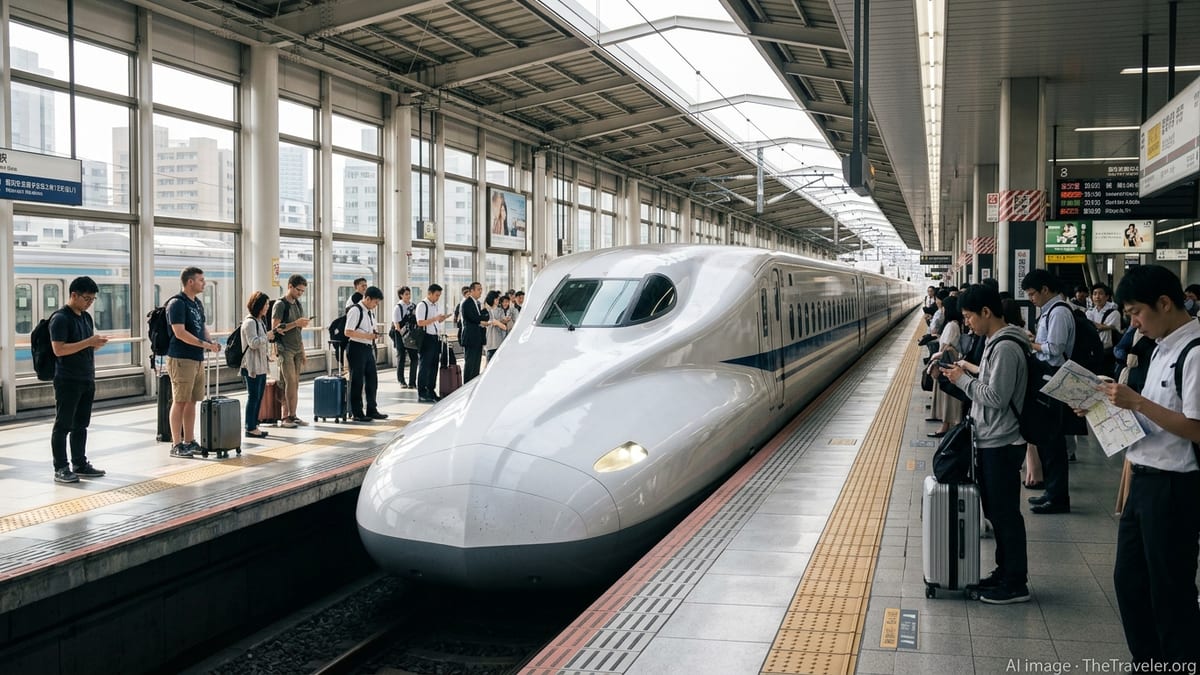
The JR Pass is valid on selected 新幹線 (shinkansen, bullet train) routes, which is where most first-time planners start looking, but it does not cover the Nozomi and 瑞穂 (Mizuho, one of the fastest Shinkansen services) services. That matters. Those are the fastest, most convenient trains on some major corridors, so excluding them changes both timing and value. The pass is best understood as a way to use JR’s network broadly, not as a universal key to every bullet train in the country.
In practical terms, this means you should map your route before buying. If your plan includes multiple long-distance legs in a short period, the pass can still be strong value. If your itinerary is mostly one or two major city hops, it probably is not. That is not a romantic answer, but it is the correct one.
When the math still works
The nationwide JR Pass can still pay off for rail-heavy multi-city itineraries that include expensive Shinkansen trips inside the validity window. A classic example is Tokyo to Kyoto to Hiroshima and back, all packed into 7, 14, or 21 days. In cases like that, the pass can absorb several costly intercity fares and simplify the whole trip at the same time. That combination still has value.
What changed is the threshold. Before the redesign, many travelers bought first and calculated later, which was convenient for the industry and expensive for some visitors. Now the pass asks to be justified. Good. It should.
- Best for: multiple long Shinkansen rides in a short period
- Less useful for: a simple Tokyo-Kyoto return
- Still important to check: whether your route uses Nozomi or Mizuho trains
Suica, local travel, and the problem of overbuying
Not every Japan rail decision belongs in the same spreadsheet. Suica is a rechargeable IC card launched by JR East in 2001, and it is used for tap-in, tap-out travel on trains, subways, buses, and for purchases at convenience stores and vending machines. For many urban days, that kind of flexibility matters more than a long-distance pass. You just tap, move, and stop thinking about ticket gates like a person who has better things to do.
If your trip mixes city wandering with only one or two major rail legs, a JR Pass guide should really be a comparison between the nationwide pass and simple point-to-point tickets plus an IC card. If you are weighing those options, this JR Pass vs Suica comparison is the cleanest place to start.
A regional option that can beat the nationwide pass
The nationwide pass is not the only rail pass that matters. The JR Kansai-Hiroshima Area Pass is a 5-day rail pass for foreign visitors issued by JR West. It costs 17,000 yen for adults and 8,500 yen for children, and for the right route that is a serious amount of mileage. It covers JR local trains, rapid trains, limited express trains, the Sanyo Shinkansen between Shin-Osaka and Hiroshima, and the JR フェリー (ferry, boat service) to Miyajima. It does not cover the Tokaido Shinkansen beyond Shin-Osaka or Osaka’s private rail lines, so it is regional by design, not a substitute for everything.
For itineraries built around Osaka, Himeji, Okayama, Hiroshima, and Miyajima over five days, it can be a strong value. This is the kind of pass that rewards precise plans and punishes vague ones. Which is fair, really. If you are comparing regional and national options, the JR Kansai-Hiroshima Area Pass guide is worth reading before you lock in dates.
How travel patterns have shifted around the pass
The redesign and price increase have shifted tourist behavior in Japan, though some of the newer patterns are still being watched rather than fully pinned down. Unverified reporting has suggested more day-trippers in Kyoto and more weekend visitors heading to Mount Fuji, which would fit the logic of a pricier pass: people squeeze value where they can and reduce the long-haul roaming that used to come more easily. That broader shift also explains why places like Fushimi Inari and Arashiyama can feel especially crowded on shorter itineraries. The pass makes distance feel thinner, and people act accordingly.



There is a small moral here, if you like those. Transportation policy changes the shape of sightseeing. It changes where people go, how long they stay, and how much of the day is spent on rails versus in streets. The texture of place changes with the ticketing system. That is not metaphor. It is logistics.
Where to experience the JR system in Japan
If you want to understand the JR Pass in real life, you experience it through ordinary movement: major stations, Shinkansen platforms, gate lines, and the decisions that happen before the first train of the day. Tokyo Station, Shin-Osaka, Kyoto, Hiroshima, and the ferry connection to Miyajima are all practical examples of how the network links regions together. The pass is not an attraction in itself. It is infrastructure, and infrastructure is best understood when you are standing inside it with a bag that feels too lumpy and a day that has already started moving.
For Japan learners, this topic also shows up in travel-language practice. JR Pass kanji and JR Pass japanisch lernen are useful search ideas because station names, route maps, and pass rules train you to read transport vocabulary in context. If you are studying Japanese, the rail system is a very efficient classroom. Tickets, platform signs, transfer notices, and seat reservations all repeat the same practical words until they stick. That is the good kind of repetition.
- Look at route maps before buying anything.
- Check whether your intercity legs are Shinkansen-heavy.
- Use an IC card for local transit unless a pass clearly beats it.
- Compare nationwide and regional passes, not just one option in isolation.
What to remember before you buy
The safest rule is simple: do not buy the JR Pass by reflex. Start with your actual itinerary, your travel days, and the trains you expect to take. Then compare the nationwide pass against regional passes and ordinary tickets. If your route is a fast sequence of expensive JR journeys, the pass can still be excellent. If not, a mixture of point-to-point tickets and Suica may leave you freer and cheaper. That is the unglamorous truth, and it is usually the right one.
In other words, the JR Pass is still useful, but it is no longer universal. Which, for serious trip planning, is probably better than pretending otherwise.
Frequently Asked Questions
Is the nationwide JR Pass still worth it after the 2023 price increase?
Yes, but only for certain itineraries. It can still make sense for rail-heavy trips with several expensive Shinkansen rides inside 7, 14, or 21 days.
Does the JR Pass cover every Shinkansen?
No. It is valid on selected Shinkansen routes, but not on Nozomi or Mizuho services.
Is a Tokyo to Kyoto return enough to justify the JR Pass?
Often, no. A round trip between Tokyo and Kyoto alone usually does not justify the nationwide pass anymore.
What is the difference between JR Pass and Suica?
The JR Pass is a foreign-visitor rail pass for longer JR travel, while Suica is a rechargeable IC card used for local trains, subways, buses, and small purchases.
When is a regional pass better than the nationwide JR Pass?
When your trip stays in one region. The JR Kansai-Hiroshima Area Pass can be strong value for a five-day route through Osaka, Himeji, Okayama, Hiroshima, and Miyajima.