
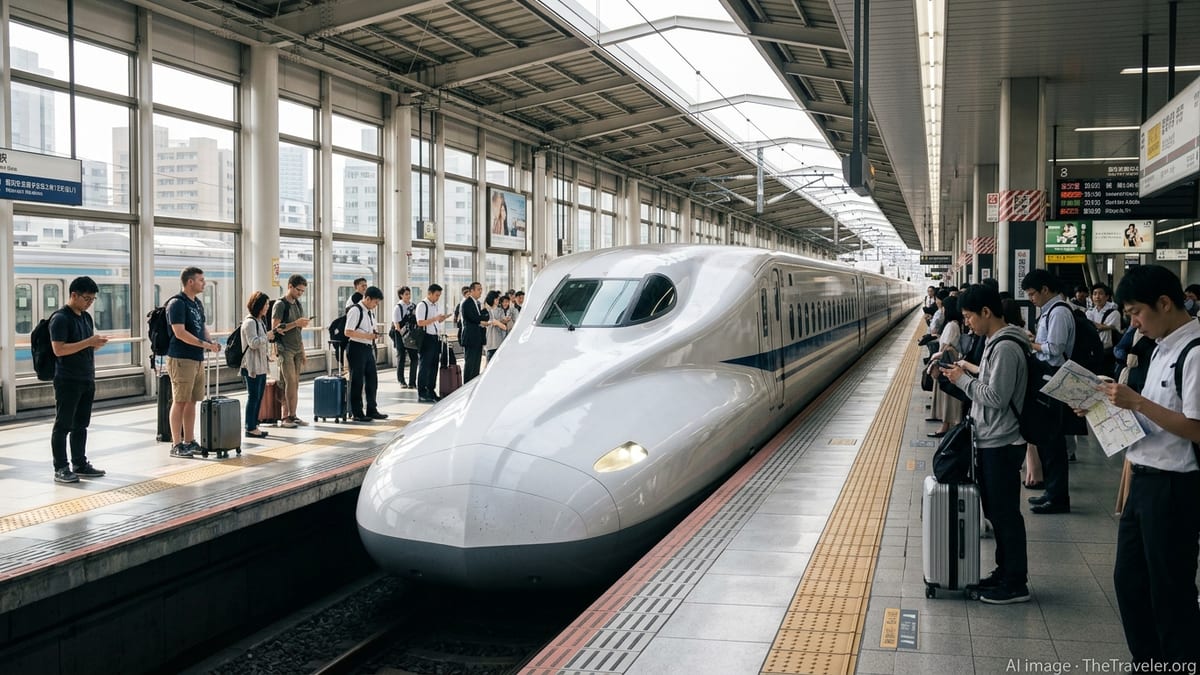
How the Japan Rail Pass reshaped tourist routes
Why does a single ticket make such a difference, and why are train maps suddenly full of red dots? The short answer is convenience, price predictability, and the reach of JR lines across major islands like 本州 (Honshu, Japan's main island), Kyushu and Hokkaido. But let's stick with travel behaviour for now.



Fact: the Japan Rail Pass offers unlimited travel on most JR trains for 7, 14 or 21 consecutive days, and it's valid on 新幹線 (shinkansen, bullet train) except the Nozomi and Mizuho services. Seriously though, that combination makes multi-city loops, like Tokyo to Kyoto to Hiroshima, affordable in a way single tickets often aren't.

What most people don't know: pass mechanics matter
Let me show you why seat reservations and route planning change choices. Trust me on this one: reserved seats on the 東海道 (Tokaido, the Tokaidō route / Eastern Sea Route) shinkansen mean tourists can book a morning trip to Kyoto, explore for a day, and return to Tokyo the same evening without sweating over crowded local trains. My tip is to book reservations at JR ticket offices, called 駅 (eki, station) midori no madoguchi, as soon as you arrive if you want peak-day flexibility. But that's not all.
Where overtourism shows up: Kyoto, Mount Fuji and urban neighbourhoods
Have you felt squeezed in front of Fushimi Inari or Arashiyama? Kyoto's hotspots see spikes because the Rail Pass effectively flattens distance. The 2019 record of 31.9 million foreign visitors to Japan, according to JNTO, meant popular temples and shrines were already busy before the pass regained popularity after travel reopened.
Kyoto up close
Anecdote: the first time I went to Kyoto with a rail pass, I stayed in a small guesthouse near Gion and watched entire tour groups arrive by the hour. Here's the catch: day-trippers compress visits into short time windows, which makes popular lanes and 鳥居 (torii, Shinto gate) gates feel packed by 10:00. Oh, almost forgot: local businesses sometimes struggle with the turnover; they want longer-staying guests who use ryokan and local eateries, not just the quick photo stop. My verdict is to aim for sunrise or late afternoon, not noon, if you want the classic shots. My tip is to learn a few station words in ローマ字 (romaji, romanization / Japanese written in Latin letters) like eki and shinkansen to ask for platform info confidently.

Mount Fuji and day-trip dynamics
Direct address: if you're heading to Mount Fuji, know which segments the JR Pass covers. You can take the JR Chuo Line to Otsuki, but the Fujikyu line to Kawaguchiko is not covered by JR, so expect extra fares. Pro tip: combine JR and a single Fujikyu ticket, or choose a tour that includes coach transfer from Tokyo to Kawaguchiko to avoid surprises. Not bad, right?
Neighbourhood spillover and regional winners
Why are neighbourhoods like Asakusa, Shimokitazawa and Kamakura suddenly busier on weekends? The Rail Pass turns longer, multi-stop itineraries into day trips, pushing crowds into smaller neighbourhoods that once felt off the tourist map. But let's stick with the positive side for a moment.



Fact: regional cities such as Kanazawa, Takayama and Matsumoto benefit from tourists spreading out beyond the major corridors because JR lines reach many of these urban centres. Seriously though, that spread helps local economies if visitors stay overnight and respect local rules. Trust me on this one: a night in a small ryokan in Takayama supports shops and artisans more than five quick stops in Kyoto.

Practical tips for language learners and cultural visitors
Anecdote: I used basic romaji phrases on a fast-moving trip, and it made a huge difference. Insider tip: practice simple station phrases like 'どこは駅ですか (doko wa eki desu ka, Where is the station?)' in romaji to ask where the station is, and learn how to read timetables that show miyako and eki names in romaji. What I especially like is using the pass as a study tool; you can listen to announcements, read signs and practice speaking with staff at eki, all while moving between cities. Convinced yet?
My verdict is that the Japan Rail Pass isn't the backpacker myth of unlimited cheap speed without planning. It's a powerful mobility service that requires route knowledge, respect for local sites and occasional paid add-ons. Here's the catch: if everyone follows the same loop, overtourism becomes a real problem. My tip is to mix popular stops with lesser-known towns, book seat reservations, and travel slightly off-peak times if possible. But that's not all.
Quick detour: always check current JR Pass rules at the official site before you travel, because rules and coverage can change year to year.
Oh, almost forgot: if you're studying Japanese, travelling with a pass gives you real-world practice for listening and reading, which accelerates learning in a way classroom drills can't match.
Frequently Asked Questions
Can I use the Japan Rail Pass on all shinkansen?
Short answer: No. The pass covers most shinkansen but not Nozomi or Mizuho services.
Do I need a visa to buy the Rail Pass?
Short answer: Yes, the pass is for foreign tourists visiting Japan under the temporary visitor status.
Sources
- The Traveler - Japan Rail Pass reshapes how tourists move across Japan
- Japan Rail Pass official site
- Japan National Tourism Organization statistics


