Overview
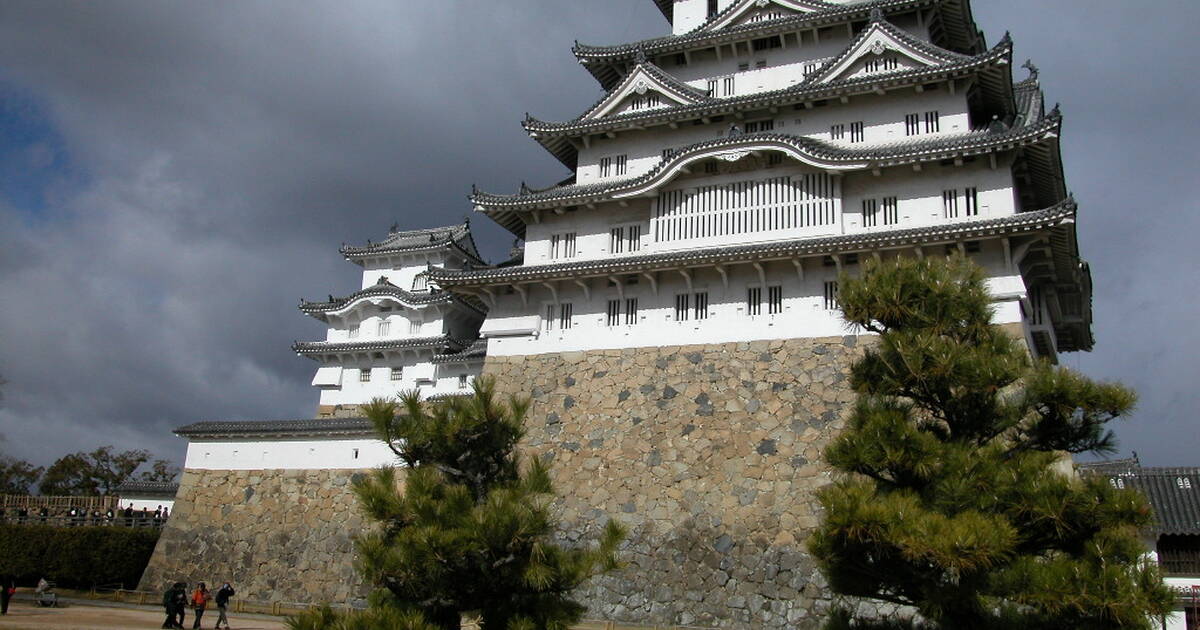
Himeji Castle sits on a low hill called Himeyama in the middle of Himeji, a mid-size city in Hyogo Prefecture that most travelers see only from a train window on the way to somewhere else. That is a mistake. The castle is the best-preserved feudal-era fortress in Japan, a genuine early Edo-period complex of roughly 83 buildings still connected by their original gates, walls, and narrow stone-paved paths. Most of Japan's famous castles are concrete reconstructions rebuilt after fire, earthquake, or war. Himeji is not. You are walking through the real thing, worn steps and all, and the difference in texture is immediate once you are inside the gates.
From Hilltop Fort to Edo-Period Masterpiece
The site has been fortified for nearly seven centuries. The first fort on Himeyama went up in 1333, built by Akamatsu Norimura, and over the following two hundred and fifty years a succession of powerful lords kept expanding and re-fortifying the hill as the balance of regional power shifted around it. The castle you actually see today, though, is largely the work of one man: the 大名 (daimyo, feudal lord) Ikeda Terumasa, who rebuilt the complex into its current grand form between 1601 and 1609, right at the start of the Edo period. That's the version that survived, more or less intact, into the present. Six centuries of Japanese castle-building compressed into one hilltop, and the last chapter of it still standing.
Why They Call It the White Heron Castle
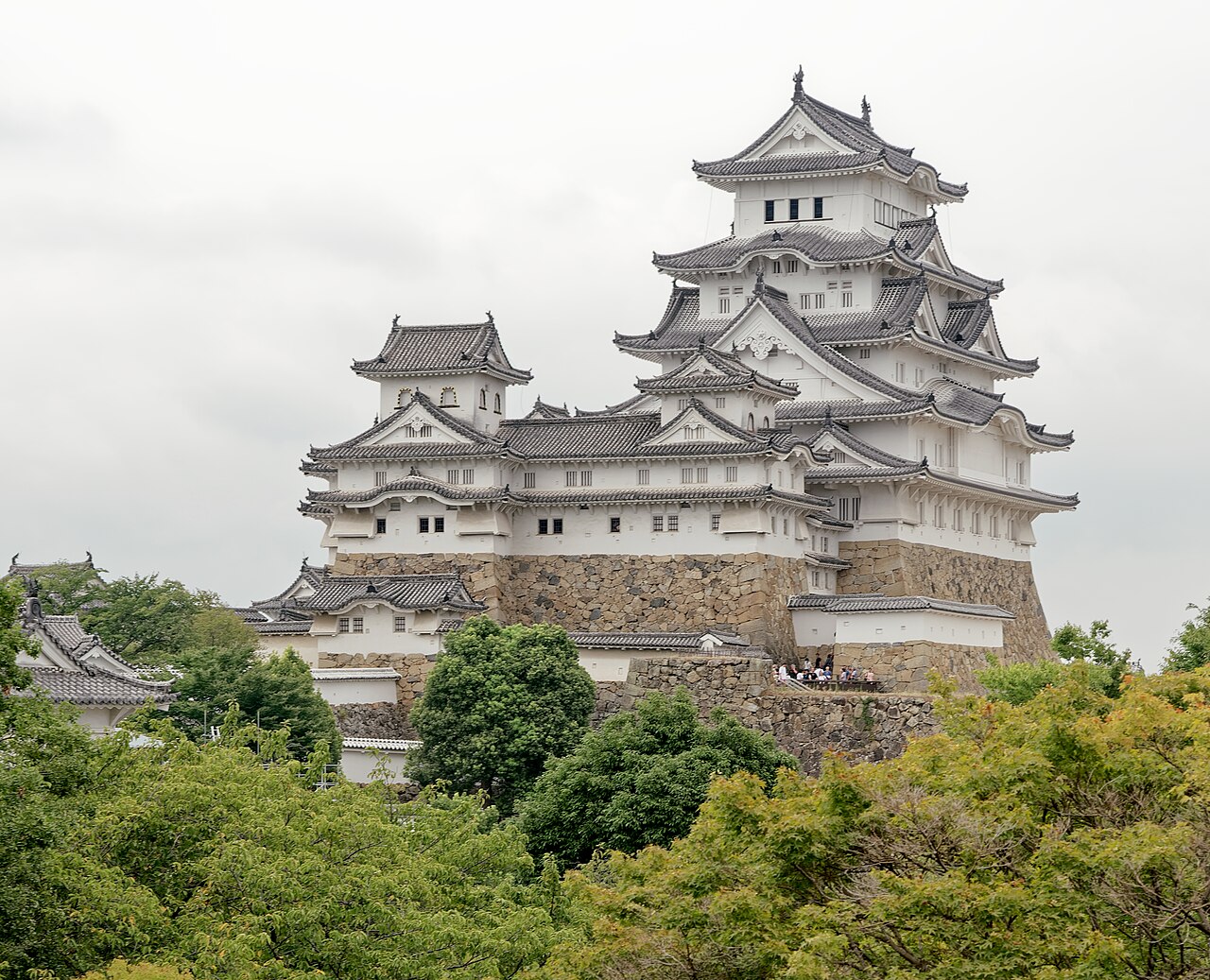
白鷺城 (shirasagi-jo, White Heron Castle (nickname for a castle)), White Heron Castle: the nickname is not marketing. The castle's exterior is coated in a dazzling white lime plaster, and its roofline stacks and curves upward across several tiers in a way that, from the right angle and with a bit of imagination, reads as a bird lifting off. Stand at the base on a clear day and you'll see why the name stuck. It is one of those cases where the poetic description turns out to be structurally accurate.
Inside the Maze: Architecture Built to Confuse an Enemy
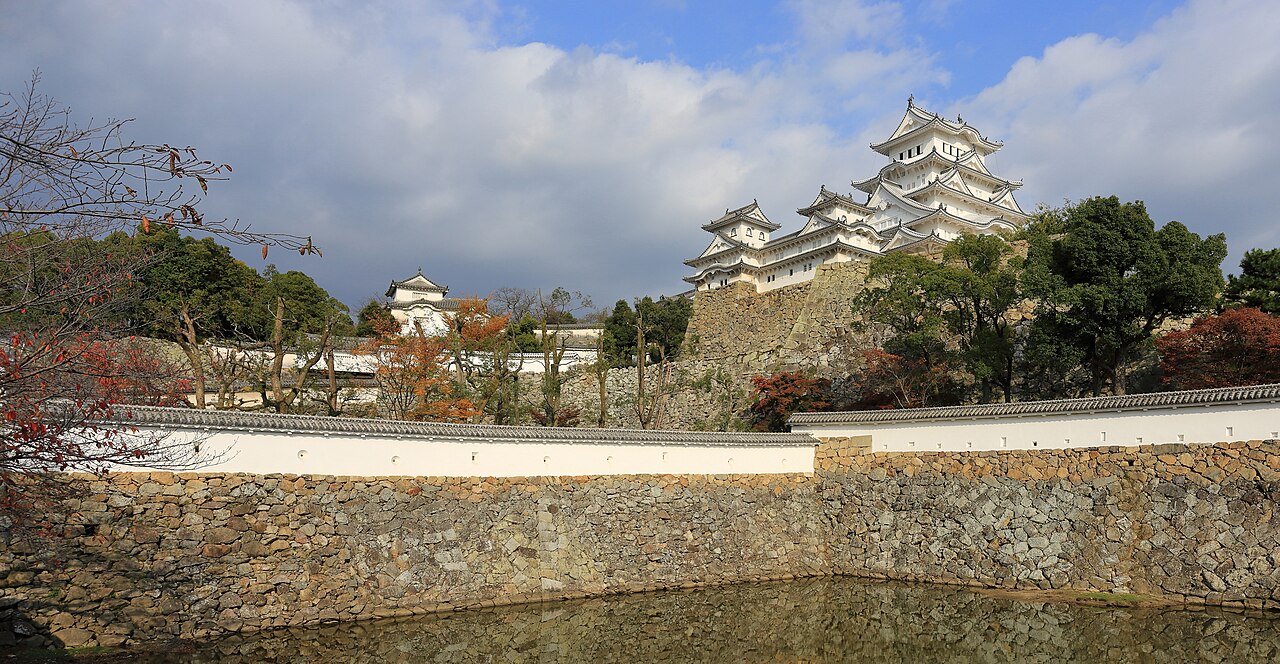
Himeji was built to be lived in, but it was also built to kill an advancing army slowly, and the defensive engineering is the real reason to spend an unhurried afternoon here rather than rushing straight to the main keep. The path in winds through a deliberate maze of gates, corridors, and hidden turns designed to disorient attackers and expose them to fire from multiple directions at once. Along the way you'll pass 石落とし (ishiotoshi, stone-dropping opening (defensive castle feature)), stone-dropping openings built into the walls for pouring projectiles onto anyone standing below; 武者返し (musha-gaeshi, anti-scaling wall projection on a castle), wall projections angled to make scaling the fortifications far harder than it looks; and 枡形 (masugata, boxed defensive courtyard between castle gates), rectangular defensive courtyards squeezed between successive gates that forced any attacking force to bottleneck and regroup under watch. None of it reads as decorative once you notice what it's actually for. The whole route to the 天守 (tenshu, castle keep, main tower of a Japanese castle), the main keep, is essentially an obstacle course dressed up as architecture, and walking it in sequence is the best way to understand how a castle like this functioned as a weapon, not just a residence.
Plaster That Does More Than Look Good
That white plaster covering the walls wasn't chosen purely for looks. Lime-based plaster of this kind also functioned as fire protection, a genuinely practical concern in a complex built mostly of wood in a country where castle fires were a routine hazard. Form and function overlapping like that is, honestly, most of what I find appealing about premodern Japanese building design: nothing is purely ornamental, even the parts that look like they should be.



A UNESCO Site and a Favorite Backdrop for Samurai Films
Himeji Castle was inscribed as a UNESCO World Heritage Site in 1993, part of the first cohort of Japanese sites to receive the designation, alongside Horyu-ji temple in Nara. The recognition reflects exactly what makes the place worth the detour: authenticity. Because so much of the complex is original rather than rebuilt, it has also become a favored filming location for samurai films, television dramas, and other period productions that need a castle that actually looks like it belongs to the era it's portraying. If a set of stone walls in a 時代劇 (jidaigeki, period drama (film/TV genre)) looks a little too convincing, there's a decent chance you're looking at Himeji.
Getting to Himeji and Walking the Grounds
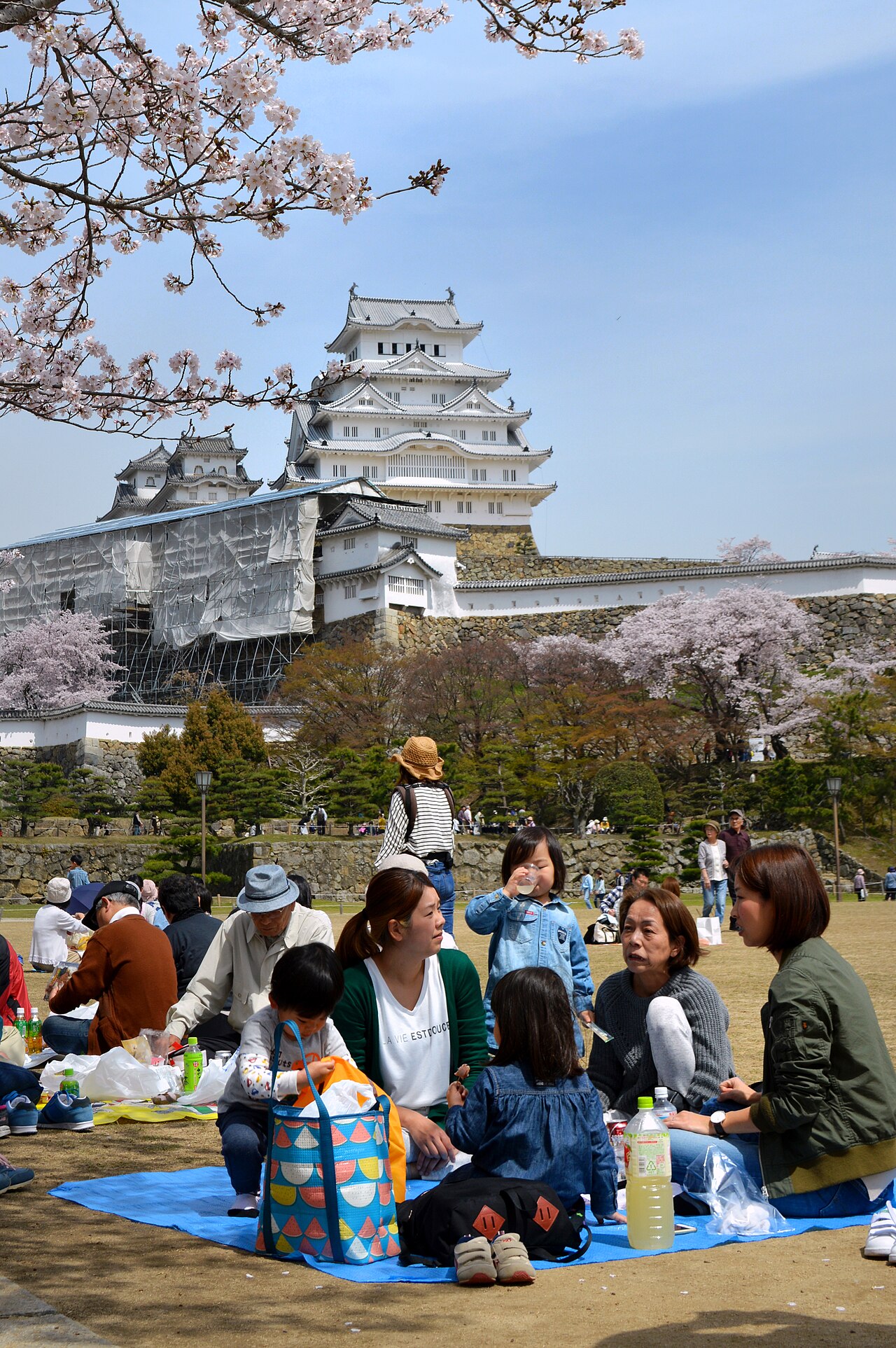
This is the easy part. Himeji sits directly on the 新幹線 (Shinkansen, bullet train) line, about 30 to 40 minutes west of Shin-Osaka, which makes it one of the more painless castle detours in the Kansai region. No car, no complicated transfers, no plotting. If you're skipping the bullet train and taking the JR Special Rapid instead, budget closer to an hour from Osaka Station. Either way, the castle itself is a short, flat, entirely walkable route from Himeji Station straight up a broad boulevard, the keep visible above the rooftops practically the whole way, which is its own small pleasure — arriving somewhere on foot, watching the destination get larger instead of appearing out of nowhere. Wear shoes you don't mind climbing steep interior stairs in; the keep's wooden staircases are narrow, worn, and unapologetically original. Give the grounds a full morning or afternoon rather than a rushed hour between trains. It rewards unhurried movement, the way most good walking does.
A Few Words Worth Learning Before You Go
Since this is a Japan-learning site as much as a travel one, a handful of terms are worth pocketing before you visit: tenshu for the main keep, ishiotoshi for those stone-dropping openings, musha-gaeshi for the anti-scaling wall projections, masugata for the boxed defensive courtyards, and of course shirasagi-jo, the White Heron Castle nickname itself. None of it is essential for getting in the gate, but knowing the vocabulary changes how you read the architecture as you walk it — you start noticing the defensive logic instead of just the pretty roofline. More soon.
- Location: Himeyama hill, Himeji, Hyogo Prefecture
- Built: main complex 1601-1609 under Ikeda Terumasa, on a site first fortified in 1333
- Status: UNESCO World Heritage Site since 1993
- Scale: approximately 83 original buildings, including the main tenshu keep
- Access: roughly 30-40 minutes from Shin-Osaka by Shinkansen, or about an hour from Osaka Station via JR Special Rapid