Riding the Hakone Ropeway: What to Expect
Deep in the mountains of Kanagawa, there's a stretch of cable and gondola cars that turns what could've been a boring transfer between two train stations into one of my favorite short rides in the whole country. The Hakone Ropeway is an aerial cableway, roughly 4 kilometers end to end, linking Sounzan up in the hills with Togendai down on the shore of Lake Ashi. It's not one continuous line, though — you'll transfer partway through at Owakudani, which honestly ends up being the best part of the trip anyway. Total one-way ride time runs about 20 to 30 minutes, depending on how busy things are and how long you end up waiting at the transfer.
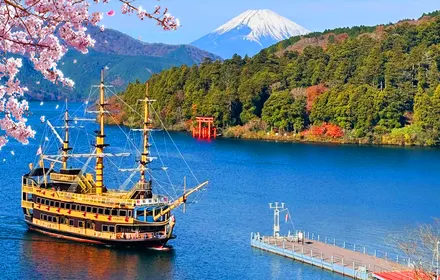
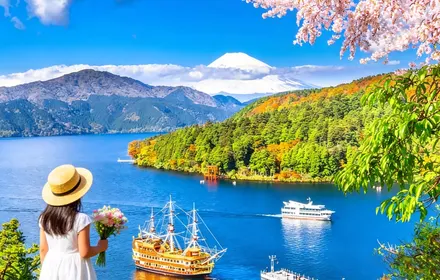
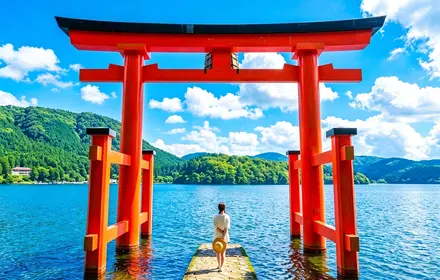
The Route: Sounzan, Owakudani, and Togendai
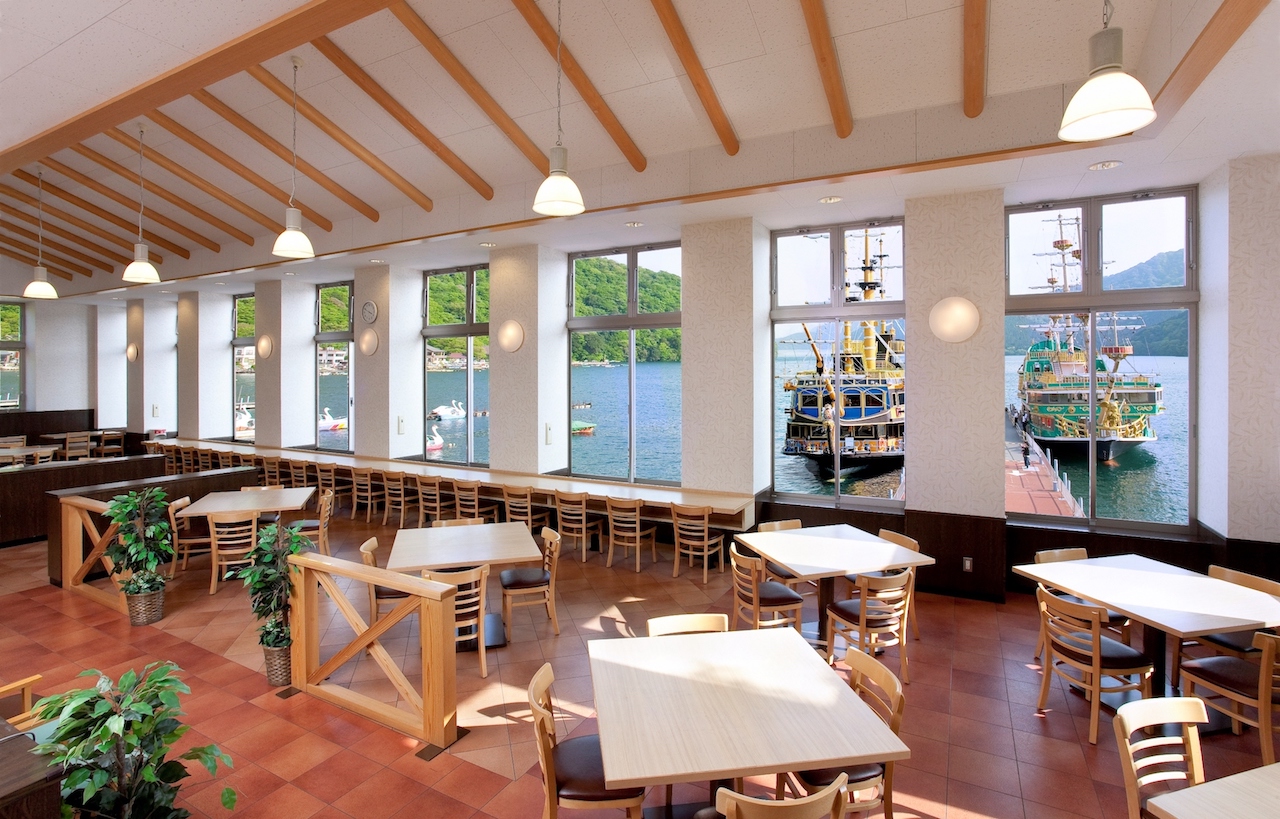
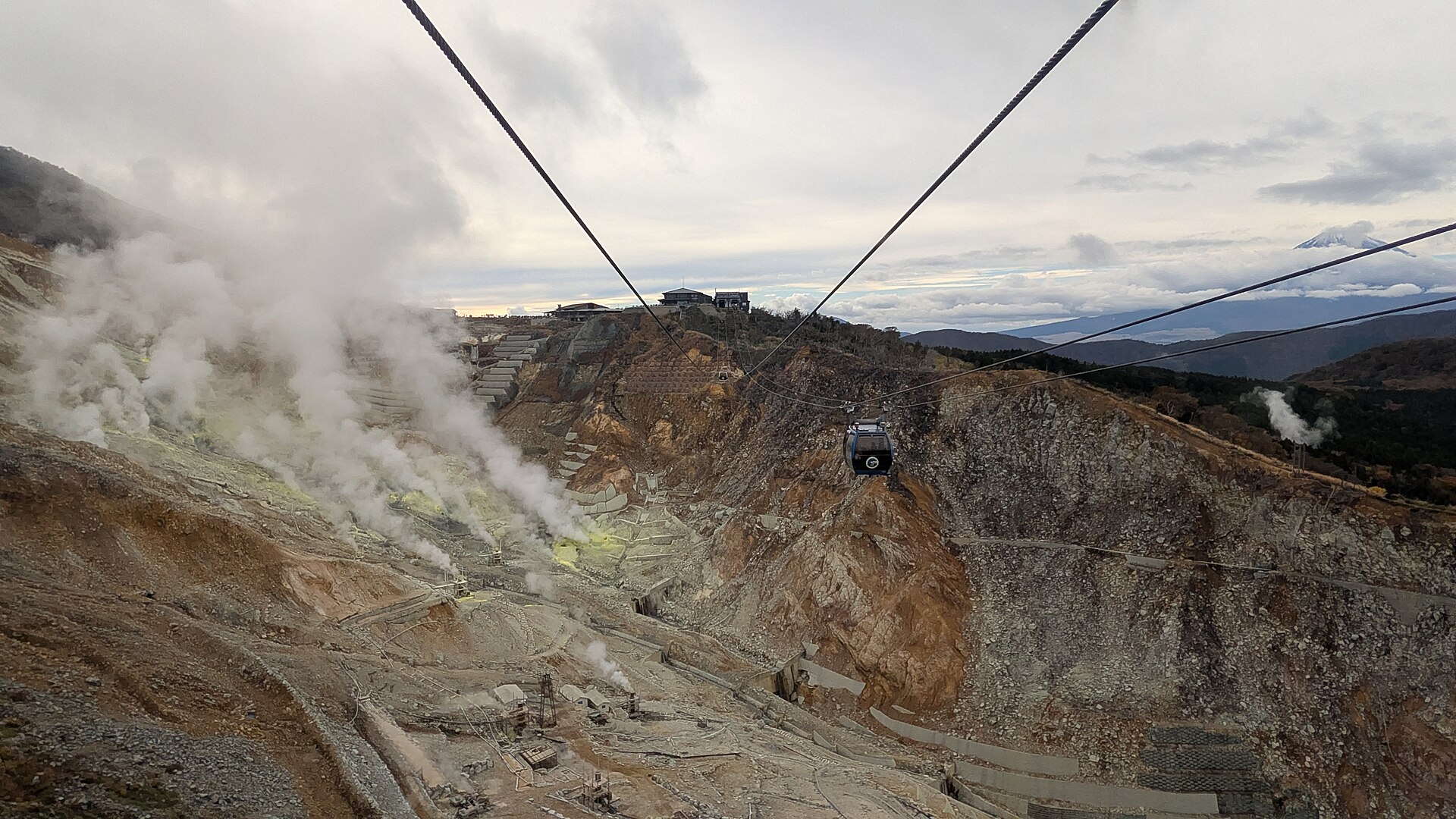
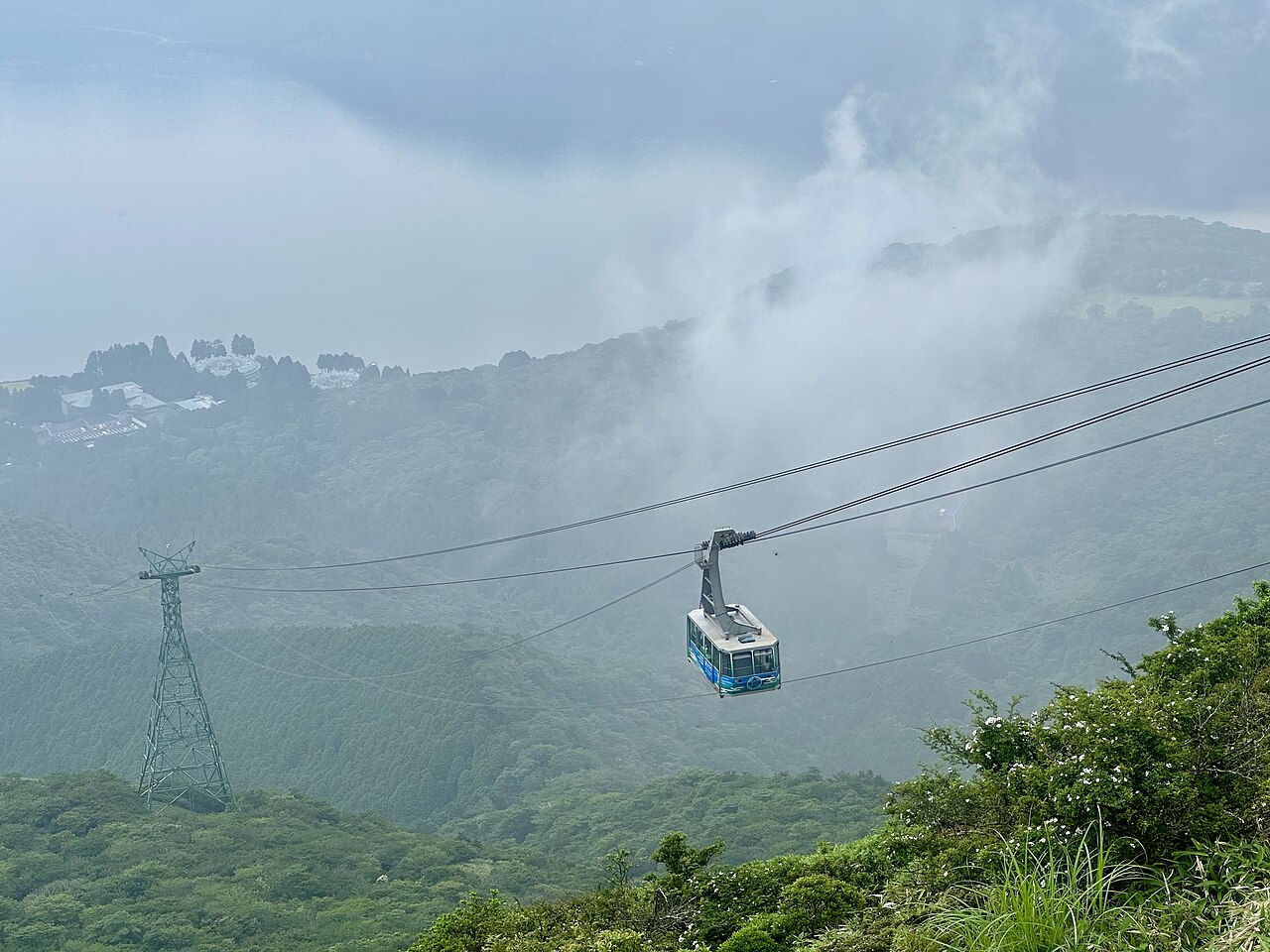
The ropeway runs in two main sections, and you'll need to hop off and back on at Owakudani in the middle. Coming from Tokyo, most people arrive at Sounzan already having ridden the Hakone Tozan Railway up through the switchbacks, so the ropeway feels like a natural continuation of the climb — except now you're airborne instead of on rails. From Sounzan, gondolas glide over pine forest and volcanic scarring toward Owakudani, then continue on down toward Togendai and Lake Ashi, where the pirate ship cruises wait to take you further into the valley. Each car holds a handful of passengers, and honestly, half the fun is just watching the terrain change beneath your feet as the trees thin out and the ground starts steaming.
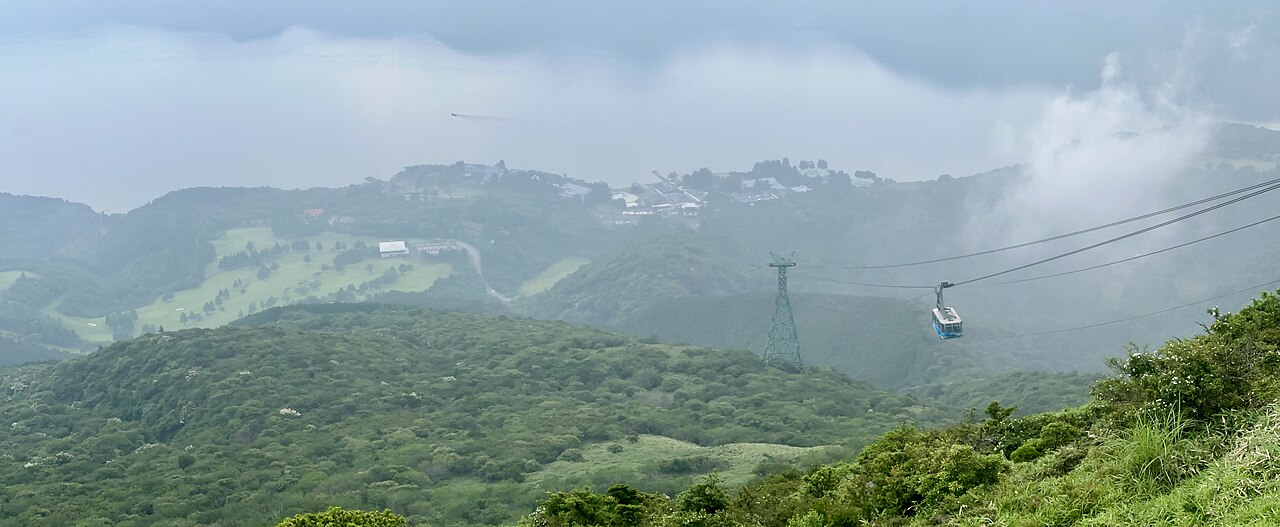
Owakudani, the Valley That Still Smokes
And what's more, the transfer point isn't just a logistical stop — it's an attraction in its own right. Owakudani sits in an active volcanic zone, and you'll smell it before you see it: sulfur fumaroles hissing out of bare, yellowed rock, steam drifting up into whatever weather's happening that day. It's dramatic in a way that photos never quite capture. While you're there, get in line for 黒卵 (黒 (kuro, black)-卵 (tamago, egg), black egg), black eggs boiled right in the sulfuric hot spring water until the shells turn a deep charcoal color. Local lore says each one adds years to your life. I've eaten more than a few over the years and, well, no complaints so far.
Chasing a Clear View of Mt. Fuji
On clear days, a lot of the gondolas frame Mt. Fuji almost perfectly, sitting there in the distance like it's posing for you. But — and this is the part nobody tells you until you've been burned once — Fuji is shy. Your best odds for an unobstructed view tend to land on cold, dry days in winter and early spring, when the humidity that usually hazes up the summer months has cleared out. I've made the trip on plenty of overcast afternoons with nothing but grey to show for it, and I've also had days where Fuji felt close enough to touch. That unpredictability is part of what keeps me coming back.
A New Gondola With Its Own Soundtrack
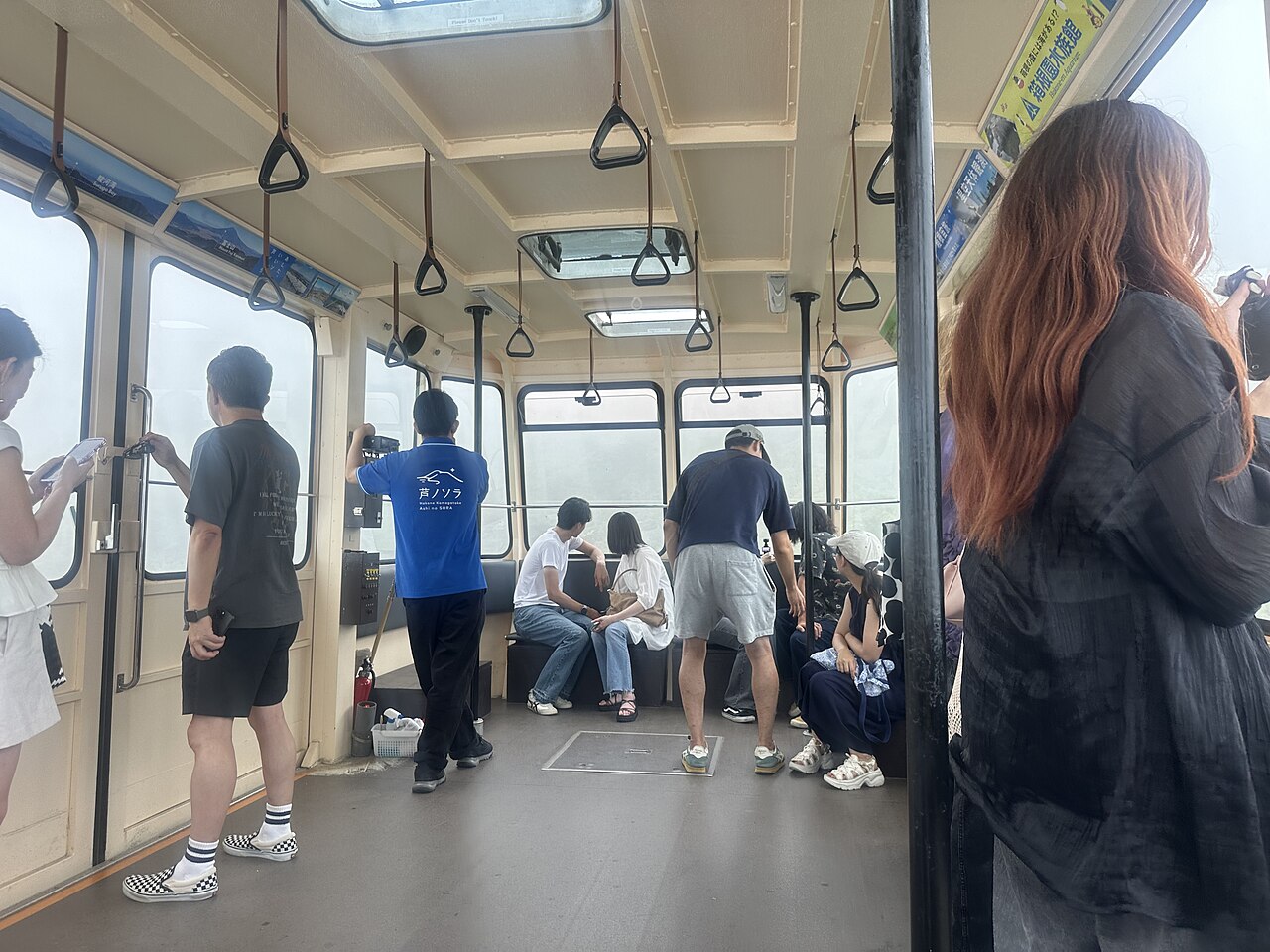
Odakyu Hakone Co., the company that operates the ropeway, recently added something I haven't seen anywhere else on a cable car: a gondola built around a spatial, three-dimensional audio system that plays curated music and ambient sound as you ride. It's a small addition on paper, but it changes the feel of the trip — instead of just moving you from one station to the next, this particular car turns the ride itself into a little sensory experience, sound shifting and moving around the cabin as the scenery does the same outside the window. If you get the chance to board it, take it; it's the kind of detail that turns a transfer into a memory.



Tickets, Timing, and Getting There
Getting out to the ropeway usually means stitching together a few different lines, and honestly, that's part of the charm of a Hakone day. The typical route combines the Odakyu train line out from Tokyo, a switch to the Hakone Tozan Railway for the mountain climb, and then the ropeway itself for the final stretch up and over. The easiest way to cover all of it is the Hakone Freepass, which handles most of the transfers in the region, ropeway included, and you can pick one up at Odakyu ticket counters before you even leave the city.
- Odakyu Line from Shinjuku toward Hakone-Yumoto
- Hakone Tozan Railway up to Gora and Sounzan
- Hakone Ropeway from Sounzan through Owakudani to Togendai
Making It Part of a Bigger Hakone Day
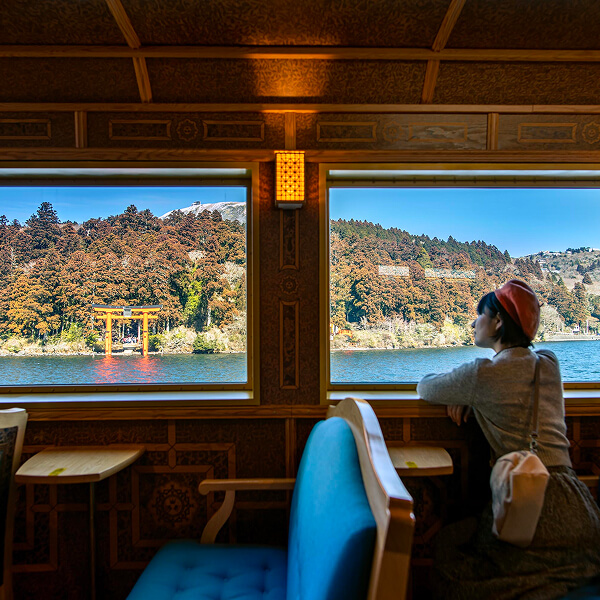
Hakone's one of those places close enough to Tokyo for a day trip but layered enough that it rewards staying longer, and the ropeway sits right at the center of that layering. String it together with an 温泉 (onsen, hot spring) soak, a night in a 旅館 (ryokan, traditional Japanese inn) if you can swing it, a pirate ship cruise across Lake Ashi, and a wander through the open-air sculpture park at the Hakone Open-Air Museum, and you've got a full, unhurried day (or two) that never feels rushed. The ropeway is really the connective tissue holding all of it together — you'll probably ride it more than once without even planning to.
A Few Japanese Words Worth Picking Up
Part of what I love about a trip like this is how much language you pick up just by paying attention to the signs and the snacks. A few worth tucking away: onsen means hot spring, 山 (yama, mountain) means mountain, 駅 (eki, station) means station, and 船 (fune, boat) means boat, handy for when you're boarding that pirate ship on Lake Ashi. Kuro-tamago, those black eggs from Owakudani, literally breaks down to kuro (black) and tamago (egg) — about as straightforward as Japanese vocabulary gets. You'll eventually find your own rhythm for picking these things up, one ride, one snack stand, one steaming valley at a time.