Overview
The Hakone Loop is a classic circle-shaped sightseeing course in the Hakone region near Tokyo, built from existing transport lines rather than one formal route. In other words, it is a practical travel pattern, not a single branded attraction, and that is part of its charm. You start at a station such as Odawara or Hakone-Yumoto, move through the hills by train and ropeway, cross Lake Ashi by cruise, and then make your way back by bus or another return leg. It is the kind of day trip that rewards patience, timing, and a little bit of flexibility… all things Japan travel tends to ask for anyway.
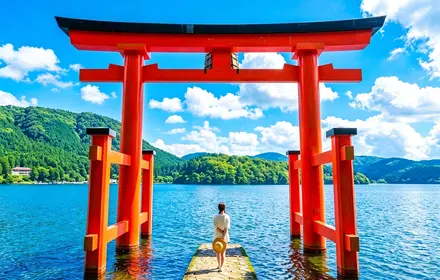
For a first visit, the route feels like a small adventure with moving parts, and those parts matter. You are not just ticking off sights; you are stitching together the Hakone Tozan Railway, cable car, ropeway, lake boat, and local buses into one continuous experience. If you want a deeper look at route timing and the practical shape of the circuit, this Hakone Loop guide is a useful companion. And if you are curious why some travelers deliberately go the other way around, there is also the idea of doing it against the stream to dodge the worst queues.
How the route usually flows
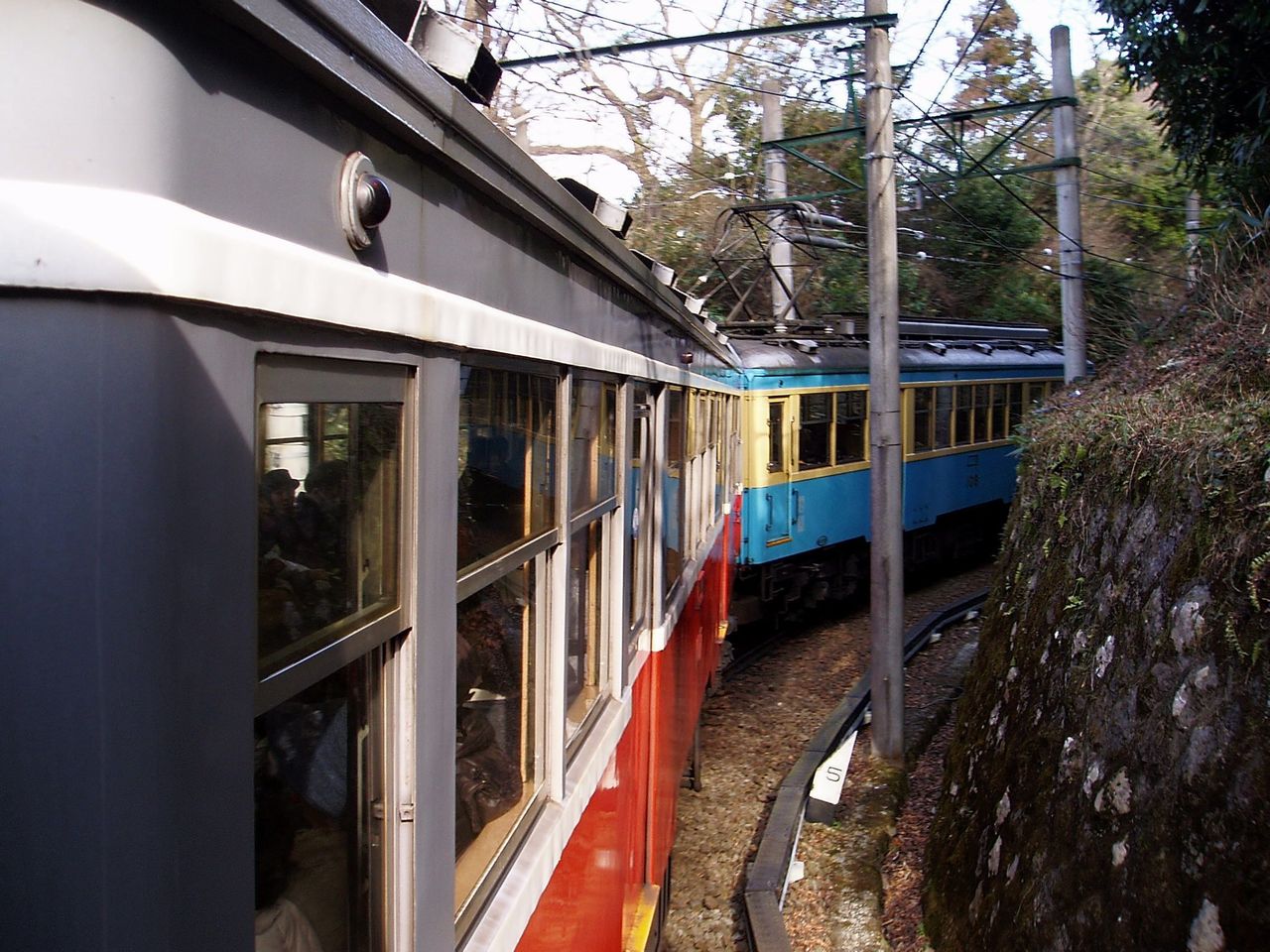
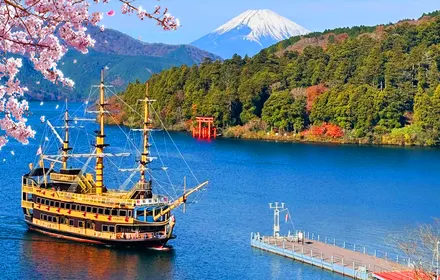
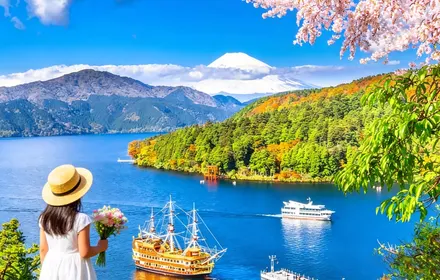
The most common version starts at Hakone-Yumoto and heads to Gora on the Hakone Tozan Railway, a scenic mountain line that takes about 40 minutes. From Gora, travelers switch to the cable car and reach Sounzan in roughly 10 minutes. From there, the ropeway carries you toward Owakudani and then onward to Togendai, with the full Sounzan-to-Togendai stretch usually taking about 30 minutes overall, including the stop at Owakudani. After that comes the lake cruise across Ashi Lake, typically around 30 minutes per segment, and then a bus or similar return leg back toward Hakone-machi, Moto-Hakone, or Hakone-Yumoto.
That sequence is popular for a reason. It keeps the day varied, and it gives the route its famous rhythm: train, cable car, ropeway, boat, bus. In Japan, this kind of smooth interconnection often depends on good planning, and the word 予約 (yoyaku, reservation; advance booking), meaning a reservation or advance arrangement, is worth keeping in mind for transport or timing-sensitive parts of a trip. The same goes for おもてなし (omotenashi, Japanese-style hospitality; attentive service), the thoughtful hospitality that shows up in station staff, ferry crews, and the little details that make a busy route feel manageable. And yes, even a simple 乗車券 (joshaken, ticket used to board a train or bus), meaning a ticket gate area, can become part of the experience when a lot of people are moving through the same place at once.
How much time you really need
Many visitors do the Hakone Loop as a full day trip, and that is the safest expectation. A realistic pace is about 7 to 8 hours if you want to see the route without rushing, though a bare minimum of around 5 to 6 hours is possible when everything lines up neatly. That minimum is the sort of number that looks tempting on paper and then disappears the moment a queue forms or you pause for a view.
The route can also be affected by timing within the day. The ropeway and cruise often see their longest waits between about 10:00 and 14:00, especially on weekends, holidays, Golden Week, and during autumn color season. Reported ropeway queues can reach 30 to 90 minutes on busy days, which is why many travelers build in cushion time. If you are coming from Tokyo, the Odakyu Romancecar from Shinjuku to Odawara can take about 60 minutes on the fastest Super Hakone service, with slower services taking longer. The commonly cited 85-minute figure often refers to Shinjuku to Hakone-Yumoto rather than Shinjuku to Odawara, so it helps to check which station is actually being discussed.
Why the Hakone Free Pass matters
For most visitors, the Hakone Free Pass is the easiest way to keep the day simple. The pass covers the main transport used on the Loop, including the Hakone Tozan Railway, Hakone Tozan Bus, Hakone Ropeway, and the sightseeing cruise. That makes it more than just a savings tool; it is a convenience tool, especially on a route with multiple transfers and separate ticket points. Travelers are often advised to buy it at the Odakyu counter in Shinjuku to save time and avoid ticket lines before the day even begins.
And that is a very Hakone kind of lesson: the less time you spend fumbling at counters, the more time you have for the parts you actually came for. The little wins matter. Japan travel often works this way, quietly. One smart pass, one sensible transfer plan, one extra buffer for a crowded platform… and suddenly the whole day feels lighter.
What makes the route special
What makes the Hakone Loop stand out is not one single landmark, but the way the scenery changes as you move. You start in a transport town, climb into the mountains, glide over volcanic terrain, and then float across the lake. Owakudani adds a strong sense of place, since it is one of the route’s most distinctive stops and can even be closed at times because of volcanic activity. When that happens, ropeway operations may be affected, so it is wise to have backup ideas ready. Sengokuhara or Gora Park are good alternatives if the ropeway is restricted.
And then there is Mount Fuji. Views are possible from the loop, including from Owakudani, though they are never guaranteed. That uncertainty is actually part of the appeal. A clear Fuji sighting can feel like a gift rather than a promise, and the day still works beautifully even when the mountain hides behind cloud. For many travelers, that combination of moving landscapes, variable weather, and efficient transport is exactly what gives Hakone its staying power.
Going the other way, and other practical route choices
Some travelers prefer to do the circuit counterclockwise, or against the stream, by taking the boat first and saving the ropeway for later in the day. The logic is simple: if queues build up during peak hours, changing the order can sometimes smooth out the day. It is a small but clever adjustment, the kind of thing experienced Japan travelers love to share because it saves real time without changing the essence of the trip. If you like seeing how that approach fits into the day, the family-style half loop described in this half-loop trip report is a good reference point.



The important thing is not to get too rigid. The Hakone Loop is best treated as a flexible framework. If the ropeway is busy, shift your rhythm. If the weather turns, adjust your expectations. If the lake cruise is crowded, let a slower lunch or a short walk absorb the delay. That adaptability is part of the experience, and honestly, it is what keeps the day from feeling like a checklist.
Related routes and what to pair it with
If you are building a longer Hakone stay, the loop pairs nicely with a 旅館 (ryokan, traditional Japanese inn) night, an 温泉 (onsen, hot spring; hot spring bath) stop, or a slower wander through the area before or after the main circuit. The classic route is often described as a full day, but the region also works as a half-day or overnight destination if you do not want to rush the connections. A lot depends on whether your priority is transport novelty, scenery, or simply getting a satisfying taste of Hakone without overstuffing the schedule.
For travelers who enjoy planning the day in layers, it can help to think of the loop as transport-first sightseeing with scenic payoffs at each transfer. That is a very Japanese kind of travel pleasure: the journey itself is the attraction, but every leg also opens onto a different view, different pace, and different atmosphere.
Where to experience it in Japan
You experience the Hakone Loop in the Hakone region of Kanagawa, southwest of Tokyo, with the main starting points usually at Odawara or Hakone-Yumoto. If you are staying in Tokyo, the route is reachable as a day trip, especially if you leave early and use the Hakone Free Pass to keep transfers easy. If you are already in Hakone, starting from a ryokan near Hakone-Yumoto can make the morning feel much calmer, though that is more of a travel rhythm choice than a requirement.
For visitors who like to understand places through movement rather than static sightseeing, Hakone is a lovely one. It is less about one grand monument and more about the sequence of transport, landscape, and timing. And that sequence changes a little every time, which is why people keep coming back to it.
Frequently Asked Questions
How long does the Hakone Loop take?
Most travelers should plan about 7 to 8 hours for a full day trip. If everything goes smoothly, the bare minimum is around 5 to 6 hours.
What transport is included in the route?
The classic route usually includes the Hakone Tozan Railway, the cable car, the Hakone Ropeway, the Ashi Lake sightseeing cruise, and a bus return or similar final leg.
Is the Hakone Loop an official route?
No. It is a practical circular sightseeing course made from existing transport lines rather than one official single route.
Should I go clockwise or counterclockwise?
Many people use the standard order, but some travelers go counterclockwise against the stream to reduce waiting times at the ropeway and cruise.
Can I see Mount Fuji on the Hakone Loop?
Yes, Mount Fuji views are possible from parts of the route, including Owakudani, but they are not guaranteed.
Sources
- Odakyu Electric Railway - Hakone Free Pass and access information: https://www.odakyu.jp/english/passes/hakone/
- Hakone Tozan Railway - Route and timetable information: https://www.hakone-tozan.co.jp/
- Hakone Ropeway official site - Operations and station details: https://www.hakone-ropeway.co.jp/
- Hakone Sightseeing Cruise official site - Cruise routes and timings: https://www.hakone-kankosen.co.jp/
- Hakone Tourism Association - Area access and visitor information: https://www.hakone.or.jp/
- Japan Guide - Hakone travel overview and ropeway timing: https://www.japan-guide.com/e/e5223.html
- Rome2Rio - Hakone Ropeway to Odawara travel times: https://www.rome2rio.com/s/Hakone-Ropeway/Odawara
- Shinjuku to Hakone travel guide - Romancecar timing reference: https://samuraicarjapanjdm.jp/shinjuku-to-hakone-travel-guide/