
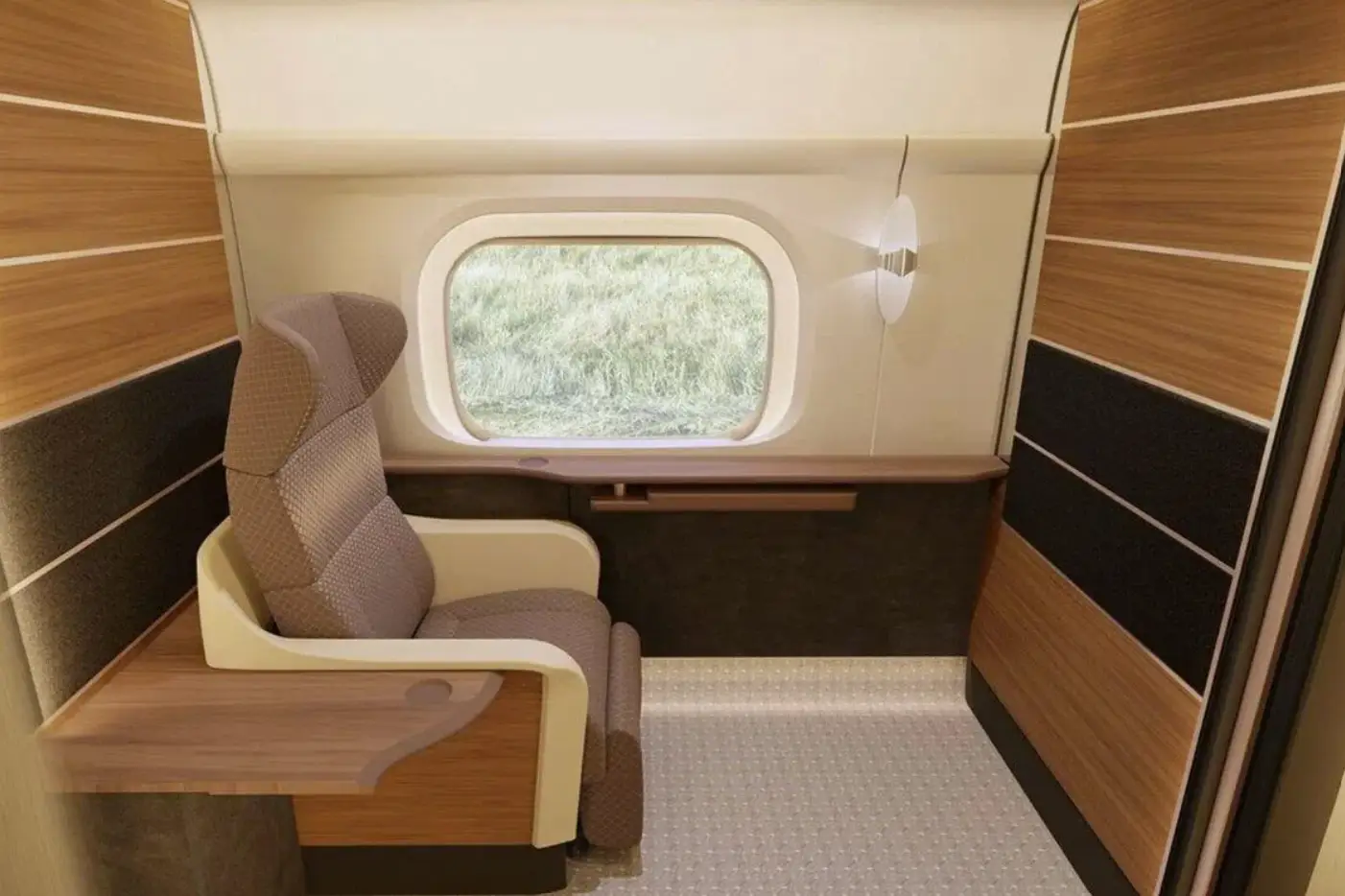
For Japan fans, this is more than a headline about fancy seats. It’s a glimpse at how the country keeps upgrading rail travel while still making room for the kind of detail that Japanese language learners and train nerds both love to notice.



新幹線 (Shinkansen, bullet train) luxury suites are no longer just a dream for train fans who like their journeys with a little extra polish. JR Central and JR West have confirmed plans for private suite-style seating on the Tokaido and Sanyo Shinkansen network, with service expected to begin in October 2026. The route matters just as much as the product itself, because this is the classic Tokyo–Osaka–Fukuoka corridor, one of the most important rail links in Japan.
Basically, this is the kind of upgrade that makes a long ride feel like a moving hotel room, not just transport. And if you’ve ever sat on a packed Nozomi and thought, “There’s got to be a better way,” well, here it is. And there’s more.
JR Central and JR West are going premium
JR Central operates the Tokaido Shinkansen, the stretch between Tokyo and Shin-Osaka, while JR West handles the Sanyo Shinkansen west of Osaka towards Hakata in Fukuoka. So when these two companies move together, it means a product that can actually cover the full eastern-to-western spine of Japan’s high-speed rail map. That’s a big operational step, not just a marketing move.
As for the route itself, the choice makes perfect sense. Tokyo to Osaka is the business-heavy core, and Osaka to Fukuoka adds another layer of long-distance travel demand, especially for domestic trips, family visits, and tourism. A private suite on this line isn’t aimed at the commuter rushing to a meeting, it’s for travellers who want space, quiet, and a more controlled environment.
What I especially like is that Japan keeps finding ways to make rail travel feel considered. Not flashy, just thoughtful. The kind of detail that says you’re not buying a seat, you’re buying time well spent. Pretty brilliant, really. But that’s not all.
What a private suite means in practice
Unlike what we’re used to on standard Shinkansen services, a suite-style setup usually means far more privacy, better storage, and a cabin-like atmosphere. Exact layouts can still change, but the whole point is to give passengers a personal space that feels closer to first-class air travel, only smoother and far less stressful. If you’ve ever watched the landscape blur past while holding a 弁当 (bento, lunch box) and green tea, you already know the basic magic of train travel in Japan. This just takes it further.
For Japanese learners, this is a good moment to notice useful travel words. Shinkansen means bullet train, 車両 (sharyo, carriage; vehicle) is a vehicle or carriage, and 特別 (tokubetsu, special) often shows up when something is special or designated. You’ll also hear people use 自由 (jiyu, freedom) for freedom, or 楽 (raku, comfort; ease) for comfort, when they talk about better travel experiences. Little vocabulary like this helps the news feel more alive. See what I mean?



Tokyo–Osaka–Fukuoka in October 2026
Trust me on this one: the launch date is the real headline. October 2026 gives the railway companies time to prepare the product, adjust operations, and figure out how to position these suites within existing premium services. That matters because the Tokaido and Sanyo Shinkansen already move huge numbers of passengers every year, and adding a luxury layer means balancing exclusivity with reliability.
The Tokyo–Osaka section is the most famous part of the route, but the full Tokyo–Fukuoka journey is where the idea gets especially interesting. That trip can already be done in a single day by rail, which is part of the appeal. A private suite turns that long ride into something more relaxed, with enough space to work, eat, read, or simply enjoy the ride without feeling boxed in.
On a related note, premium rail has always had a different kind of charm in Japan. The country has sleeper trains, deluxe tours, and carefully designed limited express services, but the Shinkansen has mostly been about speed and efficiency. This new suite concept says JR Central and JR West are willing to lean harder into luxury while still keeping the core rail identity intact. That reminds me, Japan doesn’t usually shout about luxury, it just builds it quietly.
Why this matters for Japan fans and learners
Know that feeling when a small detail changes how you see an entire country? This is one of those moments. A private suite on the Shinkansen isn’t just about wealth, it’s about how Japan keeps refining everyday systems until they feel almost ceremonial. For fans of Japanese culture, that attention to process is part of the appeal. For language learners, it’s a reminder that real-world vocabulary lives inside real-world changes.
My tip: when you read Japanese transport news, keep an eye on route names and company names. They come up constantly, and they’re practical study material. Tokaido, Sanyo, Hakata, Shin-Osaka, these are the names that anchor everyday geography in Japan. If you can place them on a map, the language starts to stick in a much more natural way.
Seriously though, I expect these suites to attract travellers who already love reserved seating, quiet cars, and the feeling of arriving fresh rather than exhausted. That’s a very Japanese kind of luxury, less about showing off and more about removing friction. This is a proper hidden gem! See what I mean?
Frequently Asked Questions
When will the Shinkansen luxury suites launch?
They are expected to begin service in October 2026.
Which companies are behind the new suites?
JR Central and JR West are the companies involved in the project.
What route will the suites serve?
The planned service is for the Tokyo, Osaka, and Fukuoka corridor on the Tokaido and Sanyo Shinkansen network.


