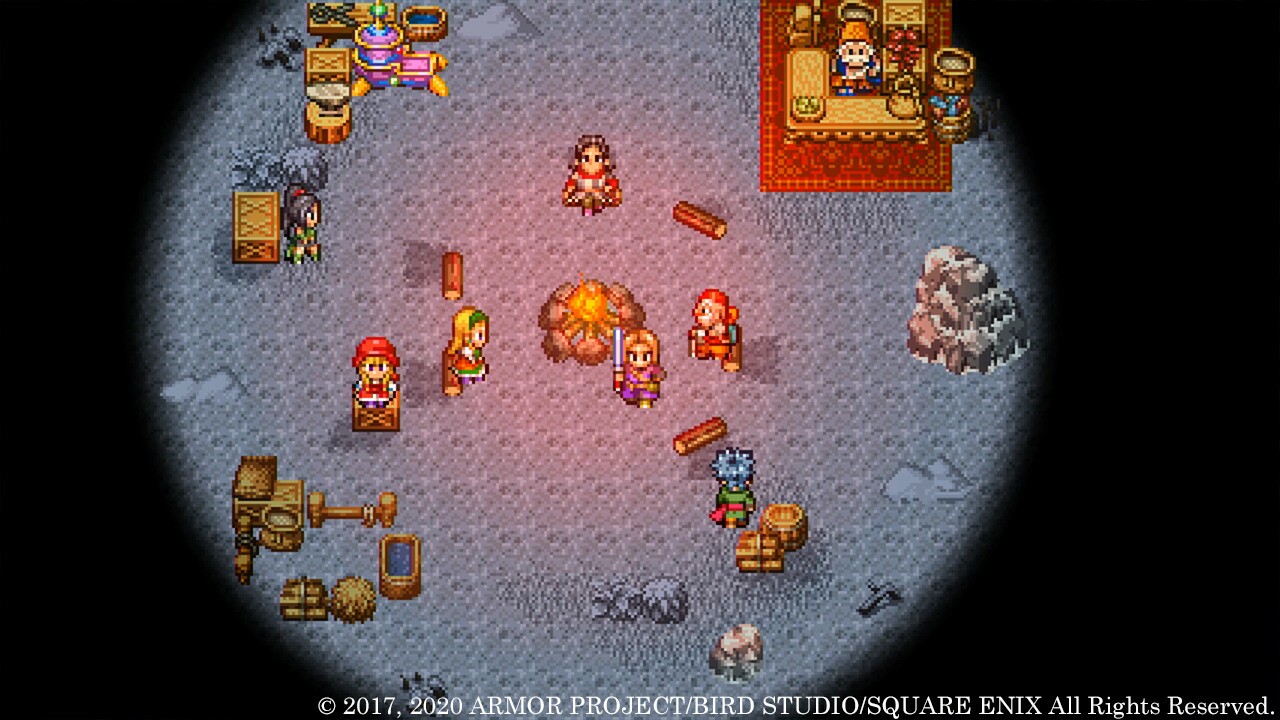
Here’s the thing: Dragon Quest isn’t only a long-running franchise, it’s a blueprint. From Yuji Horii’s clean design to Koichi Sugiyama’s music and Akira Toriyama’s character art, the series built a style that still feels unmistakably Japanese.
![Dragon Ball Z: Kakarot [Master Edition]](https://s.pacn.ws/1/p/1eh/dragon-ball-z-kakarot-master-edition-908785.1.jpg?v=t8ja8t&width=400)
It’s early morning in Kyoto, and you can still spot people on the train with game merch, Switch cases, or a manga volume tucked under one arm. Dragon Quest fits right into that everyday Japan feeling, because it’s not just a game series, it’s part of the country’s cultural furniture. Four decades after the first release in 1986, its influence is still easy to see, from console RPGs to mobile games and even the way younger fans learn about classic Japanese fantasy tropes.
Dragon Quest at 40: the game that helped build JRPG language
Dragon Quest launched on the Famicom in 1986, developed by Chunsoft and published by Enix. It arrived in a market that was still figuring out what a Japanese role-playing game could be, and it gave a very clear answer: turn-based combat, world maps, towns, inns, and a steady sense of progression. Sounds simple, but it was brilliantly effective. Players didn’t need to master arcade reflexes, they needed to explore, read, talk, and think.
What many overlook is that Dragon Quest didn’t just borrow from western fantasy, it translated those ideas into a Japanese game rhythm. The pacing was gentle, the interface was readable, and the world felt friendly even when monsters were trying to flatten you. That structure became the DNA of countless JRPGs that followed, including Final Fantasy, Pokemon, Suikoden, and Persona in different ways.
Why the series still feels so recognizable
No exaggeration: when you see slimes, inns, item shops, and level-ups presented with calm confidence, you’re seeing Dragon Quest’s shadow. The series made certain conventions feel natural, so much so that they now look like tradition. From my experience, that’s one reason the franchise still matters to Japan fans, because it shows how a single game can become part of a shared visual and narrative language.
And it gets better: the series also helped normalise the idea that a Japanese game could be cosy, heroic, and approachable at the same time. That mix is still a big part of why so many learners and fans connect with Japanese games, manga, and anime today. If you know words like 勇者 (yuusha, hero), 魔王 (maou, demon king), or tozai, you’re already brushing up against the genre language Dragon Quest helped popularise.
Yuji Horii and the creative formula behind Dragon Quest
Yuji Horii is the central figure here, and not just because his name is attached to the franchise. He’s one of the main reasons Dragon Quest feels so elegant. Horii came from game journalism and adventure design before becoming a game creator, and that background shows in his focus on clear clues, readable systems, and a story that unfolds without overwhelming the player.
Take Dragon Quest, for instance. Horii understood that players don’t always want complexity for its own sake. He kept the design focused, then let the music, art, and pacing do the heavy lifting. That kind of restraint shaped how many later JRPG creators thought about balance, difficulty, and player comfort. My tip: if you’re studying game-related Japanese, pay attention to how often Dragon Quest discussions use words like 進化 (shinka, evolution), 伝説 (densetsu, legend), and 挑戦 (chousen, challenge), because those themes keep coming back.
Akira Toriyama, Koichi Sugiyama, and the full package
Plot twist: Dragon Quest’s impact isn’t only Horii’s doing. Akira Toriyama’s character designs gave the series instant visual identity, with rounded monsters and expressive heroes that looked playful instead of intimidating. Koichi Sugiyama’s music did the same for sound, especially the overworld themes that made every adventure feel bigger than the screen.
That trio, Horii, Toriyama, and Sugiyama, created a package that felt distinctly Japanese but also easy to export. Japan fans often talk about this kind of creative teamwork as a form of 文化 (bunka, culture), where different arts work together rather than competing. It’s a reminder that game history isn’t only about mechanics, it’s about collaboration, taste, and timing. And there’s more.
Dragon Quest’s influence on JRPGs and Japanese pop culture
Unlike what we’re used to with many blockbuster franchises, Dragon Quest didn’t need to reinvent itself every few years to stay relevant. It refined its core, then adjusted around the edges. That consistency helped create trust, and trust is a huge part of why Japanese fans return to long-running series for decades.
What many overlook is how Dragon Quest shaped not just game design, but expectations. Towns should feel lived-in. Monsters should be cute and dangerous. Progress should be visible. Even today, when a new JRPG appears with a world map, a party system, or a classic fantasy job structure, there’s often a little Dragon Quest in the mix. No joke: the franchise helped make those choices feel standard.
On a related note, Dragon Quest has always been a media franchise, not only a game series. There have been anime adaptations, manga, spin-offs, handheld entries, and huge marketing campaigns across Japan. The 1988 Famicom release Dragon Quest III became so popular that schools and workplaces in Japan reportedly felt the impact on launch days, which says a lot about the series’ social reach. That kind of mass attention is rare, and it helped turn gaming into a shared national conversation.
I still remember how often Japanese learners first meet Dragon Quest vocabulary through fan discussions, retrospectives, or game guides. It’s a useful gateway into basic fantasy language, and it gives context to terms like モンスター (monsuta, monster), 宝玉 (hougyoku, jewel), and reberu-appu when you see them in other media. What I especially like: Dragon Quest makes language feel lived-in, not textbook-flat. My verdict is that’s a big reason it’s still worth caring about at 40.
Frequently Asked Questions
Why is Dragon Quest so important in game history?
It helped define the structure and tone of the Japanese role-playing game, and many later series copied or adapted its formula.
Who created Dragon Quest?
Yuji Horii is the main creator, with Akira Toriyama providing character designs and Koichi Sugiyama composing the music.
Why do Japan fans still talk about it after 40 years?
Because it shaped both game design and pop culture, and it still feels like a core part of Japan’s entertainment history.