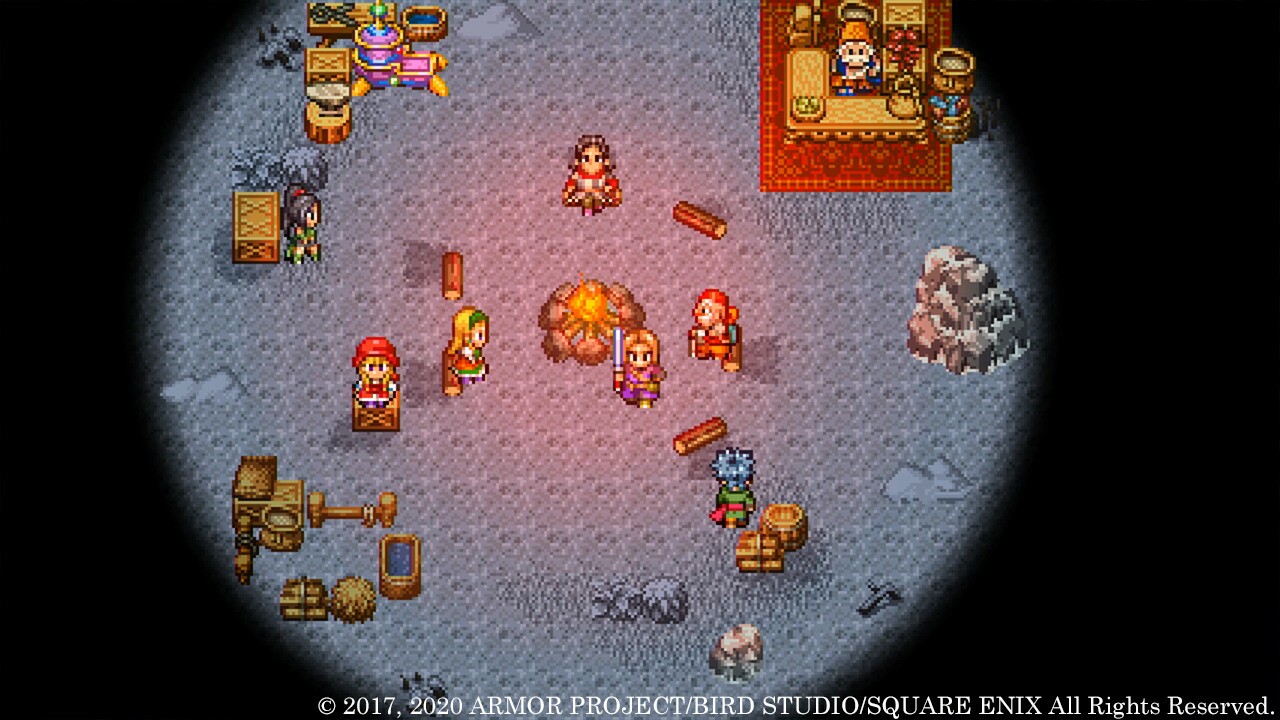
And yes, the long development restart has turned the game into a talking point all by itself. Is Square Enix showing real quality control, or is this a sign of messy management? The Japanese community can’t quite agree.
![Dragon Ball Z: Kakarot [Master Edition]](https://s.pacn.ws/1/p/1eh/dragon-ball-z-kakarot-master-edition-908785.1.jpg?v=t8ja8t&width=400)

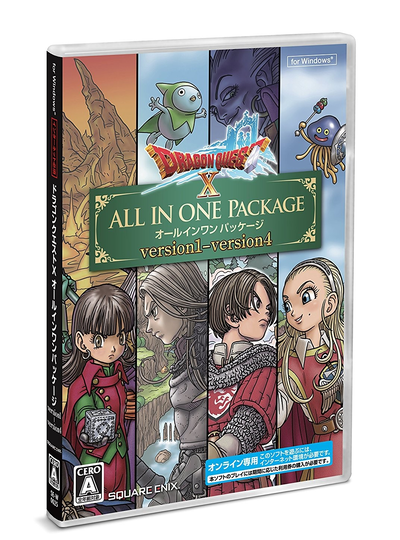
Dragon Quest vs Final Fantasy: Japan's other giant
Know that feeling when a series is enormous in one country, but almost invisible in another? That’s Dragon Quest in a nutshell, especially in Germany and much of the West. Final Fantasy became the more famous export, but Dragon Quest has been the everyday giant in Japan for decades.
The series began in 1986 with the first Dragon Quest, developed by Chunsoft and published by Enix. It arrived on the Famicom, and its structure helped define the JRPG format as we know it today, with towns, inns, turn-based battles, and a clear adventure loop. No wonder, because the game was designed to be approachable, almost like an interactive 少年 (shonen, boy; adolescent) adventure novel.
Here’s the catch: Dragon Quest was never just a game. In Japan, it became a cultural event. Reports from the 1980s and 1990s described students skipping school on release days, and some retailers even had to manage crowds carefully. Sounds odd, but it’s true. The series got so popular that new entries could feel like national holidays for fans.
Quick detour: that cultural status still matters. If you’re learning Japanese, Dragon Quest is a great place to spot simple, game-friendly vocabulary, the kind that often appears in menus and dialogue, such as 本 (hon, book), 階段 (kaidan, stairs; staircase), 魔法 (maho, magic), and 城 (shiro, castle). The writing style is usually clear and playful, which makes it less intimidating than a dense novel. My tip: if you want game language that feels understandable but still very Japanese, Dragon Quest is a smart pick.
Dragon Quest XII Beyond Dreams and the five-year restart
Plot twist: Dragon Quest XII: Beyond Dreams hasn’t been a normal sequel development at all. Square Enix first announced the game in May 2021 during the Dragon Quest 35th anniversary stream, and by 2024 the project had reportedly gone through a major restart after roughly five years of work were scrapped for a new concept. That’s a huge reset, even by big-game standards.
The reaction in Japan has been split. Some fans see it as proof that Yuji Horii and the team refuse to ship something half-baked. Others think it points to poor planning, shifting direction, or internal confusion at Square Enix. Let’s be honest: both views make sense. If you cancel years of work, you either have very high standards, or you had a very expensive problem on your hands.
For example, Square Enix has been through a rough patch with several high-profile projects and a stronger push to control quality after mixed reception on some recent releases. In that context, a restart can look like damage control. But it can also mean the team decided the original version did not fit what Dragon Quest XII needed to be. Wait, there’s more.
The title itself, Beyond Dreams, suggests something more ambitious and possibly darker than the series' usual cosy fantasy tone. Yuji Horii has hinted that the game will be different, and that alone has made longtime fans watch every statement closely. When a series has run since 1986, even a small change in tone can feel like a big cultural shift.
A female protagonist with personality changes the mood
Did you know that the most recent gameplay footage gave fans their first real look at a female protagonist with a defined personality? That detail matters more than it might sound. Dragon Quest has often leaned on silent or lightly sketched heroes, so seeing a heroine who feels more expressive changes the emotional centre of the game.
Picture this: instead of a blank avatar carrying the story, you get a character who seems to react, think, and push back. That can make dialogue scenes stronger, and it may help Dragon Quest XII appeal to players who want more narrative presence from the lead role. In a franchise famous for tradition, that’s a pretty bold move.
For Japanese learners, this is also useful from a language angle. Character-driven scenes tend to use more natural speech patterns, including softer or firmer sentence endings, depending on the mood. If you compare Dragon Quest footage with older entries, you can notice how the emotional texture has shifted. It’s a clear change.
Oh, and almost forgot: the visual style still matters too. Dragon Quest keeps that Toriyama-style charm, which gives the series an identity Final Fantasy never quite copied. The monster designs, the bright colours, the friendly silhouettes, they all make the world feel readable at a glance. That clarity is part of why the series has stayed so accessible to all ages in Japan. See what I mean?
Why Dragon Quest still matters for Japan fans and learners
Ever wondered why Dragon Quest keeps showing up in conversations about Japanese pop culture? Because it sits at the crossroads of games, school memories, family nostalgia, and national media history. It’s not just a product line. It’s a shared reference point.
Dragon Quest XII may still be far away, but the debate around it already says a lot about modern Japanese game culture. Fans want innovation, yet they also want reassurance that the soul of the series is intact. That tension is pure Dragon Quest, really, because the franchise has always balanced comfort and change.
If you’re studying Japanese, this is one of those series worth watching for the context alone. You’ll pick up vocabulary, yes, but you’ll also get a better feel for how Japanese fans talk about anticipation, trust, and disappointment. That cultural layer is just as valuable as the kanji on screen.
My verdict: Dragon Quest XII: Beyond Dreams is already important, even before release. It’s a sequel, a restart story, a design debate, and a reminder that the JRPG genre started with a game many Western players still underestimate. Whether Square Enix nails it or not, the conversation around it is already classic Dragon Quest. more Japan news on jpnerd.com
Frequently Asked Questions
Why is Dragon Quest so big in Japan?
It has been a major series since 1986, and its releases became national events with huge cultural impact.
Why do people compare Dragon Quest and Final Fantasy?
They are Japan's two biggest classic RPG brands, but Final Fantasy became more famous overseas while Dragon Quest stayed especially dominant in Japan.
What makes Dragon Quest XII unusual so far?
The reported development restart, the darker tone, and the stronger focus on a female lead have all made it stand out.