
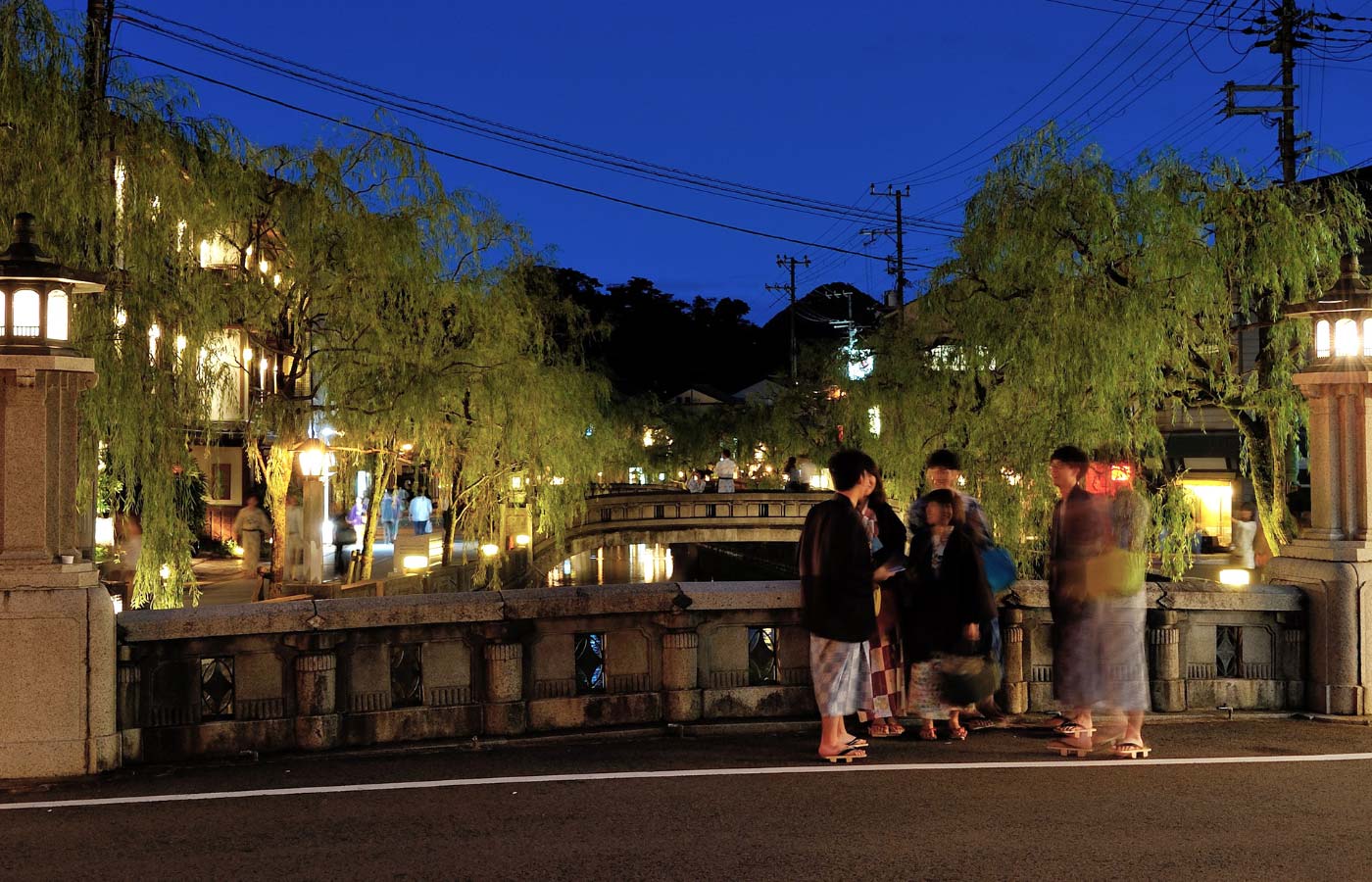
Kinosaki Onsen already has a strong reputation for bath-hopping, but a stay like this changes the pace. You can enjoy the town’s atmosphere, then head back to your own private bath and keep the evening quiet.
Nishimuraya Hotel Shogetsutei and the appeal of Kinosaki Onsen
Nishimuraya Hotel Shogetsutei is one of the best-known luxury ryokan in Kinosaki Onsen, a hot spring town in Toyooka, Hyogo Prefecture. For onsen fans, that name alone already carries weight. The hotel blends polished service with traditional ryokan atmosphere, and that mix is exactly why it stands out.
Kinosaki Onsen itself is a strong ryokan spot. The town is famous for its seven public bath houses, called 外湯 (sotoyu, public bathhouses), and many visitors spend the day walking around in 浴衣 (yukata, light cotton robe) and 下駄 (geta, wooden sandals) between one bath and the next. That's why staying overnight matters so much here, because the rhythm of the town makes more sense when you don't rush back to a train.
Compared to back home, a ryokan stay like this feels more ritualised, but not stiff. You check in, change into something comfortable, and let the day slow down. Wild, isn't it? A place can make you feel relaxed before you've even touched the bath water.
Why a suite with an open-air bath changes the experience
The main draw here is the suite with an open-air bath, or 露天風呂 (rotenburo). That private setup is a big deal for travellers who love onsen but don't always want to share space with strangers. You still get the hot spring mood, the night air, and the quiet sound of water, just without the crowd.
Here's the thing: privacy isn't only about comfort. For many first-time ryokan guests, it also removes a bit of pressure. You don't have to worry about onsen etiquette as much, and you can enjoy the bath at your own pace. For example, if you're tired after exploring the town, you can soak late in the evening, then go straight to dinner or sleep.
A good example: imagine stepping outside your suite, feeling the steam in the cool air, and looking out towards the garden or mountain side while you're in the bath. That little moment is what people are paying for. Not bad, right?
What the room type is really for
This kind of suite is especially good for couples, parents who want a quieter stay, and travellers celebrating something special. It also works well if you like the idea of a ryokan but don't want to spend your whole trip visiting shared bathing areas. My tip: if you care about bath time as much as meal time, prioritise a room with a private rotenburo over a standard room.



By the way, the original room detail page on the Visit Kinosaki site makes it clear that this is a premium room category, not a casual add-on. That matters when you're planning budget and expectations. Personally...
How to enjoy Kinosaki Onsen like a ryokan fan
Did you know that Kinosaki Onsen is often seen as one of the easiest places in Japan for a classic onsen-hopping stay? The town is compact, the canal-lined streets are walkable, and the whole atmosphere feels built around slow travel. No wonder, because the local identity is tied so closely to bathing culture and guesthouse hospitality.
Here's the deal: if you stay at Nishimuraya Hotel Shogetsutei, you don't have to choose between public baths and private relaxation. You can do both. Spend the afternoon walking around the town, try one or two sotoyu baths, then return to your suite and end the day in your own open-air bath. That's a very strong combination for onsen lovers.
The first time I went to Japan, I underestimated how much a good ryokan stay depends on timing. If you arrive too late, you miss the atmosphere. If you stay too briefly, you miss the slow part. Kinosaki Onsen rewards people who linger, and this hotel fits that style perfectly. Highly recommended: plan at least one full overnight stay, not just a quick visit. But that's not all.
Japanese learning connection: useful words to know
If you're learning Japanese, this kind of trip gives you practical vocabulary you can actually use. Ryokan means traditional inn, onsen means hot spring, rotenburo means open-air bath, and yukata is the light cotton robe many guests wear inside the hotel and around town. These words show up everywhere in travel guides, signs, and booking pages, so learning them helps a lot.
Compared to reading textbook dialogues, seeing these words in real context makes them stick. When you hear someone say rotenburo, you can picture the bath right away. That's one reason Japan travel is such a good language-learning shortcut. Sounds good, right?
What I especially like: Kinosaki Onsen doesn't feel overproduced. It feels lived-in, with a clear identity and a pace that still leaves room for simple pleasures, like hot water, quiet streets, and a good room after dark. For onsen fans, that combination is hard to beat. Personally...
Frequently Asked Questions
Where is Nishimuraya Hotel Shogetsutei located?
It is in Kinosaki Onsen, in Toyooka, Hyogo Prefecture, Japan.
What is the main selling point of this ryokan?
The standout feature is a suite with a private open-air bath, which is ideal for guests who want comfort and privacy.
Is Kinosaki Onsen good for first-time visitors?
Yes. The town is compact, easy to explore on foot, and perfect for guests who want a classic hot spring stay.


