What Is Machi-Chuka? Japan's Neighbourhood Chinese Food Culture
町中華 (machi-chuka, neighbourhood Chinese restaurant) – and the word itself says it all. 町 (machi) means "town" or "neighbourhood," while 中華 (chūka) refers to Chinese-inspired cuisine as understood in Japan. Put them together and you get a concept that is deeply rooted and intensely local: a small, family-run Chinese restaurant that has been serving the same streets for decades, with laminated menus, low prices, and a wok that never leaves the flame.



Machi-chuka is not fine dining, and it's not the glossy dim sum experience tourists chase in Yokohama's Chūkagai (Chinatown). This is ramen for 700 yen, fried rice on the table in under five minutes, and gyoza crispy enough to make you forget everything else. These restaurants grew out of the postwar era, when Chinese immigrants and Japanese-Chinese families opened affordable spots to feed the working class. Over the decades, the menus adapted, absorbed Japanese tastes, and became something entirely their own – a hybrid food culture that exists nowhere else in the world.
In recent years, machi-chuka has undergone a cultural revival in Japan, with food journalists, TV programmes, and YouTube channels celebrating these disappearing institutions before the last generation of owners retires for good. One particularly compelling window into this world comes from a YouTube video documenting Eiraiken in Yokohama, which captures exactly why these places matter.
Eiraiken in Yokohama: A Living Example of Machi-Chuka
Eiraiken (栄来軒) is a small, unpretentious restaurant in Yokohama – a city that has more historical depth than almost anywhere else in Japan when it comes to producing exactly this kind of place. Yokohama opened to foreign trade in 1859, and the port brought Chinese merchants, workers, and families who settled, cooked, and fed their neighbours. The city's relationship with Chinese cuisine is therefore not decorative; it is structural, woven into the urban fabric at street level.
What makes Eiraiken stand out as a machi-chuka example is precisely its ordinariness. The restaurant makes no attempt to be a landmark. It serves the classics – ramen, chāhan (fried rice), ankake dishes with thick, starchy sauces – in a format that prioritises speed, warmth, and value. The kitchen is typically a one- or two-person operation, the interior seats fifteen to twenty people at most, and the prices reflect a philosophy of feeding the neighbourhood rather than maximising profit.
The Menu as Cultural Document
A typical machi-chuka menu at a place like Eiraiken functions almost like a historical document. Dishes like 炒飯 (chāhan, fried rice) and 餃子 (gyōza, pan-fried dumplings) have been localised over generations to suit the Japanese palate – lighter seasoning, thinner gyoza skins, a ramen broth more delicate than its Chinese counterparts. That's not inauthenticity; it's evolution. The food reflects the specific people who made it and the specific community that ate it night after night for fifty or sixty years.
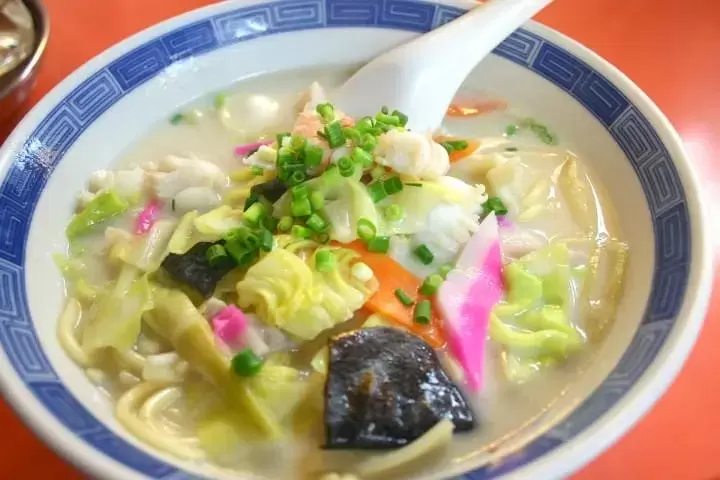
The ankake style – dishes finished with a thick, glossy, cornstarch-thickened sauce – is particularly associated with Yokohama's Chinese-Japanese cooking tradition, and it appears on machi-chuka menus in a way that feels distinctly local. Ordering ankake ramen at Eiraiken is, in a sense, eating a piece of Yokohama's port history.
Why Machi-Chuka Matters for Japanese Learners and Japan Fans
For anyone learning Japanese, machi-chuka restaurants are a goldmine of practical, everyday language. The menus use accessible kanji combinations, the staff tend to speak clearly, and the social dynamics of ordering, waiting, and paying follow patterns that come up constantly in daily Japanese life. Reading a laminated machi-chuka menu is genuinely useful language practice – you'll encounter counters, polite requests, and food vocabulary that textbooks rarely prioritise.



Beyond language, machi-chuka restaurants offer a glimpse into a side of Japan that the tourism infrastructure rarely highlights. These are not curated experiences. Local office workers eat lunch here, elderly residents come in alone on Tuesday evenings, and neighbourhood families have been visiting these places since before the current customers were born. Visiting Eiraiken in Yokohama means stepping into that continuity.
There's also a bittersweet dimension worth acknowledging: many machi-chuka restaurants are run by owners in their 60s, 70s, or 80s, and when they close, they typically close for good. No franchise will replace them. That makes the current moment a particularly important time to seek them out – as a traveller, as a food lover, and as someone who wants to understand Japan beyond the surface.
Finding Your Own Machi-Chuka in Yokohama
Yokohama is an ideal city for exploring machi-chuka, given how deeply its history with Chinese residents and cuisine runs. While Chūkagai (中華街, Yokohama's Chinatown) draws millions of visitors each year with its elaborate restaurant fronts and tourist-facing menus, the real machi-chuka experience exists in the quieter residential neighbourhoods surrounding it – in Naka-ku, Minami-ku, and the older working-class districts near the waterfront.
The practical advice for finding good machi-chuka is straightforward: look for handwritten or yellowed laminated menus in the window, check whether the restaurant has been in the same spot for decades, and pay attention to whether the clientele is exclusively local. If tourists are queuing outside, you're probably not in a machi-chuka. If a delivery driver has leaned their bike against the wall and is eating alone at the counter, you almost certainly are.
For more on Yokohama's layered food culture and the particular charm of Eiraiken, the original YouTube documentary is well worth your time – it captures the atmosphere, the cooking, and the human story behind this kind of restaurant with genuine warmth.
Discover more Japan news on jpnerd.com.
Frequently Asked Questions
What exactly is machi-chuka and how is it different from regular Chinese food in Japan?
Machi-chuka (町中華) refers specifically to small, family-run neighbourhood Chinese restaurants in Japan that have adapted their menus over decades to suit local tastes. Unlike upscale Chinese restaurants or the tourist-facing spots in Yokohama's Chinatown, machi-chuka joints are cheap, casual, and deeply embedded in their local communities – think fried rice for under 800 yen and gyoza that have been made the same way for 40 years.
Is Eiraiken in Yokohama a well-known tourist spot?
No – and that's kind of the point. Eiraiken is a neighbourhood restaurant, not a tourist landmark. It's known locally and appreciated among machi-chuka enthusiasts, but it doesn't appear on the standard tourist trail. Visiting takes a degree of deliberate effort, which makes the experience all the more rewarding for those who seek it out.
Can visiting a machi-chuka restaurant help with learning Japanese?
Absolutely. Machi-chuka menus use practical, everyday kanji and vocabulary that language learners rarely encounter in textbooks. The social interaction involved in ordering, asking questions, and paying at a casual local restaurant is also excellent, low-stakes practice for real conversational Japanese in a natural setting.