
Why Arashiyama Is a Great Place for a Kyoto Food Experience
Arashiyama already has that soft, cinematic Kyoto feel: bamboo groves, river views, old streets, and plenty of tourists who look slightly stunned by how pretty everything is. But this is also exactly why a cooking class here works so well. You’re not just eating in Kyoto, you’re learning how Kyoto food culture can be made hands-on, modern, and welcoming.



Let me show you why this matters. For many Japan fans, traditional Japanese cooking can feel a bit intimidating, especially if they worry about fish stock, hidden animal ingredients, or ingredients they can’t easily find at home. A vegan class removes that barrier, and it does so without flattening the experience. You still get the techniques, the rhythm, and the careful presentation. Convinced yet?
What You Actually Cook: Vegan Ramen and Gyoza
Picture this: you’re standing in a kitchen in Arashiyama, with bowls, flour, vegetables, noodles, and a local host showing you the steps one by one. The menu usually centres on vegan ラーメン (ramen, noodle soup) and 餃子 (gyoza, dumplings), two dishes that are beloved across Japan, but often tricky for plant-based travellers to enjoy outside a specialist restaurant.
Vegan ramen, done properly
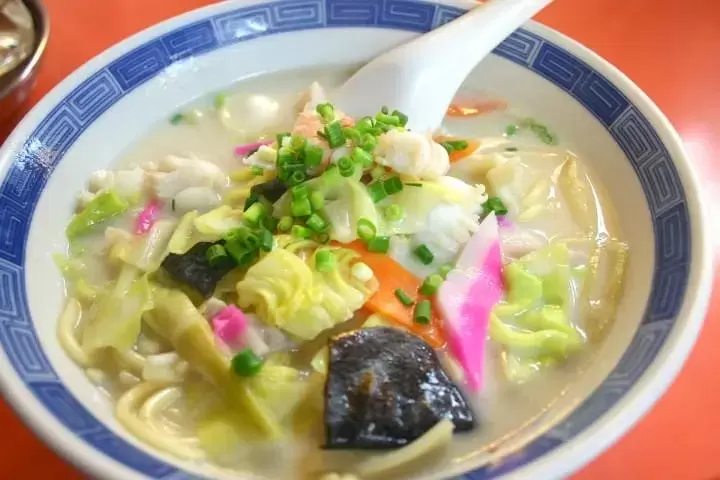
Ramen is one of the best examples of why vegan cooking classes in Japan are such a smart idea. Traditional ramen often relies on pork, chicken, or fish-based broth, so a vegan version needs real structure and care. In a class setting, you get to see how umami is built from ingredients like 昆布 (kombu, kelp), 椎茸 (shiitake, shiitake mushroom), sesame, and vegetables, not from shortcuts. Sounds good, right?
What I especially like is that this turns ramen into a lesson in Japanese flavour logic. You learn that ramen isn’t just “noodles in soup”, it’s a balance of broth, tare, noodles, toppings, and aroma oil. If you’re learning Japanese, this is a nice moment to connect food vocabulary with real life: words like 出汁 (dashi, Japanese soup stock), men, and yasai come up naturally, and they stick better when you’re actually cooking them.
Gyoza without the usual heavy feeling
By the way, gyoza are another great example of Japan’s adaptation of a foreign dish. They came from Chinese jiaozi, then became a familiar Japanese comfort food, usually pan-fried for that crispy bottom and soft top. In a vegan class, the filling often uses cabbage, chives, mushrooms, tofu, or other vegetables, and the result is lighter than many people expect. Not bad, right?
There’s also something deeply satisfying about folding gyoza by hand. It’s repetitive in the best way, and the finished plate looks far more impressive than the effort suggests. If you’ve ever wanted to make a dish that feels both casual and technically rewarding, this is a strong candidate. My tip: don’t rush the folding. The shape doesn’t need to be perfect, and the homemade look is part of the charm. My verdict:
Matcha Preparation with a Local Host
Quick detour: matcha is more than just a trendy green drink. In Japan, it carries a long cultural history, especially in tea ceremony contexts, and making it yourself adds a calmer ending to a cooking session. In this Arashiyama class, the matcha portion is usually guided by a local host, which makes the experience feel personal rather than scripted.
The reason is simple: tea tastes different when someone local explains it. The host can show the right whisking motion, talk about why the powder is sifted, and explain how to build a smooth foam without overworking the tea. If you’ve only ever had sweetened matcha lattes, this is a useful reset. You start to understand the original flavour: grassy, slightly bitter, and far more refined than people expect. Sounds weird, but it’s true.



And it gets better: this part of the class is also a small cultural bridge. You’re not being lectured, you’re being guided by someone who lives the rhythm of Kyoto food life. That changes the tone completely. The host becomes part of the memory, not just part of the logistics. While we’re at it, for language learners, tea-related words like chawan, chasen, and koicha are worth picking up, even if you only remember them loosely at first. They make future restaurant menus and tea shop visits much easier to understand. Convinced yet?
Why Vegan Classes Make Japanese Cuisine More Accessible
Ever wondered why vegan Japanese cooking classes are becoming so appealing? The answer is not just dietary convenience. They also make a traditionally ingredient-specific cuisine easier to explore without pressure. Japan has incredible food variety, but a lot of famous dishes can be difficult for vegans to enjoy unless they know exactly what to ask for.
A class like this helps solve that problem in a practical way. You leave with a small set of dishes you can repeat, plus a better understanding of substitutions, stock alternatives, and seasoning balance. That’s valuable whether you live in Japan, plan to travel there, or simply want to cook more Japanese food at home. No joke: learning to build flavour without animal products can actually sharpen your understanding of Japanese cuisine overall.
There’s also a broader travel benefit. Kyoto can be overwhelming if you’re trying to find meals that are both authentic and compatible with your diet. A class in Arashiyama gives you a guaranteed good meal, a cultural experience, and something useful to take home. This is my absolute hidden gem!
Who Should Book It, and What to Expect
If you like food, hands-on experiences, and small-group travel moments, this class is an easy recommendation. It works especially well for Japan fans who enjoy going beyond sightseeing and for learners who want vocabulary to connect with action. You’re not memorising words in a notebook, you’re chopping, stirring, folding, and tasting them into memory.
Before I forget: Arashiyama itself is part of the appeal. The area has enough atmosphere to make the class feel special, but it’s still easy to fold into a half-day Kyoto itinerary. You can pair it with a walk near Togetsukyo Bridge, a bamboo grove visit, or a slower riverside wander. That balance of activity and calm is exactly what Kyoto does best. My verdict:
In the end, a vegan cooking class in Arashiyama is more than a practical meal solution. It’s a way to make Japanese food culture feel open, teachable, and genuinely fun. For food nerds, that’s hard to beat. For language learners, it’s even better, because the lesson comes with flavour, texture, and memory attached. more Japan news on jpnerd.com
Frequently Asked Questions
Is a vegan cooking class in Arashiyama suitable for beginners?
Yes. These classes are usually designed to be easy to follow, even if you have little or no cooking experience.
What dishes are usually included?
Common dishes include vegan ramen and gyoza, along with a matcha tea preparation session.
Why is this a good activity for Japan travellers?
It combines food, culture, and a hands-on experience in one of Kyoto’s most scenic areas.


