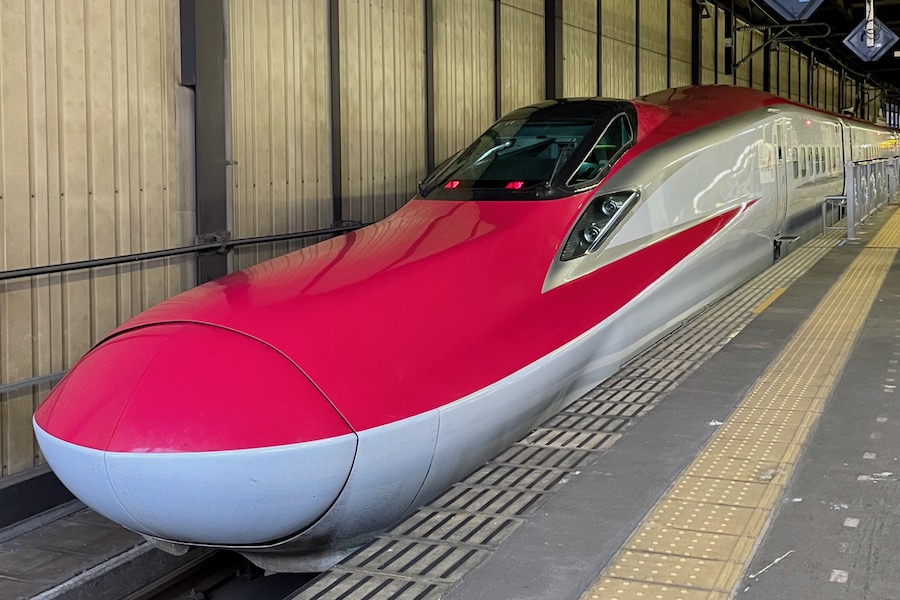
That date makes this a very searchable piece of rail news, because it’s both specific and rare. For Japan fans, it also taps into the long-running appeal of night trains, only this time on 新幹線 (Shinkansen, bullet train) tracks, with a name that stands out immediately in romaji: Amanecer Komachi.


What JR East is planning for December 27
JR East will operate an overnight Shinkansen service called Amanecer Komachi on 27 December, according to Traicy Global. The train is scheduled to leave Tokyo Station at 9:44 p.m., Ueno Station at 9:50 p.m., and Omiya Station at 10:09 p.m., which puts it firmly in late-evening territory rather than the usual daytime intercity pattern.
The most striking detail is the overnight format. Instead of arriving the same evening, the service is designed so passengers can sleep on board and reach northern destinations the next morning. For Japanese language learners, the service name is also a useful example of how rail products in Japan often get memorable branded names, with Komachi referencing the Akita Shinkansen identity and Amanecer giving the service an unusual, sunrise-and-night-travel feel.
Why this overnight Shinkansen stands out
Shinkansen are usually associated with speed, daylight travel, and tight punctuality, so an overnight run immediately changes the mood. JR East isn’t simply adding a few late trains, it’s packaging the trip as a special rail experience, which makes the announcement more than a timetable update.
What I especially like is the contrast between the modern bullet train and an old-fashioned overnight journey. Japan used to have many more night services, but those have become rare over time. That’s why a special overnight Shinkansen feels newsworthy, even if it’s a limited operation rather than a regular service.
Route and timing in practical terms
The service is linked to the Tohoku and Akita Shinkansen network, and the train is planned as a through overnight run rather than a standard daytime hop. The reported timetable starts in Tokyo, then continues via Ueno and Omiya, so passengers in the greater Tokyo area have more than one boarding option.
Because this is a special train, the exact overnight stop pattern matters. The core appeal is simple: leave after dinner, stay on a Shinkansen overnight, and arrive early enough to make a full day of it on the other side.
What the name Amanecer Komachi tells us
Amanecer isn’t a typical Japanese rail name, and that’s part of the appeal. It makes the service easier to remember, especially for international readers and learners who are scanning news headlines for train names and dates.

Komachi, by contrast, is instantly recognisable to anyone who follows Japanese trains. It’s tied to the Akita Shinkansen brand, so the name points to the destination side of the journey even before you look at the timetable. That combination makes the service feel both branded and route-specific, which is exactly the kind of detail rail enthusiasts tend to remember.
For learners, this is also a neat vocabulary moment. Train names in Japan often mix place identity, image words, and seasonal branding, so a headline like this teaches more than one thing at once: how railway companies market services, how names are written in romaji, and how a single special run can become a talking point.
Why this matters for Japan fans and rail watchers
Amanecer Komachi is small-scale news, but it hits several interests at once. It’s tied to JR East, it has a fixed date, and it involves the kind of overnight Shinkansen service that many readers will immediately want to understand better. That makes it a good example of the way Japanese rail news often spreads quickly among fans: one exact train name, one date, one route, and suddenly everyone is searching for more details.
There’s also a seasonal angle. Late December is a busy travel period in Japan, with people moving for year-end trips, family visits, and winter leisure. A special overnight run fits neatly into that rhythm, especially for travellers who prefer to turn transit time into sleep time instead of losing a full day.
For anyone building Japanese reading skills, headlines like this are worth paying attention to. You get company names, service names, dates, and route logic in a very compact format, and that’s real-world Japanese news language in action, even when the article is in English.