
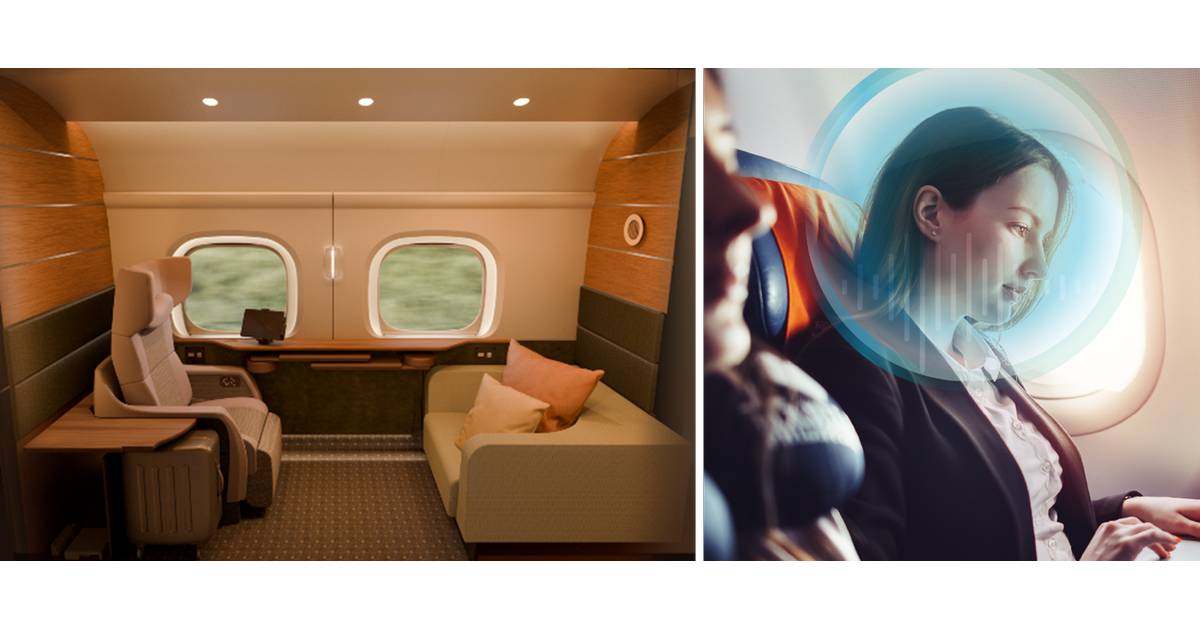
Partnership: NTT Docomo Business, NTT Sonority and JR Tokai collaborate
Guess what? The trial was a collaboration between NTT Docomo Business and NTT Sonority, along with JR Tokai, aiming to evaluate Personal Sound Zone or PSZ technology aboard the N700S. The idea was to let passengers in the premium, upper-class seats hear audio privately without wearing headphones.
Let me show you why this matters for train travel in Japan. JR Tokai operates the Tokaido Shinkansen, the high-speed artery linking Tokyo, Nagoya, and Osaka, and the N700S is one of its newest models introduced in 2020, with continuous refinements since then. That's why testing next-gen audio systems on this route makes operational sense, given passenger density and premium service expectations. See what I mean?
Test ride details: N700S premium seats and setup
It's early morning in Kyoto. On the trial run, journalists and tech staff rode in the N700S upper-class seats, where small directional speaker arrays were installed around each seat area. The premium seats on the N700S are narrower but more private than regular class, so they're a natural fit for seat-level sound zones.
That brings us to equipment specifics. NTT Sonority's PSZ uses arrays of compact speakers and beamforming algorithms to focus sound, while NTT Docomo Business handled integration and network coordination. The setup aimed to keep sound localized to a radius of roughly one seat, reducing leakage to adjacent passengers. Personally, I found that aspect promising because privacy on trains is a core part of Japanese public manners, or おもてなし.
How the PSZ was evaluated
Know that feeling when you want to watch a travel video but don't want to bother the person next to you? During the test, evaluators measured decibel levels at varying distances, checked speech intelligibility inside the target zone, and surveyed comfort over a simulated two-hour ride. And it gets better: adjustments were made in real time to correct for cabin noise and varying passenger occupancy.
Experience: What the passenger actually hears
Imagine a narrow alley in Tokyo where sound seems to come from behind you, but cleaner. In the trial, passengers reported clear audio in their seat area and much lower perceived sound just one row over. That was achieved without invasive hardware on the passenger or large headphones, relying instead on spatial audio techniques that keep the sound 'bubbled' around you.



Let's be honest: it's not perfect yet. Low-frequency sounds are harder to localise, and higher train speeds increase cabin noise. The test team noted that PSZ works best for voice and medium-frequency content like podcasts, onboard announcements, and guided tours, rather than heavy bass music. My tip? PSZ could shine as an onboard language study aid, letting learners practice shadowing Japanese dialogue while keeping the carriage quiet for others. Highly recommended:
Use case: Japanese learning and in-transit media
Let me show you why PSZ ties into language learning. Imagine an English-Japanese audio lesson playing only in your seat: you can repeat sentences out loud without disturbing others, practising シャドーイング and repeating phrases from apps or digital guidebooks. For fans of 駅弁 culture, audio explanations about regional specialty boxes could be private and immersive.
Challenges and next steps
Question: what hurdles remain before this becomes mainstream? The short answer: calibration and scalability. Beamforming needs precise calibration per seat configuration and train car, and rolling out to thousands of seats requires cost reductions. Operators also need to ensure interference-free operation with onboard Wi-Fi and safety systems.
Oh, almost forgot: accessibility and personal preference will matter. Some passengers prefer absolute silence and might not welcome even low-level PSZ leakage. That means offering a physical control or an opt-out in seat controls is likely required. Convinced yet?
That's why testing on the N700S premium class is a smart first step. Doing trials in a controlled, lower-density environment gives engineers a chance to tune algorithms before expanding to standard-class cars. What I especially like is the collaborative approach, with JR Tokai providing real operational constraints and NTT teams offering rapid prototyping.
Frequently Asked Questions
What is PSZ technology?
PSZ stands for Personal Sound Zone, a system that uses directed speaker arrays and signal processing to create a localized audio area for one listener.
Can I use PSZ instead of headphones?
In trials, PSZ provided private audio for seat occupants without headphones for mid-frequency content like speech and podcasts, but it may not fully replace headphones for bass-heavy music.


