According to the press release on PR Times, the autumn pair is being positioned as a gift for Respect for the Aged Day, with free congratulatory cards also prepared. If you’re learning Japanese, this is a neat example of how seasonal words, gift culture, and food branding often overlap in Japan.


Harapecolab turns autumn gifting into edible art
Harapecolab has introduced two autumn limited sweets that are meant to be given as gifts, not just eaten. The company, Melting Pot Harapecolab Co., Ltd., is based in Fukuoka, and the release was shared through PR Times. The focus is on seasonal presentation, careful naming, and the brand’s idea of 食べるアート (tabearu art, edible art), which treats sweets as edible art.
That concept is easy to read in the product lineup. The two autumn editions are Autumn Flowers and Jewelry Cassata. One leans towards Japanese-style confectionery with a seasonal look, while the other takes a more modern dessert format. Honestly, this is the kind of release that shows how strongly Japan ties food to the season, the recipient, and the occasion. My tip: when you see names like 秋 (aki, autumn) or seasonal motifs in Japanese sweets, pay attention to the mood the brand is trying to build, not only the flavour.
Autumn Flowers and Jewelry Cassata: the two seasonal editions
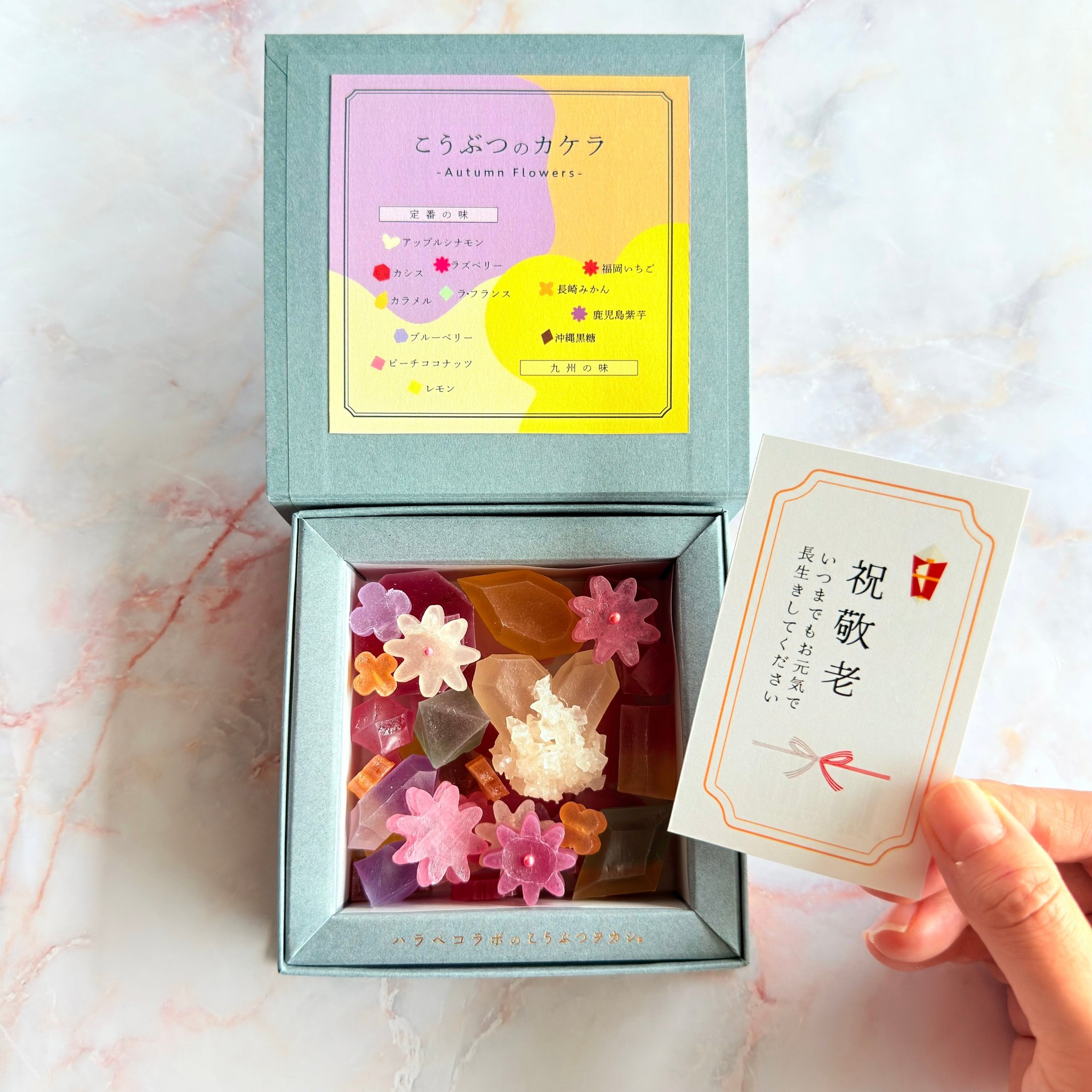
Autumn Flowers is the autumn edition of Harapecolab’s koubu to no kake ra-style confection, a jelly-like sweet made to look like flowers and minerals. In the source material, the product is presented as a gift that brings together autumn flowers and mineral-inspired shapes. That combination matters. In Japanese food design, the visual idea is often part of the product name itself, so the customer understands the seasonal message before tasting anything.
Jewelry Cassata is the second autumn item, and it is described as the first 抹茶 (matcha, powdered green tea) version in the series. Cassata is a frozen cake format, usually associated with layered creaminess and fruit or nuts, so matcha gives it a more Japanese seasonal angle. On a related note, matcha is a useful word for learners because it appears everywhere from drinks to desserts, and it often signals a flavour profile that’s less sweet and more balanced. If you’re reading Japanese food menus, this is one of those terms you’ll meet often.
What stands out in the product naming
The naming is practical, not random. Autumn Flowers gives you the season and the motif. Jewelry Cassata gives you the visual idea first, then the dessert type. That’s typical of Japanese food branding, where the label does a lot of the work. You don’t need a long explanation when the name already suggests gift value, seasonality, and texture.
Let’s be honest: this is also why these products fit gifting culture so well. In Japan, sweets are often chosen for appearance as much as taste, especially when they’re offered for family occasions or respect-based holidays. Not bad, right?
Respect for the Aged Day and the role of seasonal gifts
The release is tied to Respect for the Aged Day, known in Japanese as 敬老の日 (keiro no hi, Respect for the Aged Day). That holiday is a common time for family gifts, and food is one of the safest choices because it’s easy to share and easy to adapt to different ages. The press release also notes that a free congratulatory card with the phrase 祝敬老の日 (shuku keiro no hi, congratulations on Respect for the Aged Day) is available with all products. That small detail is important. It shows that the company isn’t only selling sweets, it’s offering a ready-made gifting package.
By the way, this is a useful vocabulary point for Japanese learners. The word gift in Japanese business and seasonal retail is often wrapped in language that signals care, occasion, and timing. You’ll see this in phrases around 贈り物 (okurimono, gift / present), 季節 (kisetsu, season), and holiday-specific messaging. The product isn’t just a dessert. It’s a message in edible form. Personally, I think that’s what makes Japanese seasonal sweets worth studying closely, even if you’re mainly interested in language.
Why tabearu art is worth watching
Tabearu art is the clearest phrase to remember from this release. It describes food that is designed as art you can eat. That sounds simple, but it covers a lot of Japanese dessert culture. Shape, colour, season, and occasion all matter. Harapecolab uses that idea consistently, and this autumn pair keeps the approach focused rather than overloaded.
Trust me on this one: if you’re learning Japanese, brand names like these are excellent reading practice because they bundle several ideas into one phrase. You get seasonal vocabulary, product type, and cultural context at the same time. When you see autumn, flowers, jewelry, and matcha in the same product line, you’re looking at a Japanese food story that’s built for both the eye and the gift box. But that’s not all.
Frequently Asked Questions
What is Harapecolab known for?
Harapecolab is known for edible art sweets that place as much emphasis on presentation as on flavour.
What are the two autumn editions?
The two seasonal products are Autumn Flowers and Jewelry Cassata.
Why is this relevant for Japanese learners?
It is a useful example of seasonal vocabulary, gift culture, and product naming in Japanese food marketing.