That matters because the language around baths can be slippery. Onsen, 銭湯 (sento, public bathhouse), 露天風呂 (rotenburo, open-air bath), 混浴 (konyoku, mixed bathing), private baths, public baths, ryokan baths, they overlap in ways that make perfect sense once you stand in the changing room with a towel in your hand and no room for theatrics. More soon.
Onsen, sento, and the other bath words you’ll actually hear
Japanese bath culture isn’t one single thing. An onsen is a hot spring bath, usually defined by mineral-rich natural water, while a sento is a neighbourhood bathhouse that may use heated tap water rather than spring water. The distinction matters, especially if you’re learning Japanese, because people use these words precisely, and locals notice the difference immediately. If you see rotenburo, that means an open-air bath. If you hear konyoku, that means mixed bathing, though this is now relatively rare and often limited to older or rural places.
Here’s the kicker: the word onsen can also refer to the whole place, not just the water. A small mountain spring, a full ryokan with multiple baths, a day-use facility, all of it can live under the same label. That’s why a careful reader of Japanese signs pays attention to the details rather than the headline. Spring source. Indoor bath. Outdoor bath. Private bath. Clothes not allowed. The fine print does the real work.
On the flip side, sento has its own charm and its own feel. It’s more about everyday life, less about staying the night, and often has a more local atmosphere. If you’re in Tokyo and want a gentle introduction to bath culture without the full ryokan ritual, a sento is a useful bridge. The Inariyu video from Tokyo is a neat example of how traditional bathhouses still sit inside the city’s daily rhythm. Classic Japan, isn’t it?
Ryokan stay or day visit: choose the right shape of the experience
The first time I went to Japan, the bath conversation felt bigger than the bath itself, because where you sleep changes how you use the water. In a ryokan, the onsen is usually folded into the stay: you arrive, you change clothes, you eat, you soak, you sleep, and the whole thing slows down around the body. That’s the point. A ryokan isn’t just accommodation with a bath attached; it’s a format that asks you to surrender a little pace.
Day visitors, on the other hand, come for the bath and leave again. This can be practical if your time is tight, or if you’re based in a nearby city and want one good soak without rearranging the whole trip. Many onsen towns and hotel complexes offer day-use bathing, sometimes with an extra fee for towels or a private room. The choice isn’t just about budget, though money matters. It’s about how much of the place you want to let in. Overnight stays give you more silence, more repetitions, and usually better access to baths at quieter times. Day visits are efficient. No wonder, because people have trains to catch and lives to keep.
Quick detour: if you’re looking at a map and wondering whether a place counts as a true onsen town, check how the bathing is integrated with lodging. Some places are built around ryokan clusters and public baths, others around a single large facility. The word onsen town often means both the water and the small economy around it, which includes inns, food, shops, and the soft choreography of arriving, changing, eating, and soaking. My tip: if your schedule allows it, stay one night. One night is enough to feel the rhythm. More than that, and the place starts to work on you. Personally...
Bath etiquette: what to do before you step in
Picture this: a changing room, a basket, a towel, and a line of slippers that all look more disciplined than you feel. The etiquette is strict but not complicated. Wash thoroughly before entering the bath, keep your towel out of the water, and do not treat the bath like a place for swimming, splashing, or loud conversation. The bath is for soaking, not for performing wellness.
Pro tip: the washing area matters as much as the bath itself. Use the stool and shower, rinse off soap completely, and only then move into the hot water. If you have a small towel, carry it with you but keep it from touching the water. Many regulars fold it on their head or set it on the side. Tattoos can still be an issue at some facilities, though policies vary, so check ahead if that applies to you. Hair should stay tied up if it’s long, and phones are usually not welcome anywhere near the water. That’s it. Clean body, quiet presence, no fuss.
Speaking of which... the emotional posture of the bath matters too. You’re not there to prove anything. You’re there to sit in heat, to notice your breathing, to feel the body settle. That sounds abstract until you’re standing in a lumpy travel day of your own and the water does its plain, physical work. Some places offer multiple bath types, such as indoor baths, rotenburo, carbonated baths, or mineral-specific tubs, and each one changes the feel slightly. The ritual stays the same. Wash, rinse, soak, rest, repeat. More soon.
What to expect from different onsen bath types
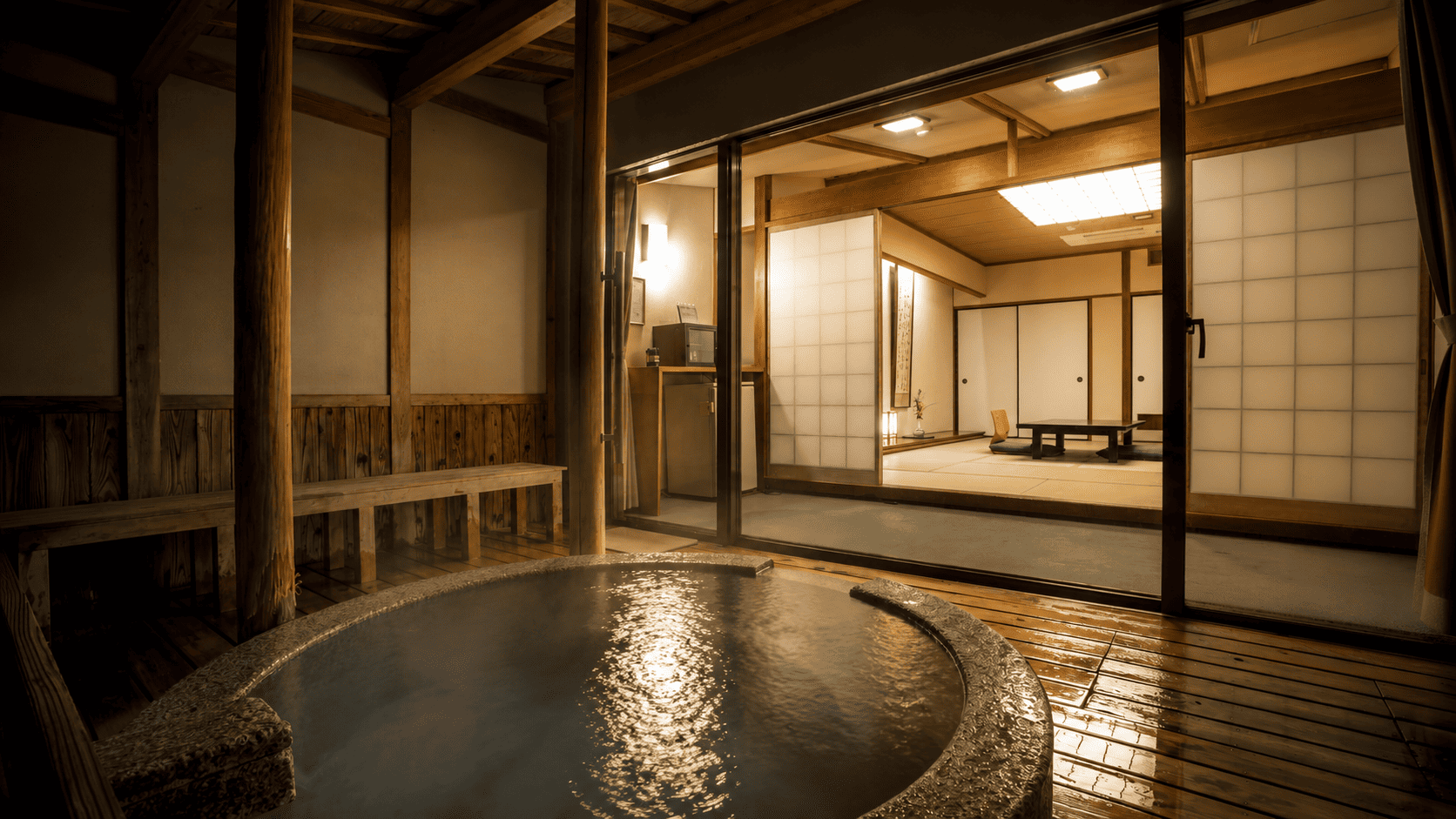
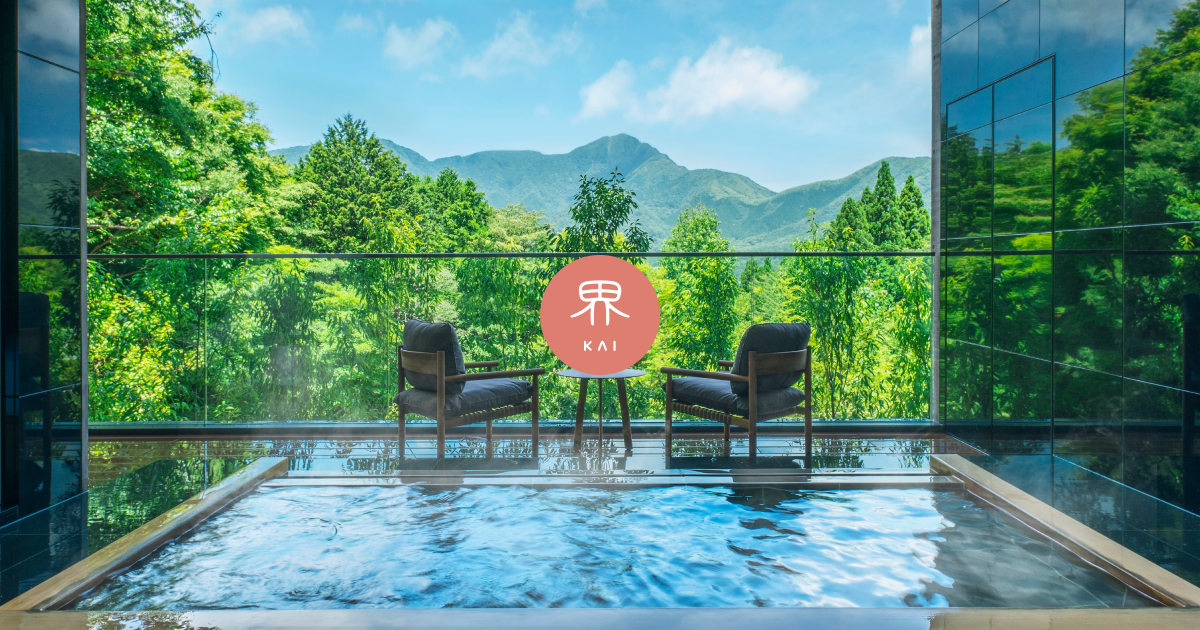
Not all onsen baths are built for the same mood. Indoor baths are usually the warm core of the place, with controlled heat and a steady crowd flow. Rotenburo brings in weather, steam, cold air, and the landscape beyond the wall or rock edge. Private baths, often called 貸切露天風呂 (kashikiri rotenburo, private reserved open-air bath) when they’re outdoors and reserved by the hour, are useful for people who want more privacy, families with children, or anyone who simply prefers to keep to themselves. No drama. Just a door that locks.
On a related note: some baths are well known because of the water itself, not the building. Sulphur-smelling springs, iron-rich water, milky water, sodium-rich water, each produces a slightly different feel on the skin. Most visitors won’t analyse the chemistry, but they will notice the texture. My opinion is simple: the best bath is the one that leaves you quiet when you step out. Not sleepy in a dull way. Reset. If you’re choosing between a bath with a dramatic view and a bath with better water, choose the water. The view can be a bonus. The water is the point.
And if you’re learning Japanese, this is useful vocabulary rather than trivia. 温泉宿 (Onsenshuku) means a hot-spring inn, rotenburo is an open-air bath, sento is a public bathhouse, and 湯 (yu, hot water; bath water) means hot water or bath water depending on context. Those words appear on signs, in menus, in hotel notes, and in the practical conversations that shape a trip. Japanese is a language that rewards attention to ordinary things. Baths are very ordinary here. That’s why they matter.
Frequently Asked Questions
What is the difference between an onsen and a sento?
An onsen uses natural hot-spring water, while a sento is a public bathhouse that may use heated water instead.
Do I need to stay overnight to use an onsen?
No. Many places allow day visits, but a ryokan stay usually gives you a fuller and slower experience.
What is the main rule in an onsen bath?
Wash yourself thoroughly before entering the bath, then keep the water clean and quiet for everyone else.