Overview
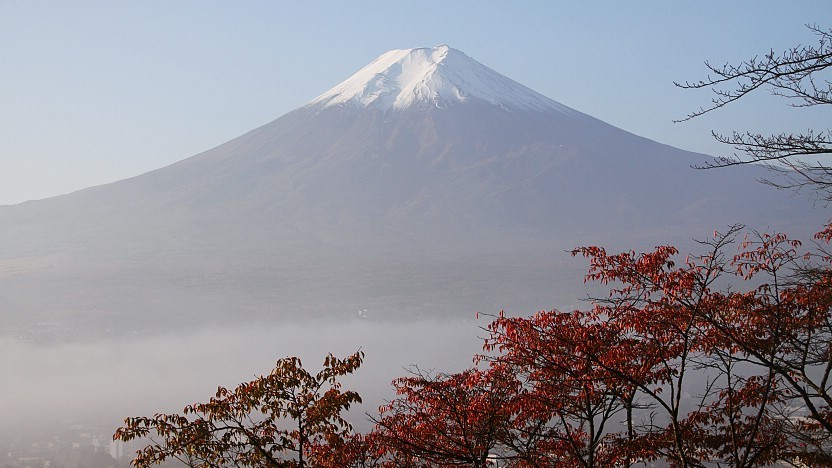
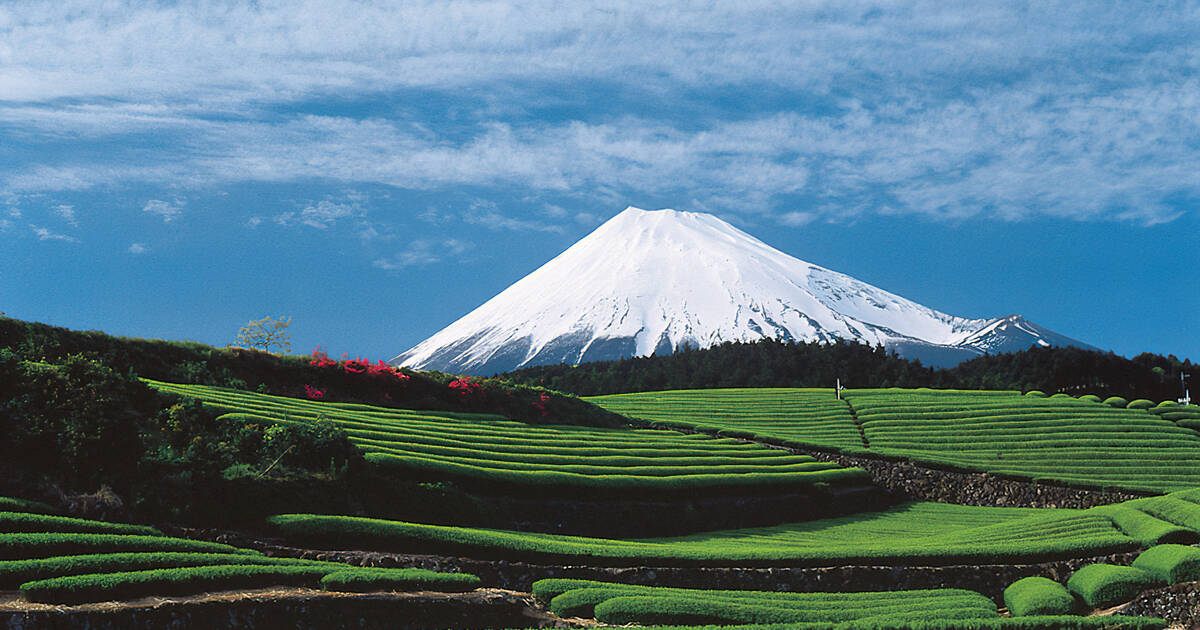
Mount Fuji rises to 3,776 metres and has been a UNESCO World Cultural Heritage site since 2013. It is the kind of landmark that changes the texture of a journey: one moment it is a postcard shape on the horizon, the next it is a route decision, a weather check, or a long conversation about whether to keep going up or simply look from below. For many visitors, the attraction is not only the summit itself, but the different ways of meeting it: from a train window, from Hakone, or on foot during the official climbing season. That season usually runs from 1 July to early September, when the main trails and mountain huts are staffed. Outside that window, conditions become a different matter entirely. More serious. Less forgiving.
If your goal is to see Mount Fuji from the Shinkansen, timing matters more than romance. Clear mornings are best, and the view is easiest on the Tokaido Shinkansen route between Tokyo and the area around Shizuoka. In Japan, the word 山 (yama, mountain) means mountain, but Fuji is in a category of its own: a singular shape, sharply legible even at a distance. The best viewing is often described in relation to 場所 (basho, place; location; setting), meaning a place or setting, because the mountain is as much about where you stand as what you see.
For visitors, I think the most useful approach is to split Fuji into three experiences: the distant view, the full climb, and the base-area trip that lets you keep your feet on lower ground. That keeps the day realistic. It also keeps the body in the story, which is where Fuji belongs.
How to see Mount Fuji from the Shinkansen
The most famous rail view comes on the Tokaido Shinkansen between Tokyo and western Honshu. On clear days, riders can catch Fuji from the window for a short stretch, and that is the whole trick: you are not guaranteed a long show, just a brief, precise one. The train reaches Odawara from Tokyo in about 30 to 40 minutes, which makes it a practical jumping-off point if you want to continue toward Hakone rather than treat Fuji as a one-frame photograph and move on. Weather is the deciding factor. Cloud cover can erase the mountain entirely, and winter air often gives the sharpest outline.
For window-seat logistics, think like a person who likes a good route map. Book a seat on the side of the train that faces Mount Fuji for your direction of travel, and keep your camera ready before the expected viewing stretch. Do not expect a long performance. This is not that sort of landscape. It arrives, the body registers it, and then it is gone. That is part of the appeal.
- Best for: short, effortless Fuji views between cities
- Watch for: clear weather and a seat on the correct side
- Useful add-on: a stop in Odawara for Hakone access
Climbing season, route access, and what the mountain huts are for
The official climbing season usually runs from 1 July to early September, when trail infrastructure is in operation and the mountain huts are staffed. The most commonly used starting point for the Yoshida Trail is the Fuji Subaru Line 5th Station, which sits at about 2,305 metres above sea level. That matters because it changes the shape of the climb immediately. You are not starting from the foot of the mountain. You are already high, already in thinner air, already paying attention.
The Japanese term 御来光 (goraiko, sunrise viewed from a mountain summit) refers to the sunrise that many climbers are trying to reach from higher up the mountain. It is the reason mountain huts matter so much. They are basic, compact, and practical, and they exist to support a sunrise attempt rather than to soften the mountain into comfort. Sleeping spaces often cost roughly 9,000 to 18,000 yen per person, with some rates closer to 7,000 to 13,000 yen without meals and higher when dinner and breakfast are included. Prices vary by hut, station, and date. In other words: check before you commit. This is a mountain, not a spreadsheet, but the spreadsheet still has to be handled.
Another important term is 予約 (yoyaku, reservation; booking), meaning a reservation. For huts in season, reservations are often essential. And if you are heading up for sunrise, the word 標高 (hyoukou, elevation above sea level), meaning altitude, is not academic. It is the reason pacing matters, and why fatigue, cold, and changing weather become safety issues quickly. Wear the lightest gear that still makes sense. Minimize load. The mountain notices.
- Fuji Subaru Line 5th Station: common Yoshida Trail starting point
- Mountain huts: basic but useful for overnight climbs
- Season: staff coverage is concentrated in July to early September
What makes the area around Fuji worth a slower day
If you do not want the climb, the Fuji area still rewards a measured, lower-effort day. Hakone is the standard base for hot springs and Fuji views, and that combination works because the place gives you distance, water, and time. The Japanese word 温泉 (onsen, hot spring; spa bath) means hot spring, and Hakone has the sort of onsen culture that lets a day take its time without turning into nothing. Lake Ashi, or Ashinoko, offers sightseeing-boat views of Mount Fuji on clear days, which is one of the cleaner ways to see the mountain without dealing with altitude or trail logistics.
If you are arriving from Tokyo, the train connection is straightforward enough to be humane. The Tokaido Shinkansen gets you to Odawara in about 30 to 40 minutes, and from there you transfer to the Hakone Tozan Railway for Hakone. That transition from high-speed rail to slower mountain transport is a nice one. The pace changes. The body catches up. You notice the texture of place again.
For many people, this is the sensible Fuji trip: view the mountain from below, spend the afternoon in Hakone, and let the summit remain a vertical fact rather than a project. I approve of this method. Not every encounter with a famous mountain needs to become a conquest.



Why Mount Fuji matters beyond the obvious postcard
Fuji matters because it is both image and infrastructure, a national symbol that still asks for practical respect. The mountain is beautiful, yes, but beauty alone does not explain why people keep orienting trips around it. It is the scale, the weather, the visibility, the way the shape appears suddenly from train windows and coastlines and hotel balconies. It is also the discipline required to meet it properly. The same mountain can be a distant silhouette, a strenuous overnight climb, or a day of onsen and lake views. That flexibility is part of its power.
The mountain also appears in safety conversations for good reason. In August 2026, reports said a father left his 7-year-old son behind on Mount Fuji and continued hiking, which drew police involvement. One report said the boy was found alone at the 6th Station after the father allegedly left him there. The case was treated as a safety and child-welfare issue because of altitude, changing weather, fatigue, and cold. It is a blunt reminder that Fuji is not a place for casual assumptions. If you go up, go up with judgment intact.
For readers who want a broader context on the mountain and its surrounding stops, the practical route is simple: read a Mount Fuji guide, then decide whether your day is really about the summit, the rail view, or Hakone’s lower-altitude calm. That decision shapes everything else.
Useful Japanese terms for planning a Fuji trip
A few Japanese terms will come up again and again if you keep exploring Fuji-related travel:
- yama — mountain
- basho — place or setting
- goraiko — sunrise seen from the mountain
- yoyaku — reservation
- hyoukou — altitude
- onsen — hot spring
If you are the sort of person who likes to learn through places, this is good material for Mount Fuji kanji and Mount Fuji Japanisch lernen searches as well, even though the mountain’s everyday travel vocabulary is usually more useful than the writing system trivia. The point is to recognize the terms you will see on signage, trail notices, and booking pages. That saves time. More importantly, it keeps you oriented.
Frequently Asked Questions
Can you see Mount Fuji from the Shinkansen?
Yes, on clear days you can see Mount Fuji from the Tokaido Shinkansen for a short stretch between Tokyo and western Honshu. The view is brief, so seat choice and weather both matter.
When is the best time to climb Mount Fuji?
The official climbing season usually runs from 1 July to early September, when the main trails and mountain huts are staffed. Outside that period, conditions are more demanding.
Where do most people start the Yoshida Trail?
A common starting point is the Fuji Subaru Line 5th Station, which sits at about 2,305 metres above sea level.
How do people usually combine Hakone with a Mount Fuji trip?
Many visitors use Odawara as the rail gateway from Tokyo, then transfer to the Hakone Tozan Railway for Hakone. Lake Ashi offers Fuji views on clear days, and Hakone is also known for its hot springs.
Are Mount Fuji mountain huts expensive?
They are basic but useful, and sleeping spaces often cost roughly 9,000 to 18,000 yen per person, with some lower rates without meals and higher rates with dinner and breakfast included. Prices vary by hut, station, and date.
Sources
- Fuji Mountain costs overview — https://fuji-mountain.com/costs/
- Mount Fuji guide and Hakone access reference — https://jpnerd.com/en/japan-news-en/1976-mount-fuji-2026-ultimate-guide-to-fuji-san-hakone-owakudani-en