Trust me on this one: Kyoto rewards good pacing. You won’t see everything, and you shouldn’t try to, but you can still leave feeling like you’ve got the real thing.



Kyoto in 2 days works best when you accept one simple rule: don’t chase a complete list, chase a clean route. The city looks compact on a map, but temple hopping without a plan can eat your time fast. What many overlook is this: Kyoto is at its best when you move by area, not by wish list.
This is a first-timer itinerary, built for people who want strong place names, steady timing, and a bit of breathing room. Let me show you why it works so well, especially if this is your first trip to Japan and you want the classics without the stress.
Day 1 in Kyoto: Gion, Higashiyama, and an Easy Start
Start with Gion in the morning, when the streets feel calmer and the wooden facades look their best. Walk from Shijo-dori toward Hanamikoji, then keep going into Higashiyama, where the atmosphere shifts from teahouses to temple lanes. No exaggeration: this is the side of Kyoto most first-time visitors picture before they even arrive.
If you want a practical anchor, make Kiyomizu-dera your main stop. The temple’s main hall is famous for its hillside stage, and the area around it gives you one of the easiest sightseeing loops in the city. Expect slopes, shops, and lots of small details, like 八つ橋 (yatsuhashi, Kyoto cinnamon sweet) sweets and souvenir stalls selling everything from 抹茶 (matcha, powdered green tea) snacks to folding fans.
What to do in Gion without overplanning
Trust me on this one: you do not need a perfect 芸妓 (geiko, Kyoto geisha)-spotting strategy to enjoy Gion. Go for the streets, the mood, and the architecture. If you do happen to see a 舞妓 (maiko, apprentice geisha) or geiko, keep your distance, stay quiet, and don’t block the lane for photos.
My tip: stop for an early lunch near the Gion area, then keep your afternoon lighter than you think you need. Kyoto days go smoother when you build in time for walking, coffee, and the occasional spontaneous shrine stop. Personally, I like that pace more than trying to tick off ten places in a row. Convinced yet?
Day 1 Afternoon: Nishiki Market and Central Kyoto
After Higashiyama, head towards central Kyoto and spend time around Nishiki Market. The market runs for about 400 metres, and it’s one of the easiest places to sample Kyoto food in small portions. You’ll find tamagoyaki, tsukemono, tofu, grilled seafood, and plenty of sweets that make quick snacking simple.
Let’s be honest: not every stall is worth stopping at, and that’s fine. This part of the itinerary is about variety and convenience, not a gourmet marathon. If you’re learning Japanese, this is also a nice place to spot everyday food vocabulary in the wild, words like kaisendon, dashi, and お好み焼き (okonomiyaki, savory pancake), even if you don’t eat all of them on day one.



From there, keep your evening flexible. You can return to Gion for dinner, or circle back to a riverside area if you want a slower finish. Unlike what we’re used to, Kyoto doesn’t ask you to rush to be impressed, and that’s part of its charm. But that’s not all.
Day 2 in Kyoto: Arashiyama and the West Side
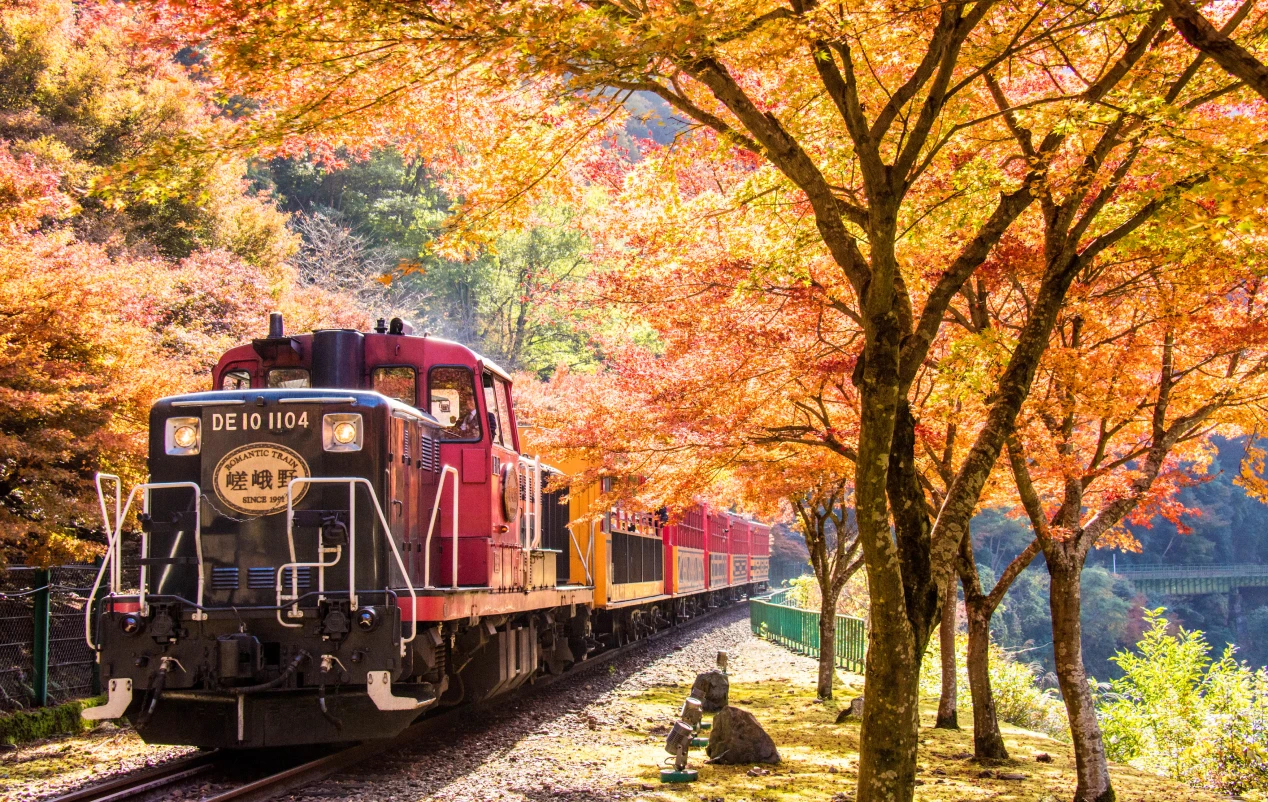
Day two belongs to Arashiyama, and it should start early. The bamboo grove gets crowded fast, especially after mid-morning, so an early train from central Kyoto makes a real difference. The area is west of the city centre, and it’s easiest to treat it as a half-day zone with a few key stops.
Begin with the bamboo path, then move on to Tenryu-ji, a Zen temple with a strong garden setting and a deep sense of order. The temple is a UNESCO World Heritage site, and even if you’re not a temple expert, the grounds feel calm in a way that’s hard to fake. Oh, almost forgot: the nearby Togetsukyo Bridge gives you a very classic Arashiyama view, especially if the weather is clear.
Arashiyama done right
Here’s the catch: Arashiyama can feel crowded and touristy if you only follow the main path. So add one small detour. Walk a little farther into the residential side, or take a short break at a riverside cafe. That one extra pause makes the area feel less like a checklist and more like a place you actually spent time in.
If you still have energy, head to Okochi Sanso Garden or stop by Iwatayama Monkey Park, which sits on Mount Arashiyama and asks for a steep climb. I wouldn’t put both into a first-timer schedule unless you’re moving fast, but either one can be a strong add-on if you want a second layer to the area. Simply brilliant, if you like a view with your walking.
How to Make This Kyoto Route Work Smoothly
The first time I went to Japan, I learned this lesson the hard way: the best itinerary is the one you can actually keep. For Kyoto, that means grouping sights by district, leaving room for lunch, and not pretending you’ll have the energy of a train timetable. Aim for two major areas per day, max.
Use trains and buses strategically, but don’t rely on buses alone if you’re short on time. The Keihan line is useful for Gion and Higashiyama, while JR and Hankyu connections help on the Arashiyama side. If you’re staying near Kyoto Station, factor in an extra 20 to 30 minutes each time you cross the city, because the transfer time adds up quickly.
What I especially like: this route gives first-timers the emotional Kyoto they came for, without pretending the city is easy to “finish” in 48 hours. You get old streets, temple scenery, food stops, and enough structure to feel in control. That balance is rare, and it’s exactly why this plan works. Personally...
In pictures
Frequently Asked Questions
Is 2 days enough for Kyoto?
Yes, if you focus on a few key areas and keep the schedule realistic. You won’t see everything, but you can cover the essentials well.
Should first-time visitors choose Gion or Arashiyama first?
Start with Gion and Higashiyama on day one, then move to Arashiyama on day two. That keeps travel efficient and the pacing balanced.
Can I do Kyoto without using buses much?
Yes, partly. Trains help a lot for the main routes, but a few short bus or taxi rides can make the itinerary much easier.