Overview
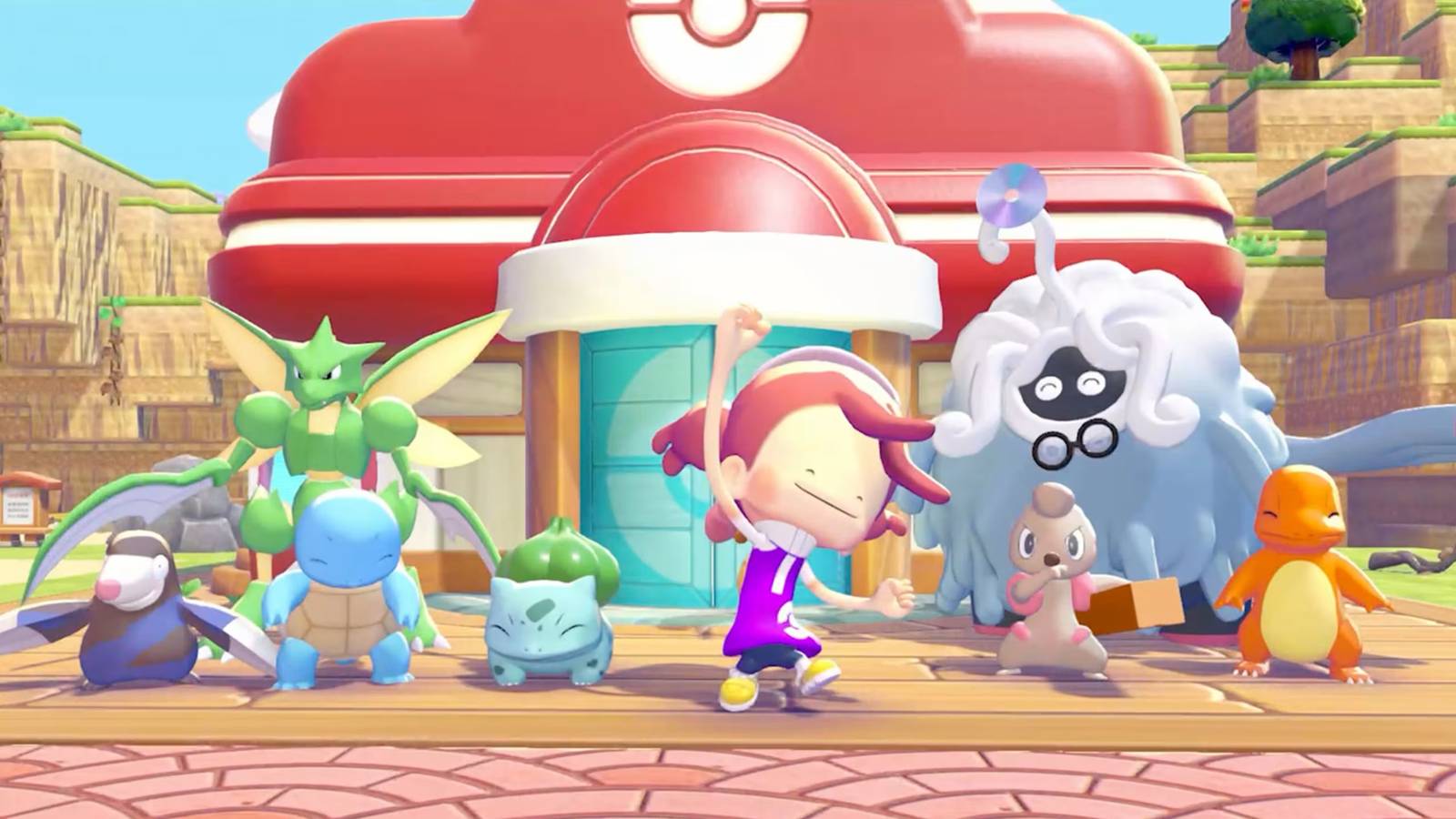
Pokémon Pokopia is the life-simulation entry in the Pokémon franchise built specifically for Nintendo Switch 2, and it has spent its first months on the market proving that a game with zero battles can still dominate a sales chart. Released worldwide on March 5, 2026, it swaps gyms and trainer duels for habitat-building, cooperative town design, and a surprisingly deep social layer built around Switch 2's Link Play and GameChat systems. Post-launch, the shipped game bears out dynamic weather, large open exploration areas, and an expanded Pokédex with deeper befriending mechanics — features that were talked about before release and have since shown up in the final product. If you came in expecting another turn-based battler with a new coat of paint, recalibrate. This one's playing a different game entirely, and that's precisely why it's worth understanding properly rather than skimming the marketing copy.
Who Actually Built It, and When It Landed
Here's something the credits don't advertise loudly: Pokopia wasn't built solely in-house at Game Freak. Development was a collaboration with Koei Tecmo's Omega Force — the studio behind the Dynasty Warriors 無双 (musou, unrivaled / peerless (genre term for one-vs-many hack-and-slash action games)) series — brought on specifically for its sandbox-genre experience. That's a genuinely interesting pairing on paper: a studio known for choreographing thousands of enemies on screen at once, repurposed for quiet habitat design and cooperative town-building. Nintendo and The Pokémon Company handled publishing, not development, which is a distinction worth keeping straight if you're tracking who to credit for what. The game launched globally on March 5, 2026, for Switch 2 hardware, with one notable exception for Switch 1 owners that I'll get to below.
The Core Loop: A Life-Sim With Zero Combat
Let's address the elephant in the room first, because a lot of newcomers assume "Pokémon game" automatically means battling. It doesn't, here. Pokopia has no combat system whatsoever — no trainer battles, no Gym challenges, no boss-Pokémon encounters. In practice, the entire game is built around befriending Pokémon by constructing habitats suited to them, then watching your world fill out as a result. Some Pokémon carry utility "Specialties" that matter more than raw stats ever would in a mainline game — a Scout Specialty, for instance, reveals hidden cloud platforms you'd otherwise miss entirely. There's no healer role, no co-op boss fight, nothing resembling an arena. If that sounds like a soft pitch, it isn't meant to be one. Cutting combat entirely is a genuine design commitment, and Pokopia backs it with mechanical depth elsewhere rather than leaving a void where battling used to be.
How Cooperative Multiplayer Actually Works
This is where the production actually gets interesting. Multiplayer runs through the Link Play menu at a Pokémon Center PC, and it breaks down into three real activities: visiting or hosting a friend's town, a shared cooperative area called Cloud Island, and a freeform sandbox called Palette Town. There's no "social arena," no matchmaking lobby with objectives — it's closer to a shared building space than a competitive game mode.
Access comes in three flavors. First, local wireless play, which requires multiple physical consoles — either several Switch 2 units, or a Switch 2 paired with a GameShare-linked Switch 1 — each running its own copy or joining a shared session. There's no split-screen and no single-console multiplayer; you genuinely need separate hardware in the room. Second, online play, handled through a one-time-use Link Code generated at the Pokémon Center PC (Link Play, then Invite Others to Visit, then Online connection), shared manually with up to three friends rather than through any friends-list matchmaking system, and requiring both a Nintendo Account and an active Nintendo Switch Online membership. Third, GameShare, which extends the invitation to guests who don't own a copy at all, within limits covered next. One caveat worth flagging clearly: progress made in multiplayer sessions does not carry over into your single-player world or main story. The two tracks stay separate — cooperative building is additive, not a shortcut through the solo campaign.
GameChat, GameShare, and the Switch 1 Question
GameChat's contribution here is straightforward: voice chat plus screen sharing for up to four players on supported games. That's it — there's no evidence of synchronized item transfers or shared UI elements happening in real time, whatever you might have heard elsewhere. When a GameShare guest collects items during a session, those items land in the host's Lost and Found only after the session ends, not synced live. Worth noting too: the Copycat Challenge event, covered below, is a solo, single-player quiz. It has nothing to do with GameChat's co-op features, despite occasionally getting lumped into the multiplayer conversation.
On hardware requirements, there's a real distinction that trips people up. Online GameShare through GameChat requires every participant to own a Switch 2, a linked Nintendo Account, and an active internet connection with NSO — no way around that. Local GameShare is far more forgiving: a Switch 1 owner can join a session hosted on a friend's Switch 2 without owning the game themselves, without an internet connection, and without an NSO membership. The trade-off is scope — local GameShare guests are limited to the Palette Town sandbox mode, not the full game. So yes, you can bring a Switch 1 friend into the sandbox for an afternoon. No, they can't tag along online.
The Copycat Challenge Event
Pokopia's most talked-about event so far is the Copycat Challenge, and it's worth being precise about what it actually was, because the shape of it got exaggerated in places. It ran as a strictly time-limited April Fools' event, from 5:00 a.m. on April 1 to 4:59 a.m. on April 2, local time — a single day's window rather than a recurring system. During that window, players hunted for Pokémon imitating other Pokémon's speech, answered three impersonation quizzes correctly, and reported to a Pokémon Center PC. The payoff was one specific reward: an in-game inflatable Sudowoodo, a nice bit of thematic irony given Sudowoodo's whole reputation as an impersonator itself. This was not a repeating daily-challenge structure earning currency or a rotating set of cosmetics; it was a one-shot, single-reward event. If a similar event returns, expect it to be its own distinct thing rather than "the Copycat Challenge, part two."
Chart Performance and What Nintendo's Numbers Actually Show
By the May 3, 2026 Nintendo Switch 2 eShop charts, Pokopia was still sitting at No. 1 — a position it had held continuously since its March 5 launch, which is a genuinely rare run of sustained dominance for any title. Mario Kart World climbed to No. 2 that same week, sitting behind Pokopia rather than newly overtaking it or being overtaken by it — Pokopia had simply never relinquished the top spot to begin with. It's a small distinction, but an important one if you're trying to understand the actual shape of the sales story rather than a flattened headline version of it.
Separately, reporting from Polygon on Nintendo's Financial Results 2026 described Pokopia as contributing to new sales marks for the company, alongside continued strong sales of the GBA classics Pokémon FireRed and LeafGreen. That framing comes from a single reported source rather than something independently verifiable line-by-line against Nintendo's own filings, so treat it as a credible but not fully corroborated data point rather than settled fact.
Where to Play Pokémon Pokopia
Pokopia is a Nintendo Switch 2 title, available through the Nintendo eShop or as a physical cartridge, and that's genuinely the intended way to experience it — the game leans hard on Switch 2-specific features like GameChat and GameShare that simply don't exist on the original hardware. The one exception, as covered above, is that Switch 1 owners can join a friend's local Palette Town sandbox session without buying a copy themselves, provided a Switch 2 owner hosts. If you're weighing whether to pick up a Switch 2 purely for this game, Mashable ran a buying-guide analysis on exactly that question, and its conclusion was appropriately unglamorous: it depends on how fully you actually use the hardware's capabilities and what's already sitting in your existing game library. Not every reason to buy a console needs to be dramatic — sometimes it really is just arithmetic.
Picking Up the Language Along the Way
For anyone using Pokémon games as a Japanese-learning tool, and plenty of jpnerd readers do exactly that, Pokopia's dialogue-heavy, life-sim structure is solid material. Switching the game's language to Japanese exposes you to a steady stream of everyday vocabulary around routine, habitat, and description that mainline battle-focused titles don't emphasize nearly as much, plus event-specific language from things like the Copycat Challenge's quiz prompts. None of that replaces a structured study plan, but as immersion reps go, a game you're already invested in beats a flashcard deck you're not.