Overview
Kanamara 祭り (matsuri, festival; traditional celebration) is an annual festival at Kanayama Shrine in Kawasaki, Kanagawa Prefecture, traditionally held on the first Sunday in April. Outside Japan, it is often called the Steel Phallus Festival or simply the Penis Festival, a label that points to the unmistakable symbolism at its centre. That shorthand can be noisy, but it does not capture the whole event. What I find more interesting is the way the festival combines shrine ritual, local folklore, and modern spectacle without fully separating any of them.
The shrine itself is associated with Kanayama-hiko and Kanayama-hime, deities linked to metalworking, protection, birth, and fertility. In practice, the festival draws people for many reasons at once: prayer, curiosity, photography, community atmosphere, and the simple appeal of seeing a tradition that has survived by remaining legible in the present. It is a recurring event, not a one-off performance, and that continuity matters. The ceremony changes little in its broad shape from year to year, while the crowd around it grows and shifts.
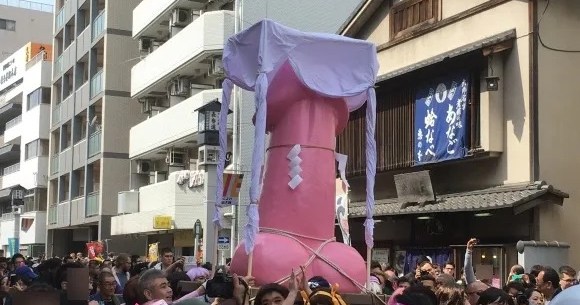
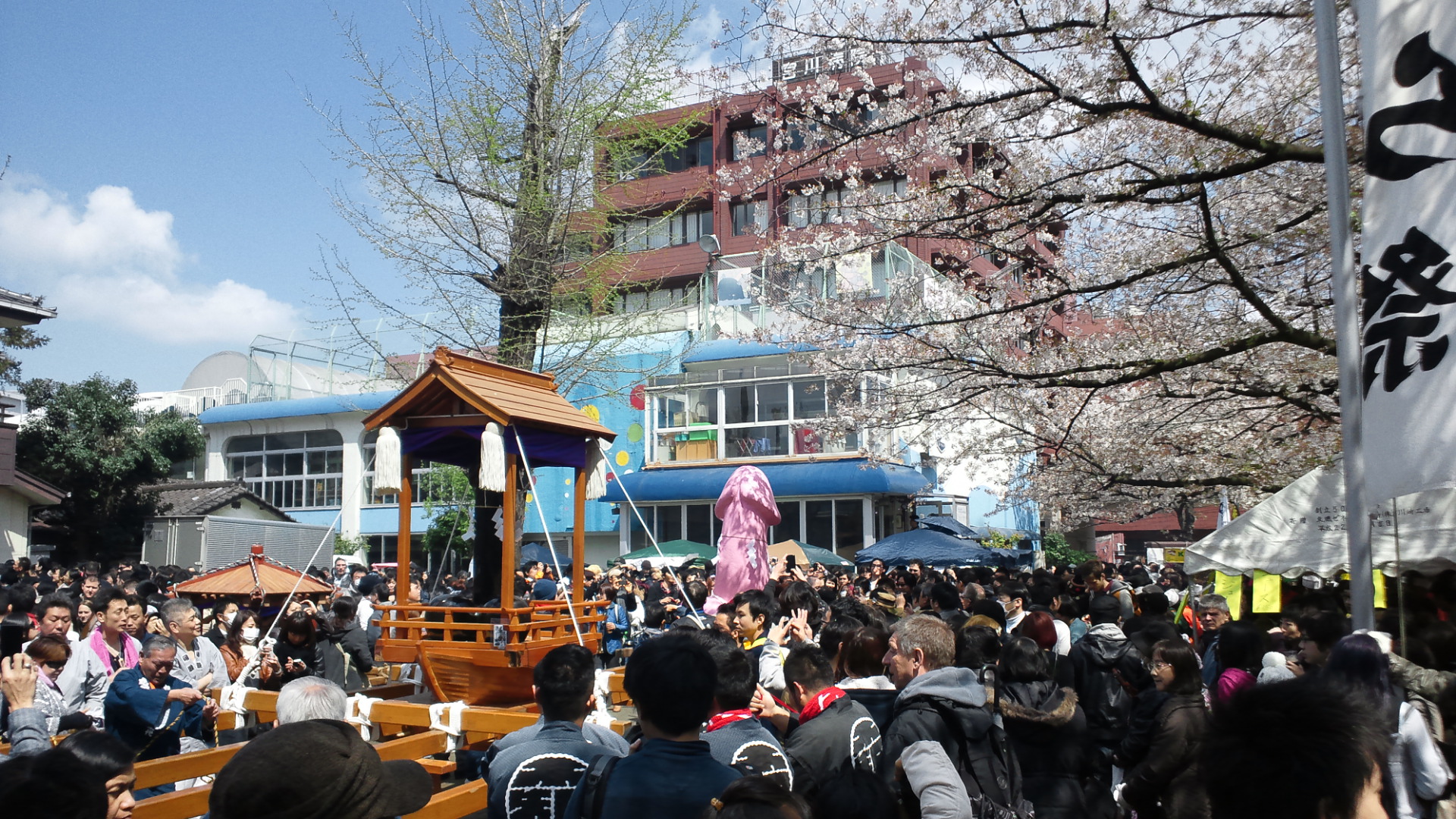
To understand Kanamara Matsuri in context, it helps to know a few terms that surface again and again. A matsuri is a festival, usually one anchored in shrine life and communal observance. A 神輿 (mikoshi, portable shrine carried in a procession) is a portable shrine carried in procession, and here the phallus-shaped mikoshi are the visual centre of the day. Yoyaku, or a reservation, is less relevant than in restaurant culture, but planning still matters because crowds are large. And if a visitor is trying to understand kanamara matsuri kanji or find kanamara matsuri japanisch lernen resources, the festival is a useful entry point: it gathers shrine vocabulary, ritual language, and a few durable symbols into one compact watershed of meaning.
Where the festival comes from
The origins of the festival lie in local customs and legends that treated phallic symbols as protective against sexual danger and as signs of fertility. One well-known legend tells of a demon that threatened men until an iron phallus defeated it, helping to establish reverence for a penis figure at the shrine. Whether one encounters that story as folklore, religious explanation, or local myth, it shows how the symbol became linked not only to reproduction but also to protection and resilience.
That layered meaning is part of why the festival has endured. In many traditions, objects that look startling from the outside are actually carrying older, practical concerns: safe childbirth, protection from harm, household continuity, and the unseen work of keeping life going. Kanamara Matsuri makes those concerns visible. It does so in a way that is unmistakable, but not necessarily frivolous. The festival’s humour is real, yet so is its devotional core.
What happens during the day
The event is built around procession and ceremony. Priests lead ritual proceedings, drums sound through the shrine grounds, and chants and music give the day a formal rhythm. The phallus-shaped mikoshi are carried in procession, turning a private emblem into a public one. Around that, the atmosphere expands into something more crowded and commercial, with sweets, keychains, posters, crafts, and other phallic decorations and souvenirs lining the path of the festival.
This balance between sacred rite and public spectacle is one reason the event attracts tens of thousands of visitors. Some come for the religion, some for the folklore, some for the photographs, and some because the festival has become part of broader pop culture conversation. I think it is easiest to understand when seen as both a shrine observance and a civic event. The two are not in opposition here. They feed each other.
For readers following kanamara matsuri news, the most reliable pattern is that the festival continues to be an annual spring gathering with a stable structure rather than a changing entertainment program. The date, the shrine, the processions, and the souvenirs remain the anchor points. The crowd may shift from year to year, but the event’s basic grammar stays recognisable.
Why it matters beyond the novelty
Kanamara Matsuri matters because it shows how a local festival can hold together religion, legend, commerce, and public curiosity without flattening into any one of them. The phallic imagery is what first catches attention, but the deeper subject is how communities preserve meaning through repeated acts. There is a kind of quiet seriousness in that repetition. The shrine, the priests, the drums, the chants, and the procession all assert that fertility and protection are not abstract ideas; they belong to lived life, family life, and the fragile business of health.
For visitors and readers interested in Japan’s festivals, the event also offers a clear example of how おもてなし (omotenashi, thoughtful hospitality; attentive service), or thoughtful hospitality, can extend to crowds rather than only to individual guests. The setting is busy, public, and commercially lively, yet it remains legible as a shrine event. That tension is part of the festival’s identity. It is not a museum piece, and it is not simply a joke. It is a living tradition under pressure from fame, and that fame has become part of its present-day shape.
Related festivals and helpful context
If Kanamara Matsuri draws interest, it often sits alongside wider curiosity about shrine festivals, fertility rites, and seasonal observances across Japan. Readers who want more context may also look at other matsuri that blend procession, prayer, and public gathering, though few have the same international reputation or the same immediate visual shorthand. For a closer look at how the festival is presented in contemporary reporting, this Kanamara Matsuri guide zum Fest des Stahlphallus in Kawasaki offers a useful starting point, while this piece on Kanamara Matsuri als Japans berühmtes Fruchtbarkeitsfest places the event in the broader frame of fertility tradition.
For readers trying to learn more in a language-focused way, kanamara matsuri kanji searches often lead to shrine terminology, festival vocabulary, and the names of the deities associated with Kanayama Shrine. That makes the festival a surprisingly practical doorway into study. The vocabulary is concrete, the ritual setting is easy to picture, and the symbols are hard to forget. In that sense, kanamara matsuri japanisch lernen is less a gimmick than a real path into cultural reading: start with the shrine, the procession, and the story, then move outward to the words that hold them together.
How to begin learning more
The best starting point is the shrine itself, followed by accounts that explain the ritual and its local legends without reducing the festival to a punchline. Readers should look for material that names the deities, the annual timing, and the ceremonial elements, then place the souvenirs and crowds in relation to the religious core. That approach keeps the event from becoming either over-mythologised or oversimplified. It also leaves room for the ordinary human facts that make a festival lasting: repetition, care, and the willingness of craftspeople, priests, and visitors to return each spring.
If one wants a practical reading path, I would begin with the historical and ritual background, then move to contemporary coverage of the day itself, and finally to the visual culture of the event. The sweets, keychains, posters, and crafted objects are not incidental. They show how a local tradition travels into popular memory. And so it becomes a plan: follow the symbol, then the story, then the people who keep both in motion.
Frequently Asked Questions
When is Kanamara Matsuri held?
Kanamara Matsuri is traditionally held on the first Sunday in April at Kanayama Shrine in Kawasaki, Kanagawa Prefecture.
Why is Kanamara Matsuri associated with fertility?
The festival is tied to local customs and legends that treat phallic symbols as protective against sexual danger and as signs of fertility, birth, and sexual health.
What can visitors expect at the festival?
Visitors can expect phallus-shaped mikoshi, ritual ceremonies led by priests, drums, chants, music, and many themed sweets, crafts, keychains, posters, and other souvenirs.
What does the shrine represent?
Kanayama Shrine is associated with Kanayama-hiko and Kanayama-hime, deities linked to metalworking, protection, birth, and fertility.
Is Kanamara Matsuri only a tourist spectacle?
No. It is both a public attraction and a religious event with ritual and historical roots, which is why it is often described as a blend of shrine observance and pop culture spectacle.