
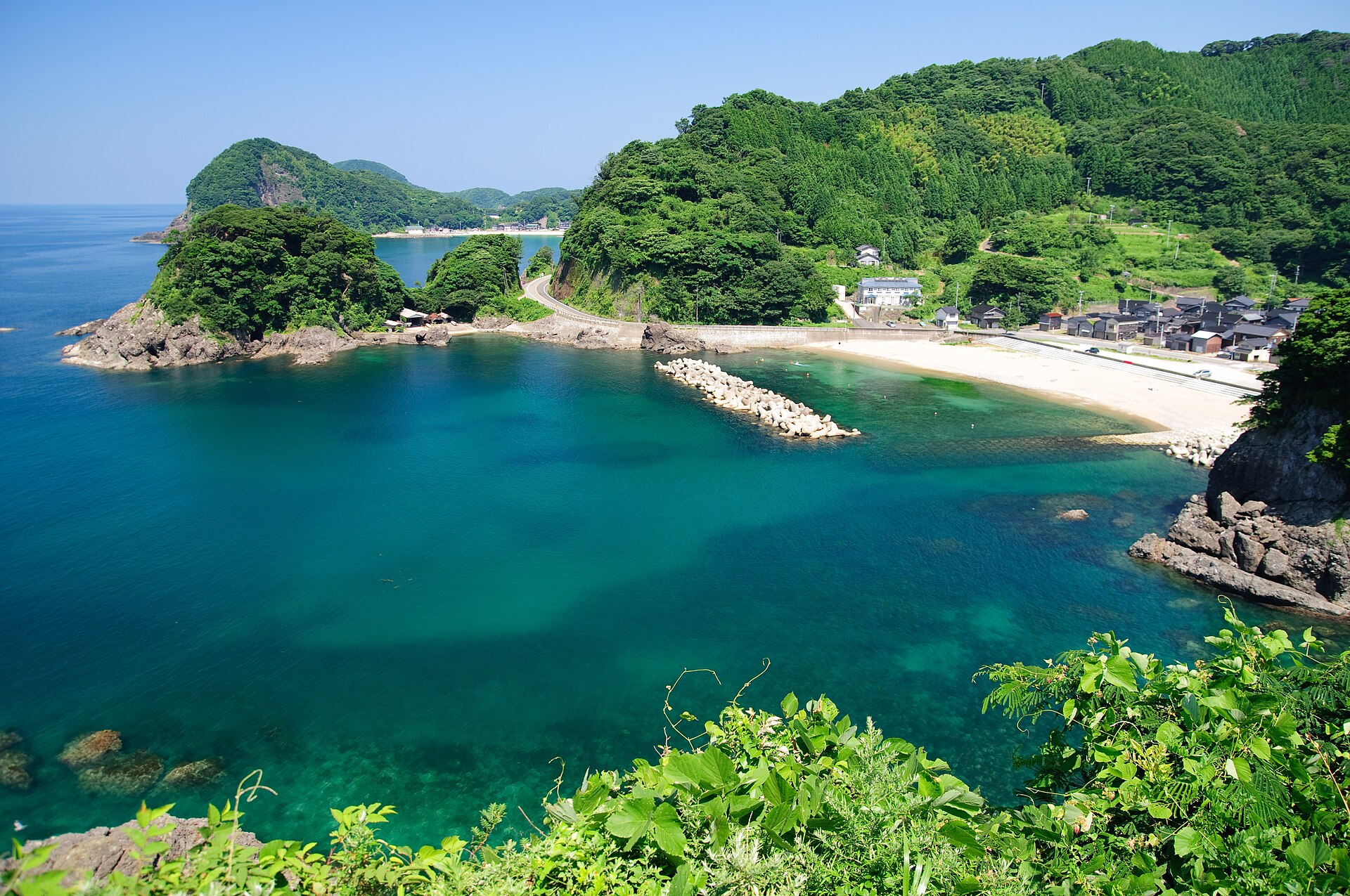
Overview
A Japan-Reise im August asks for realism. The weather is heavy, the air can sit at around 80 to 90 percent humidity, and temperatures often range from roughly 22 to 30 degrees depending on region and day. That means you are not coming for comfort in the soft, effortless sense. You are coming for texture: summer light, festival streets, mountain season, and the strange pleasure of a country moving at full seasonal volume.
The first thing to understand is timing. 梅雨 (tsuyu, rainy season), the rainy season, usually runs from early June to mid-July on Honshu, with a typical span of about 8 June to 19 July. By August, that wet stretch is generally over, but the season’s aftereffects remain in the form of heat, sudden showers, and a pace that rewards early starts. If you want a practical Japan-Reise im August guide, the answer is simple: go, but go with a plan. Wear the lightest shoes possible. Keep your day flexible. Minimize load. The summer asks for that kind of discipline. More than most places, Japan repays it.
For broader seasonal context, it helps to read Japan im Sommer: Tsuyu, Fuji und clevere Reiseplanung alongside the rest of your planning. The point is not to avoid August. The point is to understand what August is doing.
Why August can still work
August is one of those months that sounds worse on paper than it feels in practice, provided you manage expectations. There is a reason many local itineraries still run through the month. Summer festivals are in full swing, long days give you more usable hours, and some famous places are actually easier to enjoy because they are less crowded than in cherry blossom season. That matters. Fewer people means quieter visits, better photos, and less of the friction that makes busy sightseeing feel like queueing with scenery.
This is where the Japanese concept of おもてなし (omotenashi, hospitality; attentive service), meaning a form of attentive hospitality, quietly intersects with summer travel. The best hotels, 旅館 (ryokan, traditional inn), cafes, and transport staff are used to the rhythm of the season, and visitors who adapt to that rhythm tend to move more smoothly through it. A little 夜道 (yomichi, night-time walking; traveling at night), or night-time wandering, can also be useful in a different way: not as a grand detour, just as the practical habit of doing more after sunset when the air finally loosens its grip.
- August is hot, but it is also alive with seasonal events.
- Popular sights may feel calmer than during peak spring blossom time.
- Early mornings and late afternoons are the most workable outdoor windows.
- Short, sharp rain can interrupt a day and then pass.
Weather, rainfall, and the body
August in Japan is defined less by constant rain than by the body’s negotiation with heat. Tsuyu is usually already gone, but the atmosphere remains thick, and the temperature-humidity combination can be draining if you try to do too much in the middle of the day. The sensible strategy is almost embarrassingly basic: move early, rest hard, and let the city or landscape breathe around you instead of against you.
For practical movement, bring a collapsible umbrella. In summer Japan, an 傘 (kasa, umbrella), meaning an umbrella used for sudden showers or shade, is not optional kit; it is part of how people live through the season. You can buy one at a コンビニ (konbini, convenience store) for under 500 yen, which is exactly the sort of small, unglamorous detail that saves a day. If you are building a route through cities, temples, or waterfronts, keep your main outings for the early morning or the late afternoon. That is when the light softens, the humidity feels less aggressive, and the texture of place becomes legible again.
If you want an additional summer-planning angle, the guide on Japan Summer Travel Guide: Tsuyu, Fuji & neue Regeln 2026 is useful because it frames the season as a matter of rules, timing, and route choice rather than vague suffering. Which is what it is.
Mount Fuji in August: the big draw, and the strict one
If you are asking whether August is worth it, Mount Fuji is part of the answer. The official climbing season usually begins in early July and ends in early September, which means August sits squarely inside the window. The four main routes are Yoshida, Subashiri, Gotemba, and Fujinomiya, and the mountain is one of the clearest examples of how summer in Japan mixes access with regulation.
For 2026, the new Fuji rules reflect the country’s wider response to overtourism. There is a fixed entry fee of 4000 yen per person on all four routes, and the Yoshida route has a daily limit of 4000 hikers. There are also time restrictions aimed at stopping bullet climbing, the practice of trying to reach the summit without an overnight hut stop. On the Yoshida and Subashiri routes, the new rules apply from 1 July; on Fujinomiya and Gotemba, from 10 July. The checkpoint closures run from 14:00 to 3:00 for hikers without hut reservations, which is the opposite of the lazy assumption some people make. It is not about opening the mountain at 14:00. It is about closing off that window to discourage night assaults on the summit.
That matters if you are deciding whether August is the month to do Fuji. It can be, but only if you are prepared for the real conditions of access. Book ahead. Respect the rules. Do not improvise your way into a mountain plan. The mountain is not a theatre of spontaneity, and that is fine.
- Official climbing season: early July to early September.
- Main routes: Yoshida, Subashiri, Gotemba, and Fujinomiya.
- 2026 access rules: 4000 yen entry fee and stricter time controls.
- Reserve a hut if you plan to climb properly and safely.
Festivals, city nights, and the summer rhythm
August is also about 祭り (matsuri, festival), meaning festivals, and about 花火 (hanabi, fireworks), the fireworks displays that define Japanese summer evenings. These are not side notes. They are part of why people travel in this month at all. The country’s summer calendar includes large events such as Gion Matsuri and Tenjin Matsuri, along with local fireworks nights that can transform an ordinary riverbank or park into a temporary civic ritual.
Gion Matsuri is traditionally a July event, with the Yamaboko Junko processions as its high point in mid-July, but it helps to know where it sits in the seasonal arc because many travelers plan around the wider summer festival period, not a single day. In Kyoto, the Gion district also contains private lanes that are protected residential spaces. Entering those alleys where access is restricted can lead to fines of up to 10,000 yen. That is the summer travel lesson in a sentence: beauty and rules coexist. In Japan, they usually do.
August evenings, then, are best treated with a local’s discipline. Get there early. Eat something simple. Stand back when the crowd thickens. Let the event happen rather than trying to conquer it. The body notices the difference.
Where to experience August in Japan
If you want the month to make sense on the ground, choose places that reward seasonal timing rather than brute force. Mountains and highlands are obvious candidates because they offer a better relationship to temperature. Fuji is the headline, but it is not the only logic. Cities with strong evening culture, festival calendars, and accessible train connections work well too, because you can shift your day around the heat instead of fighting it.
Kyoto is excellent if you are interested in summer atmosphere, but you need to respect the rules of each district. Tokyo works if you build around mornings, museums, shaded neighbourhood walks, and evenings. Coastal areas and river settings can be good for hanabi and late walks. If you are the sort of person who likes to read a place through its movement patterns rather than just its sights, August gives you plenty to work with. It is a month of thresholds: inside and outside, wet and dry, early and late, crowded and empty.
For a practical visit, think in terms of access rather than attraction lists. Where can you go at 7 a.m.? Where can you sit down at 2 p.m.? Where does the schedule bend instead of break? That is the better August question.
Japan-Reise im August guide: who it suits
This month suits travelers who accept that summer is not decoration. It suits people who can handle humidity, who enjoy festivals, who want to see Fuji in climbing season, and who do not mind structuring a day around weather and crowds. It is less ideal if you want mild temperatures and frictionless sightseeing. August is not gentle. But it is coherent.
If you are also using the trip as part of Japan im Sommer 2026: Gion Matsuri, Hanabi und Regeln, the central idea is the same: plan around timing, not wishful thinking. That includes transport, accommodation, and the simple fact that the hottest part of the day is usually the worst time to be standing still.
And yes, there is a learning angle too. A Japan-Reise im August kanji search often turns up practical signs you will actually meet on the road: entries for weather, station exits, festival notices, and mountain regulations. If you are trying to learn Japanese through travel, August is useful precisely because the vocabulary is so immediate. A Japan-Reise im August japanisch lernen approach can start with the words you need at the point of use: rain, heat, reservation, route, and time restriction. That is not glamorous. It works.
So, is a Japan-Reise im August worth it? Yes, if you respect the season. No, if you expect the season to respect you first. More soon.
Frequently Asked Questions
Is Japan worth visiting in August?
Yes, if you plan around heat, humidity, and seasonal timing. August works well for festivals, Fuji season, and early-morning or late-afternoon sightseeing.
How hot is Japan in summer?
The summer air is often heavy, with humidity around 80 to 90 percent and temperatures roughly between 22 and 30 degrees depending on the area.
When does the rainy season end in Japan?
Tsuyu usually runs from early June to mid-July on Honshu, typically from about 8 June to 19 July.
Can you climb Mount Fuji in August?
Yes. The official climbing season usually runs from early July to early September, so August is inside the normal climbing window.
Do I need an umbrella in Japan in summer?
Yes. A foldable umbrella is a practical summer item, and konbini often sell one for under 500 yen.

