Overview
Here’s the shape of the story. For years, fans treated an Ocarina of Time remake as the sort of thing that lives forever in the leak cycle, just vague enough to fuel hope and just distant enough to dodge accountability. That changed when Nintendo officially revealed the project during a Nintendo Direct on June 9, 2026, confirming a November 5, 2026 release and tying it to the Zelda franchise’s 40th anniversary. So yes, the rumor is over. The interesting question now is what Nintendo actually changed, and why those changes matter.
![Dragon Ball Z: Kakarot [Master Edition]](https://s.pacn.ws/1/p/1eh/dragon-ball-z-kakarot-master-edition-908785.1.jpg?v=t8ja8t&width=400)

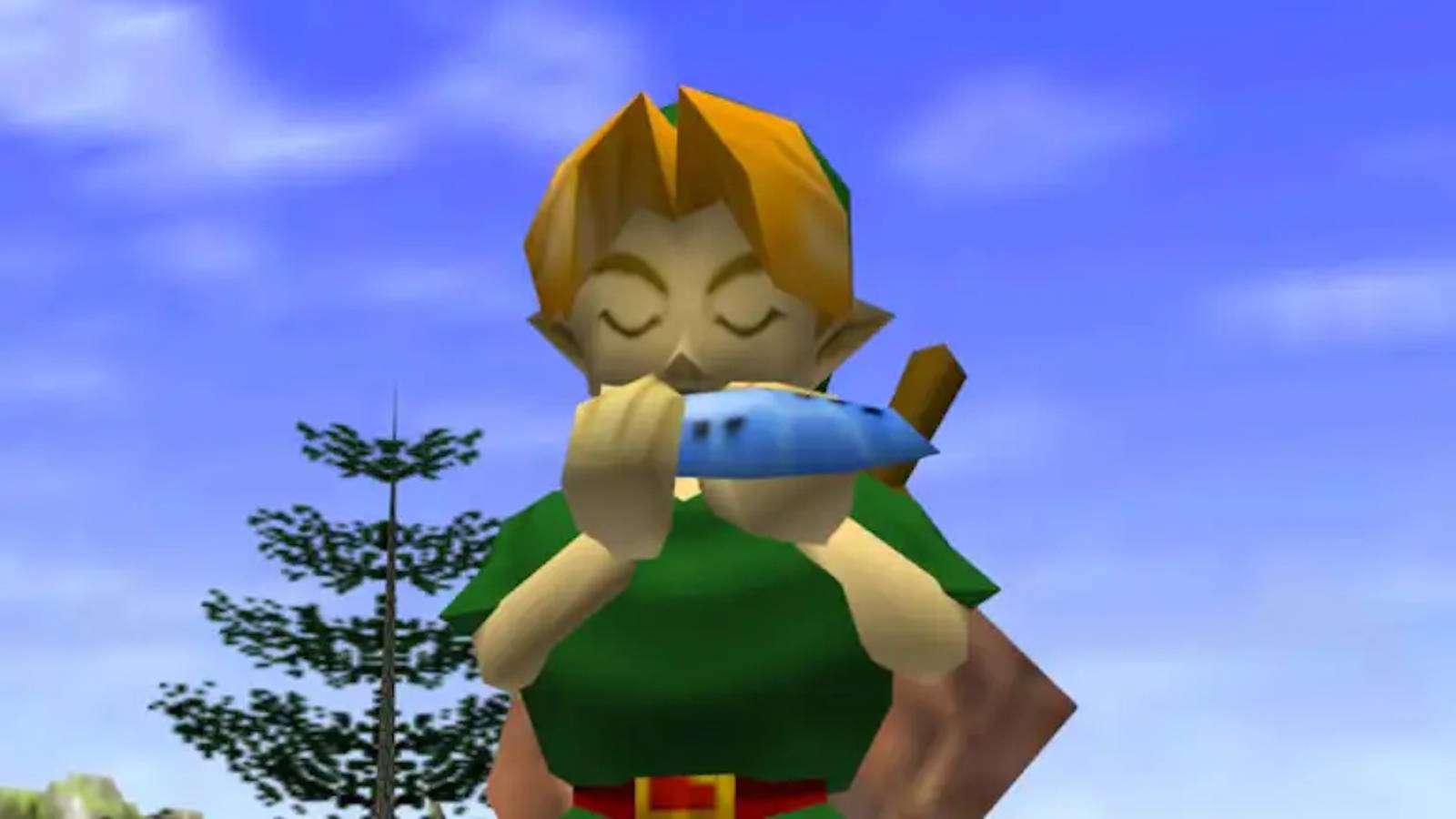
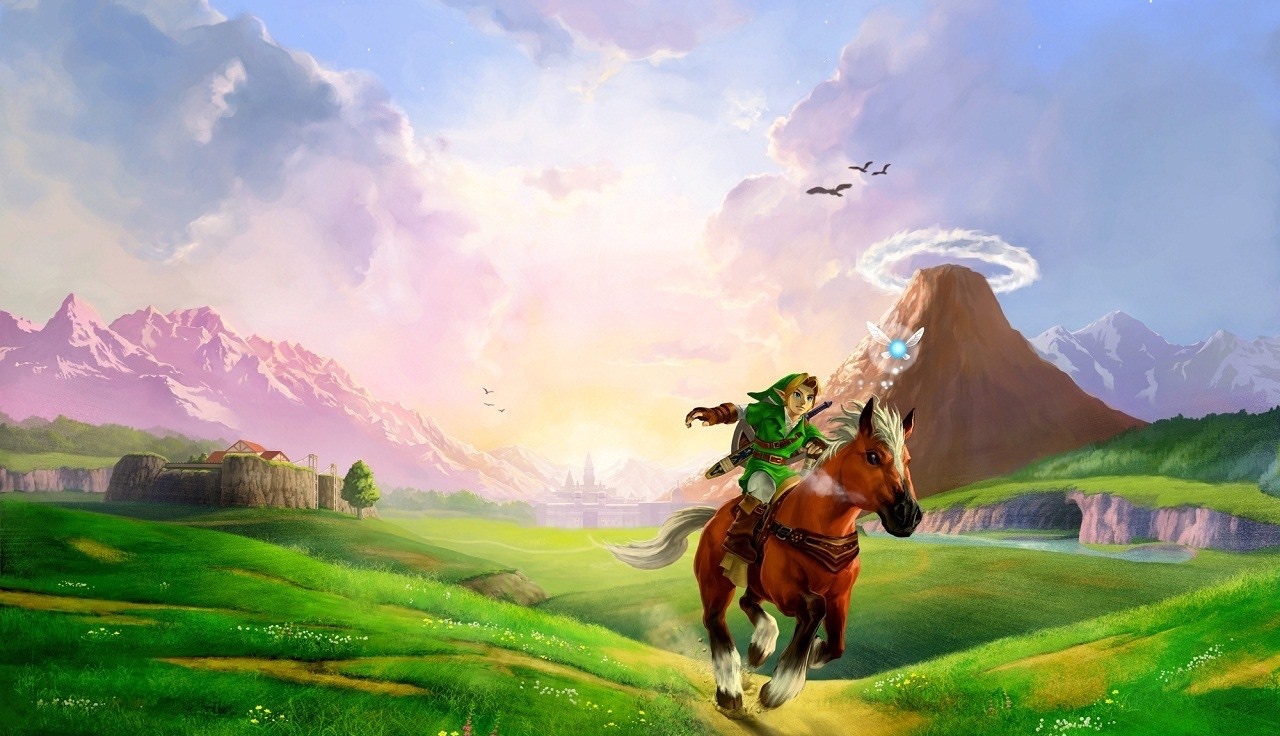
The original The Legend of Zelda: Ocarina of Time arrived on Nintendo 64 in 1998 and became a milestone for 3D action-adventure design. It was developed by Nintendo EAD under the broad creative legacy associated with Shigeru Miyamoto and Takashi Tezuka, and it sold in the millions over time. That reputation can become a trap. Remakes of famous games often collapse into museum preservation with shinier textures. Nintendo, however, is clearly not taking that route here. This remake is being positioned as a ground-up reconstruction with a stylized realism art direction, free camera control, a dedicated jump button, full voice acting for supporting characters, and broader system overhauls. In other words: not a coat of paint, but a redesign with a memory of the original still attached.
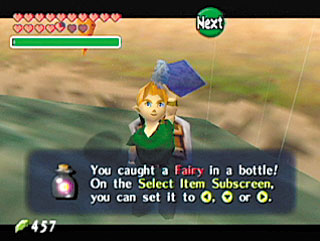
If you want the broader historical context, this is also the franchise that already experimented with modernization once before. Nintendo showed an updated Ocarina of Time tech demo at E3 2010 for Nintendo 3DS, and that line of thinking eventually led to the 3DS remake that followed in 2011. So the new Switch 2 project is not coming out of nowhere. It is the latest, and most ambitious, answer to a question Nintendo has been circling for years: how do you preserve a classic without trapping it inside old hardware assumptions?
Why the original still matters
Part of what makes this announcement noteworthy is that Ocarina of Time was never just another Zelda entry. It helped define how 3D action-adventure games could work on consoles, especially in terms of lock-on combat, dungeon structure, traversal pacing, and the now-obvious-but-once-radical idea that a big 3D space could be organized into readable, memorable zones. That design legacy is still visible in modern games, which is why a remake of this particular title attracts so much attention. You are not merely revisiting an old favorite. You are revisiting a blueprint.
The Nintendo 64 version also had technical constraints that shaped its form in very visible ways. The hardware ran with 4 MB of RDRAM, a 93.75 MHz NEC VR4300 CPU, tight geometry and texture budgets, and a development style that relied on LOD, clipping, fog, and cell-based packing to make spaces feel larger than they were. That matters because the remake is not simply polishing surfaces. It is rebuilding a game that originally depended on clever engineering to simulate scale. Once you accept that, the logic of the remake becomes much clearer. A modern remake should not imitate those limitations out of nostalgia. It should reinterpret them.
The five big changes Nintendo is making
The headline features are easy to list, but the real point is how they change play in practice, not just in theory. First, Nintendo is moving to a ground-up remake structure rather than a simple HD remaster. That means the game’s systems, presentation, and traversal rules can be re-authored instead of lightly touched. Second, the art direction is shifting to stylized realism, which is the sensible middle ground for a world that needs to feel grounded without surrendering the series’ mythic weirdness. Third, free camera control gives players modern spatial awareness; the original camera work was functional for its era, but nobody needs to pretend it was luxurious.
Fourth, the dedicated jump button is more than a control convenience. It signals that Nintendo is willing to reframe movement around direct input rather than the context-heavy logic of older Zelda games. That usually sounds small until you actually play something built around it, at which point the difference becomes annoyingly obvious in all the right ways. Fifth, supporting characters are getting full voice acting, which will change the remake’s tone considerably. Zelda has always lived in that space between fairy tale and solemn adventure, and voice performance can sharpen that atmosphere if it is directed with discipline. It can also smother it if the production gets too self-important. We’ll have to see which side wins.
There are also broader system overhauls, which is the kind of phrase that can mean anything from thoughtful quality-of-life updates to a complete rethink of progression. The point is not to fetishize novelty. The point is to modernize friction that no longer serves the game. That is the balancing act every remake has to figure out.
What the Switch 2 version means for players
Since this is a Nintendo Switch 2 exclusive, the practical question is simple: where do you play it? On Switch 2, presumably as a premium release through Nintendo’s digital store and physical retail channels, depending on how Nintendo structures distribution. If you want the original, you still have the historical version on Nintendo 64 and the later Nintendo 3DS remake as points of comparison. If you want to buy the new one, the answer will be the same platform family that Nintendo confirmed for the project. No mystery there, and thankfully no need to pretend otherwise.
For players, this exclusivity matters because Zelda remakes are not just compatibility exercises. They are hardware showcases. Nintendo tends to use these projects to demonstrate what its newest system can do when pointed at a beloved property with a massive memory footprint. That alone explains why the project has generated so much attention in the first place. Nostalgia gets people in the door. Hardware strategy keeps the door open.
If you are trying to understand the broader pattern, it helps to look at how Nintendo fans react to remakes in general. Interest is usually strongest when the remake promises preservation plus meaningful modernization, and weakest when it looks like a cynical repaint. That tension has been part of the conversation around Zelda for years, including coverage of fan expectations and remake fatigue like this discussion of why reactions can turn. The current project seems designed to avoid the most obvious trap: treating a legendary game as if presentation alone were the problem.
Release timing, rumors, and why confirmation matters
The release date now attached to the project is November 5, 2026, and the anniversary framing is not subtle. Nintendo is clearly using the 40th anniversary window to give the remake extra weight. That timing also helps explain why the rumor cycle was so persistent in the first place. Zelda speculation thrives on anniversaries because Nintendo has trained people to expect something meaningful around them. Sometimes that expectation turns into wishful thinking; sometimes it turns into a press-ready reveal. This time, it turned into the latter.
It is worth emphasizing that earlier coverage remained unconfirmed at the time. Rumor reporting can point in the right direction, but it is still rumor until Nintendo says otherwise. That distinction matters, because the difference between a leak and an official announcement is the difference between a conversation and a product plan. Now that the project is official, the relevant discussion shifts from whether it exists to how successfully Nintendo has translated a beloved 1998 game into a modern format without sanding off its identity.
And yes, that is the real test. A remake is never judged only on fidelity. It lives or dies on judgment: what to preserve, what to replace, and what old assumptions finally need to retire.
Related games and where this one fits
If you want to situate this remake inside the larger Zelda lineage, the comparison points are straightforward. The original Ocarina of Time established a template that later 3D Zelda games refined in different ways, while the 2011 Nintendo 3DS version showed that even an already-famous game could benefit from thoughtful reconstruction. The new Switch 2 version, by contrast, appears built to do something more aggressive than either of those predecessors. It is not merely updating assets or making controls less awkward; it is rethinking the entire delivery system around a modern audience.
- Original release: 1998 on Nintendo 64
- Earlier modernization: Ocarina of Time 3D on Nintendo 3DS in 2011
- New platform: Nintendo Switch 2
- Official release date: November 5, 2026
For players, that means the remake is worth watching even if you already know the original inside out. Especially then, frankly. Familiarity is precisely what makes design changes visible. When a game you know by muscle memory suddenly gives you freer movement, a different camera, or voiced support characters, you are forced to notice the assumptions the old version had buried. That is where remakes become interesting instead of merely decorative.
If you want the long arc in one sentence: Ocarina of Time began as a technical miracle on strained hardware, became a foundational 3D adventure, then returned first as a handheld reimagining and now as a full Switch 2 remake that treats modernization as a design problem, not a branding exercise. Which is why the original announcement mattered, why the rumor cycle mattered less, and why the five big changes do more than make the game look current.
Frequently Asked Questions
Is the Zelda Ocarina of Time remake officially confirmed?
Yes. Nintendo officially revealed the remake during a Nintendo Direct on June 9, 2026, ending the rumor phase.
When is the Nintendo Switch 2 remake releasing?
The confirmed release date is November 5, 2026.
What are the biggest changes in the remake?
Nintendo confirmed a ground-up remake with stylized realism, free camera control, a dedicated jump button, full voice acting for supporting characters, and other system overhauls.
Where can I play or buy it?
Nintendo confirmed it as a Nintendo Switch 2 exclusive, so that is the platform to watch for purchasing and play.
Is this the first time Ocarina of Time has been remade?
No. Nintendo previously released Ocarina of Time 3D on Nintendo 3DS in 2011 after showing an updated tech demo in 2010.