
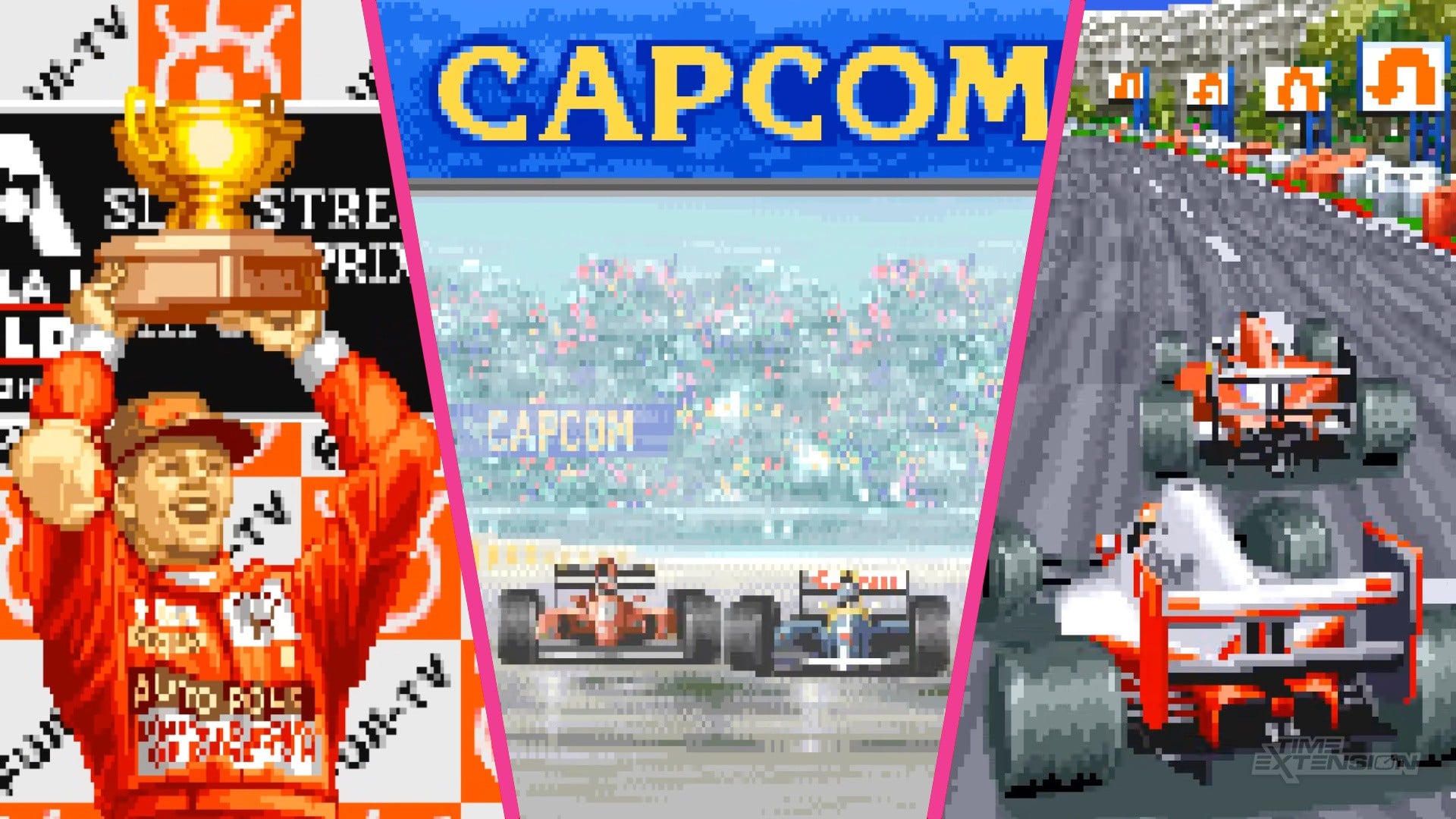
Picture this: a Capcom arcade game, running on Sega hardware, built in Japan, and remembered today by only a handful of hardware nerds. That’s the story of Slip Stream, a fast F1-style racer that slipped into arcades in the early 1990s and then almost vanished from the conversation. See what I mean?
![Dragon Ball Z: Kakarot [Master Edition]](https://s.pacn.ws/1/p/1eh/dragon-ball-z-kakarot-master-edition-908785.1.jpg?v=t8ja8t&width=400)


Here’s the deal: this wasn’t just any racing game. It was the only third-party title ever released for Sega’s System 32, a board that Sega designed to push 3D arcade visuals forward, right before the Model 2 era changed the whole scene. For Japanese game history fans, that alone makes it worth a closer look. Classic Japan, isn’t it?

Capcom in Japan and the birth of a strange arcade crossover
Capcom developed Slip Stream in Japan, and that detail matters more than it might seem. In the late 1980s and early 1990s, Japanese arcade makers were constantly trading ideas, hardware, and talent, but full-on third-party support for a Sega system was still unusual. Capcom was already known for action games and arcade craftsmanship, so seeing it step into Sega territory gave the project an odd, memorable edge.
The game’s original Japanese title was Slip Stream, and in arcade history terms, it sits in that awkward but lovely space between mainstream and obscure. It wasn’t built to become a legend; it was built to be a good-looking, high-speed racer, and it did that job well. Hand on heart: I always enjoy these near-forgotten releases, because they show how experimental the arcade business could be. From my experience...
Why Japan mattered to the project
Japan was the centre of production, from design decisions to the people actually building the game. That’s important because Japanese arcades in this era were not just entertainment venues, they were test labs. If a game could attract coin drops in Tokyo, Osaka, or Nagoya, it had a real chance of surviving. My tip: if you study game history, always follow the hardware trail back to Japan, because that’s where the most interesting stories usually begin.
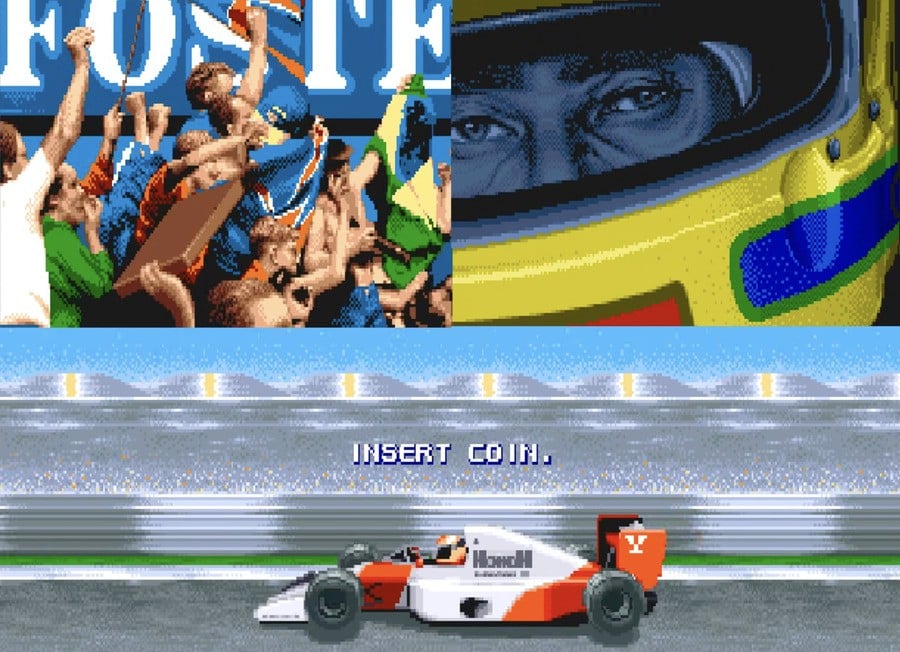
Slip Stream also reflects a very Japanese kind of precision. The car handling, the sense of speed, the clean visual design, all of it feels tuned for arcade play rather than home comfort. Trust me on this one: once you start comparing arcade racers from this period, you can feel the difference immediately. See what I mean?
System 32 and the lone third-party title
Ever wondered why Sega’s System 32 never got a bigger mixed-library life? Part of the answer is timing. Sega launched the board in 1991, and by then the arcade hardware race was moving fast, with developers eyeing newer 3D technology and more advanced sprite processing. System 32 was powerful, but its commercial window was short.
Slip Stream ended up as the only third-party game on the platform, which makes it a hardware outlier as much as a software one. Sega’s own games dominated the system, so Capcom’s presence stands out like a bright sign in a dark arcade hallway. And it gets better: because the board had such a limited life, this one title became a neat little bookmark in Sega history. Wait, there’s more.
The hardware side, explained simply
System 32 was built for arcade machines that needed speed, movement, and flashy 3D presentation. It sat in that transitional moment before polygonal racers became the norm, when game makers were still experimenting with how to fake or suggest depth. Slip Stream used that setup to deliver a racing experience that felt modern in 1993, even if it looks charmingly old-school now.
For Japanese language learners, there’s even a vocabulary angle here. Words like 高速 (kousoku) for high speed, or 自動車 (jidousha, car; automobile) for car, often show up in racing contexts, and arcade game descriptions are full of simple, practical terms. If you like learning through media, these dusty arcade boards are a great place to build your ear for how game-related Japanese gets used. Highly recommended: pair the history with a little language study, and it sticks better. From my experience...
Slip Stream as an F1 arcade racer and a rare piece of video game history
Seriously though: what makes Slip Stream special is not just its rarity, but its place in the racing-game timeline. This was an F1-style arcade racer, complete with the sort of tight track design and speed obsession that defined the genre. It wasn’t pretending to be a simulation; it was pure arcade momentum, all about corners, timing, and the thrill of shaving off tenths of a second.
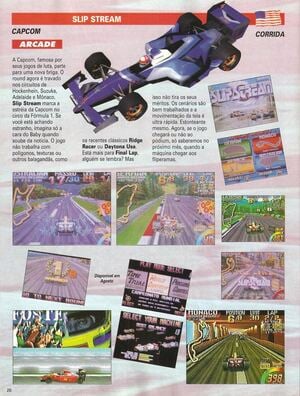
That racing focus is why collectors care so much about it today. The game is a rare piece of video game history, not because it sold millions, but because it represents a very specific moment when Japanese developers, arcade hardware, and Sega’s platform strategy briefly crossed paths. What I especially like: it’s a reminder that history isn’t only made by the biggest hits. Sometimes it’s made by the strange one-off projects that almost nobody expected to survive. That’s a very Japanese, 侘び寂び (wabi-sabi, the beauty of imperfection) kind of lesson, even if the term itself doesn’t belong to the game.
Why retro fans keep looking back
Arcade preservation depends on these tiny survivors, cabinet photos, operator manuals, and the people who still remember the machines. Without them, Slip Stream would be just another line in a database. With them, it becomes proof that Capcom and Sega’s relationship had more layers than most fans realise.
I still remember exactly how exciting it is to stumble across a game like this in a hardware list, because it forces you to ask better questions about who made what, where, and why. That’s the real fun of retro research, not just the screenshots. It’s the paper trail, the regional context, and the surprise of finding a Japanese-made Capcom racer on Sega hardware. Classic Japan, isn’t it?
Frequently Asked Questions
What was Capcom’s rare Sega arcade game?
It was Slip Stream, an F1-style arcade racer developed in Japan for Sega’s System 32.
Why is the game historically important?
It was the only third-party title ever released for Sega’s System 32, which makes it a rare hardware and software crossover.
Was the game made in Japan?
Yes, Capcom developed it in Japan, and that production context is a big part of its appeal to arcade history fans.


