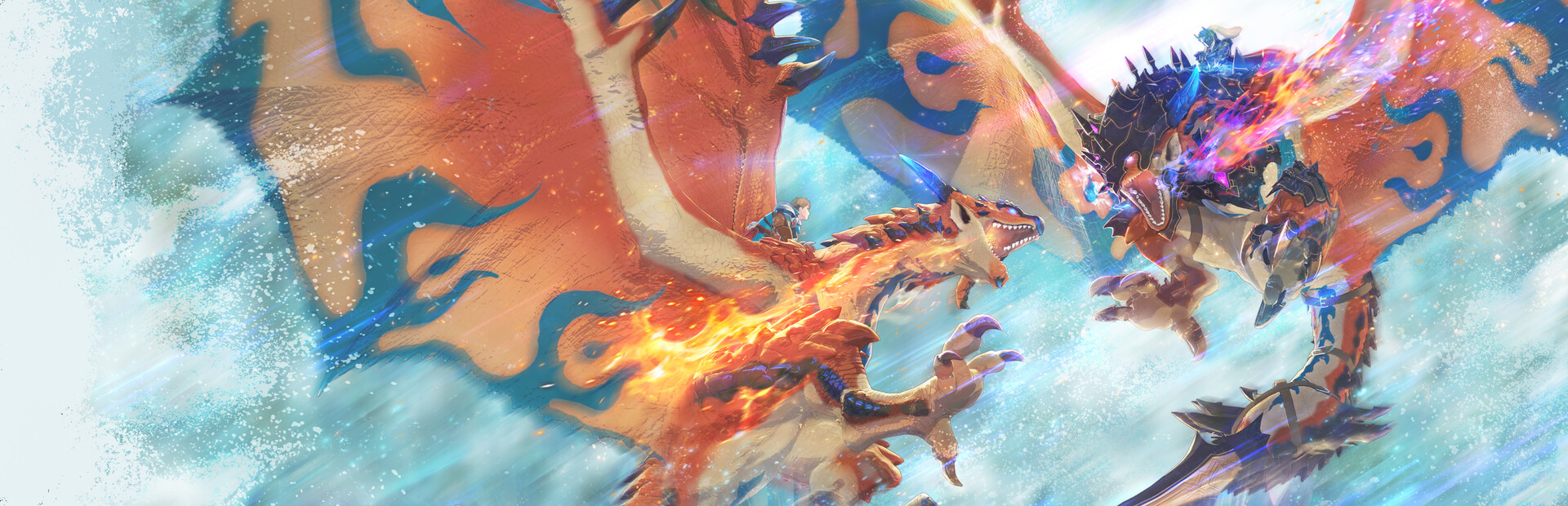
Capcom draws a line on AI replacement
Trust me on this one: when a company like Capcom speaks, the game world listens. The publisher behind Resident Evil, Monster Hunter, and Street Fighter has made it clear that generative AI isn’t there to take over the job of its developers, and that stance has stirred a lot of talk across Japan’s game scene. Hand on heart, that’s a strong position, especially at a time when so many studios are testing AI for concept art, testing, and support tasks.
![Dragon Ball Z: Kakarot [Master Edition]](https://s.pacn.ws/1/p/1eh/dragon-ball-z-kakarot-master-edition-908785.1.jpg?v=t8ja8t&width=400)


Capcom’s message is simple, really. AI may help with some workflow steps, but it can’t match the experience, taste, and decision-making of the people who actually build games. For a company with decades of hits behind it, that’s not just a PR line, it’s a statement about where creative control should stay. See what I mean?
Why Resident Evil and Monster Hunter matter here
Here’s the kicker: Capcom isn’t talking about tiny side projects, it’s talking about two of the biggest names in modern gaming. Resident Evil started in 1996 on the original PlayStation, while Monster Hunter launched in 2004 on PlayStation 2. Both series became global money-makers, and both rely on very different kinds of craft, one leans into horror pacing and cinematic tension, the other into action design, balancing, and social play.
That matters because these series are built on detailed human judgment. A monster’s attack pattern, the timing of a scare, the feel of a weapon, the rhythm of a boss fight, these are the sorts of things that can look fine on paper and still feel wrong in the game. No wonder, because players notice instantly when something feels off. Capcom seems to know that good game design isn’t just content generation, it’s taste, iteration, and a long memory for what fans love. Classic Japan, isn’t it?
What generative AI can’t quite copy
Basically, AI can remix existing patterns, but Capcom is pointing out that it still can’t keep up with developers who understand the whole picture. That includes art direction, level flow, pacing, difficulty curves, and the little surprises that make a game memorable. A model might spit out a sword design or a monster sketch in seconds, but that doesn’t mean it knows why a hunter game feels best when the risk-reward loop is just right.
My tip: if you’re studying Japanese, this is a neat topic for vocab building too. Words like 買い物 (kaimono, shopping) are useful, but here you’ll want terms such as 開発 (kaihatsu, development) (development), 技術 (gijutsu, technology; technique) (technology), and 創造 (souzou, creation) (creation). If you read Japanese game news, you’ll often see phrases like 人工知能 (jinkou chinou, artificial intelligence) for artificial intelligence, and 作品 (sakuhin, work; piece) for a work or product. Handy stuff, and it makes industry articles much easier to follow. Personally...
Japan’s game industry and the AI debate
It’s early morning in Kyoto, and this kind of news fits the mood of Japan’s broader tech debate. Japanese publishers often move carefully when it comes to new tools, especially if those tools might affect a studio’s identity. Capcom, based in Osaka, isn’t the only company thinking about this, but its clarity stands out. While we’re at it, that clarity is part of why fans trust Japanese brands so much in the first place.
On the flip side, not every studio sees AI as a threat. Some Japanese publishers and smaller teams are already using it for idea generation, translation support, image cleanup, or QA assistance. Still, there’s a huge difference between using AI as a helper and letting it steer the creative ship. Capcom’s position suggests that for blockbuster series, human-led development still comes first, especially when brand reputation is on the line. Sounds pretty sensible, doesn’t it?
Why this matters for learners and fans
For Japan fans, this is more than a gaming headline. It shows how a major Japanese company talks about work, craft, and responsibility, and that’s a useful cultural clue. In Japanese business culture, a careful public statement often says as much as a bold one, and Capcom’s line here feels very deliberate. If you follow Japanese news in romaji, you’ll start spotting these patterns faster, and that’s a nice little win for learners.
Oh, almost forgot: this also tells us something about the mood in Japan right now. People are excited about AI, sure, but there’s a strong sense that creative industries shouldn’t hand over the keys too quickly. Hand on heart, I like that balance. It leaves room for new tech, while still respecting the people who make the magic happen. See what I mean?
For anyone who loves Japan and wants to keep up with the country’s game scene, this is exactly the kind of story worth watching. Capcom isn’t rejecting technology, it’s defending the value of skilled developers, and that’s a very Japanese kind of debate, careful, practical, and quietly firm. more Japan news on jpnerd.com
Frequently Asked Questions
What is Capcom saying about AI?
Capcom says generative AI should not replace its developers, because human creativity and judgment are still more important.
Which Capcom series are affected by this stance?
The discussion mainly relates to Resident Evil and Monster Hunter, two of Capcom’s biggest global franchises.
Why does this matter for Japan fans?
It offers a clear look at how a major Japanese publisher thinks about technology, creativity, and the future of game development.