

What Is the Tateyama Kurobe Alpine Route?
Picture this: you're standing in a corridor of snow walls that tower 20 metres above your head, somewhere high in the Japanese Alps at an altitude of around 2,450 metres, and you got there entirely by public transport. That's the Tateyama Kurobe Alpine Route for you.
The route stretches roughly 90 kilometres between Toyama City and Shinano-Omachi in Nagano Prefecture. It combines seven different types of transport, including cable cars, ropeways, trolley buses, and electric buses, to cross the Northern Alps. No single vehicle does the whole journey. Instead, you hop between connections like a very scenic relay race. The highest point is Murodo, the plateau sitting at 2,450 metres, and it's where you'll find the famous snow corridor called Yuki no Otani, typically open from mid-April to late June.
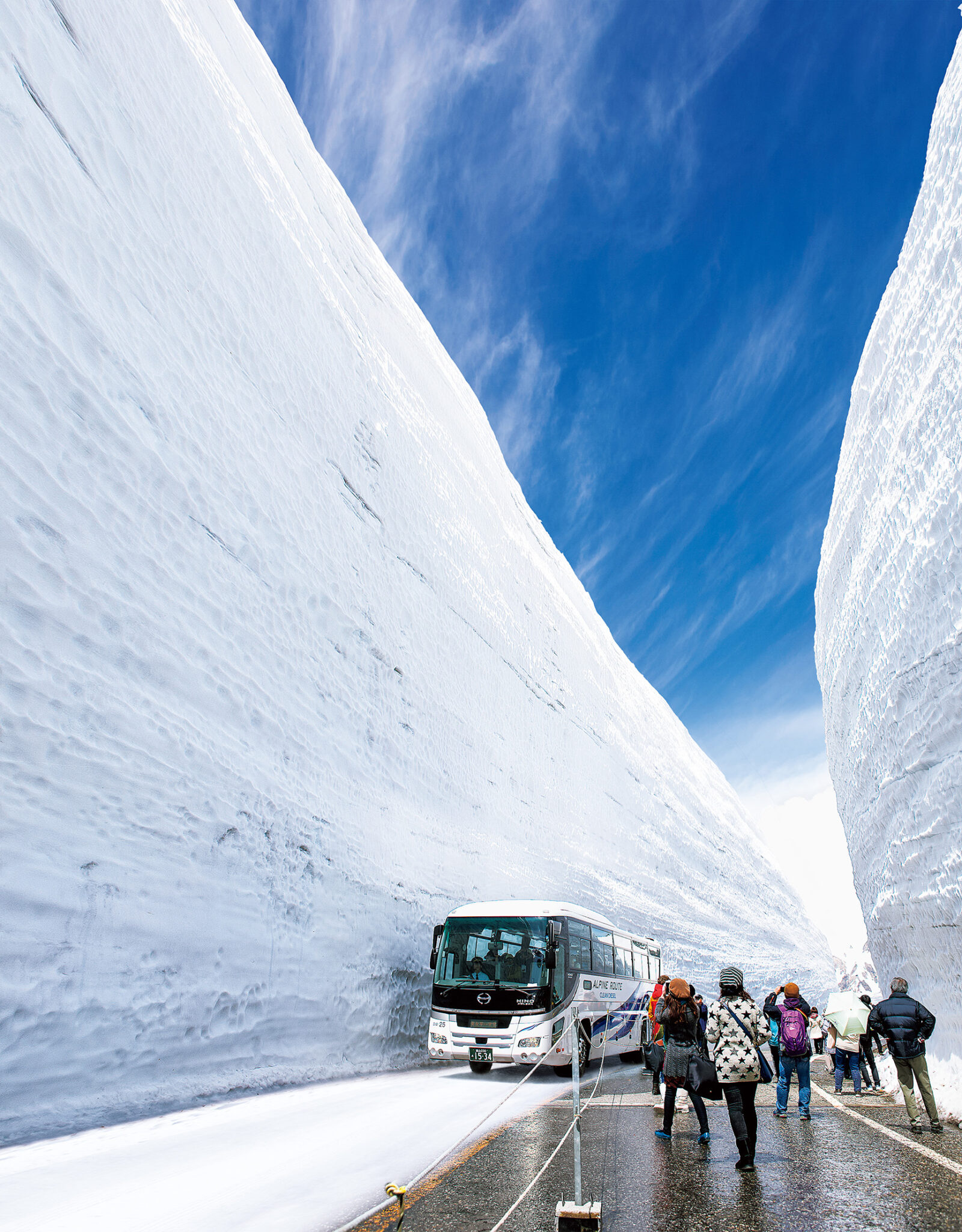
The route officially opens every year around mid-April and closes in late November. Peak season is May, when the snow walls are at their most dramatic. The kanji for the route's name, 立山黒部アルペンルート, gives you a clue about what's involved: 立山 means 山 (yama, mountain) Tate, and 黒部 refers to the Kurobe area, famous for its dam.
How to Do It as a Day Trip (Without a Car)
Here's the kicker: this is entirely doable without a car, and it's actually easier that way because private vehicles aren't allowed on most of the route anyway. The classic day trip approach is to start in Toyama, travel the full route to Shinano-Omachi, and finish in Nagano or Matsumoto. Or you can reverse it. Either works.
Getting to the Starting Point
From Toyama Station, take the Toyama Chiho Railway to Tateyama Station. The ride takes about an hour and costs around 1,200 yen. From Tateyama Station, the mountain transport chain begins: a cable car to Bijodaira, then a bus to Murodo. That bus ride alone is worth the trip. It passes through the snow corridor if you're visiting in spring.
What many overlook is that Toyama itself is easily reachable. The Hokuriku Shinkansen stops at Toyama Station, connecting it directly to Tokyo in about 2 hours and 8 minutes. From Kyoto or Osaka, you can reach Toyama via limited express in around 2 to 2.5 hours. No complicated logistics needed.
The Route Itself, Step by Step
Once you're at Murodo, you have a decision to make. You can spend time at the plateau and then continue east toward Nagano, or you can simply turn around and head back to Toyama the same way. For a true crossing, continuing is the better call.
From Murodo, the route heads down via the Daikanbo ropeway and then a trolley bus through a tunnel under the mountain to Kurobe Dam, the largest dam in Japan at 186 metres tall. The dam alone is a spectacle. After crossing the dam on foot, a cable car and then another ropeway take you down to Ogizawa, where a bus runs to Shinano-Omachi Station. From there, regular trains connect to Matsumoto and onward to Nagano or Tokyo via the Azusa limited express.
The entire crossing takes roughly 6 to 7 hours, including waiting times, which makes an early start essential. Aim to be at Tateyama Station by 8:00 or 8:30 at the latest.
Tickets, Costs and What to Expect
Hand on heart: this isn't a cheap day out. A full one-way ticket covering all transport segments from Tateyama to Ogizawa costs around 11,500 yen per person. Add train fares on both ends, and you're easily looking at 15,000 to 17,000 yen for the full day trip if you start in Toyama and end in Matsumoto.
That said, the Japan Rail Pass doesn't cover the alpine route transport. You'll need to buy the mountain segments separately. Some travel agencies and online platforms like Klook offer combined tickets, and buying in advance is strongly recommended during Golden Week in early May, when the route gets genuinely crowded.



My tip? Book the mountain transport tickets online before you leave home. The official Tateyama Kurobe Alpine Route website sells tickets in English and allows you to select your date. During peak season, departure time slots from Tateyama can sell out, so don't leave it to the last minute.
What to Wear and Bring
Unlike what we're used to in terms of spring weather, temperatures at Murodo in May hover around 0 to 5 degrees Celsius. Wear layers. A light down jacket, gloves, and a windproof outer layer aren't overkill; they're essential. The sun reflects hard off the snow, so sunglasses are worth packing too.
No serious hiking is required anywhere on the route. All the main viewpoints are accessible from the bus and cable car stops with only a few minutes of flat or gentle walking. That's exactly what makes this such a brilliant option for travellers who want dramatic alpine 景色 (keshiki, scenery) without the physical commitment of a full mountain hike.
What I especially like is the diversity of the transport. It's almost like a theme park attraction, except the scenery is completely real and genuinely awe-inspiring. Riding a trolley bus through a mountain tunnel, stepping out into snowfields the size of football pitches, then descending past a massive dam, all in one day. Not bad, right?
Japanese Language Connections Along the Route
Before I forget: if you're using this trip to practise your Japanese, the alpine route is actually a great environment for it. Station announcements, signs, and staff interactions give you real exposure to travel vocabulary. The word for ropeway is ropuwei, written as ロープウェイ, and cable car is koburuka or more commonly keeburuka, though you'll see it written as ケーブルカー everywhere. Dam is damu, ダム, and snow wall is yuki no kabe, 雪の壁.
The Murodo area sits in what's called the shizen kouen, 自然公園, a natural park zone. Signs in the area are bilingual, but making the effort to read the Japanese versions is good kanji practice. The kanji 山 (yama, mountain) appears constantly, and 雪 (yuki, snow) becomes very familiar very fast when you're surrounded by walls of it.
The best part? If you travel through Matsumoto at the end of the route, you're in a city with genuine castle culture. Matsumoto Castle, called Matsumoto-jo, 松本城, is one of Japan's original castles and worth an hour or two before catching your train onward. It's a satisfying way to end a day that started in the snow.
Convinced yet? The Tateyama Kurobe Alpine Route is one of those Japan experiences that genuinely lives up to the hype, and the fact that it's completely car-free and doable as a single day trip makes it accessible to almost any itinerary. Plan your timing, book your tickets early, and layer up.
For more Japan news on jpnerd.com, check out our latest articles.
Frequently Asked Questions
When is the best time to visit the Tateyama Kurobe Alpine Route?
Mid-April to late May is ideal for the famous snow walls at Murodo. The route opens around April 15 each year and closes in late November, with autumn foliage making October another popular period.
Do I need to book tickets in advance?
Yes, especially during Golden Week (late April to early May) and weekends in spring. The mountain transport segments sell out. Book via the official Tateyama Kurobe Alpine Route website or platforms like Klook before your trip.
Is the Japan Rail Pass valid on the alpine route?
No. The JR Pass covers the shinkansen and regular JR trains to reach Toyama or Matsumoto, but the mountain transport segments (cable cars, ropeways, trolley buses) must be purchased separately at around 11,500 yen one-way.


