
The Kyoto sakura record is now in new hands
I still remember exactly how Kyoto feels in early spring, when the air is still cool enough for a coat, but the light has already turned soft. The city seems to hold its breath around the first blossoms, and that tension between waiting and arriving is part of why the 桜 (sakura, cherry blossom) record matters so much.



For years, the history of Kyoto's cherry blossom dates was associated with Yasuyuki Aono, a climatologist who became known for treating old temple notes and seasonal records as serious scientific data. Now that work has a new steward, Genki Katata, who’s stepped into the role of guardian with the same mix of patience and rigour. He isn’t simply preserving a chart, he’s tending a long conversation between people, weather, and place.
Let's be honest: it would be easy to read blossom records as a charming side note, something for tourists and seasonal social media posts. But the Kyoto archive is more than that. It reaches back through temple diaries, historical logs, and the accumulated observations of people who noticed when the hills around the city began to blush. That’s one reason climate researchers value it so highly, because a record that long can reveal how warming temperatures are changing the timing of spring itself.
Yasuyuki Aono, Genki Katata, and the discipline of memory
What many overlook: records like these aren’t built from a single grand discovery. They depend on patient cultivation, the sort of work 職人 (shokunin, artisan; craftsperson) often understand instinctively, even when the craft isn’t wood or clay but data, archives, and interpretation. Aono spent years comparing historical texts with modern weather information, refining methods that could estimate blossom dates from centuries ago.
Before I forget: the reason Kyoto keeps appearing in this story is not only because it is beautiful, although it is. It’s also because the city has a deep paper trail. Temples, aristocratic households, and later scientific observers left behind enough detail that the arrival of blossoms can be reconstructed with unusual care. That makes Kyoto a kind of watershed for cherry blossom research, a place where history and climate science meet without forcing either one to disappear.
Katata's role now feels like an inheritance, but not in the sentimental sense. He’s taking over a system that has to stay credible, readable, and open to revision. Scientists don’t guard records by freezing them in place. They guard them by checking them, questioning them, and keeping them alive for the next reader.
Why this matters for hanami
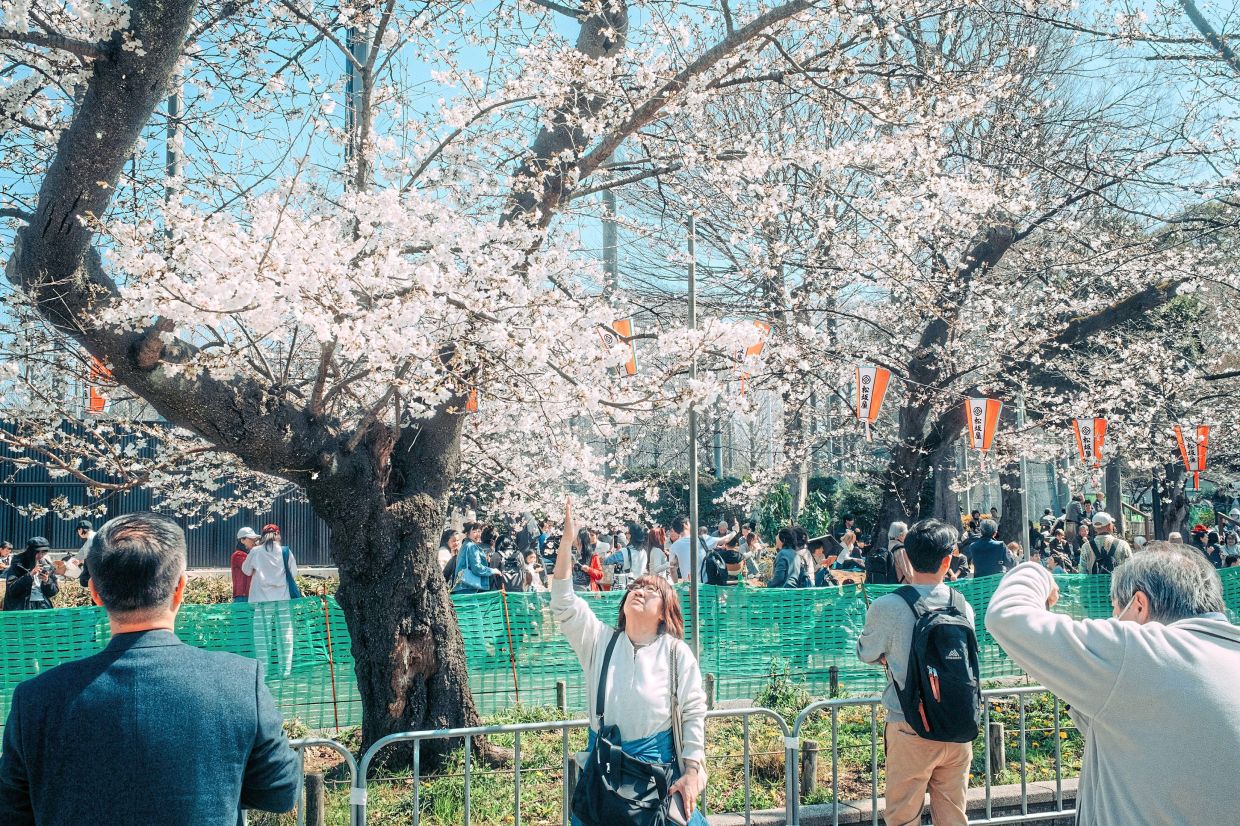
And it gets better: this isn’t just a story for climatologists. Anyone who has sat under a tree for 花見 (hanami, cherry-blossom viewing) knows that the season has a pulse of its own. You watch the buds, the forecasts, the first pale petals, and if you've lived in Japan long enough you start to feel how closely these moments are tied to the calendar, school ceremonies, work transitions, and the emotional reset of spring.
Imagine a narrow alley in Tokyo. A single branch reaches over a wall, and people stop without planning to. That reflex is what the Kyoto record measures in a slower, more disciplined way. It tells us when that pause used to happen, when it’s happening now, and how far the line has shifted.



My tip: if you're learning Japanese, this is a good topic for vocabulary that actually sticks. Words like sakura, hanami, 起点 (kiten, starting point), and 観察 (kansatsu, observation) are easier to remember when they’re attached to an image, a season, and a real place. I like that kind of learning because it feels less like memorising and more like noticing. Personally, that’s the whole point.
Kyoto, climate change, and the pressure on spring
No joke: cherry blossoms are one of the clearest public signs that climate change isn’t abstract. When temperatures rise earlier in the year, trees respond. Kyoto's record has become a reference point because it allows researchers to compare modern bloom dates with older ones and see a pattern that is hard to dismiss.
That pattern is subtle in any single year, but over a long span it becomes hard to ignore. The blossoms don’t disappear. They simply arrive at a different time, and that shift affects how people plan festivals, how schools and offices think about the season, and how families experience one of the most culturally loaded moments in the Japanese calendar.
Speaking of which... the emotional power of sakura comes from impermanence as much as beauty. The petals fall quickly, and everyone knows it. That briefness has always shaped the way people write poetry, hold picnics, and speak about spring with a kind of careful gratitude. When the calendar itself begins to drift, the feeling changes too. Not dramatically, but enough to notice.
How the record is passed on
Unlike what we're used to, this isn’t the sort of baton pass that comes with ceremony and applause. A guardian of historical blossom data works through documents, models, and long discussions with colleagues, often in quiet rooms far from the trees themselves. Genki Katata now carries that responsibility, and the weight of it is cultural as much as scientific.
And so it became a plan. Not a flashy one, just a necessary one, the kind built by people who understand that archives only matter if someone keeps reading them carefully. That is why Aono's groundwork matters, and why Katata's stewardship matters too. One measured the past. The other must help make sure the record stays usable as the climate keeps changing.
What I especially like: this story refuses to separate science from feeling. Kyoto's blossoms are not an ornament on the edge of research. They are the reason the research matters, and the reason the public pays attention at all. That mix of data and devotion is very Japanese to me in the best sense, though I say that cautiously, as an outsider who is still learning how much work goes into every apparently effortless spring scene. Wait, there’s more.
Frequently Asked Questions
Who is now guarding the Kyoto sakura record?
Genki Katata has taken on the role of guardian, following the work associated with Yasuyuki Aono.
Why are Kyoto blossom records important?
They help researchers track long-term changes in spring timing and understand how climate change affects seasonal cycles.
Why does hanami matter in this story?
Hanami gives the record cultural meaning, because the blossom dates shape how people experience spring in Japan.


