What Is the Kintoki Matsuri and Why Does It Matter?
Most tourists visiting Hakone head straight for the ropeway, the open-air museum, or a ryokan with a view of Fuji-san. That's fine. But the Kintoki 祭り (matsuri, Fest), held annually on May 5th as part of the Golden Week celebrations, belongs to a completely different category of experience. It's rooted in the legend of Kintoki, the boy hero of Japanese folklore, who is said to have been born and raised in the Hakone mountains. Locals call him Kintaro, and he's still something of a regional mascot.



The festival centres around a procession and ritual at Kintoki 神社 (Jinja, Schrein), a shrine tucked into the forested hills above Hakone-machi. This isn't a large-scale urban matsuri with massive floats and thousands of spectators. It's intimate. You can actually stand close enough to watch the kannagi (ritual performers) go through their movements, smell the cedar incense, and hear the drums echo off the hillside. Seriously though, that kind of access is rare in Japan's more famous festival circuit.
What most people don't know is that the festival grounds double as a genuine hiking destination since the trail up to Kintoki-yama, the peak associated with the legend, starts nearby. On a clear day, the view from the 1,212-metre summit is extraordinary. On a rainy May morning, it becomes something else entirely.
When Heavy Rain and Wind Hit Hakone-machi
Spring weather in the Hakone area is notoriously unpredictable. The region sits at altitude, surrounded by volcanic terrain that generates its own micro-weather patterns. The Hakone Hakonejo area sees significant rainfall even compared to other parts of Kanagawa Prefecture. During Golden Week in 2025, the Kintoki Matsuri went ahead under conditions that can only be described as properly grim: strong winds pushing rain sideways, visibility reduced across Lake Ashi, and the kind of cold that catches you off guard in early May.
Here's the kicker: the festival still ran. Not a scaled-back version or a postponement notice taped to a gate. The procession moved, the rituals were performed, and the handful of people who showed up, mostly locals and a few dedicated visitors, witnessed something genuinely unfiltered. There's a Japanese concept worth knowing here: 我慢 (gaman, geduldiges Durchhalten), written in romaji as gaman, meaning a kind of patient endurance, pushing through difficulty without complaint. Watching the festival organisers carry on in that weather, you understand gaman in a way no textbook quite captures.
Insider tip: if you're planning to attend any outdoor matsuri in Hakone, pack a proper rain jacket and waterproof shoes. Not an umbrella. Umbrellas become a hazard in mountain wind, and you'll spend the entire time fighting it rather than enjoying the festival.
Getting to Hakone-machi in Bad Weather
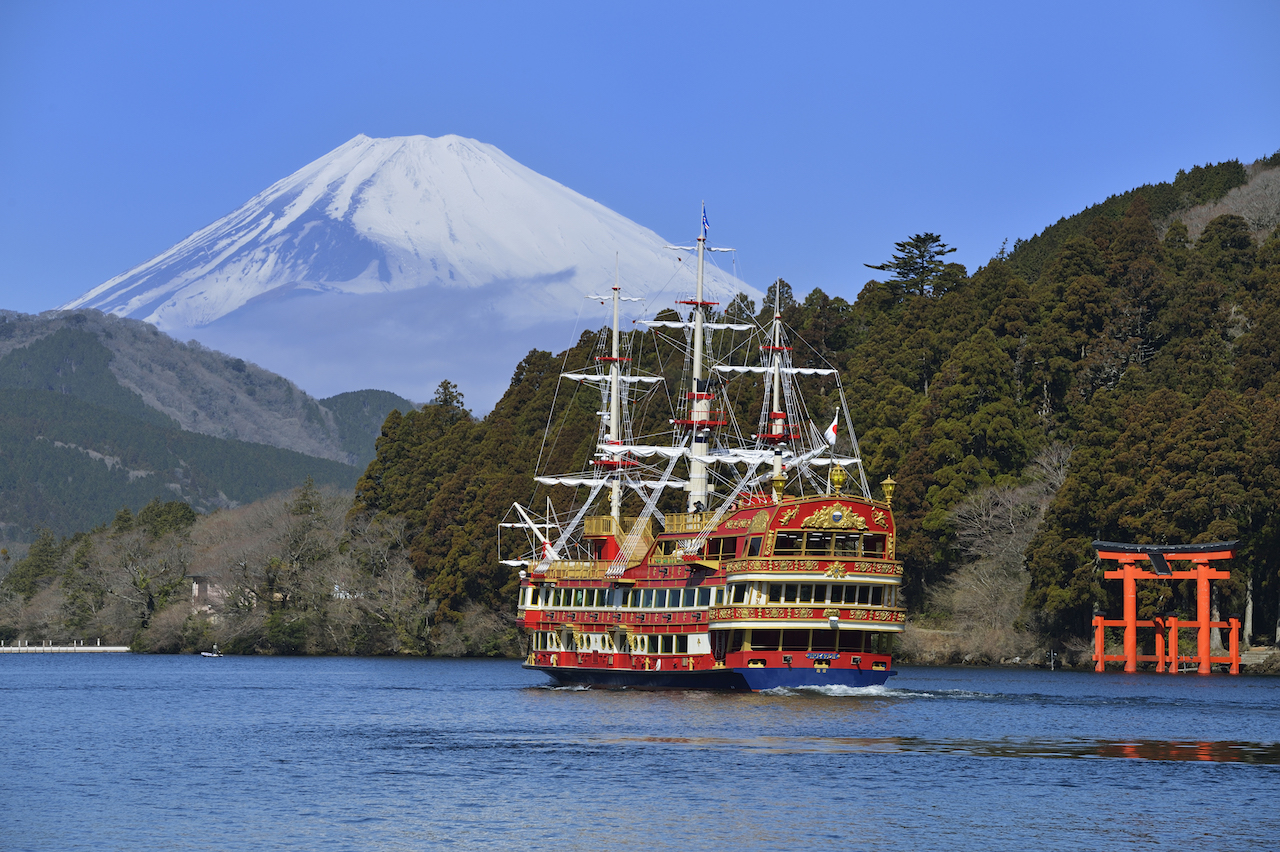
Hakone-machi sits on the southern shore of Lake Ashi and is easily reached by the Hakone Tozan Bus from Hakone-Yumoto Station or by the lake cruise from Togendai. In heavy rain, the cruise is cancelled or severely limited. That brings us to a practical point: always check the Izuhakone Bus and Hakone Tozan transport updates before heading out during Golden Week, especially if weather warnings are active for Kanagawa Prefecture. The bus runs reliably even in poor conditions, and the ride itself offers views of the lake and surrounding forest that feel genuinely atmospheric when the mist is low.
The Language Layer: Japanese You'll Actually Use at a Matsuri
Know that feeling when you arrive at a Japanese festival and suddenly realise your phrasebook is completely useless? Matsuri environments have their own rhythm and vocabulary. A few terms worth learning before you go:



神輿 (Mikoshi, tragbarer Schrein) refers to the portable shrine carried through the streets during processions. お守り (Omamori, Schutzamulett) are the protective charms sold at shrine stalls, you'll see them everywhere at Kintoki Jinja. 拝殿 (Haiden, Gebetshalle eines Schreins) is the main hall of worship at a Shinto shrine, where visitors clap twice and bow before offering a prayer. And お賽銭 (osaisen, Opfergeld am Schrein) is the offering box where you toss a coin before praying. None of these are complicated, but knowing the words means you can engage rather than just observe.
What I especially like about smaller regional festivals like this one is that the volunteers and shrine staff are almost always happy to explain what's happening if you show genuine interest. A simple "kore wa nan desu ka?" (what is this?) goes a long way. People appreciate the effort, even when the pronunciation isn't perfect. My tip: write down a few questions in romaji before you go, rather than relying on a translation app in the moment. Phone screens and rain don't mix well.
Why Small Local Festivals Deserve More Attention
Japan's most famous matsuri, Gion Matsuri in Kyoto, Awa Odori in Tokushima, Sapporo Yuki Matsuri, are genuinely spectacular. Nobody's dismissing them. But they're also managed tourism events at this point, with cordoned viewing areas, official merchandise stalls, and English-language pamphlets. That's not what you get at the Kintoki Matsuri in Hakone-machi.
Guess what? Smaller regional festivals are often where the actual living tradition still breathes. The people running the Kintoki Matsuri are the same families who have been doing it for generations. The rituals haven't been choreographed for cameras. The food stalls sell things locals actually eat, not just things that photograph well. And when the rain comes down hard and the wind picks up, nobody's checking whether the foreign visitors are having a good time. They're just getting on with it. See what I mean?
To be fair, this kind of experience requires more preparation than visiting a big-name festival. You need to know the dates (May 5th, annually), plan your transport, and accept that information in English will be minimal. But that's also exactly why it sticks with you long after you've left.
My verdict? If you're in the Hakone area during Golden Week and the weather turns ugly, don't retreat to your hotel. Put on waterproof gear and head to Hakone-machi. The Kintoki Matsuri in the rain is one of those experiences that reminds you why you came to Japan in the first place. Not bad, right?
Frequently Asked Questions
When does the Kintoki Festival in Hakone take place?
The festival is held annually on May 5th, which falls during Japan's Golden Week holiday period. It centres around a shrine in the Hakone-machi area and includes a traditional procession and ritual ceremonies.
Is the Kintoki Festival suitable for foreign visitors who don't speak Japanese?
Yes, though English signage is very limited. The festival is small and local, which actually makes it easier to observe up close. Learning a few basic Japanese phrases before you go will help you interact with locals and get more out of the experience.
What should I do if it rains heavily during the festival?
The festival generally continues regardless of weather. Bring a waterproof jacket and sturdy shoes rather than an umbrella, as wind on the hillside can make umbrellas difficult to manage. Check local transport updates in advance, as some boat services on Lake Ashi may be suspended during bad weather.