
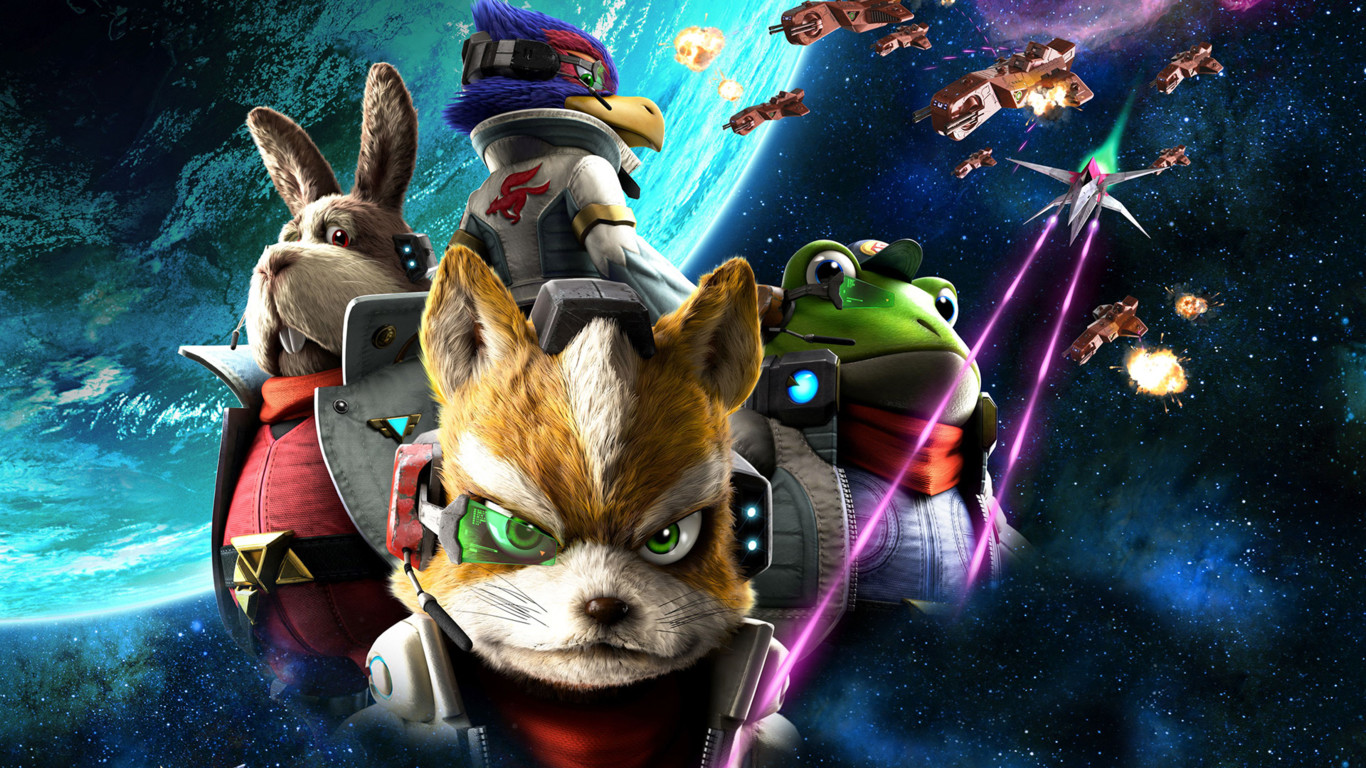
Star Fox 2026 is shaping up to be one of Nintendo's most talked-about comebacks, and IGN Southeast Asia put together a detailed side-by-side comparison with the legendary Star Fox 64 from 1997 that every fan of the franchise should see. Nearly three decades separate these two games, and the differences in design, character look, and overall direction tell you a lot about where Nintendo has been and where it's heading. Buckle up, because this is a proper nerdy breakdown.
From the N64 Era to 2026: A Nintendo Legacy Revisited
Star Fox 64 launched in Japan in April 1997 under the name Lylat Wars in some regions, and it basically defined what a rail shooter could be on home consoles. The game sold over four million copies worldwide and introduced the Rumble Pak accessory to a whole generation of players. That's not a small legacy to carry.
Ever had that feeling when you revisit something from your childhood and it hits differently as an adult? That's exactly what this comparison triggers. Fox McCloud's original N64 model was blocky, angular, and very much a product of its time, with chunky polygon limbs and a face that communicated exactly two emotions. Honestly, it had charm precisely because of those limitations.
What many overlook is that Star Fox 64 wasn't just a visual showcase. It was a masterclass in arcade-style game feel, tight controls, and branching mission paths that rewarded replay. Nintendo is carrying that structural DNA into the 2026 reboot, at least from what's been shown so far. Whether they can preserve that spirit while wrapping it in a modern coat is the real question here.
Star Fox 2026: What the New Design Actually Looks Like
Here's the kicker: Fox McCloud in 2026 looks almost like a different character at first glance. The new design features a much more detailed face with expressive fur textures, sharper ears, and an overall silhouette that leans into a slightly more realistic anthropomorphic style. Think less cartoon mascot and more cinematic hero. It's a deliberate shift, and you can feel Nintendo's attempt to appeal to both longtime fans and a newer audience that grew up on games like Star Wars Jedi: Survivor.
The Arwing, Fox's iconic spacecraft, has also been redesigned. The 1997 version was sleek but geometrically simple, all flat panels and hard edges. The 2026 iteration adds surface detail, engine glow effects, and what looks like weathering on the hull, giving it a lived-in quality that the original never aimed for. To be fair, asking a 1997 cartridge to render surface weathering would have been a bit optimistic.
Character Design Changes Worth Noting
Falco Lombardi, arguably the franchise's most beloved side character, also gets a visual overhaul. His colour palette is slightly darker in 2026, and his attitude, at least in promotional material, still reads as that classic mix of arrogance and loyalty. Slippy Toad and Peppy Hare appear updated but recognisable, which is probably the right call. Nintendo clearly doesn't want a backlash from the very fans who kept demanding this reboot for twenty years.
What I especially like is that the 2026 designs seem to keep the expressive cartoon eyes from the original era rather than going fully realistic. It's a small detail, but it keeps the characters from feeling like they belong in a different franchise entirely. From my experience, that's often where reboots lose people, when the soul of the design gets lost in the pursuit of technical fidelity.
The N64 Heritage and What Nintendo Owes It
Nintendo has a complicated relationship with its own back catalogue. On one hand, they've revived franchises brilliantly, with Metroid Dread in 2021 being a strong recent example. On the other, some beloved series sat in a drawer for decades while fans kept asking questions at every Nintendo Direct. Star Fox hasn't had a mainline console release since Star Fox Zero in 2016, and that game's divisive motion controls left a sour taste for many.



The reason is simple: Star Fox 64 set a bar that subsequent entries struggled to clear. It wasn't just nostalgia. The game had tight mission design, memorable voice acting with lines that became cultural touchstones, and a difficulty system that felt earned. "Do a barrel roll" entered internet vocabulary for a reason.
Speaking of which, there's a Japanese learning angle worth mentioning here. The phrase "do a barrel roll" in Japanese gaming culture is often referenced as "バレルロール (bareru roru, barrel roll)," a direct phonetic borrowing, which is a perfect example of how 外来語 (gairaigo, loanword), loanwords adapted into Japanese from foreign languages, work. Nintendo's franchises have contributed dozens of such terms to gaming vocabulary in Japan, from "kino" (Kirby) to "zelda," being spoken as "zeruda" by Japanese players. It's a small window into how Western pop culture gets absorbed and reshaped in Japan.
What the IGN Southeast Asia Comparison Actually Shows
The IGN Southeast Asia piece is worth reading in full because it lines up specific frames and design elements rather than just offering general impressions. They compare cockpit HUD design, character proportion changes, and environment rendering between the two eras. The Corneria city level, one of the most iconic in the original game, appears to return in 2026 with a dramatically expanded scale. Buildings that were simple rectangular blocks in 1997 are now detailed structures with visible windows and signage.
No exaggeration: the jump in visual fidelity is roughly equivalent to the leap from a hand-drawn map to Google Maps. But fidelity alone doesn't make a great game, and that's the conversation the comparison quietly invites. Simply brilliant visual design means nothing if the level structure doesn't give you reasons to fly through it more than once.
My tip is this: if you're a Japanese learner who also loves gaming, following Japanese Nintendo fan communities online is genuinely useful for picking up vocabulary. Terms like "懐かしい (natsukashii, nostalgic; fondly reminiscent)" (nostalgic, feeling fondly about the past) come up constantly in discussions about franchise reboots, and understanding that emotional register helps you read gaming commentary in Japanese much more naturally. Insider tip: Nintendo's Japanese Twitter account often uses straightforward, clean Japanese that's ideal for intermediate learners to follow.
So, Has Nintendo Actually Changed?
The honest answer is yes and no. Nintendo still controls its IP with an iron grip, still prioritises playability over raw technical benchmarks, and still designs for a broad audience rather than chasing a single demographic. That hasn't changed since 1997.
What has changed is the visual ambition. The 2026 reboot shows a Nintendo willing to invest in cinematic presentation for a franchise that used to live entirely in the arcade-style lane. Whether Star Fox 2026 will land with the same cultural weight as Star Fox 64 depends entirely on the game underneath the visuals. Oh, I almost forgot: Nintendo hasn't confirmed a release date beyond the general 2026 window, so there's still plenty of time for the internet to argue about Falco's new jacket.
See what I mean? The comparison isn't really about which game looks better. It's about what Nintendo chooses to honour and what it's willing to let go. Personally, I'm cautiously excited. The character designs respect the originals enough to feel like a continuation, and if the gameplay structure holds up, this could be the Star Fox revival fans have been waiting since the early 2000s to get.
More Japan news on jpnerd.comFrequently Asked Questions
When is Star Fox 2026 coming out?
Nintendo has announced Star Fox 2026 with a general 2026 release window, but no specific launch date has been confirmed as of now.
How does Star Fox 2026 compare visually to Star Fox 64?
Star Fox 2026 features far more detailed character models, richer environments, and cinematic presentation compared to the polygon-heavy but charming visuals of Star Fox 64 from 1997. The core character designs remain recognisable, but with a modern upgrade in detail and expression.
Is Star Fox 64 still worth playing today?
Yes. Star Fox 64 holds up well thanks to its tight controls, branching mission paths, and memorable level design. It's available on Nintendo Switch Online's Nintendo 64 library for subscribers.


