Overview
Here's where it gets interesting. The Star Fox franchise has always lived half in bright arcade spectacle and half in the peculiar seriousness Nintendo occasionally gives to its space dramas. On paper, it's a series about Arwings, explosive dogfights, and a cartoon fox leading a team across Corneria and Venom. In practice, it is also one of Nintendo's most mythologized properties, because the franchise keeps inheriting stories from outside the games themselves. The old Nintendo Power comic is one of those stories. It took Andross, a character who could have stayed a simple cosmic menace, and gave him a tragic backstory that changed how many fans read the entire series.
That matters because Star Fox is never just the games in isolation. The series began in 1993 on the Super Nintendo, developed by Nintendo EAD together with Argonaut Software, and it quickly established a space-opera identity that could support both action and lore. Star Fox 64, released in 1997, became the defining high point for a lot of players, while Star Fox Zero in 2016 was the last major prior entry before the current revival. If you want to understand why any Star Fox side material sticks, you have to understand how central that 64-era mythology still is.
For readers following The Making Of as a topic, the key point is simple: this is a rumored, discussion-heavy subject, not a random trivia dump. The franchise has genuine release history, real revival momentum, and a long tail of companion material that keeps getting re-examined whenever Nintendo points the spotlight back at Fox McCloud. The result is part news cycle, part memory exercise, and part forensic analysis of how a comic can quietly reshape canon perception without ever becoming canon itself.
How the series built its identity
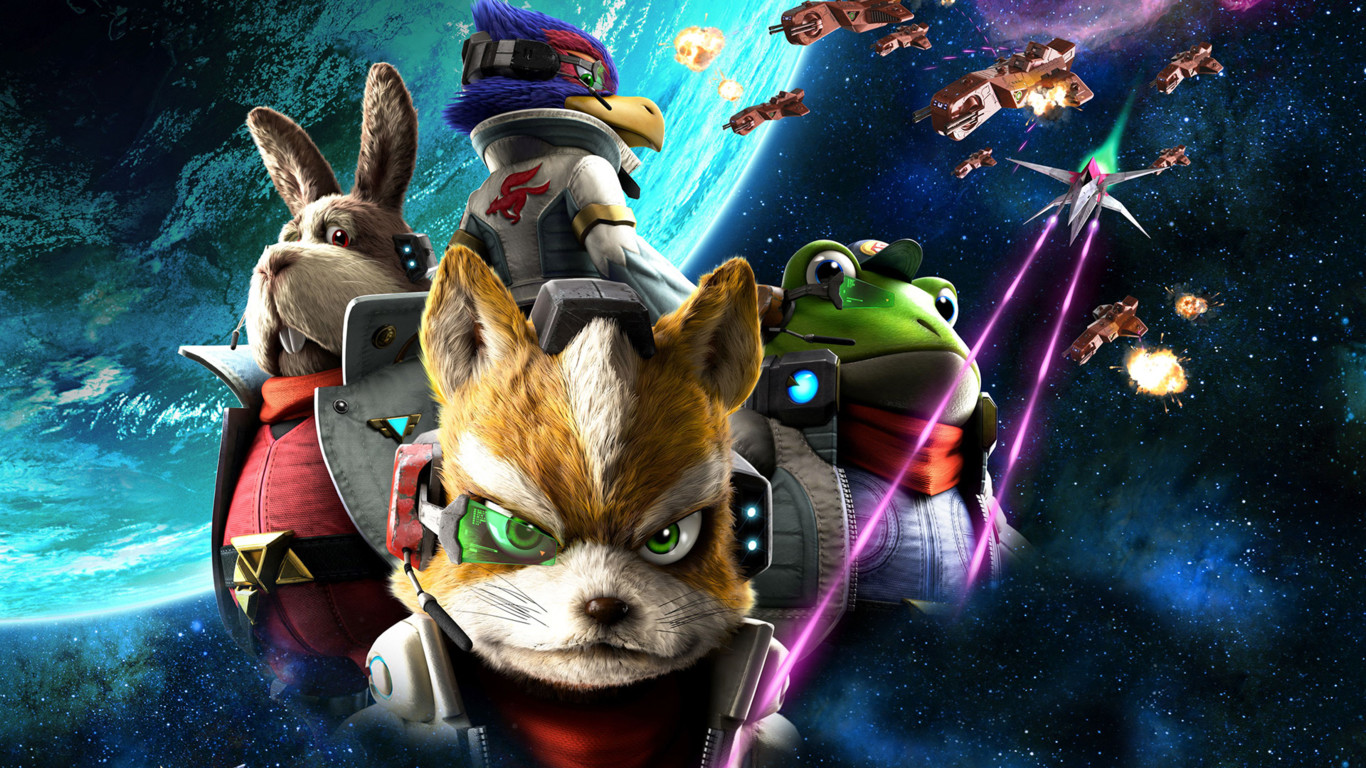
Star Fox works because it knows exactly what it is. The core appeal is not subtle. You pilot an Arwing, fly through tight routes, shoot down waves of enemies, and listen to a team of characters who are memorable because they are readable at a glance. Fox McCloud is the serious lead. Falco is the sharp-tongued rival who always sounds one comment away from taking the controls himself. Peppy is the veteran presence, and Slippy is the engineer who keeps reminding everyone that competence is a group project. That dynamic has survived because it is efficient, not because it is elaborate.
The franchise's mythology deepened over time, but the visual and mechanical grammar stayed consistent. Corneria signals order, Venom signals corruption, and Andross sits at the center of the conflict like a villain designed to be larger than the screen. That simplicity gave later writers room to add emotional weight. The Nintendo Power comic did exactly that, and it did so with the kind of seriousness that comic tie-ins sometimes use when they want to be remembered instead of merely printed.
There is also a practical reason Star Fox lore matters to Japanese culture and game-history readers: the series is an example of how ancillary media can influence fan interpretation long after release. That is a useful lens if you're trying to figure out why the revival hit N64 nerves so hard. The answer is partly nostalgia, but also structure. Star Fox keeps returning to the same iconic pieces because those pieces are durable.
What the Nintendo Power comic changed about Andross
The comic's biggest contribution was emotional reframing. Instead of treating Andross as a pure monster, it cast him in a tragedy that suggested loss, obsession, and a fall from grace. That is a familiar move in genre fiction, but it's not a trivial one here. Star Fox had not exactly been short on melodrama, yet the comic made the conflict feel more personal by implying that Andross was not born into villainy. He arrived there through damage, and damage is always easier to remember than abstract evil.
Why did that stick? Because it filled in a gap the games left open. The mainline titles gave you a war, a mission, and a face to shoot at. The comic supplied motive, tone, and a hint of pathos. In theory, this should have been disposable tie-in material. In practice, it altered the emotional texture of the franchise. You can still see that aftertaste whenever people discuss Andross as more than a final boss with a very bad attitude.
This is also where the broader discussion around The Making Of becomes interesting. A project like this lives in the overlap between official history and fan memory. It is the sort of thing that generates leak chatter, retrospective articles, and endless arguments over what counts as relevant lore. If you're chasing that conversation, a useful entry point is Star Fox remake rumours, because every revival cycle sends fans back to the same questions: what is the core of the series, and which side stories actually matter?
Release timing, revival coverage, and what was confirmed
Let's separate the confirmed facts from the rumor fog. Nintendo officially confirmed a Star Fox revival at a May 6, 2026 Nintendo Direct, and the project was reported as a remake of Star Fox 64 for Nintendo Switch 2 rather than a brand-new mainline entry. The reported release date of June 25, 2026 was later treated as more than speculation, because the game did in fact release on Nintendo Switch 2 on that date. The platform detail matters because it places the remake squarely inside the current hardware cycle instead of leaving it in some vague cross-generational limbo.
There was also a June 2026 poster-teaser presented through the Nintendo Europe account. By then, the revival had already been officially confirmed, and the teaser functioned as pre-launch marketing rather than as a mysterious breadcrumb trail. That distinction matters more than people admit. Marketing can be playful, but it can also create a false sense of discovery where there really is none. This one was simply part of the rollout.
Fan reception, meanwhile, had already been primed by external signals. Famitsu's May 31, 2026 most wanted games ranking included Star Fox, which is hardly shocking when a dormant favorite starts moving again. That kind of ranking does not tell you everything, but it does tell you where anticipation clusters. It also explains why reports about Star Fox entering Famitsu's most wanted games drew attention well beyond the usual niche.
Characters and why the lore still lands
The character set is compact, and that is part of the design's strength. Fox McCloud carries the emotional center. Falco provides friction. Peppy anchors continuity. Slippy supplies the team's vulnerable intelligence. Andross, meanwhile, remains the gravitational threat that keeps the story from floating away into pure mascot abstraction. The series does not need a sprawling cast; it needs a handful of readable roles that can be recombined across missions, remakes, and supplementary material.
The tragic Andross backstory worked because it made the rivalry feel asymmetrical in a new way. A simple good-versus-evil structure is easy to consume and easy to forget. A conflicted antagonist lingers longer, especially when the game itself still plays like a fast, direct, arcade-forward shooter. That tension between mechanical clarity and lore complexity is one of Star Fox's most enduring tricks. The franchise keeps looking simple until you start tracing the peripheral material, and then it becomes clear how much scaffolding has been built around it over the years.
That is also why casting and adaptation news matter even when they don't change gameplay. Glen Powell's confirmed casting as Fox McCloud in The Super Mario Galaxy Movie shows how far the character's visibility now extends beyond the games themselves. The old fantasy of a Star Fox film has become the more ordinary reality of cross-media franchise management. That is less romantic, sure, but it's also very Nintendo in the modern era.
Where to play or buy it now
If you want to play the current Star Fox remake, the confirmed platform is Nintendo Switch 2. That is the straightforward answer, and frankly the only one that matters if your goal is to experience the game rather than debate the marketing cycle around it. For older entries, Star Fox 64 remains the essential reference point, while the 2016 Star Fox Zero marks the last major prior chapter before the revival era took over.
For buyers, the sensible approach is to check Nintendo's digital storefront and major retailer listings for Switch 2 availability, because a revived first-party title tends to move through standard channels rather than through some exotic collector pipeline. If you are specifically interested in the lore side of the franchise, the older print material is harder to track down, which is exactly why retrospective coverage keeps resurfacing. That scarcity is part of the appeal (and part of the headache).
If you're approaching this from a culture and language angle, the series also offers a nice little side door into terminology. The word 漢字 (kanji, Chinese characters used in Japanese writing) refers to Japanese logographic characters, and in fan discussions it sometimes comes up when people search for the series name or side material in Japanese databases. Likewise, japanisch lernen can be a surprisingly useful query when you're trying to follow franchise history through Japanese coverage rather than English summaries. In other words: the lore rabbit hole is not just about Andross. It's also about how you navigate the source material in the first place.
Which is why The Making Of still matters. The comic did not change the games, but it changed how people remember them, and that is often the more durable kind of influence.
Frequently Asked Questions
What is The Making Of in this Star Fox context?
It refers to the long-running discussion around the old Nintendo Power comic and how it shaped fan understanding of Andross, not to a separate in-game feature.
Was the Star Fox remake actually released?
Yes. Nintendo confirmed the June 25, 2026 date, and the Star Fox remake was released on Nintendo Switch 2 on that day.
Is the new Star Fox game a completely new entry?
No. The reported project was a remake of Star Fox 64 for Nintendo Switch 2 rather than a new mainline game.
Why do fans still talk about Andross's tragic backstory?
Because the Nintendo Power comic gave Andross emotional depth that the games only implied, and that changed how many readers interpret the character.
Where can I play the current Star Fox release?
The confirmed platform is Nintendo Switch 2, so that's where the remake is available.