What Is Hirome Market – and Why Does It Feel Different?
Located in the centre of Kochi City in Shikoku, Hirome Market – officially written as ひろめ市場 (Hirome Ichiba, Hirome Market) – opened in 1998 and quickly became one of the most distinctive food spaces in all of Japan. The name itself comes from a historic term meaning "to spread" or "to make widely known," referencing the area's past as a gathering place near Kochi Castle.
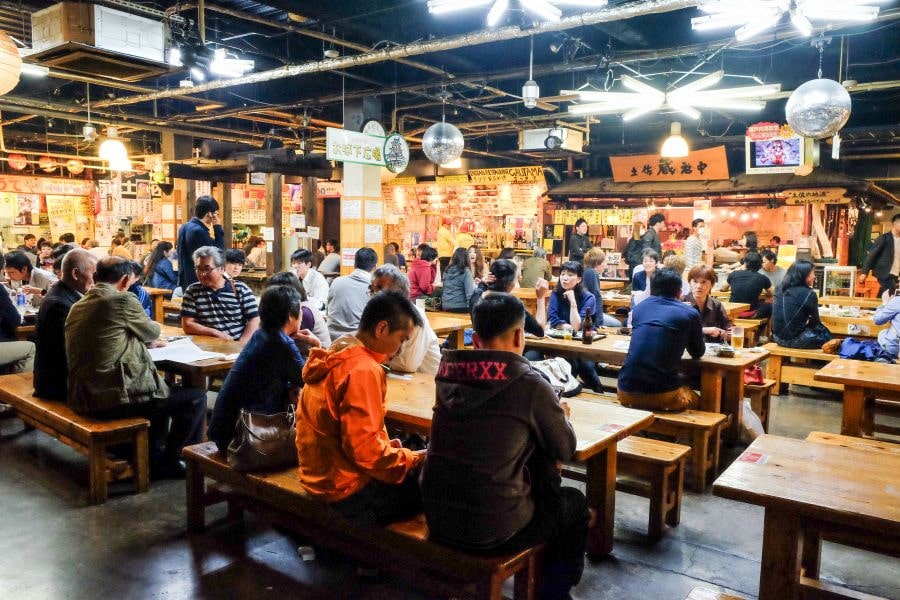
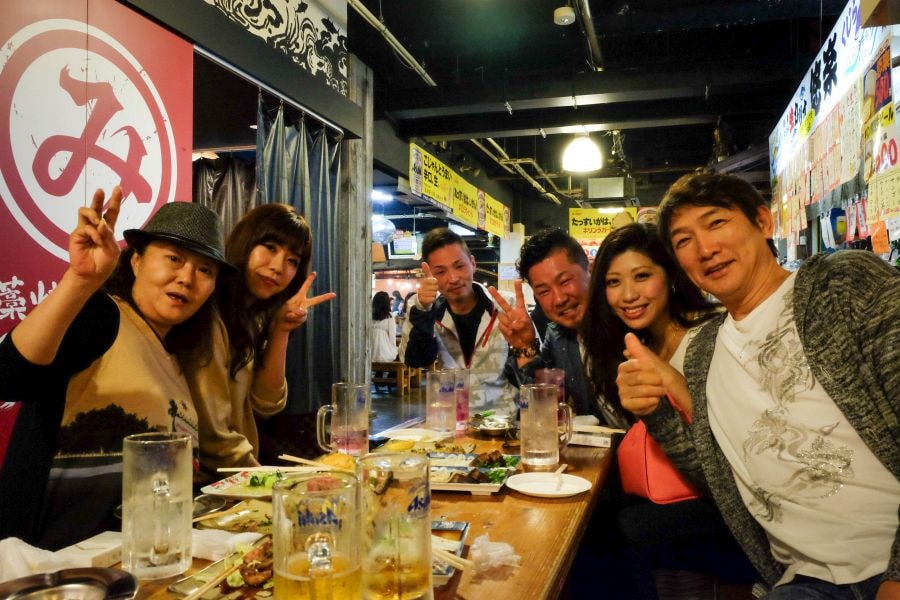
The market covers roughly 923 square metres and houses around 60 individual stalls and shops, ranging from izakayas and sashimi counters to craft shops and local sweet vendors. What makes it unusual, especially by Japanese standards, is its open communal seating. There are no reserved tables, no tray trays to carry back to a private booth. You order from whichever stall catches your eye, grab whatever is free at the shared wooden tables filling the central hall, and simply sit down. Your neighbour might be a retired fisherman, a group of university students, or a tourist from Osaka who got off the train an hour ago. That mix is entirely the point.
In Japanese food culture, this kind of informal, boundary-dissolving atmosphere has a word worth knowing: 賑わい (nigiwai, bustle, liveliness, thriving atmosphere.) Hirome Market has nigiwai in abundance, and locals are fiercely proud of it.
What to Eat at Hirome Market: Kochi's Culinary Highlights
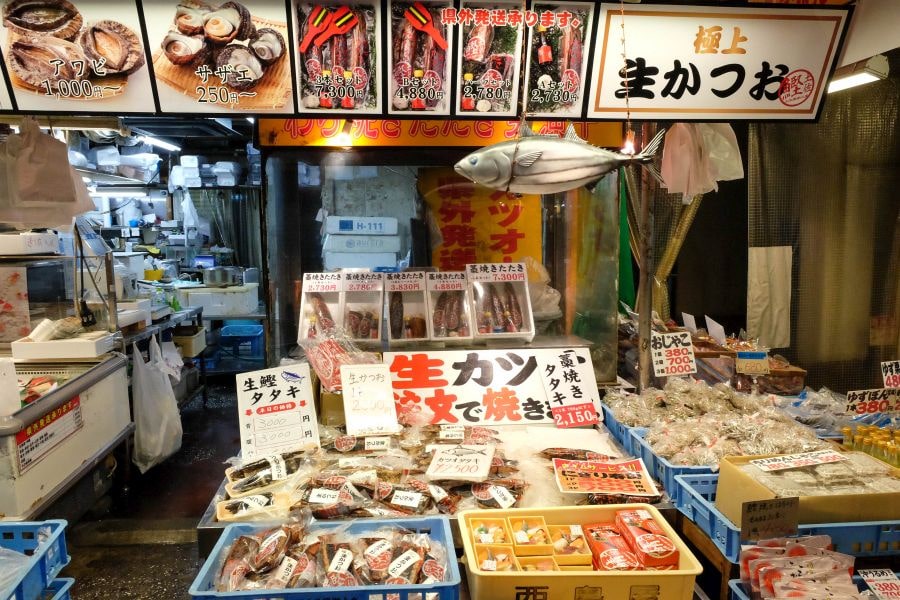
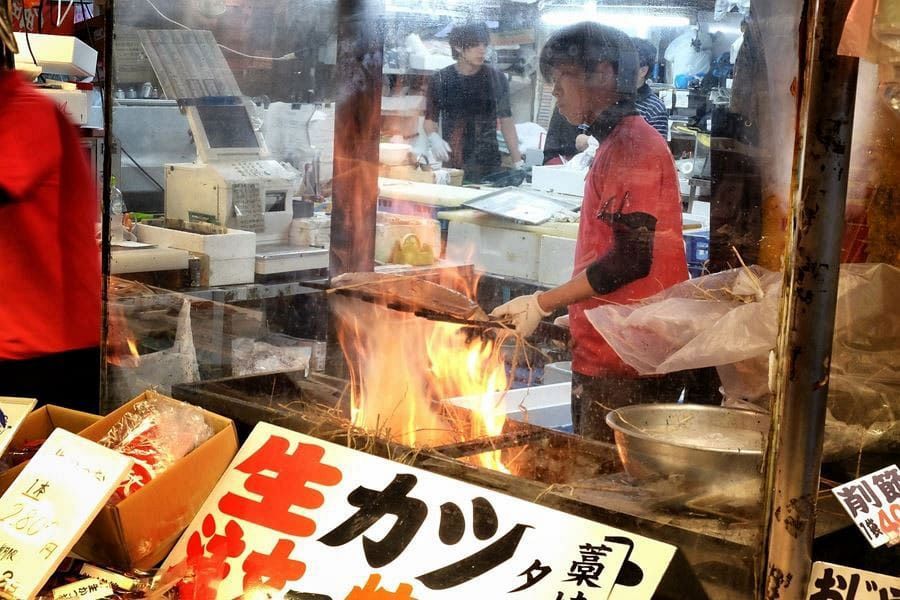
Kochi Prefecture sits along the Pacific coast of Shikoku and is famous for its seafood, particularly カツオ (katsuo, bonito/skipjack tuna.) The signature preparation you'll find at stalls throughout Hirome is katsuo no tataki: thick slices of bonito seared over an open straw flame (yaki-wara), served with garlic, ginger, and ponzu. It's widely considered Kochi's most iconic dish, and watching the flames roar up from a straw bundle at one of the stalls inside Hirome is a spectacle in itself.

Must-Visit Stalls
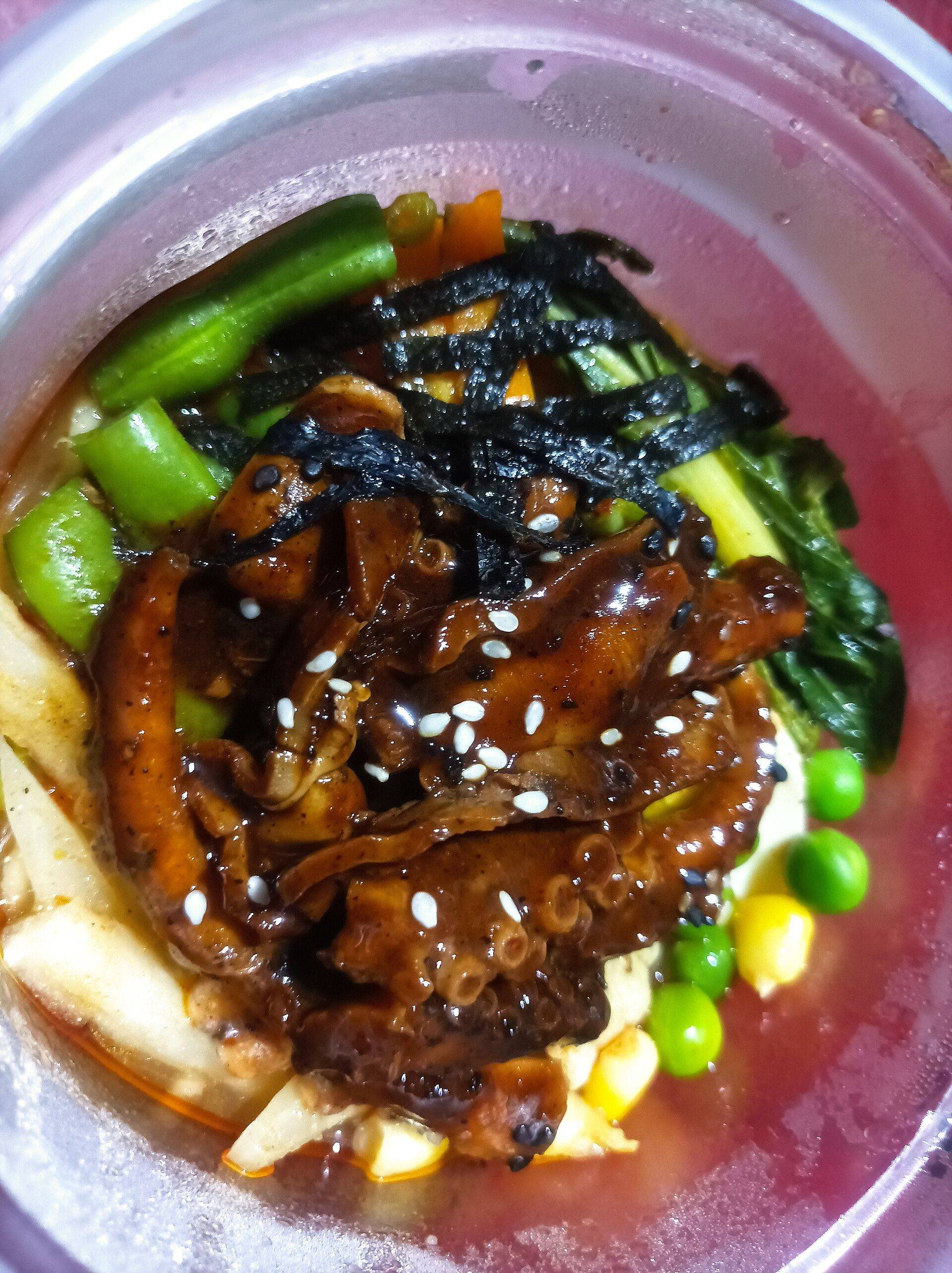
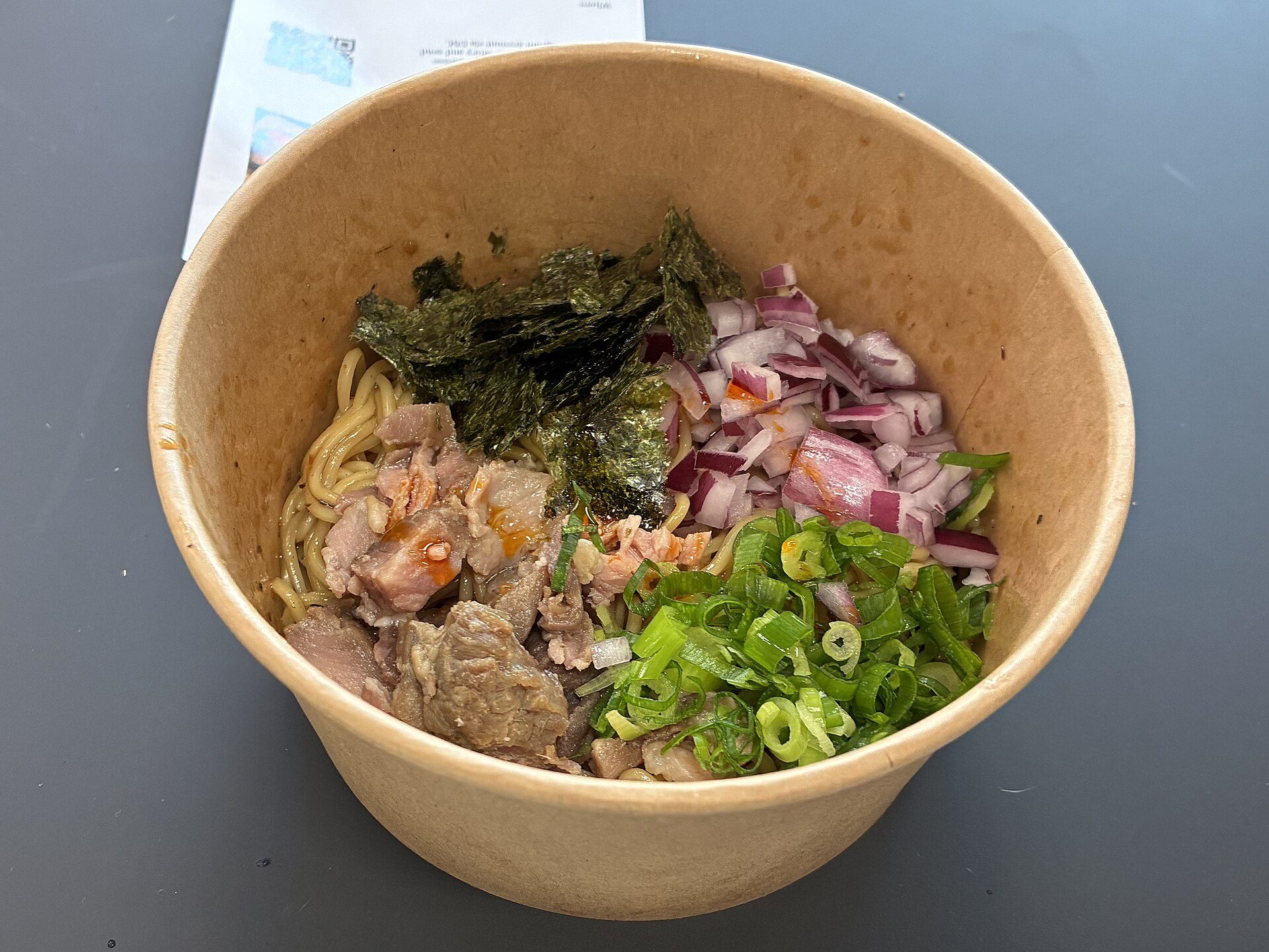
Among the most popular vendors is Myo no Katsuo, a stall known for its freshly seared tataki prepared to order. Portions are generous and prices are reasonable, a plate of katsuo no tataki typically runs between ¥800 and ¥1,200 depending on portion size. Alongside seafood, you'll find gyoza, yakitori, local ramen, and stalls selling Kochi's famous yuzu products, the prefecture produces more yuzu citrus than any other in Japan.
Drinking Culture at Hirome
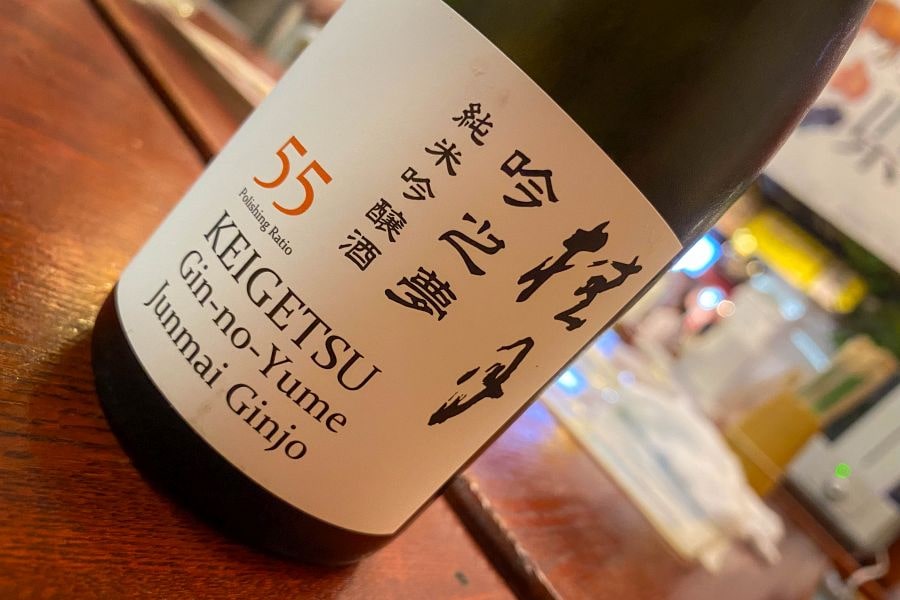
It would be a disservice to talk about Hirome Market without addressing the drinking. Kochi has a long-standing reputation as Japan's most enthusiastic drinking prefecture, a local pride that visitors encounter almost immediately. The market is busy from around 11 a.m. On weekdays, but on Friday evenings and weekends the communal tables fill up completely, with salarymen, families, and friend groups sharing beers, sake cups, and glasses of local doburoku (unrefined sake). The word for cheers – 乾杯 (kanpai, cheers / dry cup) – rings out constantly through the hall.



Hirome vs. Japan's Other Famous Markets
Japan has no shortage of celebrated food markets. Nishiki Market in Kyoto, often called "Kyoto's Kitchen," stretches 400 metres through a narrow covered arcade and focuses more on high-end ingredients, pickles, and street snacks for tourists. Tsukiji Outer Market in Tokyo draws early-morning crowds for premium sushi and fresh produce. Both are extraordinary in their own right, but they function primarily as shopping or snacking experiences where you move through, eat standing up, and move on.
Hirome is fundamentally different in its intent. It's designed for staying. The shared table model means there's no pressure to vacate, no ticket system, no social hierarchy built into the furniture layout. A YouTube visit to Hirome Market captures this perfectly: the camera never stops moving because there's always something happening at the next table. According to Japan Adventurer, the market is open daily from around 10 a.m. To 11 p.m. (with some variation by stall), making it one of the few indoor food markets in Japan that genuinely functions as an all-day social hub rather than a peak-hour destination.
Visiting Hirome Market: Practical Tips for Travellers
Hirome Market is located at 2-3-1 Obiyamachi, Kochi City, just a few minutes' walk from Kochi Castle and easily reachable via the Tosa Dentetsu tram line, a charming, old-fashioned streetcar system that still runs through the city centre. The nearest tram stop is Obiyamachi.
A few things worth knowing before du gehst:
- Seating is first-come, first-served – arrive early on weekends if you want a comfortable spot at a central table.
- You can order from multiple stalls and bring everything back to one table. There's no expectation that you eat from only one vendor.
- Cash is king at most stalls, though larger vendors increasingly accept IC cards and PayPay.
- The word to know when asking for recommendations is おすすめ (osusume, recommendation) – simply ask "Osusume wa nan desu ka?" and you'll usually get an enthusiastic answer from stall owners.
Hirome is also the kind of place where solo travellers feel immediately at ease. The communal atmosphere breaks down the social barriers that can make eating alone in Japan feel isolating; here, sharing a table naturally invites conversation, and Kochi locals are famously warm and outgoing by Japanese standards.
In pictures
Frequently Asked Questions
Where exactly is Hirome Market located?
Hirome Market is at 2-3-1 Obiyamachi in central Kochi City, Shikoku. It's a short walk from Kochi Castle and accessible by the Tosa Dentetsu tram – exit at the Obiyamachi stop.
What is the must-try dish at Hirome Market?
Katsuo no tataki – straw-flame-seared bonito tuna – is Kochi's signature dish and the undisputed star of Hirome Market. Several stalls prepare it fresh to order, and it's typically served with ponzu, garlic, and ginger.
Is Hirome Market suitable for solo travellers or beginners to Japan?
Absolutely. The open communal seating makes it easy to join the atmosphere even alone, and the relaxed, friendly vibe in Kochi is welcoming to foreign visitors. Knowing a few basic Japanese phrases like osusume (recommendation) or kanpai (cheers) goes a long way here.
For more Japan news on jpnerd.com, explore our latest articles on Japanese culture, travel, and language learning.