What Makes Tokushima Ramen Special?
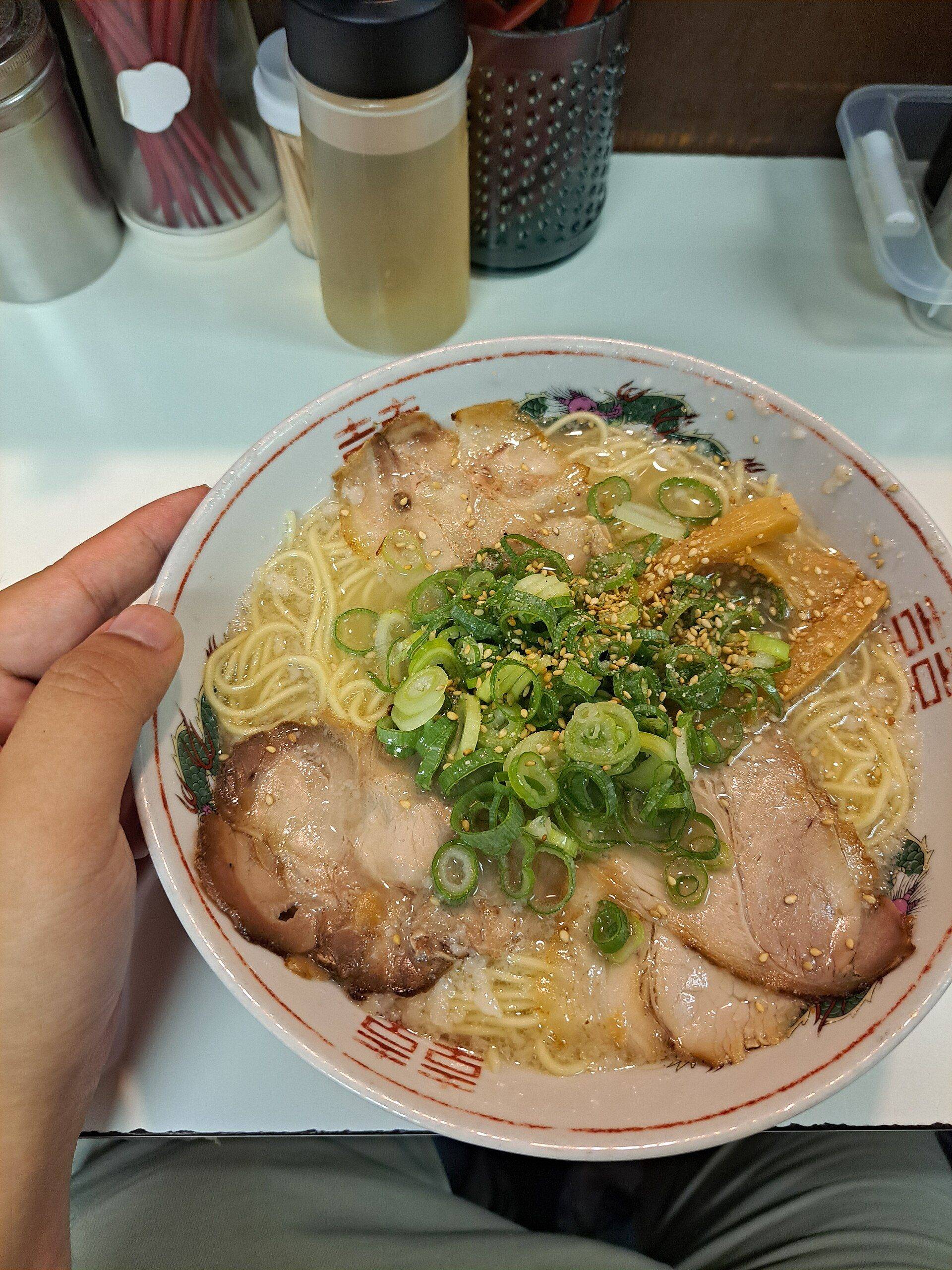
At its core, Tokushima Ramen is built around a dark, soy-based broth enriched with pork bone stock, a combination that sounds familiar but tastes quite unlike anything else in Japan. The broth gets its signature depth from 豚骨醤油 (tonkotsu shōyu, pork bone soy sauce,) a marriage of fatty richness and savoury saltiness that lingers long after the last slurp.
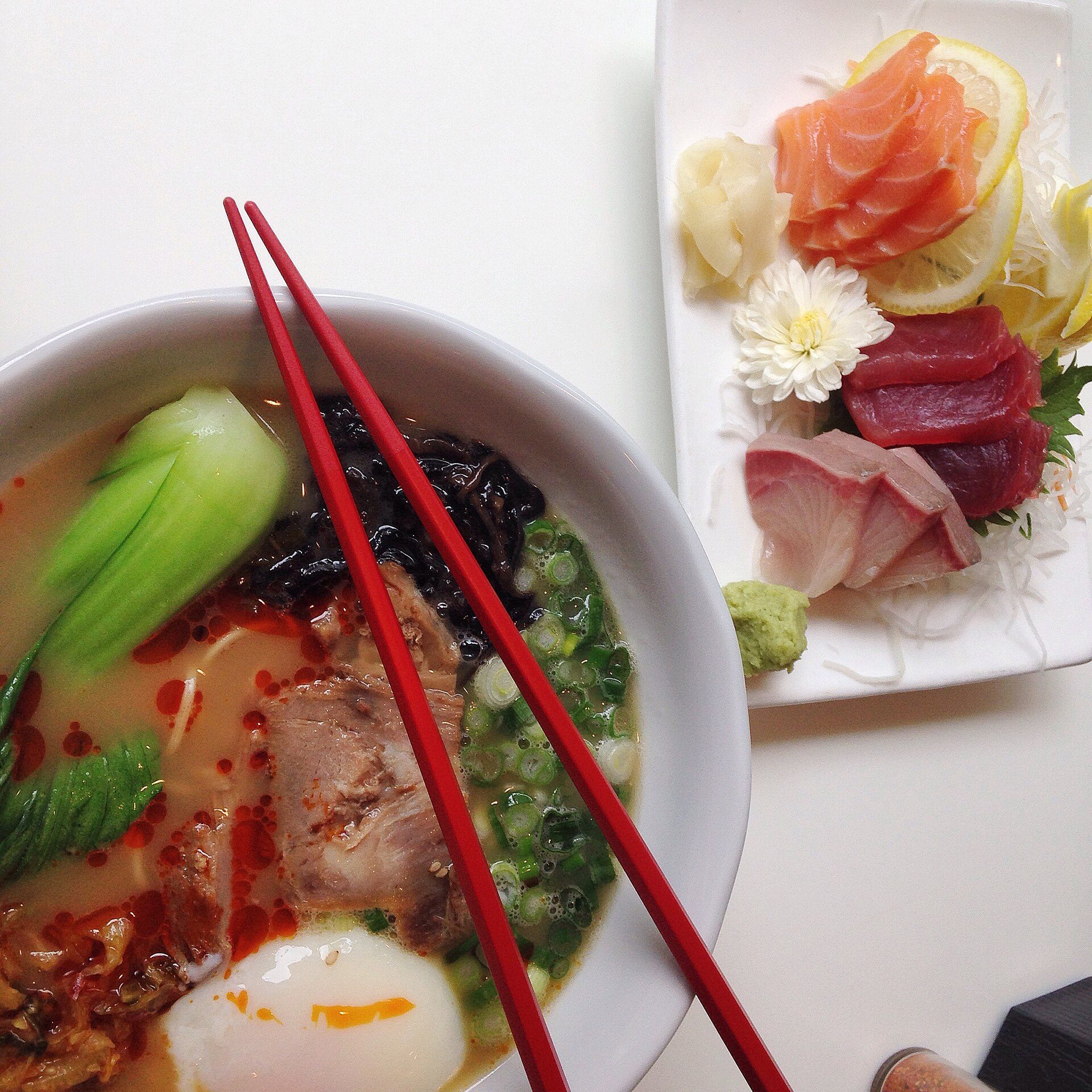
What really sets Tokushima apart, however, is the topping combination. A raw egg cracked directly into the hot bowl is considered the standard finish, not eine luxuriöse Zugabe, sondern ein erwartetes Element des authentischen Erlebnisses. The egg gently cooks in the heat of the broth, adding a creamy, silky texture that softens the intense flavour of the soy-heavy soup. Sliced braised pork belly (バラ肉, baraniku = "pork belly") rests on top, along with green onions and, in many shops, a small portion of sweetened minced pork cooked in soy sauce, a detail that gives the bowl a subtle sweetness unlike most other ramen styles.
The noodles themselves tend to be thin and straight, allowing the thick broth to coat every strand properly. It's a bowl engineered for maximum flavour impact in minimum time, a practical quality that resonates with the working-class roots of the dish.
Tokushima Prefecture and the Birth of a Regional Classic
Tokushima Prefecture sits on the northeastern corner of Shikoku, Japan's fourth-largest island. With a population of around 700,000, it's one of Japan's less-visited prefectures by international tourists, which makes its ramen culture all the more interesting as an authentic, unpolished regional tradition rather than a tourist-oriented product.
The style is believed to have developed in the post-war decades, influenced heavily by the local pork industry. Tokushima has historically been a significant pork-producing area, and that agricultural identity fed directly into the kitchen. Local ramen shop owners built their recipes around what was abundant and affordable, pork bones, soy sauce, and eggs. The result was a hyper-local dish that evolved organically from the region's food economy rather than from culinary trend-chasing.
Three Colour Varieties
Interestingly, Tokushima Ramen is not a single monolithic style. Locals and food researchers typically identify three sub-styles, distinguished by the colour and intensity of the broth. The dark brown variety (こい系, koi-kei = "rich style") is the most iconic and widely recognised outside the prefecture, characterised by its deep soy flavour and sweetened minced pork. The lighter yellow variety (うす系, usu-kei) uses a milder, more pork-forward broth with less soy. A white variant (しろ系, shiro-kei) leans closer to a classic tonkotsu style with a pale, milky broth. Most visitors encounter the dark version first, and it tends to leave the strongest impression.
Tokushima Ramen as Culinary Identity: More Than Just a Bowl
In Japan, regional ramen styles are deeply tied to local アイデンティティ (aidentiti, identity,) and Tokushima is a prime example of how a single dish can anchor a place's cultural self-image. Much like how Kagawa Prefecture is synonymous with udon or Kochi with katsuo (skipjack tuna), Tokushima claims ramen as its culinary flag. This connection is explored in detail in the Shikoku Food Guide by Food in Japan, which highlights how each of Shikoku's four prefectures has cultivated distinct food identities that locals take serious pride in.
For Japanese language learners, food vocabulary is one of the most rewarding areas to explore because it comes loaded with cultural context. The word ご当地 (gotōchi, local specialty) or "regional pride" appears constantly in Japanese food media when discussing dishes like Tokushima Ramen. You'll find it on menus, travel programmes, and train station souvenir displays across Japan, a handy term that signals authentic regional character rather than chain restaurant standardisation.



Local ramen shops in Tokushima city, often small, family-run establishments with counter seating and hand-written menus, are the primary keepers of this tradition. Visiting one is less like dining out and more like stepping into a neighbourhood ritual. The YouTube documentary on Tokushima Ramen captures this atmosphere vividly, showing the kitchen workflow, the broth preparation, and the quiet pride of shop owners who have served the same recipe for 30 or 40 years.
Why Japan Fans and Language Learners Should Care
If you're learning Japanese, food culture is one of the richest entry points into understanding how Japanese people relate to their home regions. The concept of ふるさとの味 (furusato no aji, the taste of one's hometown) is deeply embedded in Japanese sentiment, and regional dishes like Tokushima Ramen are exactly what that phrase refers to. Asking a Japanese person about their regional food is often one of the fastest ways to spark a genuine, enthusiastic conversation.
For Japan fans planning to travel beyond the obvious tourist circuits of Tokyo, Kyoto, and Osaka, Shikoku offers an extraordinarily authentic slice of everyday Japanese life. Tokushima city is accessible by highway bus from Osaka in around two hours, and a bowl of local ramen there costs between 700 and 900 yen at most traditional shops, excellent value for a culturally loaded experience. Pair it with a visit to the famous Awa Odori dance festival (held every August), and you have a Tokushima itinerary that goes well beyond the standard tourist checklist.
The broader ramen culture that Tokushima belongs to is itself a study in Japanese craftsmanship, as explored in depth in features on WELT's deep ramen culture, which examines why noodle-making has become a near-obsessive pursuit of perfection among Japanese chefs. Tokushima's shop owners embody exactly that spirit, not through Michelin-star ambition, but through decades of daily repetition and unwillingness to compromise on broth quality.
Whether you're a ramen tourist, a Japanese learner building your food vocabulary, or simply someone who appreciates the idea that a single bowl of noodles can tell you everything about a place, Tokushima Ramen is worth knowing. It's humble, honest, and irreducibly local. That's what makes it unforgettable.
For more Japan news on jpnerd.com, keep exploring our coverage of Japanese culture, food, and language.
Frequently Asked Questions
What is Tokushima Ramen made of?
Tokushima Ramen features a dark soy-and-pork-bone broth, thin straight noodles, braised pork belly, sweetened minced pork, green onions, and a raw egg cracked directly into the bowl before serving. The egg gently sets in the hot broth, adding a creamy texture to the rich soup.
Is Tokushima Ramen spicy?
Not inherently. The dominant flavour profile is rich, savoury, and slightly sweet from the soy-braised pork, rather than chilli-hot. Some shops offer spice options or condiments on the side, but the classic bowl is more umami-forward than spicy.
How do I get to Tokushima from Osaka or Tokyo?
From Osaka, Tokushima city is reachable by highway bus in approximately 2 hours, or by train via the Naruto Line. From Tokyo, the most practical route is a flight to Tokushima Awaodori Airport (about 1 hour 10 minutes) or a bullet train to Osaka followed by the bus connection.