
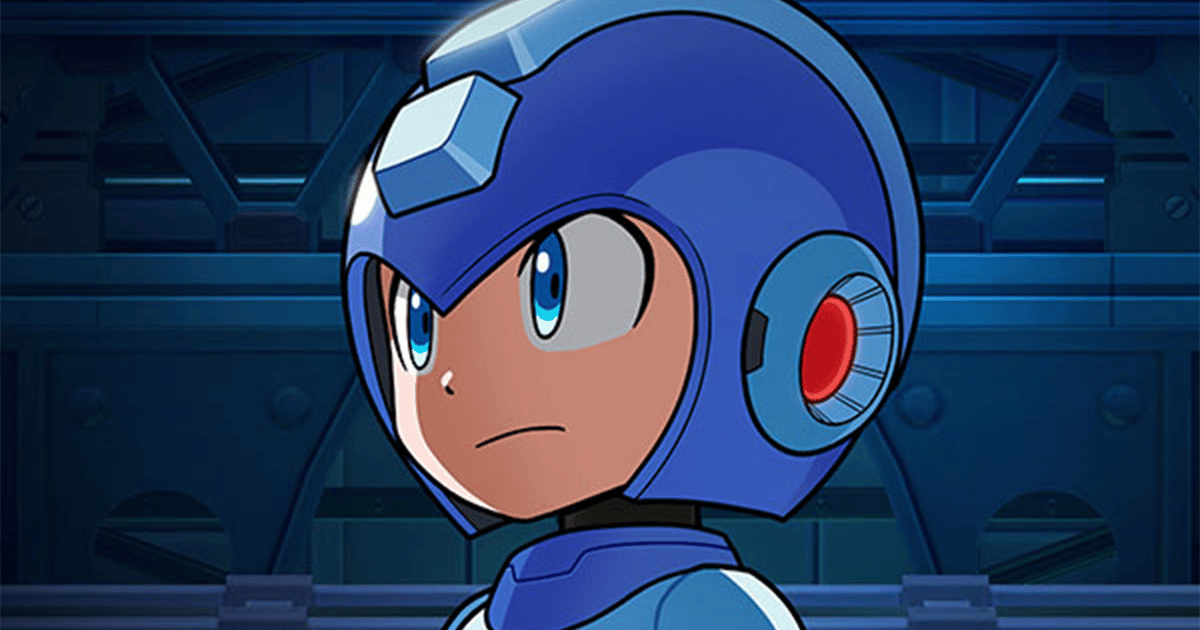
What Happened: Capcom and the SAG-AFTRA Do Not Work Order
In mid-2025, SAG-AFTRA, the Screen Actors Guild‑American Federation of Television and Radio Artists, the primary union representing voice actors in the United States, announced a Do Not Work Order targeting Mega Man: Dual Override. This is one of the union's strongest measures: it formally instructs all SAG-AFTRA members to refuse work on a production, effectively making it extremely difficult to hire union-affiliated English-language voice talent.
![Dragon Ball Z: Kakarot [Master Edition]](https://s.pacn.ws/1/p/1eh/dragon-ball-z-kakarot-master-edition-908785.1.jpg?v=t8ja8t&width=400)


According to Game Developer, Capcom stands accused of deliberately sidestepping the Interactive Media Agreement, the union contract that governs video game voice work in the US and covers protections like session transparency, AI voice likeness rights, and residual payments. SAG-AFTRA has been especially vigilant about AI provisions since the landmark video game strike of 2023, which lasted nearly eleven months and involved major publishers including Activision and EA. Capcom has not yet issued a detailed public response to the specific allegations.
The 声優 (seiyū, voice actor) profession sits at the very heart of this dispute. In Japan, seiyū are cultural icons with dedicated fan followings, anime convention appearances, and solo music careers. The contrast with how English-language voice work is often treated, as a contractor arrangement with fewer protections, is stark, and it is exactly that gap that SAG-AFTRA is trying to close.
Mega Man: Dual Override, What We Know About the Project
Details about Mega Man: Dual Override remain limited, which itself is notable given Capcom's typically tight pre-release communications strategy. What is known is that the title is a new entry in the long-running ロックマン (Rokkuman, Mega Man) franchise, the Japanese name for the blue bomber that has been in production since the original 1987 Famicom release. The franchise has sold over 38 million units worldwide as of Capcom's most recent fiscal reports.
The fact that union issues have surfaced this early in the project's public life suggests the dispute arose during pre-production casting or contract negotiation phases, the stage where studios lock in voice directors, casting agencies, and individual talent agreements. For a franchise with Mega Man's global recognition, bypassing SAG-AFTRA agreements would represent a significant strategic and reputational risk, not just a labour relations issue.
Why English Localisation Matters for Japanese Games
Japanese game studios increasingly treat English localisation as a core part of the product, not an afterthought. The ローカライズ (rōkalaizu, localisation) process involves script translation, cultural adaptation, and, crucially, voice recording sessions that can span hundreds of hours for a single title. For Japanese learners, it is worth knowing that the Japanese industry term 吹き替え (fukikae, dubbing / voice replacement) is used for both anime and game localisation, and the craft is considered highly skilled work in Japan's entertainment ecosystem.
When a studio skips union agreements, it does not just affect individual actors' pay. It removes transparency requirements around AI voice replication, a provision SAG-AFTRA fought hard to include in recent contracts. Given that AI voice cloning tools can now replicate a recorded performance with minimal source material, voice actors have legitimate fears that a non-union session today could become an unlicensed AI asset tomorrow.
The Broader Picture: Japanese Studios and Western Labour Standards
Capcom is not the first Japanese publisher to face union friction. The 2023 SAG-AFTRA video game strike, the longest in the union's history, put pressure on dozens of studios, many of them Japanese-owned or Japanese-partnered. Sony Interactive Entertainment, Bandai Namco, and Koei Tecmo were among the companies eventually signing new agreements. The strike's resolution included first-of-their-kind protections specifically addressing generative AI use of performers' voices and likenesses.
For Japan fans learning the language, this context is genuinely useful. The Japanese word 労働組合 (rōdō kumiai, labour union / trade union) appears regularly in Japanese business news, but union culture in Japan functions very differently from the US model. Japanese company unions (企業別組合, kigyō betsu kumiai) tend to be enterprise-level and consensus-oriented, rarely calling strikes. When Japanese companies hire talent in the US, they sometimes underestimate how assertively US unions will enforce their contracts, and the Capcom situation may be a direct consequence of that cultural gap.
It is also worth noting that Capcom is headquartered in Osaka, a city known in Japan for its pragmatic, commerce-driven culture, captured in the local phrase moukari makka ("are you making money?"). Whether that cultural framing has any bearing on contract negotiations is speculative, but the company's relatively limited public communications on this issue contrast with the swift responses typically issued by US-headquartered publishers in similar situations.
What This Means for Fans and Japanese Learners
For anyone who loves Japanese games or is learning Japanese partly because of franchises like Mega Man, this story is a reminder that the polished English versions of these titles involve a complex, labour-intensive production chain that extends far beyond Japan's borders. The voice actors you hear in localised Capcom games, or in any major Japanese game release, are protected (or should be protected) by contracts negotiated over decades of industry advocacy.
If you are studying Japanese and want to follow this story in the original language, searching for カプコン 労働問題 (Kapukon rōdō mondai = "Capcom labour issue") on Japanese news aggregators like Yahoo! Japan News will show you how, or whether, Japanese media is covering the controversy. Spoiler: Japanese gaming media tends to report on Western labour disputes involving Japanese companies with considerably less urgency than outlets like Game Developer or Kotaku.
For deeper reading on how the 2023 SAG-AFTRA strike reshaped video game voice work, Game Developer has ongoing coverage that is well worth bookmarking.
Find more Japan news on jpnerd.com.
Frequently Asked Questions
What is a SAG-AFTRA Do Not Work Order?
A Do Not Work Order is a formal directive from SAG-AFTRA instructing all union members to refuse employment on a specific production. It is typically issued when a studio is accused of violating or bypassing the union's collective bargaining agreements, making it very difficult for that production to hire union-affiliated voice talent in the US.
What is Mega Man: Dual Override?
Mega Man: Dual Override is an upcoming title in Capcom's long-running Mega Man franchise (known in Japan as Rokkuman / ロックマン). Specific gameplay and release details remain limited, but the project has attracted attention due to the SAG-AFTRA Do Not Work Order issued against it in 2025.
Why do Japanese game companies sometimes clash with US voice actor unions?
Japanese studios often operate under a domestic union culture that is enterprise-based and rarely adversarial. When hiring talent in the US, they may underestimate the enforcement power of SAG-AFTRA, whose Interactive Media Agreement covers AI voice protections, session transparency, and residual rights, standards that go beyond what many Japanese studios are accustomed to negotiating at home.


