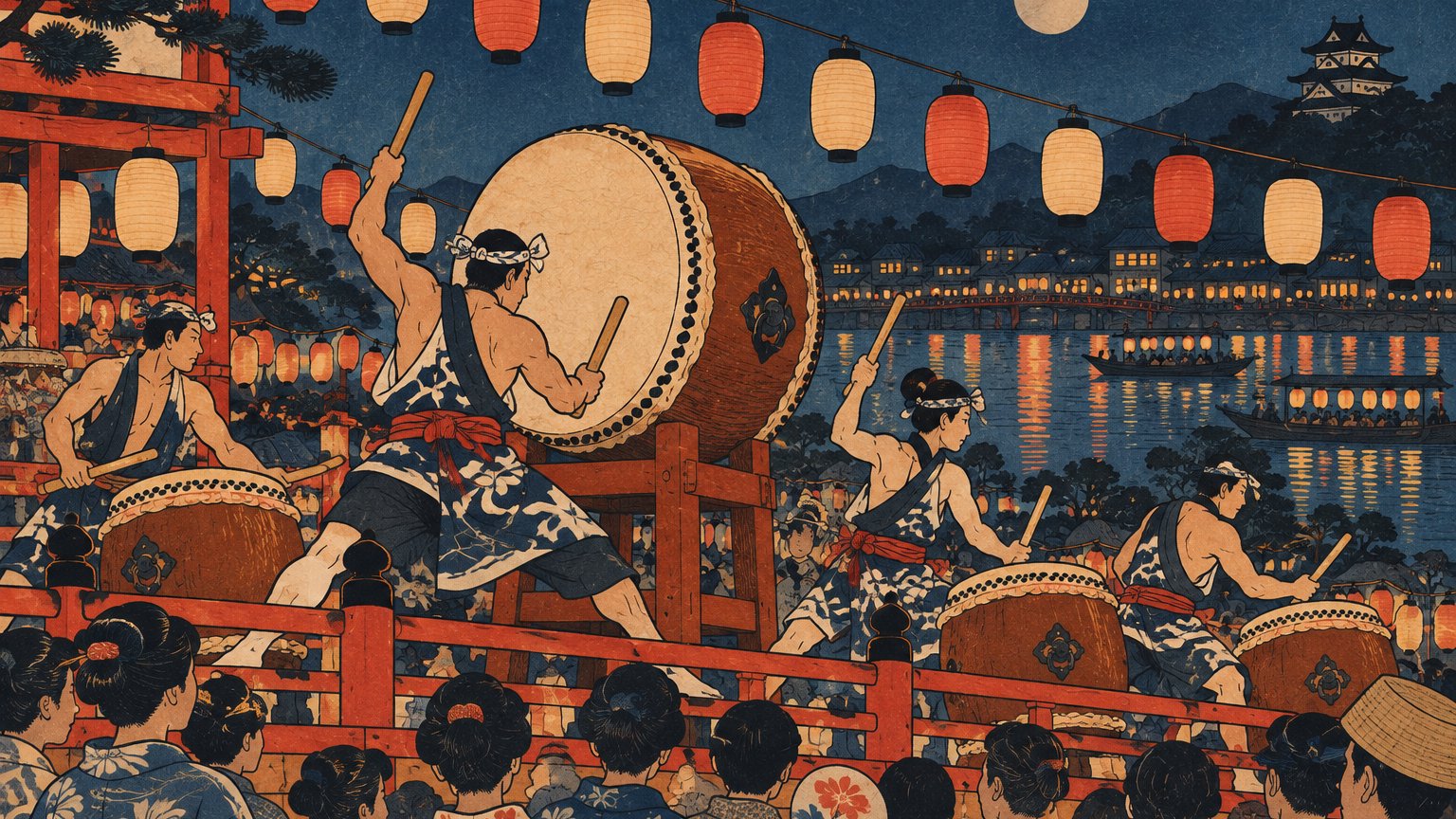
I keep thinking about how often city districts are read only in terms of what they’ll become. Here, the temporary fence is part of the surface story, but it’s also the canvas. The result is modest in scale and very specific to the place, which is exactly why it feels worth pausing for.
Project No. 6 arrives on the Nihonbashi River Walk
The latest instalment of the Nihonbashi River Walk Museum is the sixth in the series, and it uses temporary construction fencing as its support. The new piece is titled nihonbashi 通り (tori, street; road) 絵図 (ezu, map; illustrated drawing), and the work is being displayed in the Nihonbashi-Muromachi 1-chome redevelopment area, in the Japan Bridge district.
According to reporting from Erimane and Mynavi News, the project is part of an area-management effort meant to create movement and liveliness along the river walk. The phrasing matters. This isn’t a standalone gallery show dropped into the neighbourhood, but an artwork embedded in the daily texture of redevelopment, street movement, and local circulation.
For Japanese language learners, the title itself is a useful little study. tori means street or road, and ezu means map or illustrated drawing. Put together, nihonbashi tori ezu suggests something between a street map and a pictorial view of the district. It’s the kind of compound that tells you a lot before you even see the image.
Why construction fencing has become a public surface
In many cities, construction fencing is simply a blank interruption. In Nihonbashi, the fence has been turned into a working public face through the NIHONBASHI RIVER WALK MUSEUM project, which has been rolling out artworks across different redevelopment zones since July 2025, according to Mitsui Fudosan material cited in the coverage.
The sixth piece continues that method. Rather than hiding the worksite altogether, the project treats the barrier as a site for small-scale urban culture. That choice has a quiet intelligence to it. It gives pedestrians something to read while the larger transformation remains in progress, and it allows the district to show itself as unfinished without looking neglected.
What I especially like is that the idea stays specific. No grand slogans, no attempt to disguise the fact of redevelopment. Just an illustrated surface, a named location, and a route through the area that becomes more legible as each section appears.
How the series fits the Japan Bridge area
The Japan Bridge area has long been one of Tokyo's places of layered movement, where commerce, offices, old street patterns, and redevelopment projects overlap. That makes it a natural setting for a project like this, because the neighbourhood already depends on circulation. People pass through on foot, for work, for shopping, for appointments, and for the slow practical business of the city.
The Nihonbashi River Walk itself is described as a waterside pedestrian network centred on a riverfront environment and linked redevelopment zones. In that setting, the artworks do more than decorate. They mark a path, soften an in-between space, and help make the route feel intentional rather than leftover.
I think that distinction matters. A city under construction can feel like a place waiting to happen, but a project like this insists that the waiting is part of the present tense.
What the sixth artwork adds to the streetscape
nihonbashi tori ezu is by illustrator Tomohisa Yonemura, whose work is being used to animate the fencing around the site. The image appears within a larger civic and commercial framework, but the effect described in the reporting is local and readable, not decorative for decoration's sake.
That is the stronger urban-art gesture here. The piece is not trying to overwhelm the street. It is there to be encountered in passing, the way a shokunin's work is often understood best in context, not isolated from the material around it. A good signboard, a careful wall treatment, a well-placed illustration, each one changes the pace of walking.
There is also a practical poetry to the whole arrangement. A barrier says no entry. An artwork on that same barrier says look closely anyway.
Why this matters for Japan fans and learners
For readers learning Japanese, projects like this are useful because they connect language to place. Words such as ezu, 町 (machi, town; neighbourhood), 回廊 (kairo, corridor; passageway), and 賑わい (nigiwai, bustle; liveliness) become more memorable when they’re attached to a real streetscape, not a vocabulary list. Even the word river walk has a Japanese urban logic behind it, one that links waterside planning with pedestrian culture and local cultivation of space.
There is also a broader lesson in how Japanese districts often stage transition. Redevelopment doesn’t have to erase every sign of the in-between phase. Sometimes the temporary surface becomes the most interesting one, because it shows who’s thinking about public space right now, and how carefully.
My tip: if you’re studying Japanese through urban signs, neighbourhood projects like this are excellent reading material. They reward close attention, and they tend to use vocabulary that sits between everyday life, city planning, and design.
Frequently Asked Questions
What is the Nihonbashi River Walk Museum?
It is an art project that uses construction fencing in the Nihonbashi River Walk area as a display surface for works placed across redevelopment sites.
What is the sixth artwork called?
The sixth work is titled nihonbashi tori ezu.
Why is this project important?
It brings art into an active redevelopment district and helps make the Japan Bridge area feel more walkable and legible during construction.