Overview
桜 (sakura, cherry blossom) 抹茶 (matcha, powdered green tea) (also styled SAKURA MATCHA) is one of those products that sounds simple and turns out to be a little more mischievous than advertised. It's marketed in Japan as a seasonal, matcha-style powder flavored with sakura, cherry blossom, and here's the detail worth clocking before you get too excited: it contains no actual tea leaves whatsoever. No ground tencha, no gyokuro, nothing a tea purist would recognize as Camellia sinensis. What you're actually whisking up is a matcha-style base built around sakura aroma and flavor, designed to be prepared exactly like ceremonial matcha rather than steeped like a teabag left to sulk in a mug. It launched, vanished from shelves at a pace that apparently startled even the people who made it, and has since come back for a limited re-release. Which is roughly the point at which I started paying it proper attention.
So What's Actually in the Tin?
Let's clear up the obvious confusion first, because the name does it no favors. Real matcha is stone-ground whole tea leaf, full stop, that's the entire premise of the stuff. Sakura Matcha borrows the visual language and the ritual of matcha, the fine powder, the pale jade-adjacent hue, the whisking, without actually being tea at all. Instead you get a matcha-style base combined with sakura flavor and aroma components, built to evoke cherry blossom season in both taste and appearance. It's a clever bit of category-bending, honestly, and it works partly because sakura already carries enormous weight in Japanese culture. The word signifies both the literal blossom and a much broader motif of spring itself, renewal, fleeting beauty, the whole cultural chorus that gets triggered the moment cherry trees start blooming. Slap that symbolism on a product and you've got instant seasonal, emotional resonance, no persuading required.
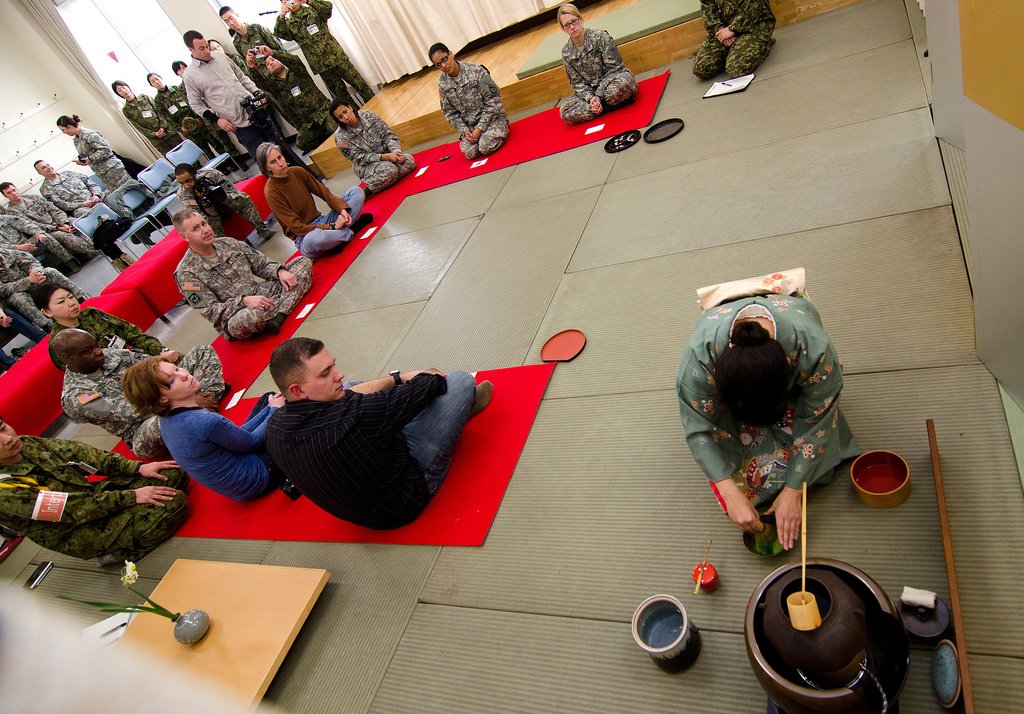
The Whisking Ritual: How to Prepare It
This is the part that actually separates Sakura Matcha from a novelty flavored drink powder: it's designed to be whisked, not steeped or stirred into hot water like instant cocoa. The recommended kit reads exactly like a ceremonial matcha setup, a 茶筅 (chasen, bamboo tea whisk) (bamboo whisk), a 茶碗 (chawan, tea bowl) (tea bowl), and a fine sifter to break up any clumps before the water goes in.
- Sift roughly a teaspoon of powder into the bowl to remove lumps.
- Add hot, not boiling, water, somewhere in the 70-80°C range.
- Whisk briskly in quick, zigzag strokes until a fine, delicate foam forms on top.
Mind you, sources don't fully agree on the finer print, and I'd rather flag that than pretend there's one tidy answer. English-language coverage suggests around 60ml of water per teaspoon of powder, whisked in quick "M-shaped" motions. German-language coverage describes something closer to 1-2 grams of powder per 60-80ml of water, with a pre-warmed bowl and brisk "Z-shaped" strokes. Whether that's a genuine recipe discrepancy or just two writers describing the same brisk zigzag from different angles is honestly unclear, so treat the ratios as a starting point and adjust to taste rather than gospel. An electric milk frother will get you foam too, if you're not fussed about tradition, but it changes both the texture and, frankly, the entire point of doing this by hand in the first place.
An Edo-Era Echo: Sakurayu and Sakuracha
None of this whisking business appeared from nowhere, either. It leans, deliberately or otherwise, on a much older tradition: 桜湯 (sakurayu, salted cherry blossom hot water infusion) and 桜茶 (sakuracha, cherry blossom tea), hot water infused with salted, dried cherry blossoms and leaves, served in the Edo period on special occasions, engagements, celebrations, after the birth of a child, particularly in spring. It wasn't an everyday drink; it was a gesture, something poured out to mark a moment worth marking. Some coverage frames the modern Sakura Matcha line, with its refreshed packaging, as a fairly direct reinterpretation of that floral, festive symbolism for a contemporary audience, though I'd hold that particular claim a touch loosely, as the sourcing behind the packaging-and-heritage angle is thinner than the rest of the story.
Why It Sold Out, and Why It's Back (Briefly)
The original run of Sakura Matcha sold out almost immediately, which, depending who you ask, is either simply a sign that a niche, well-timed seasonal product found its audience, or a case study in how limited-run marketing works. A limited re-release was announced in early April, and the maker confirmed it shortly after via an official press release, stating plainly that it was brought back specifically to meet consumer demand. The Japanese trade outlet Foods Channel (Infomart) covered the relaunch a few days later too, for anyone wanting a second, independent nod that this wasn't just a rumor doing the rounds online. Some commentary has gone further, framing the sellout-then-scarcity pattern as a deliberate hype strategy, leaning on limited availability, storytelling, and 花見 (hanami, cherry blossom viewing) culture to turn a flavored powder into a shareable experience rather than just another tin on a shelf. That's a plausible reading, but it's commentary and inference rather than anything the maker has confirmed outright, so I'll leave it filed under "informed suspicion" rather than fact.
Where to Track It Down in Japan
Because it's explicitly a limited-run item, there's no single permanent shop to point you toward, which is, I'll admit, part of the appeal and part of the annoyance in equal measure. Your best bets follow the usual pattern for seasonal Japanese specialty foods: デパ地下 (depachika, department store basement food hall), the basement food halls of department stores, are worth a wander during cherry blossom season, as are specialty tea and confectionery shops in matcha strongholds like Uji and Kyoto, which tend to stock sakura-themed spins on their usual lineup each spring. Independent cafes sometimes riff on the concept too, offering sakura matcha lattes or whisked bowls as a seasonal special even when the packaged product itself is between runs. Given the sellout history, though, your most reliable move is simply keeping an eye on the maker's official retail channels and social media around late winter into spring, when restock announcements tend to land, and being quick off the mark once they do.
Learning Corner: The Japanese Behind the Powder
Part of the fun of a product like this, for anyone learning Japanese alongside their tea habit, is that it comes pre-loaded with useful vocabulary. Sakura means cherry blossom, and by extension carries connotations of spring and fleeting beauty. Matcha is powdered green tea, traditionally stone-ground. Sakurayu and sakuracha are the older sibling drinks, hot water and tea respectively, flavored with salted cherry blossoms. Chasen is the bamboo whisk, chawan the tea bowl, and hanami the whole cherry-blossom-viewing custom that gives all of this its emotional context. If you're the flashcard type, these are genuinely useful additions to a Japan-learning vocabulary list, and looking up the kanji behind each term is a solid way to anchor them properly rather than just nodding along at the katakana on a tin.
So: not tea, not quite matcha, but a proper little ritual dressed up in cherry blossom pink, and a genuinely charming example of how Japanese seasonal food culture keeps reinventing centuries-old customs for a new tin on the shelf. It's really exciting to watch, and even more fun to whisk.