
Cash or card in Japan
Japan is becoming less cash-based. According to the Ministry of Economy, Trade and Industry (METI), cashless payments made up 58.0 percent of the total amount paid by consumers in 2025, and the target for 2030 is 65 percent. METI measures the value of payments, not their number. Credit cards accounted for 82.7 percent of the cashless total. For you this means: use a card as your main payment method and carry cash as a reserve.
The Japan National Tourism Organization (JNTO) names Visa, JCB and Mastercard as the most widely accepted cards. Contactless payment is spreading but not available everywhere, so carry a card with a chip.
Where you usually need cash:
- Rural areas: JNTO says many places, especially in the countryside, take only cash, including some hotels.
- Small restaurants, shops and entrance fees: For small amounts at sights, small restaurants and small shops, cash is often the only way to pay. A sign reading 現金のみ (genkin nomi, cash only) means no cards.
- Temples, shrines, taxis and small shops: A 10,000 yen note is readily accepted in Japan, but smaller notes and coins are appreciated.
- Buses and lockers: If you pay cash on a bus, some drivers do not accept notes above 1,000 yen and may lack change. Many lockers need coins.
- Ticket machines: According to JNTO, ticket machines take only cash, and you also top up an IC card with cash there.
Where you usually pay by card or IC card: large hotels, department stores, shopping centers and restaurants in the cities, plus many stations, convenience stores, supermarkets and chains. An IC card also works at many vending machines and lockers.
Where to withdraw yen
Not every ATM in Japan accepts foreign cards. The machines of the convenience store banks and of the post office are the dependable ones. The table summarizes what the operators state. Even with the right logo a card can be refused, as several operators warn. Your own bank's fee comes on top.
| Operator | Cards named by the operator | Operator's fee | Maximum per withdrawal | Hours and languages |
|---|---|---|---|---|
| Seven Bank (7-Eleven, over 28,000 ATMs) | Visa (PLUS), Mastercard (Maestro, Cirrus), UnionPay, American Express, JCB, Discover, Diners Club | varies by card brand, the bank does not state the amount in advance | 100,000 yen, 30,000 yen for magnetic-stripe-only cards | Visa and Mastercard around the clock, other brands slightly shorter, 365 days; languages include English, French and German |
| Japan Post Bank (post offices, stations, FamilyMart) | Visa (PLUS), Mastercard (Maestro, Cirrus), JCB, UnionPay, Discover | 220 yen with certain foreign cards | 50,000 yen | Post offices Mon to Sat 7:00 to 23:00, Sundays and holidays 7:00 to 21:00; compact machines in FamilyMart 0:05 to 23:55; English according to JNTO |
| Lawson Bank | Visa (PLUS), Mastercard (Maestro, Cirrus), JCB, UnionPay | varies by card, the amount is shown on screen before you confirm | 50,000 yen in steps of 10,000 yen | 24 hours, daily maintenance 3:00 to 4:00 (15 minutes); Japanese, English, Chinese, Korean; not in every store |
| E-net (FamilyMart, Don Quijote and others) | Visa, Mastercard, UnionPay, JCB | varies by bank | not stated | 24 hours, 365 days; not in every store; help via the guide phone at the machine |
| AEON Bank | Visa, Mastercard (Maestro, Cirrus), UnionPay | from 16 December 2026, 880 yen according to the bank | 50,000 yen | not every AEON machine accepts foreign cards, the bank's locator shows which do |
| MUFG (major bank) | Visa (PLUS), Mastercard (Maestro, Cirrus), UnionPay, JCB, Discover | 660 yen, as of 1 July 2025 | 50,000 yen in steps of 10,000 yen | according to the hours of the branch |
JNTO also lists Mizuho and SMBC as banks with machines for foreign cards but gives no fees or limits for them. There are also ATMs at Narita, Haneda, Chubu Centrair and Kansai airports.
Plan your withdrawals as a few large ones rather than many small ones, because the operator's fee applies per withdrawal. On a 50,000 yen withdrawal, 220 yen is 0.44 percent, 660 yen is 1.32 percent and 880 yen is 1.76 percent. At Seven Bank you can withdraw up to 100,000 yen at once with a chip card. JNTO points out that not all ATMs run around the clock and that fees can differ by time of day. A share of the ATMs in Japan does not accept foreign cards at all, as japan-guide notes.

Withdrawing step by step
- Insert your card and choose a language. Seven Bank offers English, French and German, among others.
- Choose withdrawal. In Japanese this is 引き出し (hikidashi, withdrawal).
- Select the account and enter your PIN. The PIN is the 暗証番号 (anshō bangō, secret number).
- Choose the amount in yen. Limits and steps depend on the operator, see the table. If you exceed the limit, enter a smaller amount.
- Check the fee. The 手数料 (tesūryō, fee) is shown before you confirm, for example at Lawson Bank.
- Choose to be billed in yen. If the ATM asks which currency to bill you in, choose yen (see the next section). Then take your cash, card and receipt.
If a machine does not accept your card, try the next operator. Japan Post Bank does not offer balance inquiries with foreign cards. Machines can be briefly unavailable for maintenance.
The four kinds of fees
Consumer advice from Germany names three cost factors: the charges of your bank or card provider, the exchange rate, and the charges of the ATM operator or merchant on site. The slogan "free worldwide" often refers only to the bank's own charges. In practice there are four items:
- ATM fee in Japan: It goes to the operator, is listed in the table above and is shown on screen. Your bank has no influence on it.
- Your bank's cash withdrawal fee: Some cards allow free withdrawals, others charge a percentage or a flat amount. It is in your bank's fee schedule.
- Foreign transaction fee: This fee applies because the yen is not your home currency. According to a German consumer test organization it is usually 1 to 2 percent of the amount. Some cards charge nothing.
- Exchange rate: Your bank or card provider converts yen into your currency. Compare the rate with a reference rate: a small deviation is normal, a large one is a cost item.
DCC: always pay in yen
At an ATM or at a shop terminal the device may offer to bill you in your home currency right away. This is called Dynamic Currency Conversion, or DCC. Seven Bank explains the choice this way: with your home currency the amount is fixed in that currency at once, with yen it is converted later when your bank bills you. German consumer advice recommends declining the conversion: the operator often uses a poor rate or adds a surcharge, and your bank or card company converts on better terms.
Worked example. You withdraw 50,000 yen. The ATM offers to bill you in your home currency, at a rate 5 percent worse than the market rate (an assumption for this example). That is 5 percent more, the equivalent of about 2,500 yen extra, on top of all other fees. The ATM fee of 220 yen is small next to that. A test by a German consumer organization in 2019 of ATMs in Europe found that accepting the instant conversion would have cost more than 5 percent in most cases and up to 13.7 percent at worst.
So always choose yen, at the ATM and at the card terminal. At a shop, check before you enter the PIN or sign that the amount is shown in yen. Japan Post Bank notes that with certain foreign cards the billing amount can be fixed in the currency of the country where the card was issued. Seven Bank offers the choice only for Visa and Mastercard.
Which card for Japan
You pick a card by criteria, not by name:
- Network: Visa and Mastercard are the most widespread, JCB is also named. Take two cards from different networks and keep them in separate places.
- Foreign transaction fee: 0 percent is ideal. Otherwise expect 1 to 2 percent on every payment and every withdrawal.
- Cash in foreign currency: Ask whether withdrawals abroad are free, from which minimum amount and up to which daily limit. In Japan, 50,000 to 100,000 yen per withdrawal is typical.
- Card type: A credit card usually bills you in a batch, a debit card (Visa Debit or Debit Mastercard) charges your account directly. For both, your bank's fees matter.
- Debit cards and ATM logos: A debit card that carries only a domestic scheme usually will not work in Japan. The operators name the Visa, Mastercard, Maestro, Cirrus and PLUS logos. Maestro is being phased out for new cards in some countries: in Germany, for example, hardly any new cards with Maestro have been issued since 1 July 2023, existing cards run until their expiry date and some banks switch earlier. None of the operators lists V Pay, and outside Europe V Pay can cause acceptance problems.
- Prepaid and neobanks: With providers such as Wise or Revolut you load a balance and pay with a debit card. Withdrawals there are often free only up to a monthly amount. Compare the terms, this guide makes no recommendation.
- Preparation: Check your PIN, activate the card for use abroad if needed and adjust your limits. JNTO advises telling your bank in advance so the card is not blocked at the first withdrawal.
Exchange before you go or in Japan
German consumer advice recommends exchanging a small amount at home for the taxi ride to the hotel and your first supplies. In Japan you can exchange foreign currency on arrival, and currency exchange is called 両替 (ryōgae, currency exchange) in Japanese. JNTO lists exchange counters in the arrival halls of all major airports, and banks, post offices and some hotels also exchange money. Outside the big cities there are few exchange offices. Compare the rate with a reference rate before you exchange.
Foreign currency is generally not accepted as payment in Japan, except perhaps at major international airports. Exchange offices earn on the rate, and depending on the currency, exchanging at home or in Japan is cheaper, as japan-guide notes. When you enter or leave, you must declare more than 1 million yen in cash, checks or securities to customs. For how to arrive at Haneda, see the Haneda guide.
Coins and notes
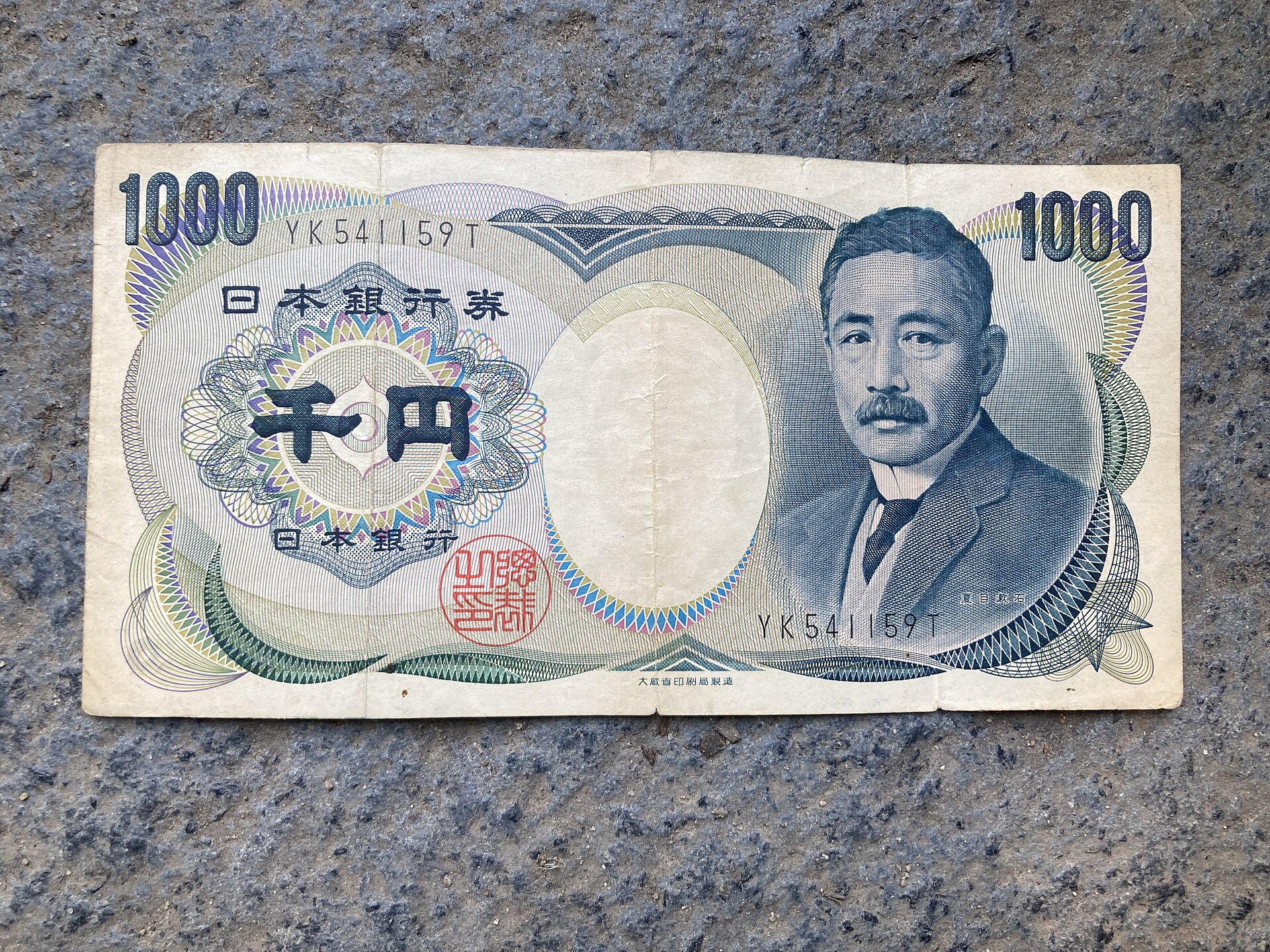
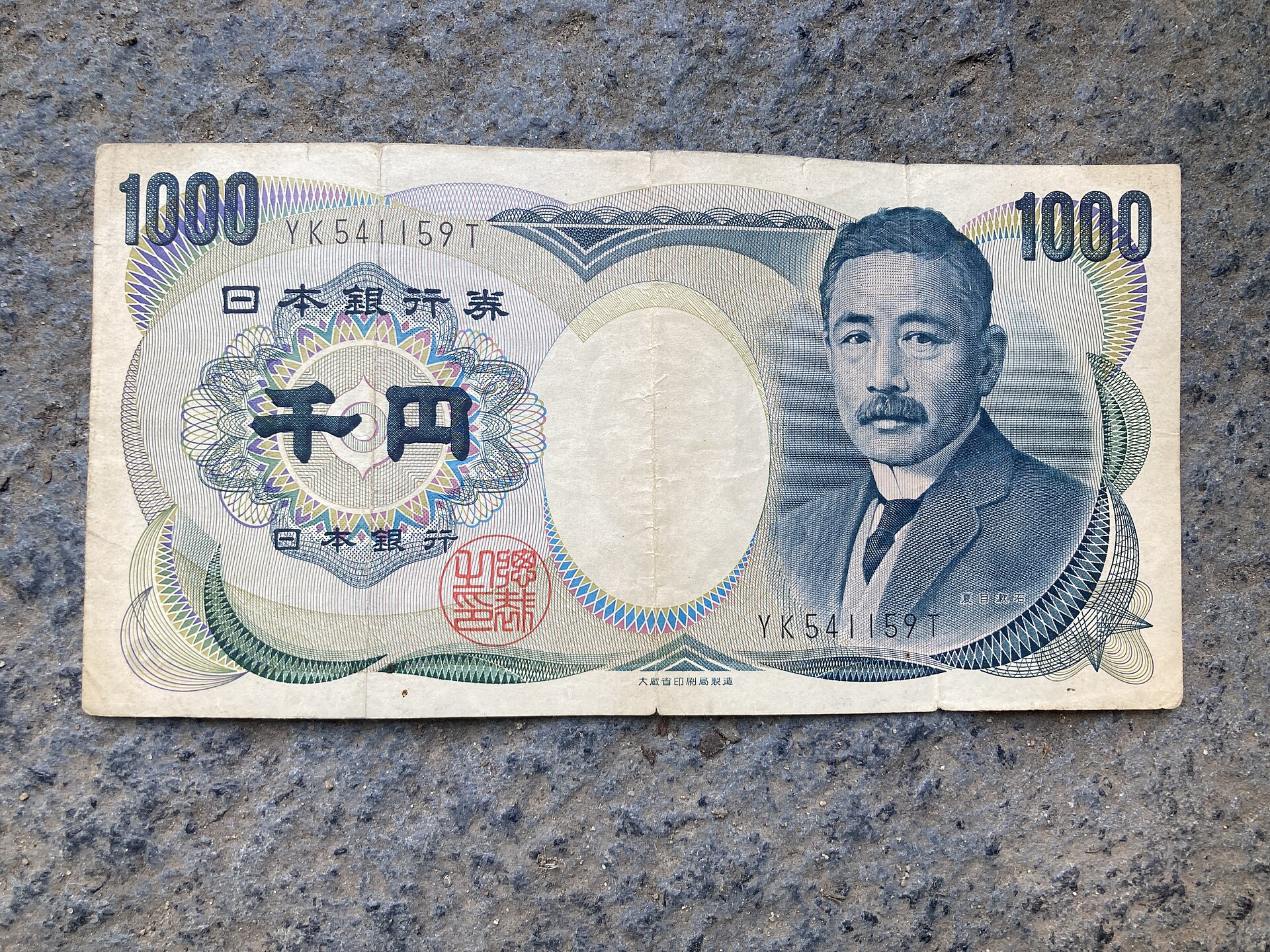
Notes come in 1,000, 5,000 and 10,000 yen, plus the rare 2,000 yen note. A new series has been in circulation since 3 July 2024: the 10,000 yen note shows Shibusawa Eiichi, the 5,000 yen note Tsuda Umeko and the 1,000 yen note Kitasato Shibasaburo. The old notes remain valid. According to JNTO the 2,000 yen note is often mistaken for a 1,000 yen note, so check your change.

The yen is called 円 (en, yen) in Japanese. Coins come in 1, 5, 10, 50, 100 and 500 yen. The bicolor 500 yen coin has been in circulation since 2021. Coins pile up fast on a trip, so a separate coin purse pays off: vending machines take coins and 1,000 yen notes, many lockers need coins, and the right 小銭 (kozeni, small change) saves you trouble on the bus. Check your お釣り (otsuri, change) and the 紙幣 (shihei, banknotes) in it right at the register.

Tipping, tax-free and IC cards
Tipping: It is not customary in bars, cafes, restaurants, taxis and hotels in Japan. There is a custom called 心付け (kokorozuke, a gratuity from the heart) in a few situations, for example for a private guide or interpreter. Even there it is not expected, and it is handed over discreetly in an envelope, which you can buy in grocery stores, stationery shops and 100 yen shops. Only at the top luxury ryokan do guests tip the attendant when tea is first served. On the other hand, first-class hotels may add a 10 to 15 percent service charge.
Tax-free: A new refund procedure has applied since 1 November 2026. How it works is covered in the tax-free guide.
IC cards: You buy and top up an IC card at a machine with cash only. According to JNTO an IC card carries a deposit, usually 500 yen, which you get back when you return the card. The IC card wizard finds the right card for your route. The cost calculator works out what your trip costs overall, and the budget guide gives an overview of daily costs.
If your card is lost
If you lose a card, block it at once. German consumer advice says never to let the card out of your hands and to block it immediately if it is lost. Save your card issuer's 24-hour emergency number before you leave and keep it apart from the card. For cards from German banks there is a central blocking service: from abroad +49 116 116, alternatively +49 30 4050 4050. It is open around the clock, and calls from abroad may cost money. Not every issuer takes part, so also save your own bank's number.
For cards from other countries, use the number printed on the card or shown in your bank's app.
Frequently asked questions
Do I still need cash in Japan?
Yes. In the cities you can pay by card for much of daily life, but in the countryside, in small restaurants, at ticket machines, at lockers and for small entrance fees you need yen. Plan a reserve.
Which ATM suits my card?
Seven Bank and Japan Post Bank accept Visa and Mastercard including Maestro and Cirrus. Seven Bank allows up to 100,000 yen per withdrawal and runs around the clock. In every case check the fee on screen.
Should I be billed in yen or in my own currency?
In yen. Being billed in your home currency (DCC, instant conversion) is usually more expensive because the operator applies a poorer rate. This applies at shop terminals too.
Will my debit card work in Japan?
In most cases only if it carries an international scheme such as Visa, Mastercard, Maestro, Cirrus or PLUS. A card with only a domestic scheme usually will not work. In Germany, for example, a plain girocard works only at home according to consumer advice there.
What do I do if my card is gone?
Block it at once with your issuer's emergency number. For German banks, from abroad call +49 116 116 or alternatively +49 30 4050 4050. For other cards use the number printed on the card or in the app.
Sources
- METI: 2025 Ratio of Cashless Payment Among the Total Amount Paid by Consumers
- JNTO: Cashless Payments in Japan
- JNTO: Japan Currency Exchange
- JNTO: Tipping in Japan
- JNTO: Accommodation
- japan-guide.com: Money on your trip to Japan
- Seven Bank: Overseas Cards Usable at ATMs
- Seven Bank: How to withdraw cash in Japan using a foreign card, DCC
- Japan Post Bank: International ATM Service
- Lawson Bank: International ATMs
- E-net: Overseas-issued cards
- AEON Bank: Cash cards and credit cards issued overseas
- MUFG: ATMs and overseas-issued cards (Japanese)
- Verbraucherzentrale: Cash, cards and traveler's checks abroad (German)
- Verbraucherzentrale: No more Maestro function for girocards (German)
- Stiftung Warentest: Withdrawing cash abroad, instant conversion (German)
- Stiftung Warentest: Travel payment methods (German)
- Bank of Japan: Banknotes and Coins in Use
- Bank of Japan: Issuance Date for the New Series of Bank of Japan Notes
- Sperr-Notruf 116 116 (German)
- Wikimedia Commons: photos Seven Bank ATM (MIKI Yoshihito, CC BY 2.0), Lawson Bank ATM (Momiji.Takinogawa, CC BY-SA 4.0), Japanese coins (Mokkie, CC BY-SA 3.0), new 10,000 yen note (National Printing Bureau Japan, CC BY 4.0)