
Overview
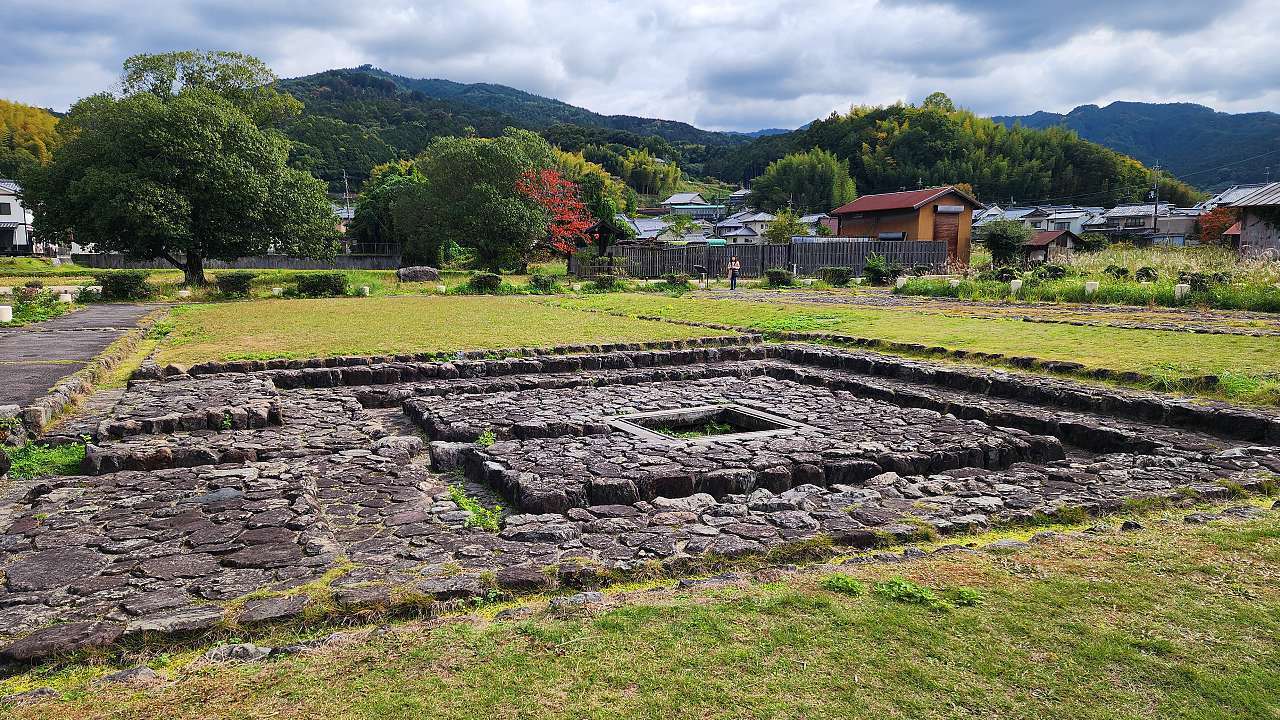
Asuka-Fujiwara is one of those places that rewards a slower kind of travel. It is not a single monument, but a historic area in southern Nara where Japan’s early political order, court culture, and Buddhist influence took shape in a very visible way. When people talk about this landscape, they are usually talking about the Asuka period, roughly 592 to 710, when power was being reorganized, new symbols of rule were appearing, and temples were beginning to mark the land in lasting ways.

The name also points to Fujiwara-kyo, Japan’s first large-scale grid-planned capital and, in many histories, its first capital. From 694 to 710, it served as the government seat and was laid out with a clear city plan modeled on Chinese urban design. That detail matters because it shows how openly Japan was borrowing ideas from China and Korea while building something distinctly its own. If you are trying to understand early Japan, this is a very good place to start.
And yes, the area has also been in the news recently for its World Heritage recognition. The newer UNESCO listing centers on Fujiwara-kyo and related sites across the Nara region, while the broader Asuka story remains essential for understanding the whole cultural landscape. For a related look at Japan’s early capitals, you can also read about Asuka-Fujiwara: Japans frueheste Hauptstaedte and Japan’s Newest World Heritage Site Explained.
Why this landscape matters
What makes Asuka-Fujiwara special is not only age, but transformation. This was the era when Japan’s state took shape in a more recognizable form, when administration became more structured, when rank and political symbols were reorganized, and when legitimacy was increasingly expressed through ritual and architecture. You can feel that historical turning point in the way the area is discussed: not as a remote ruin field, but as a birthplace of systems.
Buddhism is a major part of that story. It took root early in Asuka and influenced architecture, ritual, and the language of rule. Temples were not just religious buildings; they were part of the visual and political fabric of the time. That is one reason the landscape feels so layered. A visit here is never just about one dynasty or one building. It is about watching a whole civilization learn new forms, adapt imported ideas, and make them local.
For readers interested in the cultural side of history, this is also where the human scale comes in. Prince Shotoku remains one of the most recognizable figures of the Asuka era, associated with the Seventeen-Article Constitution and with the broader intellectual and political reorientation of the time. He is one of those figures whose historical significance is bigger than any single site, and his presence helps explain why Asuka still resonates so strongly in Japanese memory.
Fujiwara-kyo and the birth of a planned capital
Fujiwara-kyo is the center of gravity here. Built as Japan’s first large-scale grid-planned capital, it was established as a government seat in 694 and remained the capital until 710. The city plan followed Chinese urban models, which gives it a very different character from the looser, more layered settlement patterns people often imagine when they hear the word ‘ancient’. This was deliberate, formal, and political.
Even in fragmentary remains, that sense of order still matters. The site reminds us that capitals are not only places where rulers live. They are statements. They say what kind of government exists, how authority should be seen, and how the world ought to be arranged. In Fujiwara-kyo, that statement was made in a new architectural language, one that connected Japan to continental models while also helping define an emerging local state.
If you enjoy historic landscapes, this is where the word 宮所 (kyujo, imperial site; palace-related place), meaning an imperial site or palace-related place, becomes useful. The area is full of traces of that palace-centered world, even when the structures themselves are gone. And if you are reading about the UNESCO angle, you will see the term 遺産 (isan, heritage; cultural property) a lot too, meaning heritage, because the value here comes from a whole network of linked remains rather than a single building.
What Asuka adds to the story
Asuka broadens the picture beyond one capital. It is the place where Japan’s state took shape, where temples emerged, and where power first had a visible center during the Asuka period. That makes it one of the most important historic landscapes in the country, even when compared with better-known later capitals. The atmosphere of the area reflects that early mix of experiment, belief, and statecraft.
One useful way to think about Asuka is through the idea of 律令 (ritsuryo, early centralized legal-administrative system), the administrative order that developed in early Japan. The period was not simply chaotic transformation; it was a process of building systems, defining ranks, and making authority legible. When you stand in a place tied to that shift, the history feels less abstract. It becomes a story about how a society learned to organize itself.
That is also why the area is such a good match for curious travelers. You do not need to be a specialist to appreciate it. But if you are someone who likes to connect archaeology, religion, politics, and landscape, it opens up beautifully. A quiet field can suddenly feel like a chapter in a national origin story. Well… I love that sort of thing.
How the UNESCO recognition frames the region
The newest World Heritage recognition centers on Fujiwara-kyo and related sites in the Nara region, covering 19 sites in total. Those include palace ruins, Buddhist temples, monumental tombs and graves, sacred sites, and the remains of the capital itself. That spread is important, because it shows how wide the historical footprint really is. This is not one preserved building; it is an interlinked cultural landscape.
The UNESCO framing also helps explain why Asuka-Fujiwara is often discussed as both a local and national story. The historic value lies in the combination of urban planning, religious development, political change, and cross-cultural exchange. The landscape tells a story of early Japan looking outward while also building its own center of gravity. And what’s more, it does so through traces that are still accessible in the region today.


If you are following Asuka-Fujiwara news, the UNESCO angle is the one most people will encounter first. But the deeper attraction is the long timeline behind it. That is where the real fascination sits… in the way a capital rises, moves, leaves remains behind, and still shapes how a place is understood centuries later.
What to look for when you experience it in Japan
For visitors, the best approach is to think in terms of the wider landscape rather than one single stop. You are looking for the spatial story: palace remains, temple grounds, burial sites, sacred places, and the broader setting of the former capital. That is why the experience feels so different from a conventional city sight. It asks you to read the land a little.
- Look for traces of grid planning in the Fujiwara-kyo area.
- Pay attention to temple sites that show Buddhism’s early expansion.
- Notice how palace and burial sites together reveal court culture and power.
- Use the Asuka period as your timeline, not just a list of ruins.
- Read the landscape as a record of early state formation, not only archaeology.
If you are interested in learning Japanese through place names and historical vocabulary, this is also a nice topic for Asuka-Fujiwara kanji study, even if the body of the history itself is best understood through romanized terms and site names. For learners, a phrase like Asuka-Fujiwara japanisch lernen makes sense because the area connects language, history, and culture in a very concrete way.
Related historic contexts worth exploring
The Asuka story does not stand alone. If you are following the broader arc of Japan’s early capitals, it helps to compare it with other early political centers and with the later development of the Nara region. That wider context makes Fujiwara-kyo easier to understand as part of a larger experiment in state building rather than an isolated chapter.
And if you like connecting landmarks to ideas, this region is especially rewarding because it sits at the intersection of archaeology, religion, governance, and memory. That is a rare combination. It is also why the Asuka-Fujiwara area continues to attract interest far beyond specialist history circles. You come for the ruins, maybe, but you stay for the story of how Japan learned to imagine itself.
Frequently Asked Questions
What is Asuka-Fujiwara?
Asuka-Fujiwara is a historic area in Nara Prefecture tied to Japan’s early state formation and capital history, especially the Asuka period and Fujiwara-kyo.
Why is Fujiwara-kyo important?
Fujiwara-kyo was Japan’s first large-scale grid-planned capital and served as the government seat from 694 to 710.
What does the UNESCO recognition cover?
The newer UNESCO listing centers on Fujiwara-kyo and related sites in the Nara region, including palace ruins, temples, tombs, sacred sites, and the remains of the capital.
Who is Prince Shotoku in this context?
Prince Shotoku is a key figure of the Asuka era and is associated with the Seventeen-Article Constitution.
Sources
UNESCO World Heritage materials on the Nara region and Fujiwara-kyo — https://whc.unesco.org/
Japanese government and regional heritage information on Asuka and Fujiwara-kyo — https://www.pref.nara.jp/
Asuka-Fujiwara related background coverage — https://jpnerd.com/de/japan-news-de/5735-asuka-fujiwara-japans-frueheste-hauptstaedte-de
World Heritage explanation article — https://jpnerd.com/en/japan-news-en/10522-japan-s-newest-world-heritage-site-explained-en