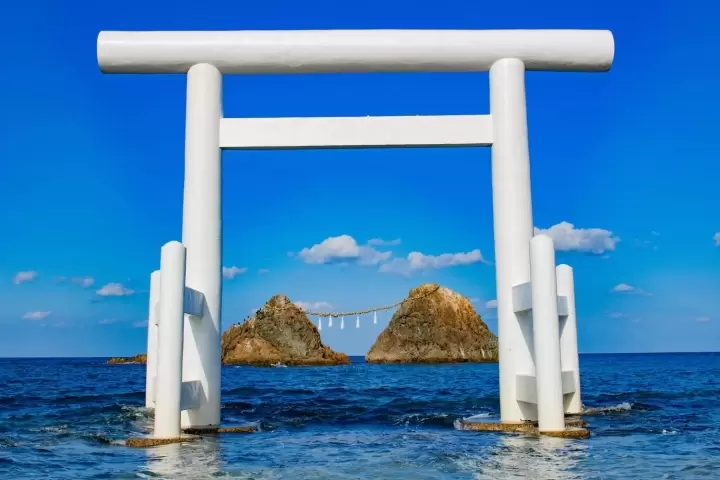
Overview: A Volcano Living Inside Tokyo's Borders
Not much more than a couple of hours south of the trains and vending machines of central Tokyo, there's an island that still runs on its own volcanic clock. Izu Oshima is the largest of the Izu Islands, a chain that trails off the coast near the Izu Peninsula out into the Pacific, and here's the part that still gets me every time I explain it to someone: it's administratively part of Tokyo Metropolis. Same Tokyo as the Yamanote Line and the crossing at Shibuya. Just... with an active volcano sitting in the middle of it.



Cited distances vary a little depending on the source. Some put the island roughly 110 kilometers south of central Tokyo; others place it closer to 100 kilometers south of the city and about 22 to 25 kilometers east of the Izu Peninsula, rather than south of it. Either way, it's close. Close enough for a long weekend, far enough that it feels like a different country by the time you step off the boat.
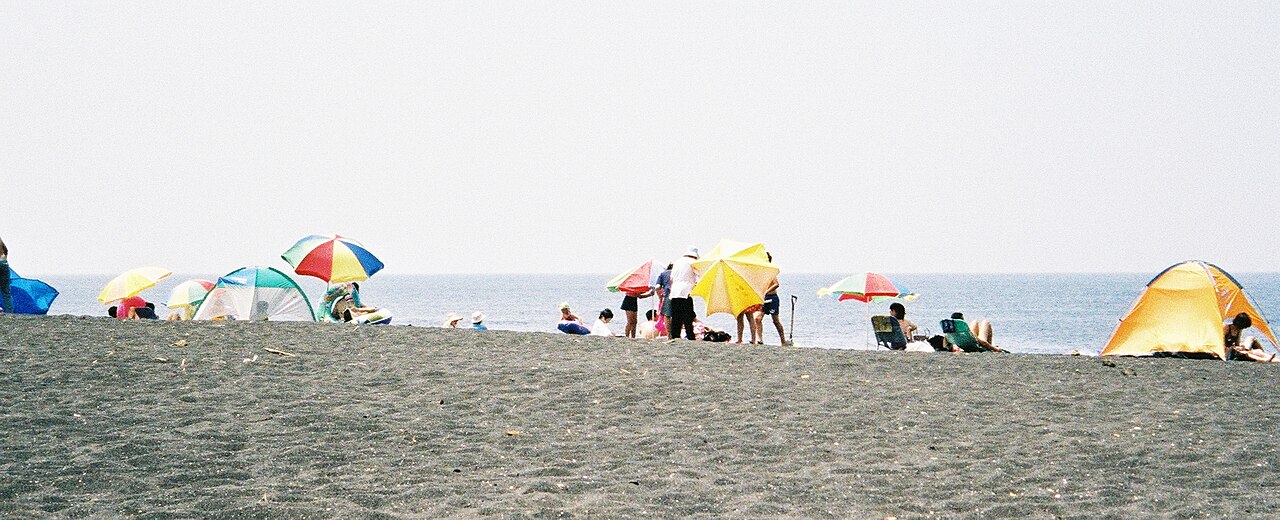
Getting There: From the Ferry Terminal to the Lava Fields
Getting to Izu Oshima is part of the appeal, honestly. The fastest option is the Tokai Kisen high-speed jetfoil from Takeshiba in Tokyo, which covers the distance in around two hours — you're reading a book, you look up, and suddenly there's an island. There's also the slower, more atmospheric route: an overnight regular ferry that takes roughly six to eight hours, the kind of crossing where you fall asleep to the sound of the engine and wake up somewhere else entirely. And if you'd rather break the trip up, you can take a train down to Atami or Ito on the Izu Peninsula and catch a shorter connecting ferry from there. No wrong answer, really — just different paces of arriving.
Mount Mihara: The Mountain That Runs the Show
Everything on Izu Oshima orbits around Mount Mihara (Mihara-yama), the active volcano at the island's center, standing 758 meters tall. The island itself exists because of it — Izu Oshima was built up by volcanic activity and sits within the Izu-Bonin volcanic arc, so in a very real sense, the mountain came first and the island followed.
Mihara-yama's last major eruption was in 1986, and it was serious enough to force a temporary evacuation of residents and reshape parts of the island's terrain. It's quiet these days, but it hasn't gone anywhere — you can walk right up toward the crater, and the landscape up there is genuinely strange, almost lunar, all dark rock and drifting cloud with barely a plant in sight. It's one of those places where you stop mid-sentence because the ground in front of you looks like it belongs on a different planet.
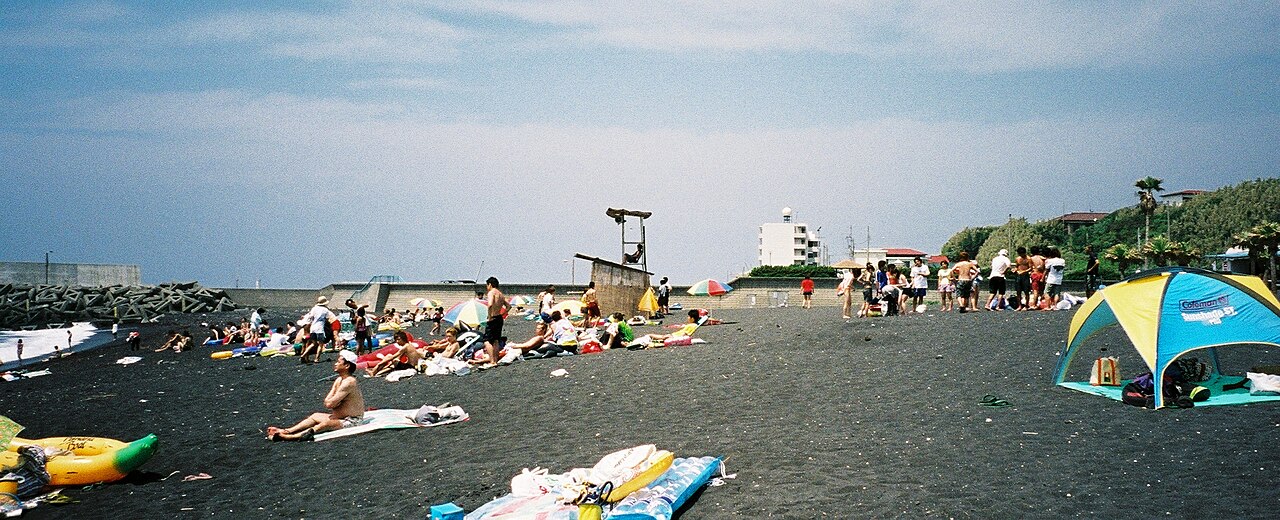
Black Sand and Green Slopes: The Island's Volcanic Landscape
Come down off the crater and the island softens into something else entirely. Izu Oshima's coastline is a patchwork of black lava fields and black sand beaches, rugged volcanic rock, and green slopes that roll down toward a very blue Pacific Ocean. The contrast is what stays with you — dark stone against bright water, bare crater against forested lower ground. It's not a manicured kind of beautiful. It's raw, and it earns it.



Life on Oshima: Villages and a Quietly Shrinking Population
Motomachi is the island's largest settlement and the administrative center of Oshima Town, which also takes in the smaller hamlets of Okata, Senzu, Nomashi, Sashikiji, and Habuminato. It's a small-town rhythm out here — fishing boats, local shops, the kind of place where a shopkeeper will strike up a conversation just because you're clearly not from around here.
The population has been drifting downward for a while, in step with a lot of rural Japan. As of February 2025, Oshima Town's official population was around 6,813, down from roughly 7,100 in 2020. It's still a real, living community — just a smaller one each year, and there's something quietly moving about that if you sit with it.
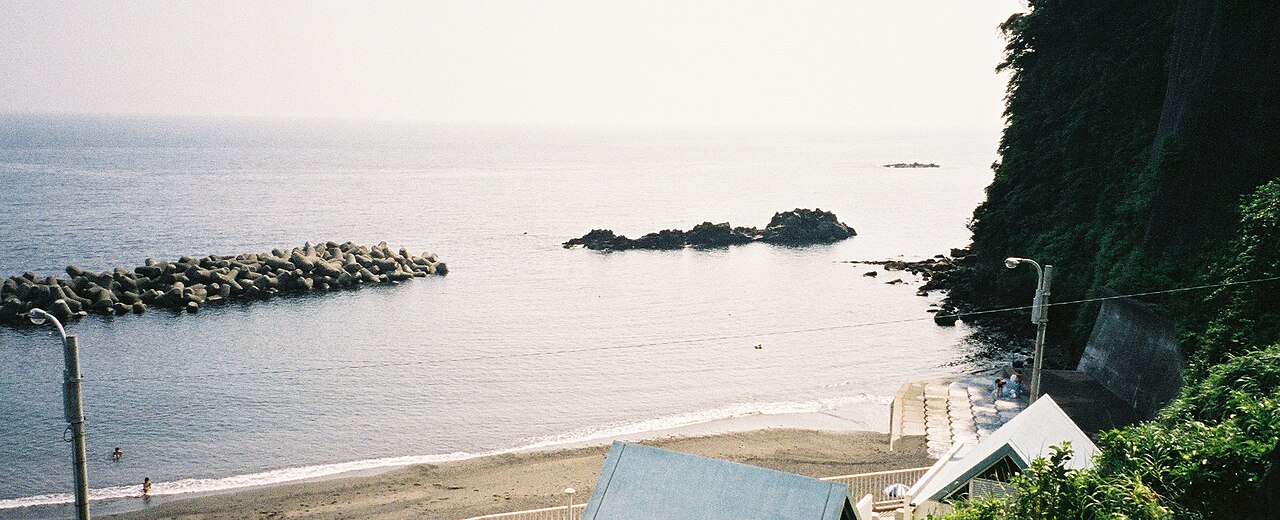
Hiking Izu Oshima: Trails for Every Kind of Legs
Whatever your hiking mood, the island seems to have a trail for it. There are short, gentle walks that circle around the base of Mount Mihara for anyone who just wants a taste of the volcanic scenery without committing a whole day to it, and there are longer, more strenuous mountain trails that take you right up toward the crater rim. Beyond the volcano, coastline walking routes trace the black rock shoreline, weaving between lava formations and quiet stretches of beach. None of it feels overbuilt or overcrowded — you can walk for a good while and mostly just hear wind and water.
Where to Experience Izu Oshima in Japan
This isn't really a resort-island kind of place, and I mean that as a compliment. Izu Oshima's tourism identity leans toward nature and small, family-run accommodations rather than glossy hotel towers, so the experience of visiting is closer to staying with a community than checking into a destination. You come for the volcano, the coastline, and the trails, and you stay in something small and personal along the way. If you're based in Tokyo and looking for a place that's technically still the capital but feels like an entirely different rhythm of life, Izu Oshima is about as close as that contradiction gets — and it's worth the boat ride to find out for yourself.
A Few Words Worth Learning Before You Go
If you're working on your Japanese, Izu Oshima is a nice, manageable case study — the place name itself, the terms for volcano (火山 (kazan, volcano)), crater (火口 (kako, crater)), and eruption (噴火 (funka, eruption)) will all come up naturally if you read anything about the island in Japanese, and knowing the kanji behind Izu Oshima gives you a small foothold for recognizing island and peninsula names all across the Izu chain. It's a good reminder that learning Japanese doesn't only happen at a desk — sometimes it happens on a jetfoil, looking up place names as the island comes into view.