Overview
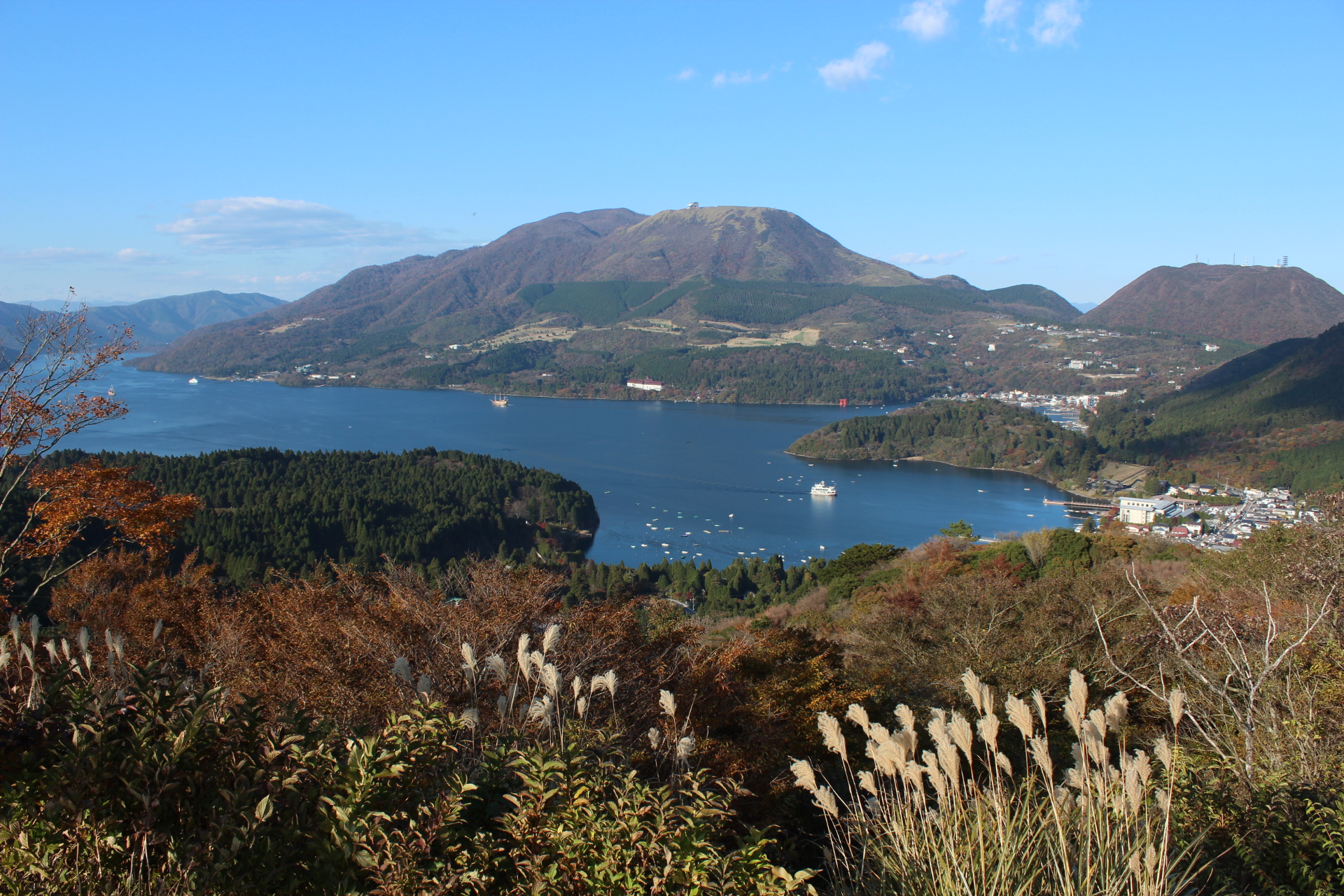
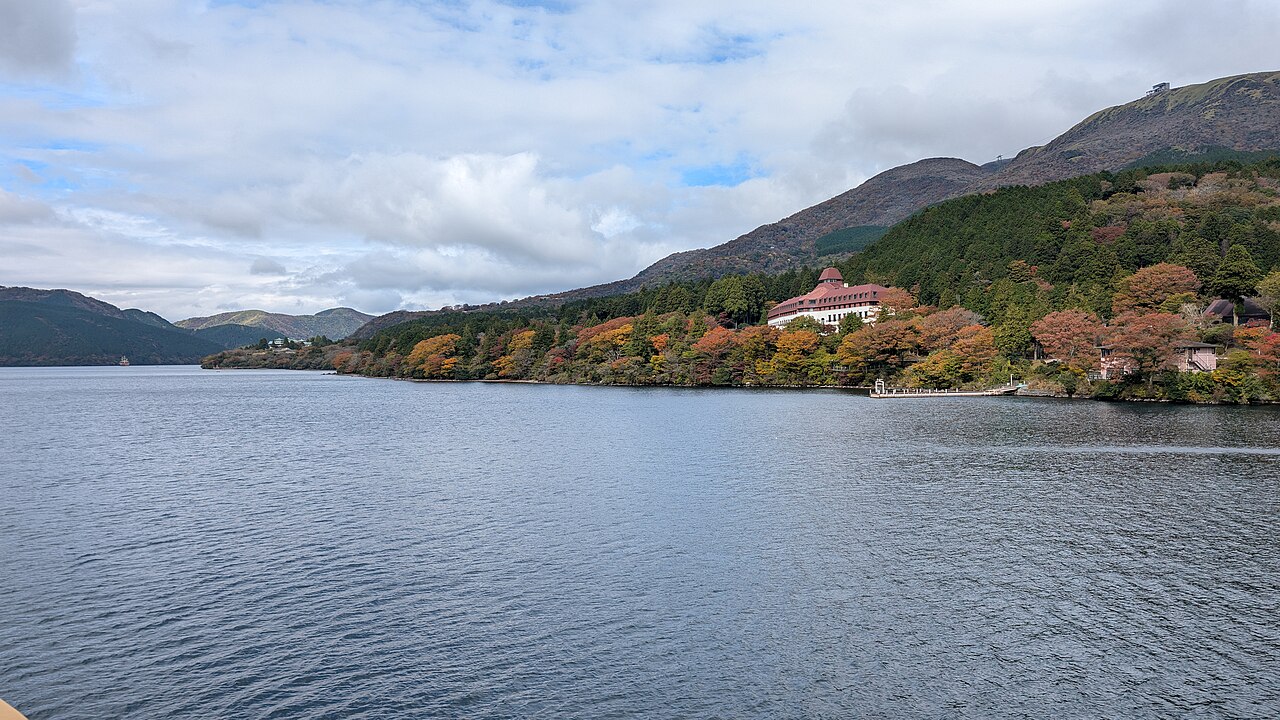
Ashi Lake Hakone is not a lake you simply “see” once and tick off. It is a volcanic caldera lake formed by eruptions about 3,000 years ago, sitting at roughly 723 to 725 metres above sea level and covering about 7.1 square kilometres. The maximum depth is around 43 metres, which gives the water a surprisingly serious presence for something that many visitors first meet from a ferry deck or a shoreline path. It is also one of the clearest examples of how place in Japan can be read through movement: a boat crossing, a ropeway ride, a walk to a 神社 (shrine, Shinto shrine), a pause for weather to change. That is the texture of the experience.
For visitors coming from Tokyo, the area is usually reachable in about 1.5 to 2 hours depending on the route, which is why it works so well as either a day trip or an overnight stay. Hakone itself belongs to the Fuji-Hakone-Izu National Park, and the wider area folds together 温泉 (onsen, hot spring; hot spring bath), museums, hiking, and historic sites without much fuss. The result is a destination that feels complete without being polished to death. Good. It should not be.
The landscape and why it matters
The lake’s calm surface and wide basin create the conditions for the famous mirror-like reflection of Mount Fuji, but only on some days of the year. Early morning offers the best chance of clear views, and even then the outcome depends on wind, clouds, and the small mood swings of the weather. That uncertainty is part of the point. You come here for a view that has to be earned, not guaranteed.
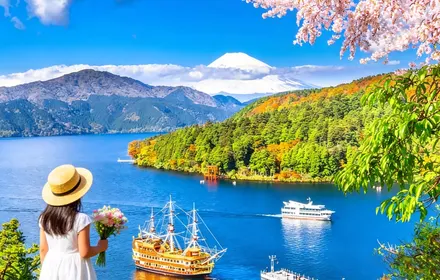
Late-blooming cherry blossoms can still be seen around the shoreline in spring, especially at higher elevations and along the paths near the water. In practice, this means the lake is not just a winter-clear Fuji place or a summer cruise place; it changes with the season, and the surrounding hills give the whole area a layered feel. The body notices this. The air is cooler, the distance to the far shore feels honest, and even a short walk can make the place seem larger than the map would suggest.
Boats, ropeways, and the moving view
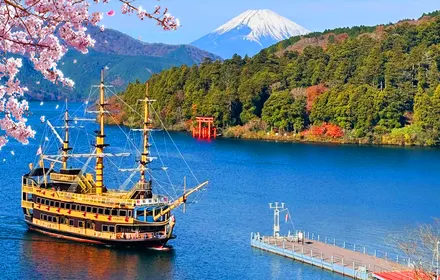
The sightseeing pirate ships are one of the region’s signature attractions, and yes, they are deliberately theatrical. They are styled after 17th- and 18th-century European sailing warships, including ships such as HMS Victory and Vasa, rather than Edo-period Japanese vessels. That detail matters because it tells you what kind of object this is: not regular transport, but a scenic machine designed to frame the lake. The Hakone Sightseeing Boats operator runs cruises between Togendai, Motohakone, and Hakone-machi, with trips typically lasting about 25 to 40 minutes depending on the route.
If you want the clearest sense of the lake’s scale, ride one way and walk the other side of your itinerary. Combine the crossing with the Hakone Ropeway, which links the area near Togendai with Owakudani and opens out over the volcanic landscape. The lake sits in a basin of old fire, and the ropeway makes that visible in a way that static observation never quite can. More soon, but the short version is this: move through the area slowly, and it starts making sense.
Historic layers along the shore
Hakone is not just a scenic corner of a national park; it is also a place with deep historical weight. The lake area has ties to the old Tokaido road and the Hakone checkpoint, or 関所 (sekisho, checkpoint; barrier station on an old road), which once controlled movement through the region. That older geography still hums under the modern sightseeing flow. You feel it in the way routes converge, in the careful pacing of the shoreline, and in the fact that Hakone has long been a threshold rather than a destination in the simple sense.
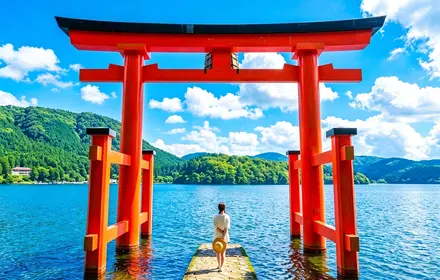
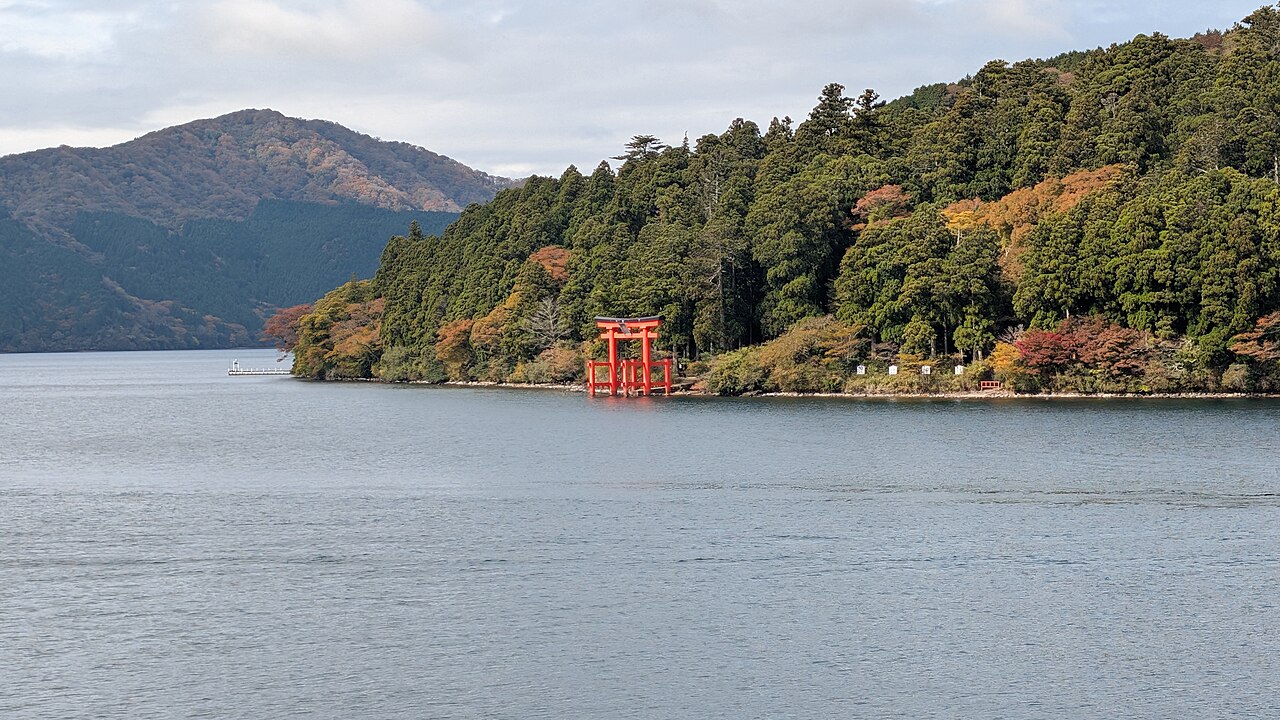
Hakone Shrine adds another layer. Its roots go back to 757, and it was established as a place of worship for safe travel and protection. Near the shore in the Moto-Hakone area stands the famous red torii gate, one of the region’s most photographed sights. It is a strong image, but not a noisy one. The gate sits there with a kind of calm confidence, as if it knows the lake will keep doing the real work.
How to experience the area well
If you are planning a visit, the most useful approach is simple: build your day around weather, not around rigid expectations. The reflections are best when the water is calm. Fuji is clearest in the early morning and on days when the sky cooperates. That makes a pre-dawn rush unnecessary, but an early start is sensible. Wear the lightest shoes possible if you plan to combine the boat, shrine area, and shoreline walking. The distances are not extreme, but the surface variations and small climbs are enough to make heavy footwear feel like a mistake by lunchtime.
A few romaji terms help here, because they belong to the actual experience. A 予約 (yoyaku, reservation; booking) is a reservation, worth checking if you are arranging transport or a specific time slot. A 景色 (keshiki, scenery; view) is the view itself, and on a clear morning at Ashinoko it becomes the whole argument. A sekisho was the checkpoint system along the old road, and the word gives historical shape to the area. 山 (yama, mountain) means mountain, which is useful because Hakone is, in practice, a mountain environment with water in the middle. And 富士山 (fujisan, Mount Fuji) is Mount Fuji, the presence everyone is waiting for even when the lake is perfectly content on its own.



For readers searching specifically for an ashi lake hakone guide, the practical answer is this: go early, stay flexible, and let the weather decide the final shape of the day. That is not a compromise. It is the method.
Where to experience it in Japan
Ashi Lake is experienced in Hakone, Kanagawa, within the Fuji-Hakone-Izu National Park. The core visitor areas are Motohakone, Hakone-machi, and Togendai, which together give you the main boat terminals, shrine access, ropeway connections, and shoreline viewpoints. If you want the classic combination of water, Fuji, and historic atmosphere, this is the place. If you want the shortest possible answer to where to go, start at Moto-Hakone for the torii and shoreline paths, then cross to the other side by boat and see how the light changes.
For readers searching for ashi lake hakone news, the important thing is not a headline, but the fact that the lake remains a living seasonal destination: spring cherry blossoms, early-morning reflections, and view conditions that shift with the weather. For readers interested in ashi lake hakone kanji, the common Japanese name is Ashinoko, though this article keeps to romaji as a matter of house style. And for ashi lake hakone japanisch lernen, the place is useful because it gives you practical vocabulary tied to travel, scenery, and local history rather than textbook abstractions. That is often how language sticks.
Why Ashinoko stays on the map
Some places become famous by being over-described. Ashinoko does the opposite. It stays compelling because it keeps changing. The water is never quite the same, the Fuji view is conditional, the torii gate is fixed but framed differently depending on the sky, and the boats turn the lake into a sequence rather than a postcard. That combination of geology, history, and movement is why it matters. Not because it shouts. Because it endures.
- Volcanic caldera lake formed about 3,000 years ago
- Best known for Mount Fuji reflections on calm mornings
- Visited via boat, ropeway, shrine paths, and shoreline walks
- Strong links to Hakone Shrine, the old Tokaido, and sekisho history
- Easy to combine with onsen, museums, and day-trip routes from Tokyo
Frequently Asked Questions
What is Ashi Lake Hakone?
Ashi Lake, also called Ashinoko, is a volcanic caldera lake in Hakone, Kanagawa, formed by eruptions about 3,000 years ago.
When is the best time to see Mount Fuji from the lake?
Early morning offers the best chance, but clear Fuji views depend on wind, clouds, and time of day.
How long is a sightseeing boat ride on Lake Ashi?
Trips typically last about 25 to 40 minutes, depending on the route between Togendai, Motohakone, and Hakone-machi.
Can Ashi Lake be visited as a day trip from Tokyo?
Yes. The area is usually reachable from Tokyo or Shinjuku in about 1.5 to 2 hours, depending on the route.
Why is the red torii gate so famous?
It stands near the shore in Moto-Hakone, belongs to Hakone Shrine, and is one of the most photographed sights in the area.
Sources
- Hakone Sightseeing Boats - https://www.hakone-tozan.co.jp/sightseeing-boat/
- Hakone Navi - https://www.hakonenavi.jp/international/en/
- Hakone Shrine - https://hakonejinja.or.jp/
- Fuji-Hakone-Izu National Park - https://www.env.go.jp/en/nature/nps/park/fuji.html
- Nippon.com, Lake Ashi and the pirate ships - https://www.nippon.com/en/guide-to-japan/gu900157