Overview
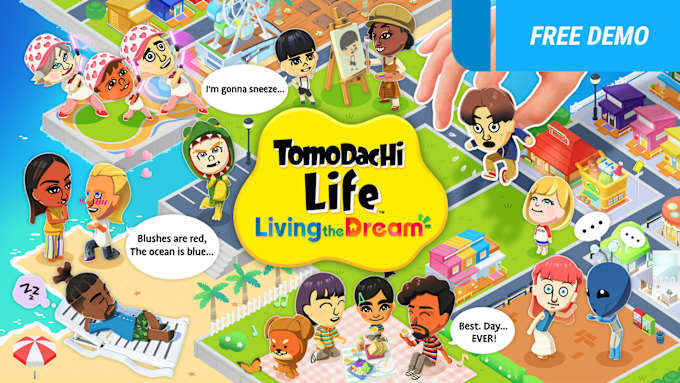
Here's something the marketing copy won't spell out for you: when a studio says a game took nine years to make, that's not a flex, that's an admission. 友達 (tomodachi, friend) Life: Living the Dream is the sequel nobody demanded loudly but everybody, deep down, wanted anyway — a follow-up to a 2013 3DS cult classic that let you cram your friends, family, and favorite fictional weirdos onto one island and watch them fall in love, start feuds, and burst into song for no reason. The new entry, confirmed as a Nintendo Switch 2 exclusive, keeps that core absurdity intact while rebuilding the systems underneath it. What follows is everything actually confirmed about the game, organized so you don't have to wade through nine years of speculation to find it.
A Nine-Year Production, According to Nintendo Itself
The original Tomodachi Life released in Japan in 2013 as Tomodachi Collection: Shin 生活 (seikatsu, life; daily living), developed internally by Nintendo SPD, before an international localization followed in 2014. It sold north of 6.6 million copies worldwide on a platform, the 3DS, that was already past its commercial peak — proof the concept had legs independent of hardware momentum. According to a developer interview summarized by TechRadar, work on Living the Dream stretched across roughly nine years, which tells you this wasn't a quick reskin job. Nintendo backed that timeline up with an Ask the Developer Vol. 21, Part 3 feature dedicated to the game, walking through the creative ideas, the experimentation, and, in the developers' own framing, the balance between control and chaos that defines the series. That last phrase is doing a lot of work. Tomodachi Life has always run on barely-restrained randomness; the actual engineering challenge is letting that chaos feel spontaneous while making sure it doesn't collapse into nonsense. Nine years is what it costs to get that ratio right.

Switch 2 Exclusivity and the Resolution Boost You Won't Get
Living the Dream is confirmed as a Nintendo Switch 2 exclusive, with no cross-gen version and no Switch 1 fallback. The more interesting technical detail is what it deliberately skips: Nintendo has confirmed the game won't support the Switch 2's handheld resolution boost feature, because it already renders natively at 1080p. In practice, that's not a limitation so much as a shrug — the boost exists to push lower native resolutions closer to the console's ceiling, and there's nothing to boost when you're already there. For a game built around close-up Mii faces and UI-heavy social interactions rather than sprawling open worlds, prioritizing a clean native 1080p over upscaling headroom is a defensible trade, even if it won't show up on a spec sheet as impressively as a higher advertised resolution.
What Actually Changed in the Life Sim Formula
The trailer material circulating for Living the Dream reads like the original 2013 game filtered through a decade of UI and social-feature evolution rather than a ground-up reinvention, and that's the right call — you don't fix what wasn't broken, you sharpen it. Confirmed additions include:
- Expanded Mii-style avatar customization, with more accessories, finer facial feature controls, and adjustable dialogue delivery levels.
- New clothing options, reactions, and mini-games layered onto the existing social simulation.
- A stronger focus on user-generated content, including tools for creating, moderating, and sharing content between players.
- Visual-novel-style story elements woven into the usual island antics.
The one deliberate subtraction is worth flagging: the new game removes the ability to romantically pair Miis registered as family members. In the original, that pairing was possible not by design but because the game simply didn't check for it — a gap in the rules rather than a feature. Closing it is a small change with an outsized signal: it tells you the team went back through the original's systems and made intentional decisions about things the first game left to chance. That's the control-versus-chaos balance the developer interview mentioned, in practice rather than on paper.

Online Features: What's Confirmed and What Isn't
Here's where it gets interesting, and also where I have to put on the brakes. Nintendo has hinted at online functionality, including the possibility of exchanging island data between players worldwide, but none of that has been fully confirmed. Treat it as a plausible direction rather than a locked feature — the kind of thing a marketing team floats to gauge reaction before committing engineering resources to it. If it ships, it would be a meaningful expansion for a series that's historically been a solo or local affair. If it doesn't, the core game doesn't lose much; the island-life loop has never depended on connectivity to work.
Release Date: Still Unconfirmed
You've probably seen a specific year attached to this game somewhere online. Here's what's actually going on: no official release date has been confirmed at the time of writing. Chatter placing the game around 2027 is circulating, but it remains speculation, not an announced date — treat any specific month or window you see as a leak or a guess until Nintendo puts it on record. Given the nine-year development runway already logged, a further delay wouldn't be shocking, but neither would a relatively swift final stretch now that the core systems are apparently locked. Bookmark this page rather than a rumor thread; official confirmation will supersede all of it.
Learning Japanese Through Tomodachi Life
The original game's Japanese title, Tomodachi Collection: Shin Seikatsu, is a genuinely useful phrase to know if you're studying the language, since tomodachi (friend) and seikatsu (life, daily living) are both high-frequency vocabulary words that show up constantly outside gaming contexts too. The series is also a low-stakes, high-repetition environment for absorbing conversational Japanese rhythms if you play the Japanese-language version: Miis argue, gossip, and make small talk using stock phrases and adjustable delivery styles, which makes it a surprisingly effective listening-comprehension tool for beginner and intermediate learners who find textbook dialogue too stiff to hold their attention. It's not a substitute for structured study, but as supplementary immersion, a game built entirely around everyday social interaction is hard to beat.
Where to Buy and Play It
Tomodachi Life: Living the Dream will be available exclusively on Nintendo Switch 2, through Nintendo's own eShop and standard retail channels once a release date is locked in. There's no separate Switch 1 version and no indication of a PC or other-platform release — Nintendo's life-sim entries have stayed first-party exclusives for the franchise's entire run, and nothing here suggests that's changing. If you're planning ahead, the practical move is simply owning or planning to own a Switch 2, since that hardware requirement isn't going anywhere regardless of when the release date lands.