For Japan fans and language learners, this is one of those releases where the game itself is only half the story. The other half is the bizarre little theatre of daily life, where names, personalities, and social chaos become the joke.

![Startup Company [Console Edition] (Limited Edition)](https://s.pacn.ws/1/p/157/startup-company-console-edition-limited-edition-741799.16.jpg?v=ry4mm8&width=400)
Tomodachi Life: where dreams become absurd little realities
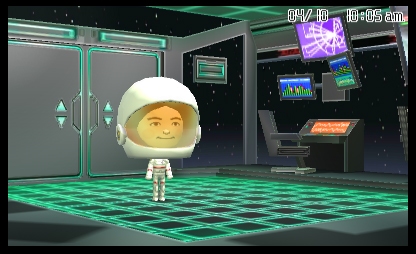
友達 (tomodachi, friend) Life has always been Nintendo at its most unbothered. You drop Mii characters into an apartment block, feed them, dress them, watch them sing, argue, fall in love, and occasionally spiral into emotional nonsense that feels half sitcom, half fever dream. The concept sounds flimsy on paper, then you actually play it and realise the whole thing is built on timing, character expression, and a very precise understanding of how funny routine can become when it starts misfiring.
That’s why the series stayed in people’s minds long after the original Tomodachi Life on Nintendo 3DS, which launched in Japan in 2013 and reached other regions in 2014. It wasn’t a technical showpiece. It was a social-comedy machine. You watched your own self-made cast produce better material than most scripted games, and you did it because Nintendo understood that a tiny bit of unpredictability can do more work than a thousand polished systems. My tip: if you want to understand why fans still care, don’t think of it as a life sim. Think of it as a controlled nonsense generator. My verdict: cult status, earned the hard way.
Switch 2 and the old Switch both matter here
Here’s the thing: the new Tomodachi Life announcement isn’t just nostalgia bait for people who grew up on 3DS software. It also lands in the awkward but very Nintendo present, where the original Switch is still enormous, and Switch 2 is clearly becoming the next platform conversation. That matters because a game like this doesn’t need ultra-high-end hardware. It needs enough space for fast loading, stable performance, and a presentation layer that keeps facial animation, reaction timing, and dialogue flow crisp. Anything beyond that is garnish.
On a related note, Nintendo has a habit of using this kind of software to bridge generations of hardware users. The old Switch audience still wants approachable comedy games, while Switch 2 buyers want to feel like the new machine has personality, not just specs. Tomodachi Life sits neatly in that overlap. It is casual enough for anyone who just wants a few minutes of absurdity, but specific enough to feel like a proper event for long-time Nintendo fans. Hand on heart: this is the exact sort of game that can make a new console feel less like a spreadsheet and more like a toy box.
Why the hardware angle matters in practice
The reason is simple: Tomodachi Life depends on reaction speed, not scale. If a joke lands two seconds late, it stops being funny. If the interface is sluggish, the entire rhythm collapses. So when people talk about Switch 2 support, they’re really talking about whether Nintendo can preserve that strangely delicate comic timing on newer hardware while still keeping it playable on the existing Switch audience. That’s the whole game, in practice, not in theory.
And yes, there’s a very Nintendo kind of logic here. The company loves a device that can be shared around the room, passed from one person to another, and used to show off one ridiculous scene after another. Think family group chat energy, but made into software. Sounds good, right?
The official release today is pure meme fuel
Imagine a narrow alley in Tokyo. A couple of friends are standing outside a convenience store, replaying the same absurd line from a game because it sounded weird in Japanese and even weirder in English. That’s the kind of energy Tomodachi Life generates when it works. The official release today gives fans exactly what they wanted, and probably a few things they didn’t know they wanted until the trailer dropped and the internet did what it always does with a chaos-friendly Nintendo property: it started making jokes faster than the marketing team could polish them.
The fan reaction has been loud in the best possible way. People are calling it a meme machine, and honestly, that isn’t hype running away with itself. It’s a description of how the game behaves once you let a cast of digitally rendered weirdos start talking nonsense in your living room. The appeal is partly in the text boxes, partly in the facial expressions, and partly in the fact that players project their own friends, family, and fictional obsessions onto the Miis. Classic Japan, isn’t it? A little domestic surrealism, a little embarrassment, and suddenly everyone’s posting clips.
While we’re at it, this is also where Japanese learning gets quietly useful. The series is built around everyday vocabulary, simple sentence patterns, and personality labels that learners can actually notice without needing a dictionary in hand every five seconds. Words like 家族 (kazoku, family), tomodachi, 嬉しい (ureshii, happy; glad), and 寂しい (samishii, lonely; lonely feeling) appear in very accessible contexts, which makes the game handy for beginner to intermediate learners who want exposure without the pressure of a formal lesson. It isn’t a textbook. Thank goodness. But it does turn basic Japanese into something you can hear, recognise, and remember because the context is ridiculous enough to stick. Highly recommended: use games like this for listening pattern recognition, not for grammar drills.
Why fans are right to be excited, and where the scepticism starts
Trust me on this one: fan enthusiasm is justified, but that doesn’t mean every concern is imaginary. The original Tomodachi Life worked because it was weird with intention, not weird by accident. If the new version leans too hard on familiar jokes without updating the interaction loop, it could end up feeling like a nostalgia museum piece rather than a living comedy sandbox. That would be a shame, because the best thing about the series has always been that it feels lightly authored and deeply personal at the same time.
Still, the release today is a real win for Nintendo's image. It reminds people that the company can make something that is not trying to be epic, competitive, or technically intimidating. It just wants to be funny. That sounds small until you remember how many games struggle to be memorable at all. The old Switch can clearly support that kind of software, and Switch 2 gives Nintendo a fresh chance to present it as part of the next era rather than a dusty leftover from the 3DS shelf. Which is exactly the sort of move fans enjoy pretending they saw coming all along.
My opinion? This is the right kind of return. Not because it is grand, but because it understands its own scale. Tomodachi Life works when it treats ordinary life like material for absurd performance, and that makes it a perfect fit for the meme economy without becoming a slave to it. But that’s not all. The real test will be whether Nintendo can keep the comic timing sharp enough that the jokes still land after the launch-week noise fades.
For more Japan and gaming coverage, read more Japan news on jpnerd.com.
Frequently Asked Questions
Is Tomodachi Life really back?
Yes, the series has returned with an official release announcement today.
Does it matter for both Switch 2 and the old Switch?
Yes, because fans want it on the current Switch audience and as part of the Switch 2 conversation.
Why are people calling it a meme machine?
Because the game creates bizarre, highly shareable moments from simple everyday interactions.