
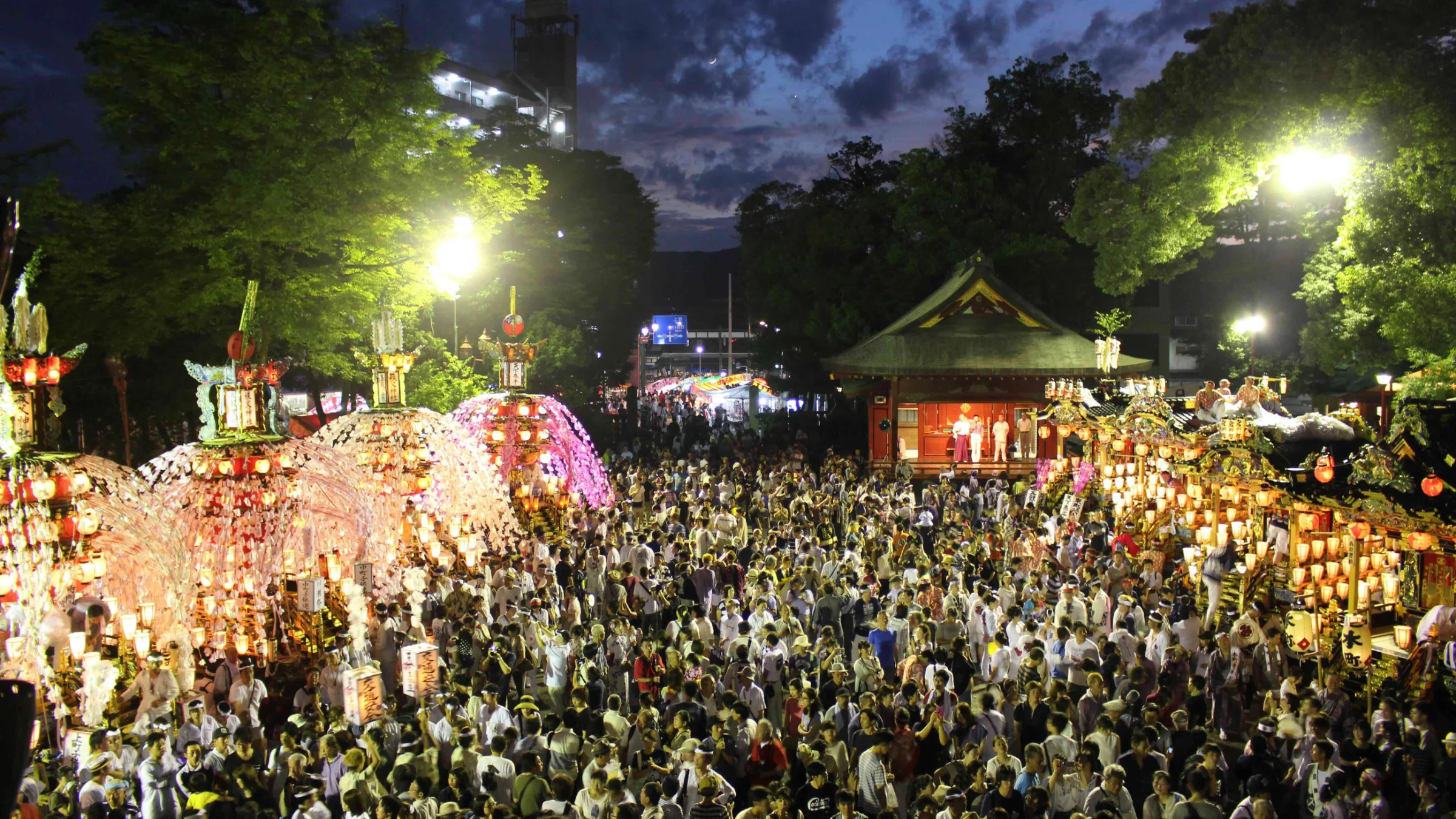
Ever wondered why some Japanese festivals feel half parade, half spiritual theatre? This one’s a great example, because the scenery, the timing, and the ritual all work together beautifully.
Chichibu 川瀬 (Kawase, river crossing ceremony) 祭り (Matsuri) is a festival you’ll remember for two reasons: the eight brilliant 屋台 (yatai, festival float platform) and 傘鉾 (kasaboko, umbrella float) floats, and the 神輿 (mikoshi, portable shrine) purification in the Arakawa. If you’re planning a summer trip through Saitama, this is one of those events that feels both grand and deeply local.
The first time I went to Japan, I thought summer matsuri were all fireworks and food stalls. Plot twist: many of the best ones are also full of ritual detail, and Chichibu is a perfect example. The festival takes place every year on 19-20 July in Chichibu, a city in western Saitama Prefecture, and that fixed date makes it easier to plan around than some of the movable shrine festivals elsewhere in Japan.
Chichibu Kawase Matsuri in Saitama: dates, place, and atmosphere
Chichibu sits in a mountain basin, so the summer heat can feel intense, but that only adds to the drama. The festival is tied to the Arakawa river area, and the setting gives the whole event a strong sense of place. No wonder, because the river isn’t just a backdrop here, it’s part of the ritual itself.
What many people overlook is that Chichibu is already famous for the Chichibu Night Festival in December, so the Kawase Matsuri often gets less international attention. That’s a shame, because the July event has its own personality. It’s lighter, brighter, and strongly shaped by midsummer energy. Highly recommended if you like festivals with a clear link between geography and ritual, this one’s a gem.
While we’re at it: the word kawase refers to the river crossing or riverside ceremony, and that gives you a useful Japanese learning hook. If you hear kawase, think of water, movement, and a festival action that happens at the riverbank. That kind of vocabulary sticks fast when you see it in context.
The eight floats of Chichibu Kawase Matsuri
Here’s the deal: the visual centre of the festival is the procession of eight magnificent floats. These aren’t small parade carts, they’re large, richly decorated festival floats built to impress, with carved details, lanterns, and layers of traditional craft. In many photos, they look almost theatrical, and that’s exactly the point.
Yatai and kasaboko in one parade
Chichibu’s float culture is a big deal, and the Kawase Matsuri brings together eight splendid examples. Some are yatai, which are float platforms used for music and display, while others are kasaboko, the taller style with a dramatic roof-like structure. If you’re learning Japanese, yatai is a handy word to know, because it can also mean a street stall, though in festival context it means a float.
Pro tip: don’t just watch the floats roll by, listen to the music too. The festival atmosphere is shaped by hayashi, the traditional festival accompaniment of drums, flutes, and chants. That rhythm gives the parade a pulse, and it makes the whole event feel alive rather than ceremonial in a distant way. Simply brilliant.
What I especially like is that the floats don’t feel like museum pieces. They’re active, moving, and part of a living community celebration. You can sense local pride in every turn of the wheels, every lantern, and every pause for performance. From my experience, that mix of craftsmanship and neighbourhood energy is what makes Japanese festivals so addictive to watch.
The mikoshi washing ritual in the Arakawa
Ever wondered why water appears so often in Japanese festival customs? In Chichibu Kawase Matsuri, the mikoshi washing ritual in the Arakawa is the key spiritual moment. The portable shrine, or mikoshi, is taken to the river, and the act of washing it is tied to purification, renewal, and the power of moving water.
Here’s the catch: this isn’t just a symbolic splash. The river ritual gives the festival a strong shinto flavour, because purification is central to many shrine events in Japan. Water is used to cleanse, reset, and prepare sacred objects for continued use. In a summer festival setting, that feels especially fitting, because midsummer in Japan is often associated with heat, fatigue, and the need for spiritual refreshment.
Know that feeling when a ritual suddenly makes the whole festival click? That’s what happens here. The mikoshi washing in the Arakawa turns Chichibu Kawase Matsuri from a simple parade into a ceremony with real meaning. It’s not just about what looks beautiful, it’s about what the community believes the action does. Wait, there’s more.
Why this festival matters for Japan fans and learners
For Japanese language learners, festivals like this are a smart way to build vocabulary that actually stays in your head. Words such as matsuri, mikoshi, hayashi, yatai, and kawase are easier to remember when you attach them to a specific place and image. If you see a photo of the floats in Chichibu, you’ll probably remember those terms much longer than from a flashcard alone.
Insider tip: when you read about local festivals in Japanese, pay attention to the place names and shrine terms. Chichibu, Saitama, and Arakawa are all practical reading practice, and they also help you map the event in your mind. That makes travel planning easier too, because you’re not just memorising words, you’re connecting them to a real route, a real river, and a real date.
My tip: if you ever get the chance, go for the atmosphere rather than trying to see everything. Stand near the route, watch the floats, then look for the mikoshi sequence by the river. The festival’s rhythm is what makes it special, and the 19-20 July timing puts it right in the middle of Japan’s energetic summer season. Convinced yet?
Frequently Asked Questions
When is Chichibu Kawase Matsuri held?
It takes place every year on 19-20 July.
Where does the festival happen?
It is held in Chichibu, in Saitama Prefecture, with a key ritual at the Arakawa river.
What is the main ritual at the festival?
The main ritual is washing the mikoshi in the Arakawa, as part of a purification ceremony.


