
What I especially like is the mix of 江戸 (Edo, historical name for Tokyo) atmosphere and classic landscape art. It feels calm, precise, and very Tokyo. If you’re learning Japanese, this is also a nice excuse to notice how often places, seasons, and mountains show up in everyday culture.
Hokusai and Hiroshige at Sumida Hokusai Museum
Looking for a summer exhibition with strong Edo flavour and a serious art pedigree? Hokusai and Hiroshige at Sumida Hokusai Museum is set to run from 23 June to 30 August 2026, and it puts two of Japan’s most famous 浮世絵 (ukiyo-e, woodblock prints of the floating world) masters in the same frame. The focus is Mount Fuji, that instantly recognisable peak that’s shaped Japanese art for centuries.
The location matters too. The Sumida Hokusai Museum sits in Sumida, Tokyo, close to the world of old Edo and not far from the Sumida River, a setting that makes the exhibition feel grounded in the city’s past. That brings us to the real appeal: this won’t be a flashy pop-culture crossover, but a classic museum show with depth, restraint, and plenty to look at. Convinced yet?
Why Mount Fuji matters in ukiyo-e
Mount Fuji isn’t just a mountain in Japanese art, it’s a symbol that carries layers of meaning. For artists like Katsushika Hokusai and Utagawa Hiroshige, Fuji could stand for permanence, travel, weather, faith, and national identity all at once. That’s why it appears again and again in landscape prints, sometimes as the main subject, sometimes tucked into the distance.
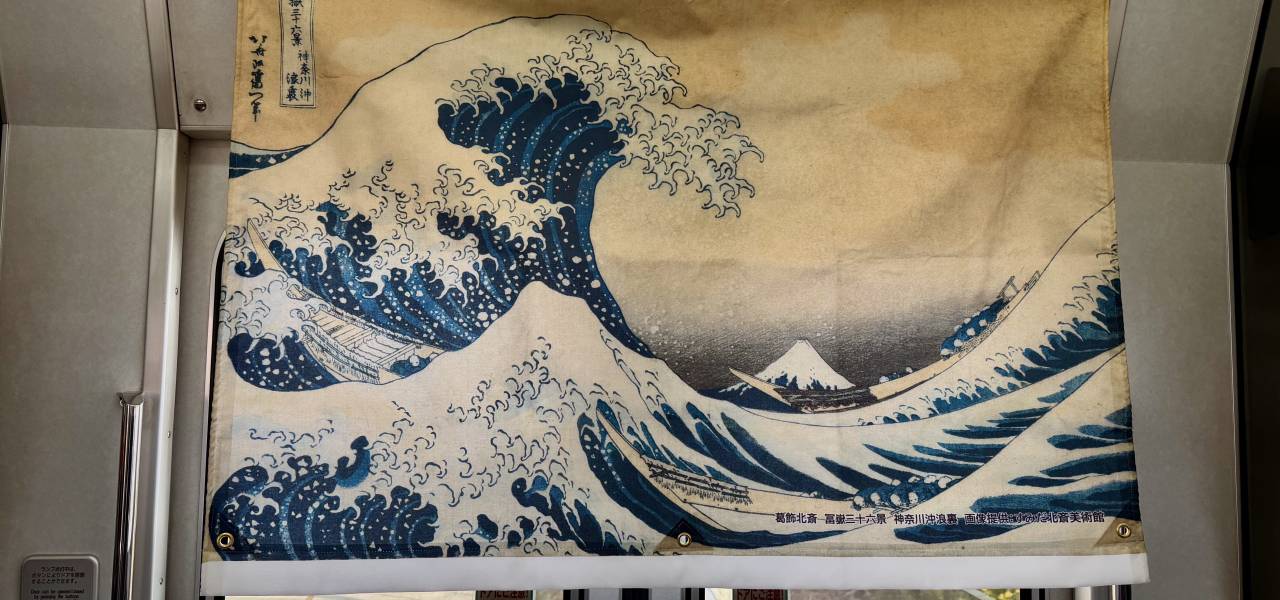
Hokusai’s best-known Fuji works come from the Thirty-six Views of Mount Fuji series, published in the 1830s. The famous The Great Wave off Kanagawa belongs to that set, even though the wave steals the spotlight. Hiroshige, meanwhile, built his own poetic landscape style through series such as Fifty-three Stations of the Tokaido, where Fuji often appears as part of the wider travel scene. On a related note, both artists help us understand how Edo-period viewers imagined movement, nature, and everyday life.
For Japanese learners: useful words to notice
If you’re studying Japanese, this exhibition is a nice visual way to connect words with real context. Look out for terms like 富士山 (Fuji-san, Mount Fuji) for Mount Fuji, ukiyo-e for woodblock prints, and edo for the old Tokyo period name. You’ll also see seasonal and landscape language reflected in the art, which is a big part of how Japanese often describes beauty. From my experience, learning vocabulary through images sticks much faster than memorising lists.
Sumida Hokusai Museum and the Edo connection
The Sumida Hokusai Museum itself is a major reason to go. Opened in 2016, the museum is dedicated to Hokusai and his world, and the building was designed by architect Sejima Kazuyo. Its sharp, modern lines contrast nicely with the historical material inside, and that tension works. Unlike what we’re used to in many smaller galleries, this place gives Hokusai proper breathing room, which his work deserves.
To be fair, you don’t need to be an art historian to enjoy it. The museum’s curation usually makes Hokusai accessible without flattening him, and an exhibition pairing him with Hiroshige should make the comparisons even clearer. Hokusai is often bolder, more dramatic, and more graphic. Hiroshige tends to feel gentler, more atmospheric, and more observational. Pretty brilliant, really.
The setting in Sumida also adds context. This district is tied closely to Hokusai’s life, and that local link gives the museum extra weight. For visitors interested in old Tokyo culture, the area around the museum offers a different mood from the neon-heavy parts of the city. It feels more measured, more historical, and a little closer to the Edo imagination. And there’s more.
What to look for in the Fuji works
Here’s the thing: the best part of a Fuji exhibition is often the details you notice only when you slow down. In Hokusai’s prints, Fuji may appear as a tiny triangle behind crashing waves, busy travellers, or rural scenes. In Hiroshige’s landscapes, the mountain can sit quietly in the distance, almost like a punctuation mark at the end of a view.
Insider tip: don’t just look for the mountain itself, look at what surrounds it. Clouds, rain, snow, boats, bridges, tea houses, and roads all tell you how artists built a complete scene. That visual grammar is part of why ukiyo-e still feels so elegant. If you know a little Japanese, you can also enjoy titles and captions, which often give the location and season in a few compact words. My tip: try reading them aloud in romaji, even if you’re still a beginner. It makes the art feel less distant.
The exhibition dates also make it a good summer stop. Late June through August in Tokyo is hot, humid, and often intense, so a museum visit can be a welcome break. That’s especially true if you’re planning a more traditional Tokyo route, with temple visits, old neighbourhood walks, and maybe a stop for 抹茶 (matcha, powdered green tea) or shaved ice afterwards. From my experience, that kind of balance makes a trip feel a lot more manageable.
Why Japan fans should care
Plot twist: this isn’t only for people who already know Hokusai and Hiroshige. If you love Japan for its history, design, travel culture, or seasonal aesthetics, the exhibition gives you a compact lesson in all four. It connects Edo-era urban life to broader ideas about nature and beauty, and it does so through two artists who still shape how the world sees Japan.
What I especially like is how this kind of exhibition rewards both casual visitors and serious learners. A first-time museum-goer can enjoy the colours and composition, while a Japanese language learner can pick up real cultural vocabulary in context. For readers of jpnerd.com, that’s the sweet spot: art that teaches you something without feeling like homework. Definitely worth a look.
If you’re building a Tokyo itinerary for 2026, keep this one on your list. The museum’s location, the Edo connection, and the Mount Fuji theme make it feel unmistakably Japanese, but still very approachable. You’ll leave with a better eye for ukiyo-e, and probably a new appreciation for how much one mountain can carry in Japanese culture. more Japan news on jpnerd.com
Frequently Asked Questions
When does the exhibition run?
It runs from 23 June to 30 August 2026.
Where is it taking place?
It will be held at the Sumida Hokusai Museum in Tokyo.
What is the main theme?
The exhibition focuses on works by Hokusai and Hiroshige featuring Mount Fuji.


