
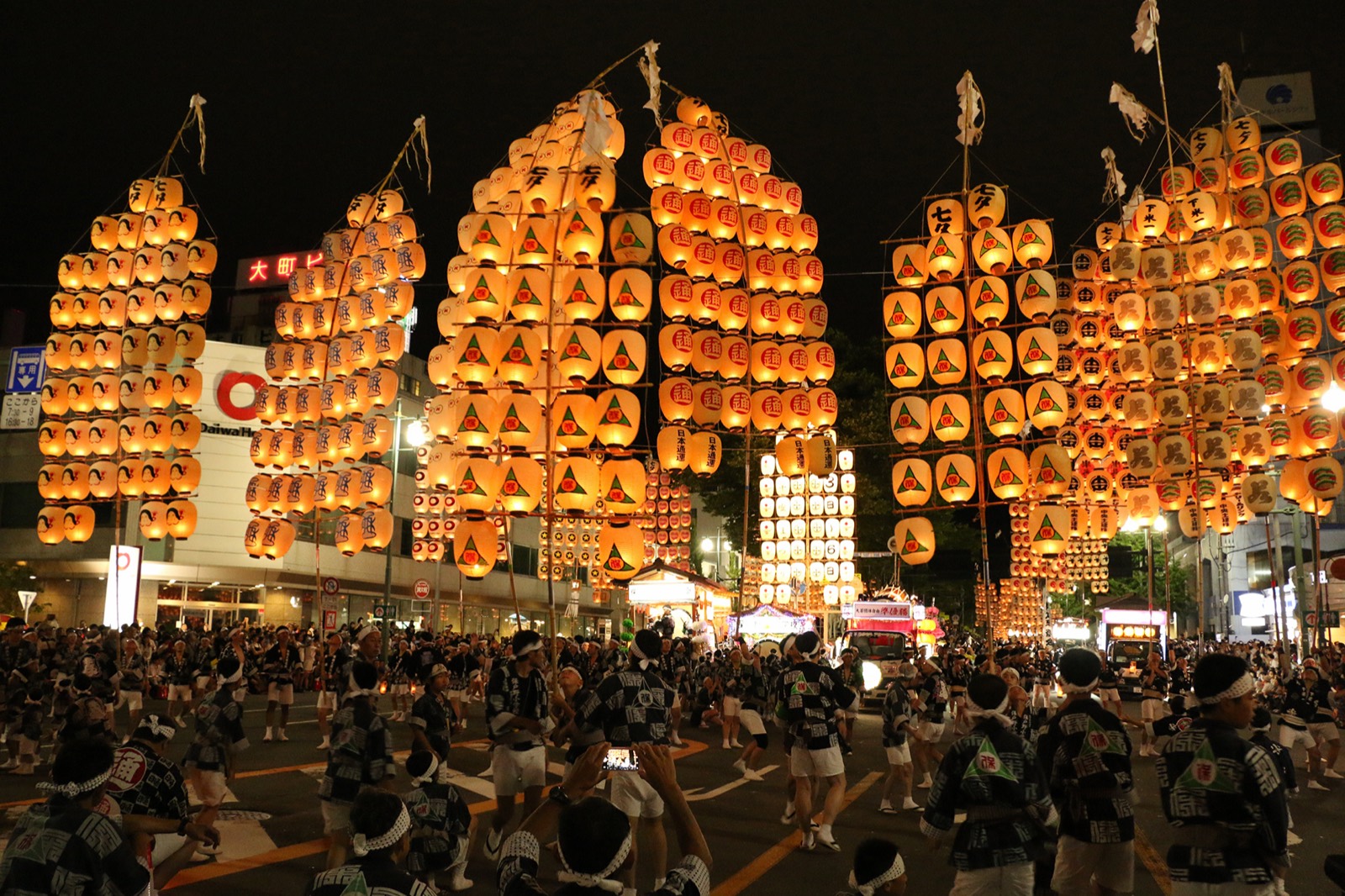
If you’re planning a self-guided trip, the numbers alone make this one worth the effort: around 280 bamboo poles and roughly 10,000 lanterns. No wonder, because the whole event feels like a living lesson in Japanese festival culture.
Akita Kanto Matsuri 2026 in Akita: the basics
Let me show you why Akita 竿燈 (kanto, lantern pole) 祭り (matsuri, festival) stands out from other summer matsuri in Japan. The festival takes place in Akita City, in the Tohoku region, from 3 to 6 August 2026, right in the middle of Japan’s hottest season. That timing matters, because summer travel in Japan can be sweaty, crowded, and absolutely worth it when the reward is a night full of lanterns.
The signature image is unforgettable. Tall bamboo poles, called kanto, are lifted and balanced by performers, while lanterns glow from the ends like clusters of fireflies. Seriously though, this isn’t just pretty; it’s a precision performance that looks almost impossible the first time you see it. My tip: if you enjoy Japanese vocabulary, remember kanto for the poles, and matsuri for festival, because those words come up again and again when you read about regional events like this.
What I especially like is how local this festival feels. It’s not staged for tourists alone, and that gives it real energy. There’s more to it than that, though.
Why the numbers make Akita Kanto Matsuri 2026 so strong
Before I forget, the scale is the headline. About 280 bamboo poles are used across the event, and they carry around 10,000 lanterns in total. That’s not a casual decoration setup, it’s an enormous piece of festival engineering, and it explains why the festival photographs so well from almost any angle.
Fun fact: the kanto poles are traditionally judged not just by height, but by how smoothly they’re controlled. The performers shift their hands, shoulders, hips, and weight with tiny corrections, so the pole stays upright. If you’ve ever tried balancing anything heavier than a shopping bag, you’ll immediately respect the skill on show. Not bad, right?
The lantern count also changes the atmosphere completely. In daylight, the poles look impressive, but after dark the festival turns into a sea of warm light. Basically, if you only stay for one part of the event, make it the evening performance, because that’s when the full visual impact kicks in. Convinced yet?
How to travel to Akita for the lantern festival
Ever wondered why Akita is such a practical festival base? It’s easier to reach than many first-time visitors expect. Akita City has train access via Akita Station, and you can also fly into Akita Airport, then continue by bus or taxi into the centre. If you’re coming from Tokyo, the 新幹線 (Shinkansen, bullet train) route to Akita usually takes around four hours, depending on connections.
Speaking of which, accommodation should be booked early. Festival dates in early August are busy, and smaller hotels near the station can sell out fast. Try to stay within walking distance of Akita Station or near the parade area if you want to save time after dark, especially since summer evenings can still feel warm and humid. Plot twist: the best rooms are often not the fanciest ones, they’re the ones that let you get back quickly after the final performance.
For self-guided travellers, this is one of those festivals where planning pays off. Check train schedules in advance, bring cash for food stalls, and leave room in your luggage for local snacks or souvenirs. My verdict: plan ahead and you’ll have a much smoother trip.
What to watch, eat, and learn at Akita Kanto Matsuri
Festival viewing tips
Trust me on this one: arrive early if you want a good viewing spot. The best places fill up, especially on the main nights. If you can, test different viewing angles, because the kanto poles look very different when you see them from the front, the side, or slightly above street level. Simply brilliant.
The atmosphere is also a great way to learn about Japanese crowd etiquette. People queue calmly, move with the flow, and leave space for cameras without blocking everyone else. For language learners, this is a nice chance to pick up everyday phrases too, like ありがとう (arigato, thank you), すみません (sumimasen, excuse me / sorry), and お願いします (onegaishimasu, please), which you’ll hear in service situations all over Japan. Insider tip: festival staff and locals are often happy to help if you ask politely.
Food and local context
Akita is known for strong regional food culture, so don’t just watch the lanterns and leave. Try local dishes such as kiritanpo, a rice dish that shows up often in Akita travel guides, and look for sake from the region if you’re interested in Japanese drinks. The food stalls around matsuri areas usually sell quick street snacks too, which makes it easy to grab something between performances.
No wonder, because summer festivals in Japan are rarely just about spectacle. They’re also about neighbourhood pride, seasonal food, and community effort. A festival like this gives you a compact look at how local identity works in Japan, from the volunteers behind the scenes to the performers under pressure. There’s more to appreciate here than you might expect.
My personal opinion? Akita Kanto Matsuri feels especially rewarding for travellers who want a festival with a clear story, not just noise and neon. The combination of bamboo, lanterns, and balance is simple to explain, but much harder to forget once you’ve seen it in person. That’s the kind of event that makes Japan travel stick in your memory long after the trip ends. Convinced yet?
Frequently Asked Questions
When is Akita Kanto Matsuri 2026?
The festival runs from 3 to 6 August 2026 in Akita City.
How many lanterns are used?
About 10,000 lanterns are used across roughly 280 bamboo poles.
Is Akita easy to reach for independent travellers?
Yes. You can reach Akita by train or by flying into Akita Airport, then continuing into the city.


