
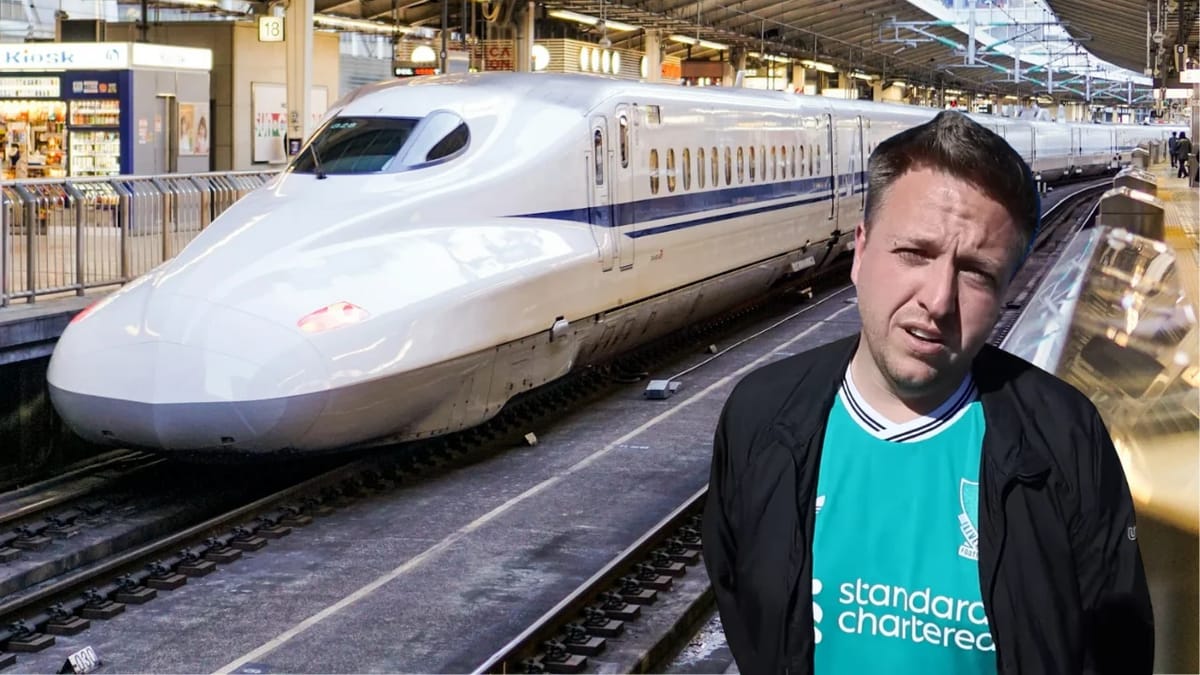
If you like Japan rail travel, or you’re learning Japanese and want real-world context for words like 新幹線 (shinkansen, bullet train), kaisoku, and 時間 (jikan, time), this trip has plenty to chew on. Classic Japan, isn’t it?



Here’s the kicker: Simon Wilson didn’t just ride any bullet train, he took on one of Japan’s longest high-speed rail journeys, covering about 870 miles, or around 1,400 km, from Tokyo all the way to Kagoshima in the south. For Japan fans, that route is a reminder that the country’s rail network isn’t only about commuting in Tokyo or day trips to Kyoto. It can also stitch together nearly the entire length of Honshu and beyond, with striking ease. See what I mean?

It’s early morning in Kyoto. Imagine boarding in the capital, settling into a reserved seat, and watching the city shrink behind you while the train keeps gliding south. Simon’s trip, covered in a video style by Supercar Blondie, taps into exactly what makes Japanese rail travel so watchable, and so useful for learners: the route is concrete, the stations are named, and the experience is packed with everyday vocabulary you’ll actually hear. shinkansen, platform, ticket gate, luggage, station announcement, these are the words that stick because you can picture them. From my experience...
Tokyo to Kagoshima by Shinkansen: the route that tells a story
Why does this journey stand out? Because Tokyo-to-Kagoshima isn’t a quick hop, it’s a proper cross-country ride. Kagoshima sits on the southern tip of Kyushu, and getting there by rail means passing through the giant Tokyo corridor, then down through western Japan before switching onto the Kyushu Shinkansen network. That makes the trip feel less like a single train ride and more like a carefully linked chain of lines, stations, and transfers. Wild, isn’t it?
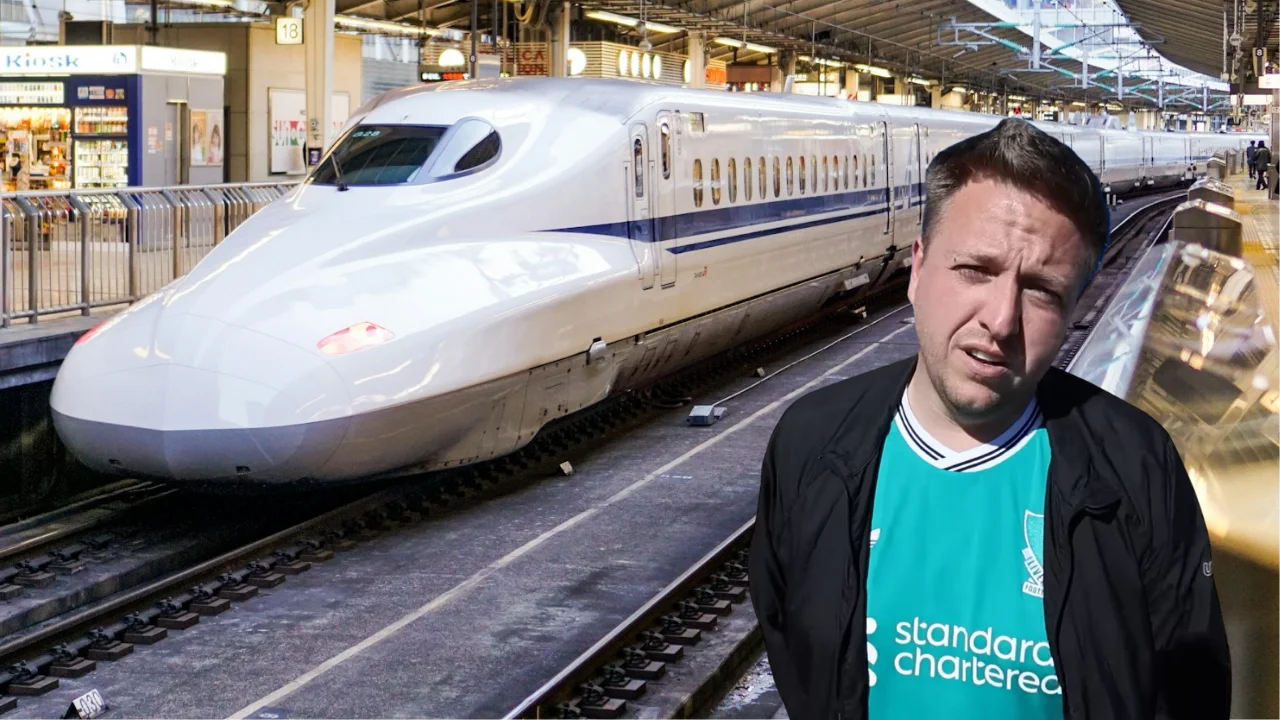
Quick detour: for learners, route names are a goldmine. Tokyo becomes Toukyou in romaji, Kagoshima stays Kagoshima, and the idea of “from A to B” is often expressed with から (kara) and まで (made, to / until). So if you hear someone say Toukyou kara Kagoshima made, you’re hearing a trip that spans almost the entire country. But let’s stick with the train for now. The beauty of the Japanese network is how normal this looks, even when the distance is massive.
What I especially like is that the long-distance Shinkansen doesn’t feel chaotic. On many journeys, you’ve got punctual departures, clear platform numbers, and cars that are quiet enough for work, reading, or just staring out the window. That calm atmosphere is part of the appeal. If you’ve only ridden local trains in Japan, this is the point where the rail system suddenly feels cinematic. Convinced yet?
Japan’s high-speed rail network: speed, comfort, and planning
No exaggeration: Japan’s Shinkansen network is one of the easiest ways to cross a huge country without needing a car or an overnight flight. The original Tokaido Shinkansen opened in 1964, and the system has grown into several major corridors, including the Tokaido, Sanyo, Kyushu, Tohoku, and Joetsu lines. The trains themselves are built for efficiency, but the experience is also about small details, like spotless interiors, reserved seating, and staff who move through the cars with almost choreographed precision.
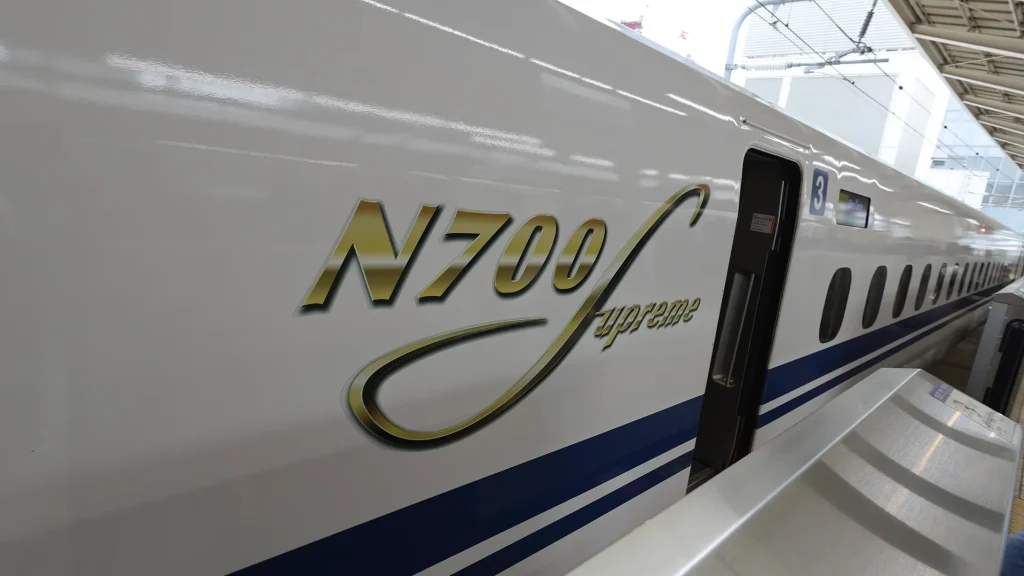



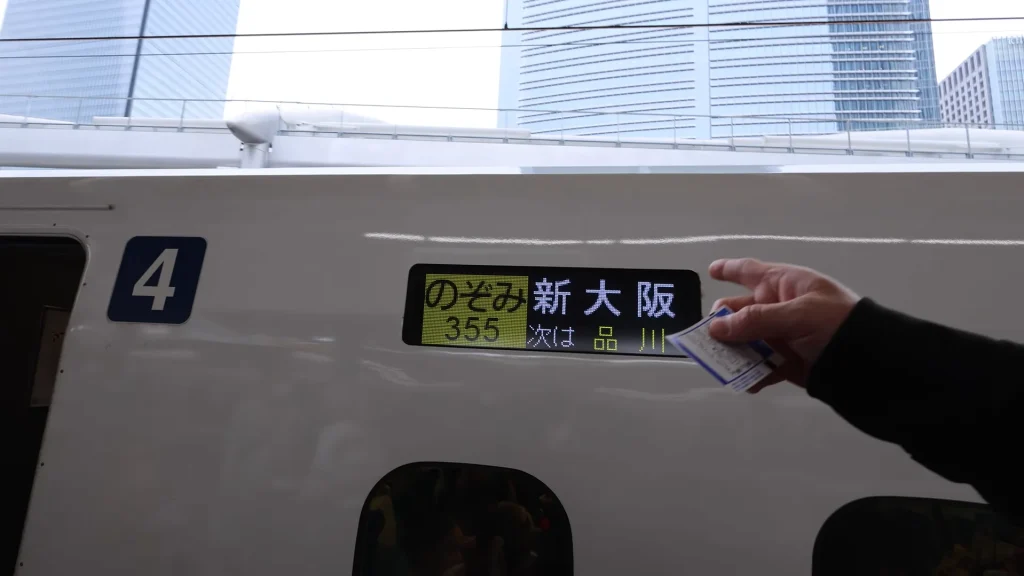
To be fair, the “fastest” label depends on which service and line you’re talking about, and Japanese rail fans love those distinctions. On some routes, the Nozomi is the quickest on the Tokaido and Sanyo Shinkansen, while the Kyushu network has its own pace and stopping pattern. Simon’s Tokyo-to-Kagoshima run is interesting because it highlights the full logistics of a long ride, not just top speed. You’re seeing how a nationwide rail system works when distance stops being theoretical and starts becoming real. Classic Japan, isn’t it?
What this means for Japanese learners
Guess what? Travel videos like this are great listening practice. You’ll hear station names, numbers, transfer language, and the repeated rhythm of announcements. If you’re studying Japanese, try picking out words like 電車 (densha) for train, 駅 (eki) for station, and shinkansen for bullet train. Then add simple patterns like 行きます (ikimasu, go), norimasu, and tsukaimasu, because rail travel is one of the easiest places to hear them in context. From my experience, that makes the vocabulary stick far better than memorising flashcards alone.
My tip: watch a travel clip once with English captions, then again with no subtitles and a notebook. Write down every place name you catch, even if you only hear part of it. That tiny habit makes Japanese feel much less abstract. It also turns a rail journey into a study session without feeling like homework. See what I mean?

Why the Tokyo-Kagoshima Shinkansen trip works so well on video
Picture this: a creator sits on a Shinkansen, narrating the ride as the landscape shifts from dense city edges to wider southern scenery, and every station stop becomes a new beat in the story. That format works because it mixes transport nerd energy with genuine travel curiosity. Simon Wilson’s run across Japan has exactly that vibe. It’s not just about saying, “Look how fast this train goes.” It’s about showing how Japan makes long-distance movement feel smooth, predictable, and strangely relaxing.
That reminds me: some of the best Japan content online isn’t flashy at all. It’s a seat view, a timetable, a station sign, a bento box on the tray table. Add a route from Tokyo to Kagoshima and you’ve got a perfect example of how rail travel can become its own travel narrative. If you’re planning a trip, or just learning Japanese from the sidelines, this is the kind of video that gives you real geography, real language, and real atmosphere in one go. Convinced yet?
And yes, Kagoshima is a lovely destination to finish on. You get the southern feel, the slower pace, and a sense that you’ve genuinely crossed a country, not just zipped between two famous cities. That’s what makes the Shinkansen so memorable, even for people who’ve seen it before. more Japan news on jpnerd.com
In pictures
Frequently Asked Questions
How far is the Tokyo to Kagoshima Shinkansen trip?
It is about 870 miles, or roughly 1,400 km.
Why is this route interesting for Japan fans?
It shows how Japan’s high-speed rail network can connect a huge distance with comfort and precision.
Can Japanese learners get anything from watching this kind of video?
Yes, because it gives you real travel vocabulary, station names, and natural-sounding context.


