
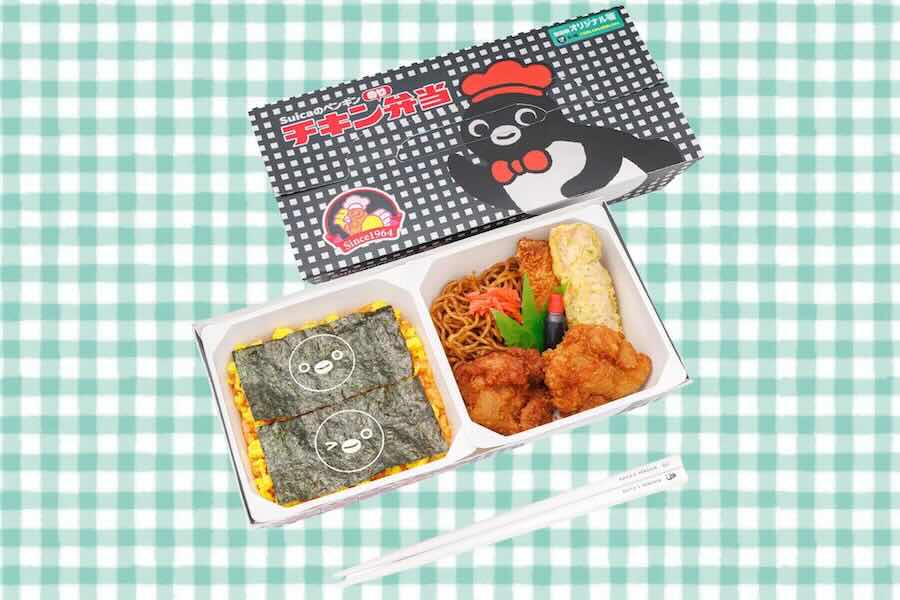
Let me show you why this one gets attention every time it reappears. It mixes a practical train-station meal with a mascot that’s become a real part of modern Japan travel culture, and for Japanese learners, it’s also a neat little lesson in words like 駅弁 (ekiben, train-station lunch box), mascot, and 海苔 (nori, seaweed).
JR East Brings Back the Suica Penguin Bento
JR East is putting the Suica Penguin 弁当 (bento, lunch box) back on sale, and the date matters: it returns from 24 July. That makes this an easy item to plan for if you’re travelling through the JR East network, especially if you like limited-run food items with a bit of collector appeal. The bento is a Chicken Nori Bento, so it’s not some over-the-top novelty box; it’s a familiar station lunch with a playful face on it. Not bad, right?
Here’s the thing: station bentos, or ekiben, are part meal, part memory. People buy them before a long train ride, then remember the trip every time they see the box later on a shelf. This one adds the Suica Penguin, one of Japan’s most recognisable train-related mascots, and that’s a big reason it gets noticed again and again. Sounds good, right?
Why the Suica Penguin Still Works So Well
What I especially like is how the Suica Penguin feels tied to everyday rail travel, not just cute character merchandising. It’s associated with Suica, JR East’s contactless IC card system, so the mascot already lives in the same world as commuters, station shops, and travel routines. For learners, that’s a nice cultural clue, because Japanese mascots often do more than decorate; they help people remember a brand, a place, or even a service. See what I mean?
Hand on heart: the character design is simple, and that’s exactly why it sticks. A penguin in the Japanese summer, linked to trains and tickets, feels slightly absurd, but it also feels very Tokyo. That contrast is part of the charm. If you’ve studied Japanese for a while, you’ll know that cute branding is everywhere, from department stores to local tourism campaigns, and the Suica Penguin is one of the stronger examples. But that’s not all.
What makes it collector-friendly
For example, ekiben collectors often chase seasonals, collaboration boxes, and regional designs, because the packaging is part of the experience. A box like this is attractive even after the meal is gone, especially if the artwork is tied to a mascot that many travellers already know. JR East understands that very well, and this kind of release sits right between convenience food and souvenir culture. Sounds weird, but it’s true.
Chicken Nori Bento and the Culture of Station Food
Let’s be honest: a Chicken Nori Bento sounds humble, and that’s a good thing. Nori means seaweed, and in bento culture it often appears as a topping or layer, bringing flavour, texture, and that familiar lunch-box look that Japanese people recognise instantly. Chicken gives it a hearty, standard appeal, so this isn’t trying to reinvent station food; it’s leaning into a classic format with a mascot twist.



A great example: if you’re learning Japanese and looking at bento menus, this kind of item teaches you practical vocabulary without forcing it. You’ll see bento, nori, and suica in one place, and each word has a real-world context. That’s much easier to remember than isolated flashcards, especially if you’ve actually seen the packaging at a station kiosk or in a travel article. My tip: when you spot a menu name like this, say it out loud once in romaji, then connect it to the visual design. It sticks fast. Sounds good, right?
Why station bentos feel so Japanese
Imagine a narrow alley in Tokyo. You’re hurrying between platforms, carrying a hot drink, and you grab an ekiben before boarding a limited express. That small purchase is part of the travel story, and it’s one reason station bentos remain so popular. They’re convenient, but they also feel local, even when the meal itself is straightforward. JR East knows how to package that feeling, and the Suica Penguin Bento is a neat example of how design can turn an ordinary lunch into something people talk about. No exaggeration: the box is half the fun.
What Travelers Should Know Before 24 July
It’s early morning in Kyoto, and you’re already thinking about train food in Tokyo. That may sound odd, but Japan fans do this all the time, because limited releases often matter as much as destinations. If you want the Suica Penguin Bento, keep 24 July in mind and check JR East station sales points in advance, since these items can move quickly when they come back. Short runs and popular characters are a strong combination, and this one has both.
Speaking of which... if you’re planning a JR East trip, it helps to think in station terms rather than city terms. You’re not just buying lunch, you’re buying it at the place where trains, shopping, and travel culture meet. That’s why these releases get shared so often in Japan fan circles. The packaging looks good, the mascot is familiar, and the date gives people a clear reason to watch for it. It’s exactly the sort of news that makes ekiben lovers smile. See what I mean?
For Japan learners, this is also a good reminder that everyday vocabulary can be tied to real experiences. Words like 駅 (eki, station), bento, nori, and mascot-related terms show up all over travel content, and the more you see them in context, the faster they settle in. If you ever find yourself in a station shop in Japan, you’ll notice how much storytelling gets packed into a simple lunch box. But that’s not all.
Frequently Asked Questions
When does the Suica Penguin Bento go on sale?
It returns on 24 July.
Who is releasing it?
JR East is behind the release.
What kind of bento is it?
It is a Chicken Nori Bento with Suica Penguin packaging.


