
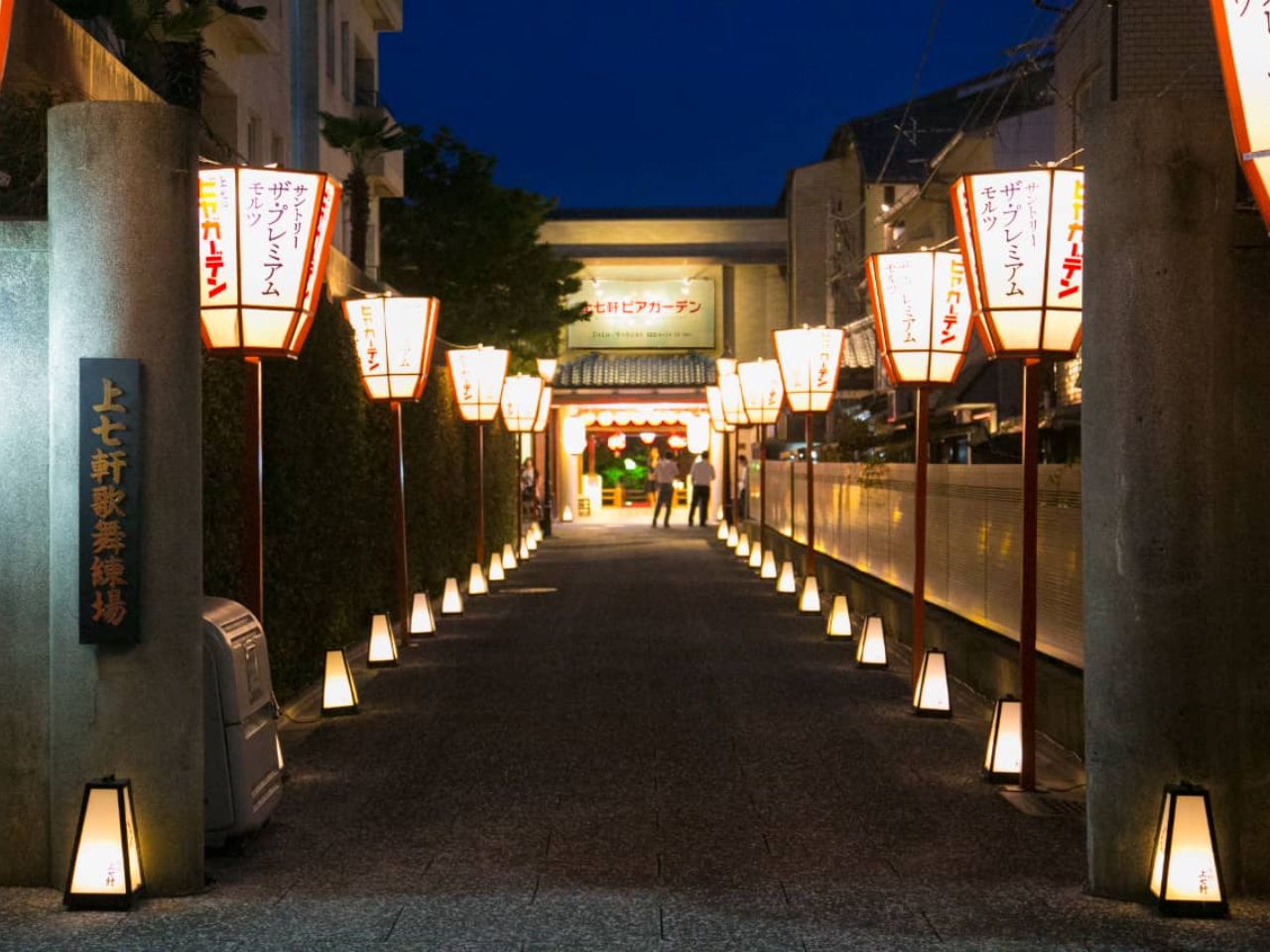
The reason’s simple: Kamishichiken never became as busy as Gion, so its old atmosphere survived in a more relaxed way. That makes it a great stop for Japan fans who want history, not just pretty streets.
Kamishichiken in Kyoto: an old district with real character
Ever wondered why some parts of Kyoto feel like time moved differently there? Kamishichiken is one of those places. It sits on the northwestern side of the city, near Kitano Tenmangu Shrine, and it’s been linked to 芸妓 (geiko, Kyoto geisha) and 舞妓 (maiko, apprentice geisha) culture for centuries. The district’s name means “upper seven houses”, a nod to the seven tea houses that were said to have opened there in the Muromachi period.
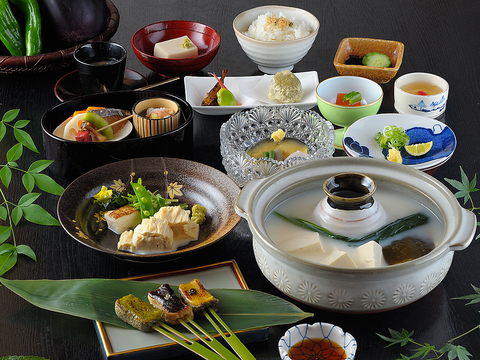
What I especially like is that Kamishichiken doesn’t try too hard to impress you. The streets are quieter than the famous tourist zones, and that calm makes the wooden townscape stand out even more. You’ll notice 町家 (machiya, traditional townhouse) townhouses, small lanterns, and narrow lanes that feel close to the old Kyoto people imagine when they picture the city. See what I mean?
For Japanese learners, this area is also a nice place to pick up vocabulary in context. Words like geiko, maiko, お茶屋 (ochaya, tea house), and machiya are everywhere in books, documentaries, and travel posts, but seeing the places behind them makes the terms stick. Sounds simple, but it really helps.
Why Kamishichiken matters in Kyoto’s geisha history
Did you know that Kamishichiken is often described as Kyoto’s oldest 花街 (hanamachi, geisha district), or 芸者 (geisha, traditional female entertainer) district? Its roots go back to the 15th century, when the area developed around Kitano Tenmangu. The original tea houses were connected to entertainment for visitors and shrine pilgrims, and that mix of religion, hospitality, and performance shaped the district’s identity early on.
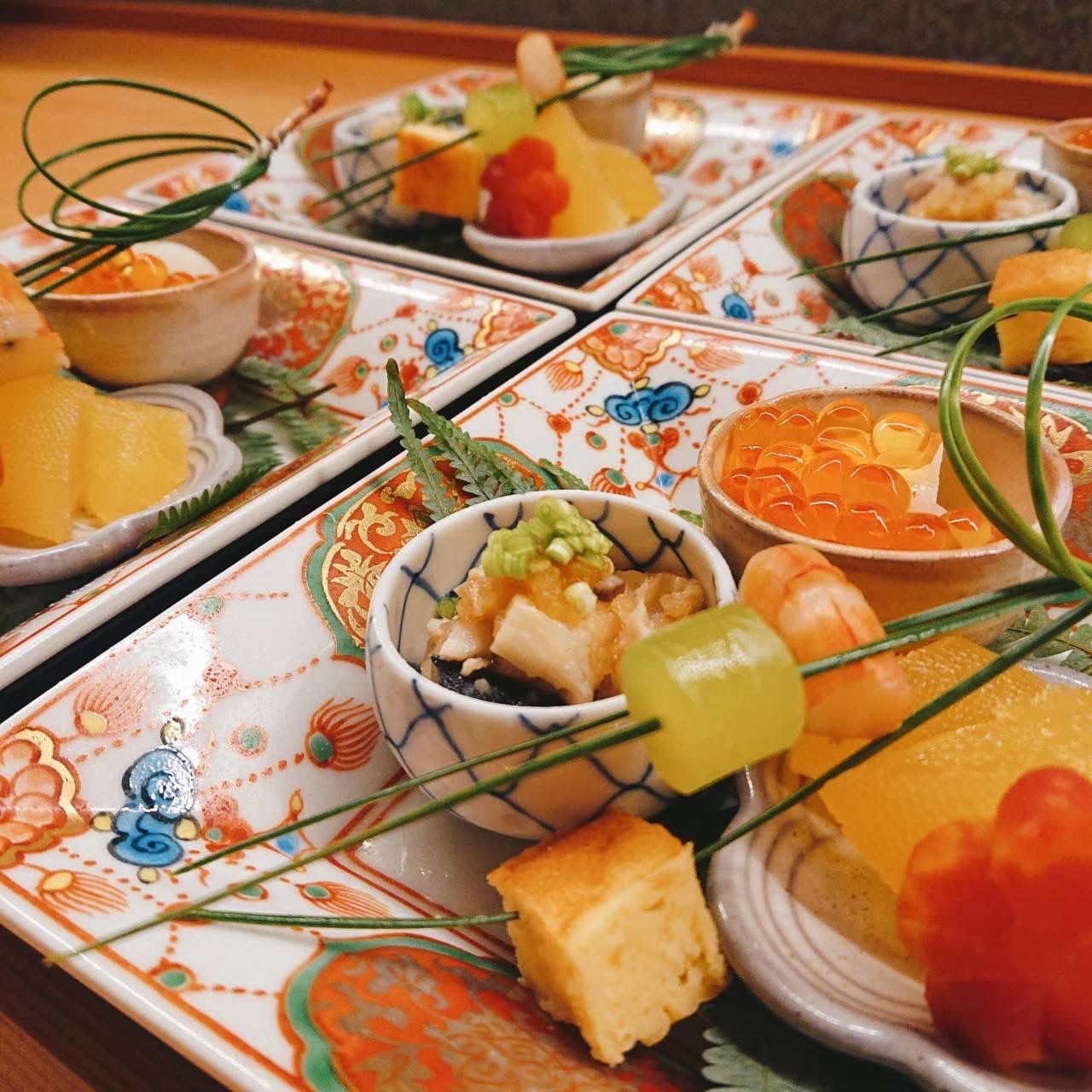
Here’s the deal: Kyoto once had several hanamachi, but only a few remain active today. Kamishichiken is one of them, and that alone makes it important. It’s smaller than Gion Kobu, and it doesn’t draw the same crowds, but that’s part of its charm. The district still supports traditional arts, including dance, music, and refined banter in the ochaya system. Wild, isn’t it?
And it gets better: Kamishichiken has kept seasonal customs that make the neighbourhood feel alive rather than frozen. In early spring, locals and visitors look forward to the district’s annual performances and events, especially the ones connected to Kitano Odori, a spring dance performance first held in 1952. That mix of old setting and living tradition is what makes the area matter, not just photograph well.
Walking through Kamishichiken: what to look for
It's early morning in Kyoto, and Kamishichiken is at its best. The lanes are quiet, a few shops are just opening, and the details of the district come through clearly. You may spot 暖簾 (noren) curtains, wooden facades, and the kind of signage that tells you this is still an active cultural neighbourhood, not a museum set.
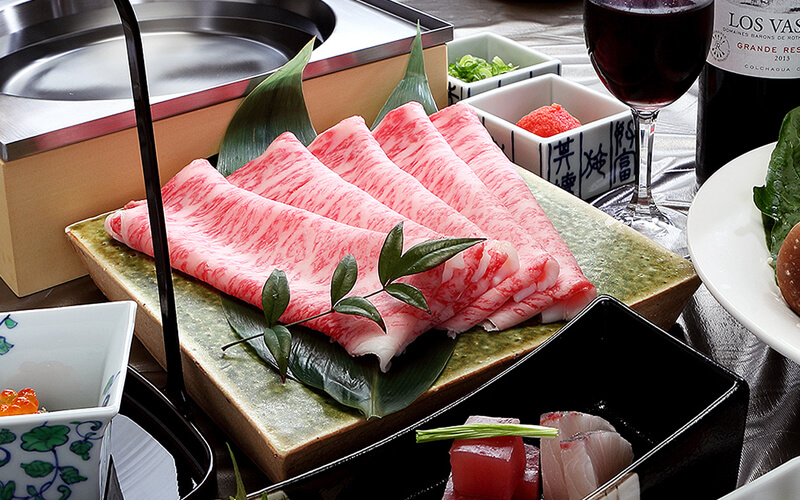
On a related note: the area around Kitano Tenmangu is worth slow exploration. The shrine itself is famous for scholarship and plum blossoms, and that gives Kamishichiken a nice seasonal rhythm. In late winter and early spring, plum trees bloom nearby, while the district’s tea houses and restaurants cater to locals, visitors, and people connected to the performing arts.
My tip: come for atmosphere, not just sightseeing
My tip: don’t rush through Kamishichiken with the same checklist you’d use for a major monument. Sit down for tea if you find a welcoming spot, walk the side streets, and pay attention to the small details. I love how the area feels lived-in, not staged. This is my absolute hidden gem!
Speaking of which... if you are learning Japanese, try matching the words you hear with the place itself. Geiko is the Kyoto term for a professional female entertainer, maiko is an apprentice, and ochaya is a tea house where guests are entertained. Those terms make much more sense once you’ve stood in a real hanamachi and seen how the district is arranged. Wait, there's more.
Kamishichiken today: quiet, respected, and still working
Guess what? Kamishichiken isn’t frozen in the past. It still functions as a working entertainment district, even if the scale is small. That means the local economy, the cultural calendar, and the neighbourhood atmosphere are all connected. The area also benefits from being near one of Kyoto’s major religious sites, so it attracts a mix of shrine visitors, history lovers, and repeat Japan travellers.
And yes, you should expect the etiquette to be different from what you might do in a regular café district. Some streets are residential, some buildings are private, and geiko culture deserves respectful distance. If you want photos, keep it discreet, and don’t block entrances or bother people who are going about their day. The reason is simple: this is still a real neighbourhood, not a theme park.
For visitors who enjoy deeper city portraits, Kamishichiken shows a side of Kyoto that feels less polished and more human. The district is small enough to explore in under an hour, but rich enough to stay in your memory much longer. My verdict: if Gion is the famous headline, Kamishichiken is the elegant footnote you’re glad you didn’t skip. See what I mean?
In pictures
Frequently Asked Questions
Where is Kamishichiken in Kyoto?
It is in northwestern Kyoto, near Kitano Tenmangu Shrine.
Why is Kamishichiken important?
It is one of Kyoto’s oldest geisha districts and still preserves active traditional culture.
Is Kamishichiken quieter than Gion?
Yes, it is generally much quieter and feels more local.


