
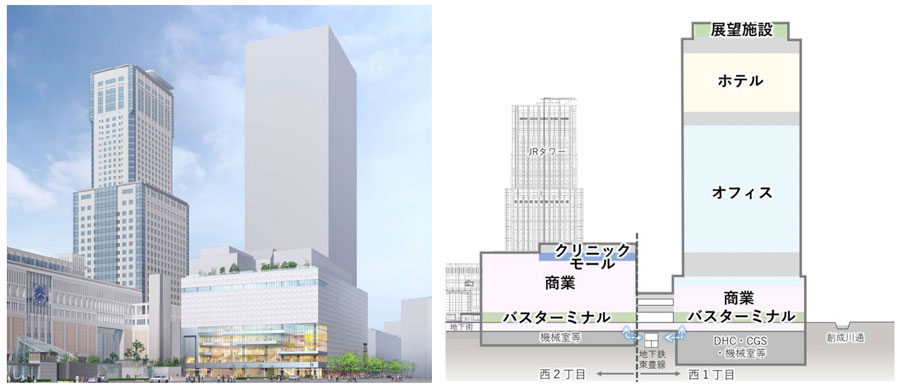
What I especially like is that this isn't just about new buildings; it's about how rail, shopping, offices, and daily life can fit together in one busy northern hub. Sounds good, right?



JR Hokkaido and the future of the Sapporo Station area
JR Hokkaido is moving ahead with a phased redevelopment plan for the Sapporo Station area, and that alone tells you this isn't a small refresh. We're talking about one of the key transport nodes in Hokkaido, a place where trains, buses, commuters, shoppers, and tourists all mix from morning to night.
Unlike what we're used to in many cities, Japanese station areas often work as mini city centres. Sapporo is no exception. The station district already connects underground walkways, department stores, office towers, and major rail lines, so any redevelopment here has a real impact on everyday life. Personally, that mix is what makes station-area planning in Japan so interesting.
And it gets better: this project is being framed as a phased redevelopment plan, which usually means the work will be rolled out step by step instead of all at once. That matters in a place as busy as Sapporo, because rail operations and pedestrian flow can't simply stop while construction happens. From my experience, that kind of careful staging is very Japanese, in the best possible way.
Why the phased redevelopment plan matters for Hokkaido
Hokkaido has a different urban rhythm from Tokyo or Osaka. Distances are larger, winters are harsher, and transport hubs have to work harder for longer parts of the year. So when JR Hokkaido looks at the Sapporo Station area, it isn't just thinking about land use. It's thinking about how the city functions through snow, rush hour, and tourism seasons. Hand on heart, that's the real story here.
The phased approach also gives planners more room to adjust. A railway company like JR Hokkaido has to balance commercial goals with transport reliability, and that balancing act is exactly what makes Japanese infrastructure projects worth watching. There are tracks to protect, passenger routes to maintain, and commercial space to reimagine, all at the same time.
Compared with back home, where station redevelopment can sometimes feel disconnected from rail operations, Japan often treats the station as the heart of the district. That brings us to the bigger point: if JR Hokkaido gets this right, the project could improve how people move through central Sapporo for decades. Sounds odd, but it's true.
What could change around Sapporo Station
I still remember exactly how central Sapporo Station feels the first time you step out into the city. There's a strong sense of order, but also constant movement. A redevelopment plan in this area could bring new office space, better pedestrian routes, and more efficient links between rail, subway, and surface streets.



Possible changes to watch
While the exact design details will depend on JR Hokkaido's final plans, station-area redevelopments in Japan usually focus on a few things. First, better station-front access. Second, smoother transfers between transport systems. Third, more commercial value from shops, hotels, and public space. Not bad, right?
For Japan fans, this also means a chance to watch how a regional capital adapts to changing travel patterns. Sapporo is already a major destination for winter tourism, food, and festivals, so the station district has to do more than just move people. It has to welcome them. The best part is that these projects often shape the city's mood as much as its skyline.
My tip: if you read Japanese news about this development, look for words like 再開発 (saikaihatsu, redevelopment), 計画 (keikaku, plan), and 段階的 (dankaiteki, phased; step-by-step). Those terms often appear in infrastructure coverage, and they help you read Japanese articles with more confidence. That little vocab gain is useful, and it makes the news feel much less intimidating. Personally...
Why Japan learners should pay attention
Know that feeling when a train station ends up telling you more about a city than a guidebook does? That's exactly why this story is worth following. Station redevelopment in Japan isn't just construction news; it's a window into urban design, railway culture, and local economics.
For Japanese language learners, this kind of article also gives you practical vocabulary in context. You can pick up terms like 駅前 (eki-mae, in front of the station; station-front), saikaihatsu, kochi, and 交通 (kotsu, transportation; traffic), then see how they appear in real reporting. And because JR Hokkaido is involved, you're also seeing a regional infrastructure story, not only a Tokyo-centred one.
Let's be honest: lots of Japan news can feel abstract if you're not on the ground. This one is easier to picture. A station district, a phased redevelopment plan, a northern city, and a railway company with a big role in shaping daily life. That combination makes it especially useful for readers who want both context and vocabulary. From my experience, those are the stories that stick.
If you want to keep up with similar updates, check more Japan news on jpnerd.com.
Frequently Asked Questions
What is JR Hokkaido planning in Sapporo?
JR Hokkaido is preparing a phased redevelopment plan for the Sapporo Station area, aimed at improving and reshaping the district around the station.
Why does the Sapporo Station area matter so much?
It is one of Hokkaido's main transport and commercial hubs, so changes there can affect commuting, shopping, tourism, and city planning.
Why should Japanese learners care about this news?
It offers real-world vocabulary and a clear look at how Japanese cities organise rail, business, and public space.


