
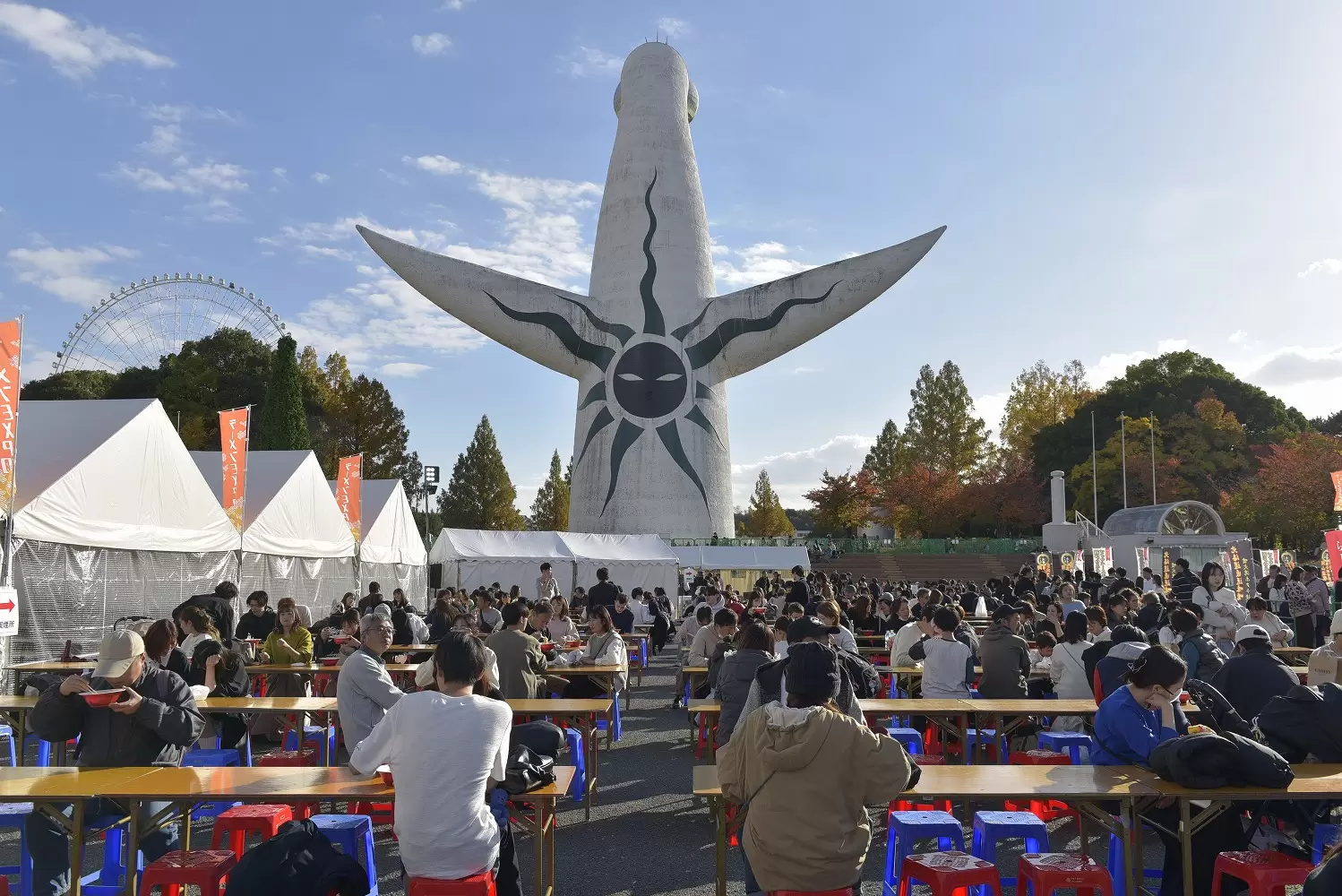
No joke: Osaka Expo after dark is shaping up to be one of the most memorable event experiences in Japan this year. The site on Yumeshima in Osaka Bay is already drawing attention for its architecture and futuristic pavilions, but when the sun goes down, the mood changes quickly, and that’s where the fireworks and drone show come in.



If you’re learning Japanese, this is also a great moment to connect words with real scenes. Think 花火 (hanabi) for fireworks, 夜 (yoru) for night, and 祭り (matsuri) for festival. Those words aren’t just vocabulary flashcards; they’re part of the atmosphere, and Osaka Expo leans hard into that feeling. See what I mean?
Osaka Expo at Night: Why the Evening Crowd Matters
What makes the night version so appealing is the contrast. By day, the Expo is all about architecture, pavilion-hopping, and long walks under the sky. By night, the same site feels like a live celebration, with lights reflecting off the water and people staying longer than they planned.
On a related note, Expo 2025 Osaka, Kansai, Japan runs from 13 April to 13 October 2025, and it’s being held on Yumeshima, an artificial island in Osaka. That setting matters. It gives the evening shows an open horizon, which is perfect for both fireworks and aerial drone formations. Classic Japan, isn't it?
Here’s the kicker: Osaka knows how to do nightlife with personality. This isn’t just a theme-park-style add-on, it’s part of the whole event culture. The energy is very much Osaka, lively and a little playful, with people lingering for the big finish instead of rushing back to the train. Wait, there's more.
Fireworks at Osaka Expo: hanabi with a Festival Feel
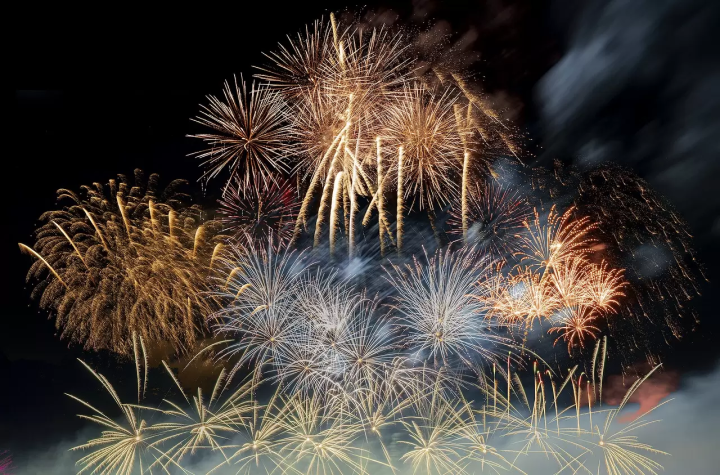
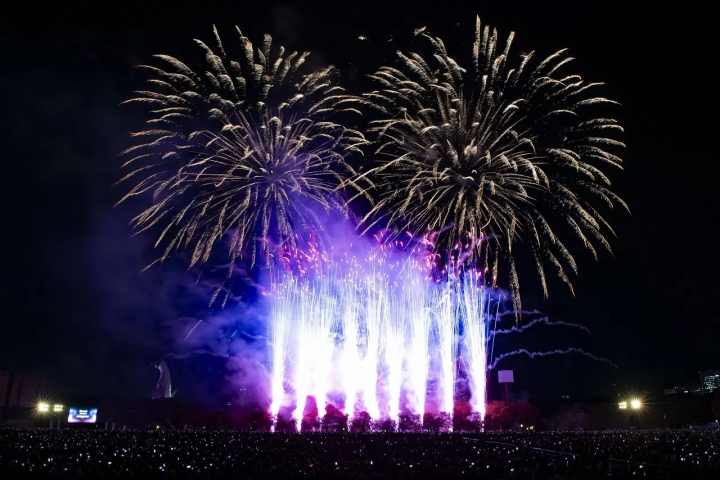
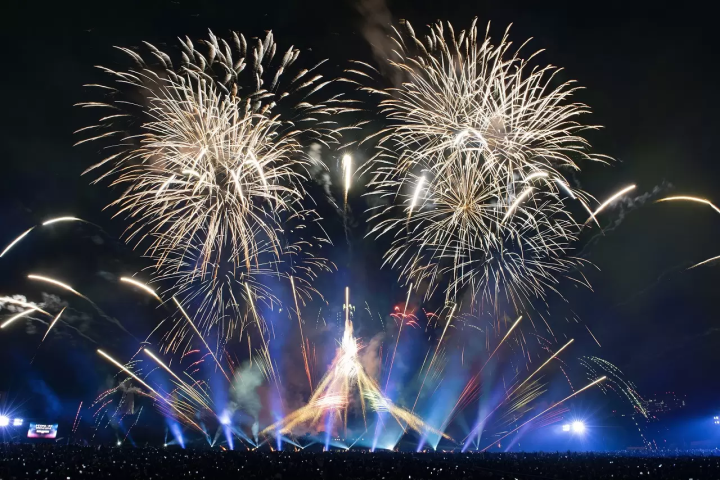
Hand on heart: fireworks are one of the easiest ways to understand Japanese seasonal culture. In Japanese, hanabi literally means “fire flowers”, and that image makes sense the moment you see them over water. At Osaka Expo, the fireworks add a familiar matsuri feeling to a very modern international event.
Unlike what we’re used to in many Western events, Japanese fireworks displays often feel carefully staged, almost like a performance with pauses, rhythm, and a strong visual theme. If the Expo programme includes hanabi on selected nights, expect people to plan around it, because in Japan a good fireworks display can be the main reason to stay out late. My tip: arrive early, eat before the show, and don’t assume the best view is right in front of the stage. Sometimes a little distance gives you the clearest skyline. See what I mean?
Speaking of which... fireworks in Japan often come with food stalls, casual snacks, and that walk-around feeling you get at summer festivals. Even if the Expo doesn’t mirror a traditional shrine festival, the emotional shape is similar, and that’s part of the charm. You’re not just watching something, you’re participating in an evening ritual. But that's not all.



Useful Japanese words for this kind of night
Did you know that a few simple words can help you describe the whole scene in Japanese? Hanabi for fireworks, yoru for night, 空 (sora) for sky, and 光 (hikari) for light are all useful here. If you want to say “The fireworks were beautiful,” you can build a very natural sentence from those basics. Know that feeling when a place gives you a new reason to remember vocabulary? That’s this.
Drone Show at Osaka Expo: Futuristic Japan in the Sky
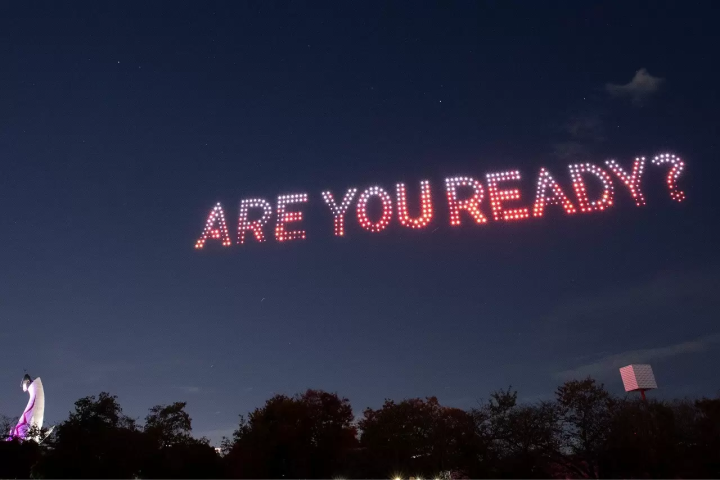
Seriously though: the drone show may be the most futuristic part of the whole evening. Drone displays have become a serious visual art form in Japan, and the Expo is exactly the kind of venue where they make sense. When hundreds of lights move in patterns overhead, it feels like technology and showmanship are shaking hands.
To be fair, drone shows work best when the sky is clear and the spacing is generous, which is why Yumeshima is such a smart location. The open waterfront gives the drones room to create shapes, logos, and animated sequences without the visual clutter you’d get in a dense city centre. On a related note, this also makes the show easy to appreciate for visitors who aren’t fluent in Japanese, because the images do the talking.
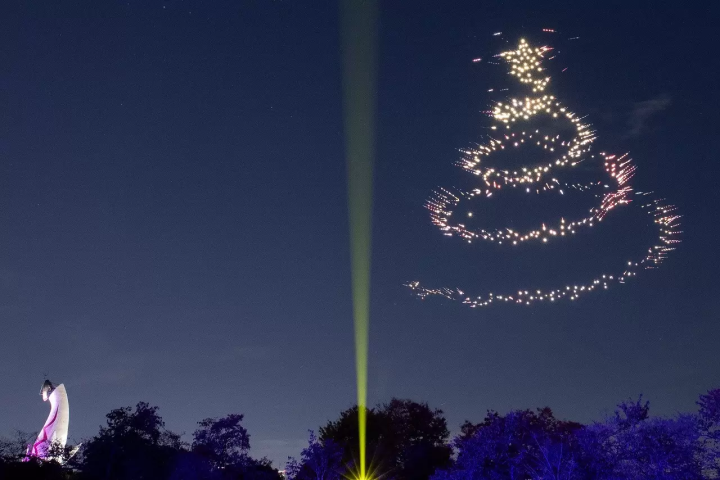
What I especially like is how a drone show fits modern Japan without losing the festival spirit. It’s high-tech, yes, but it’s still built around shared excitement, cheering, and that collective pause when the crowd looks up at once. That’s very Japan, too. Insider tip: if you want photos, switch to a higher shutter speed and don’t rely on your phone’s auto mode alone. Wait, there's more.
How Japanese Learners Can Enjoy the Osaka Expo Night Show
If you’re studying Japanese, an event like this is gold. You can practise words that actually match what you see, not just textbook examples. Try listening for terms such as hanabi, yoru, お祭り (omatsuri, festival), and 綺麗 (kirei, beautiful; pretty), then repeat them when the lights go up. It makes memory stick faster, and it feels more natural than drilling random lists.
You can also use the Expo as a reading challenge. Look up official updates on the Expo site, then compare them with coverage from outlets like MATCHA. That mix of simple event language and real-world context is exactly what helps learners move from beginner phrases to actual understanding. And if you’re travelling in Japan, a sentence like “Kyo wa hanabi o mi ni ikimasu” can get you pretty far.
That reminds me: a lot of Japan fans first fall in love with the country through seasonal events, not museums or grammar books. Fireworks, night markets, train rides after sunset, the smell of grilled food, it all builds a memory. Osaka Expo at night does the same thing on a bigger stage, with a modern twist. See what I mean?
In pictures
Frequently Asked Questions
When is Osaka Expo taking place?
Expo 2025 Osaka, Kansai, Japan runs from 13 April to 13 October 2025.
What makes the night programme special?
The combination of fireworks, drone visuals, and the waterfront setting gives the Expo a festival-like evening atmosphere.
Is this a good event for Japanese learners?
Yes, because you can connect real scenes with useful vocabulary like hanabi, yoru, and matsuri.


