
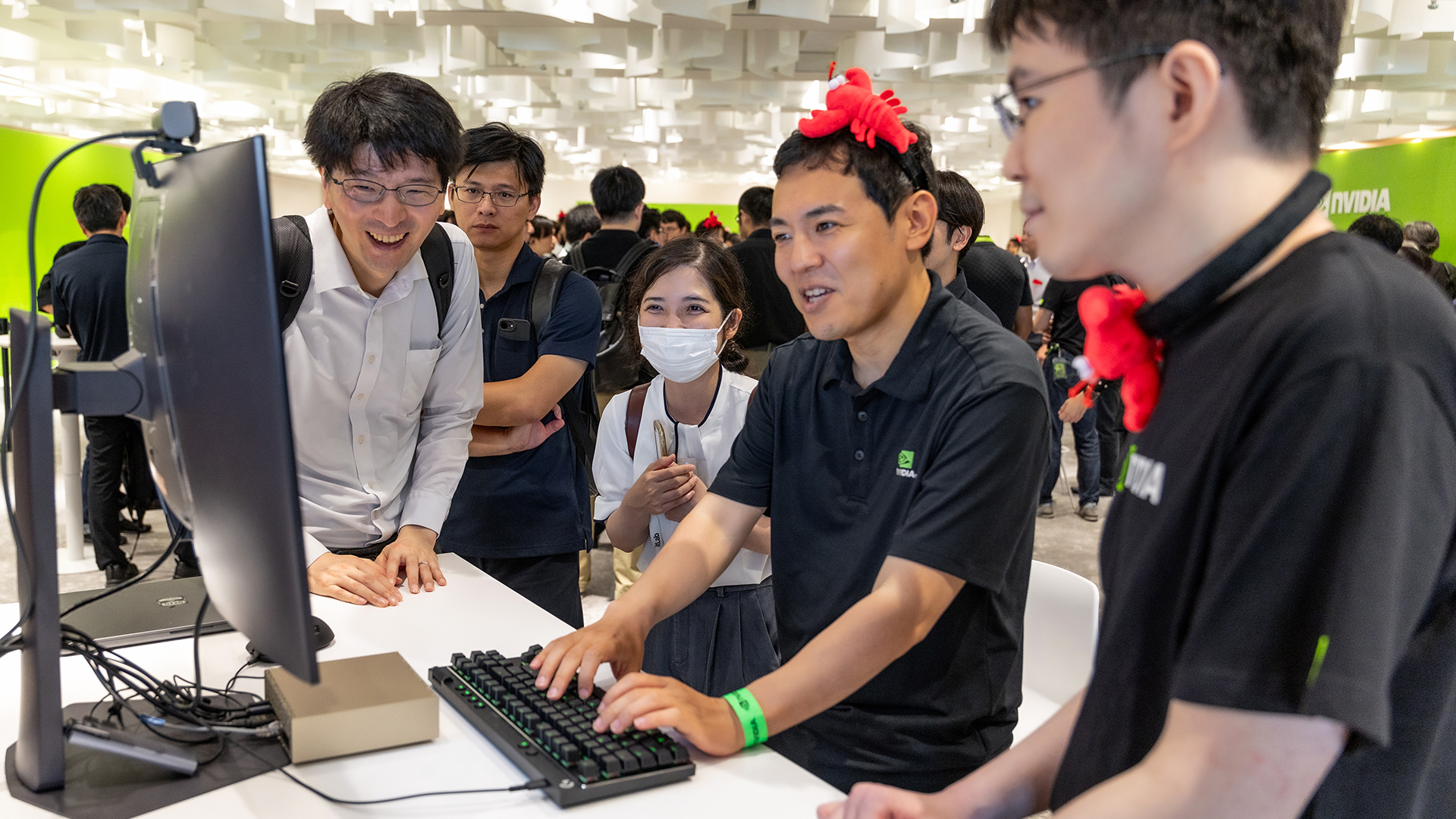
And it gets better: the story isn't about one flashy announcement. It’s about how AI, chips, robots, and game culture are starting to line up in a very Japanese way, practical, fast-moving, and a little theatrical. Sounds odd, but it’s true.



Imagine a narrow alley in Tokyo. Neon lights, arcade music, and a crowd that knows the difference between hype and real innovation. That’s why NVIDIA's Japan push feels so smart, because it didn’t happen in some sterile conference room. It played out against the kind of backdrop that instantly says: this is where the future meets pop culture.
Before I forget: if you're learning Japanese, this is also the kind of story that gives you useful vocabulary for free. Words like 最新技術 (saishin gijutsu, cutting-edge technology) for cutting-edge technology, 機械 (kikai, machine) for machine, and 自動化 (jido-ka, automation) for automation keep popping up in tech coverage, and they make a lot more sense when you connect them to real companies, real people, and real places.
NVIDIA and Japan: a long game, not a one-off visit
NVIDIA has been in Japan's orbit for years, but this latest move shows something bigger. Japan is one of the world's key markets for industrial robotics, gaming, automotive tech, and manufacturing, so it makes perfect sense that a company like NVIDIA would want to deepen ties here. The timing matters too, because Japan is racing to build AI infrastructure while companies face labour shortages, an ageing population, and pressure to automate more work.
Here’s the deal: NVIDIA's value in Japan isn't just about graphics chips anymore. It’s about stacking the whole AI system, from accelerated computing and software to simulation and robot training. That full-stack approach matters in a country where companies don't want loose pieces, they want systems that slot into factories, labs, and real products. No wonder, because Japanese industry loves precision, reliability, and partners who can ship the whole package. Personally, that fits Japan's style better than the usual Silicon Valley buzzword parade.
Why full-stack AI matters in Japan
Full-stack AI means hardware, software, cloud tools, developer frameworks, and deployment all working together. In practice, that could mean training robots in simulation before they ever touch a factory floor, or using AI models to improve quality control in manufacturing. For Japanese firms, that kind of integration cuts risk, and risk is something they take seriously.
Quick detour: if you've studied business Japanese, this is where words like 来年 (rainen, next year) for next year, 実装 (jissou, implementation) for implementation, and 改善 (kaizen, continuous improvement) for continuous improvement start to feel very real. They aren't just textbook terms, they're part of the decision-making culture behind this kind of rollout. From my experience, that makes tech news much easier to enjoy, because you're not just reading about products, you’re reading about the language of how Japan works.
Jensen Huang meets Sega leadership in Akihabara
Trust me on this one: Akihabara was the perfect stage. It is one of Tokyo's most recognisable tech-and-pop-culture districts, and putting Jensen Huang there with Sega leadership created the exact mix of old-school gaming nostalgia and next-gen hardware ambition that tech media loves. Sega is one of those names that still carries enormous weight in Japan, even now that the company is better known for character brands, entertainment, and its long gaming heritage than for consoles.
Jensen Huang's meeting with Sega leadership was not just a photo op, though it certainly looked good on camera. It pointed to something practical: game tech has always been a major testing ground for graphics, simulation, and AI. Sega's history, from the Mega Drive era to iconic arcade culture, gives this meeting extra texture. And in Akihabara, that texture matters. Classic Japan, isn’t it?



Why Sega still matters in 2026
Sega is not just a nostalgia brand. It remains a symbol of Japan's entertainment engineering, and its broader studio and publishing ecosystem still connects to AI-ready workflows, character development, and interactive worlds. When a company like NVIDIA shows up alongside Sega leadership, the message is pretty clear: games are no longer just games, they’re a proving ground for simulation, digital humans, and robot-like systems that need fast rendering and smart decision-making.
What I especially like: this kind of crossover feels very Japanese. The line between entertainment, hardware, and industrial tech is thinner than people think. One day you're looking at an arcade sign in Akihabara, the next you're talking about digital twins, autonomous movement, and real-time inference. Not bad, right?
Akihabara as the stage for Japan's AI and robotics future
Ever wondered why Akihabara keeps showing up in stories about Japan's future? It's because the district still functions as a visual shorthand for tech identity. You can talk about semiconductors, AI factories, and robotics all day, but if you do it in Akihabara, the message lands faster. The setting says that Japan's next wave of innovation won't be hidden away in an office park, it’ll be tied to places people already know and love.
And it gets better: the robotics angle is where NVIDIA's full-stack pitch becomes especially interesting. Japan already has deep strength in robot manufacturing, from industrial arms to service robots and research platforms. Pair that with AI models trained in simulation, GPU acceleration, and software stacks that can scale, and you get a pretty serious roadmap for the next decade. That’s the real story here, not just the ceremony around it.
For Japanese learners, this is a great moment to notice how tech articles often use words like 未来 (mirai, future) for future, 成長 (seichou, growth) for growth, and renkei for collaboration. These terms show up across business, gaming, and engineering coverage, so they are worth learning early. If you read enough Japan tech news, you'll start spotting them everywhere, and that's when the language feels less like study and more like access. Convinced yet?
What this means for Japan fans and Japanese learners
Let's be honest: most people come for the shiny headlines, but the deeper value is in the cultural pattern. Japan often turns big technology shifts into something grounded, place-based, and partnership-driven. NVIDIA showing up with Sega in Akihabara is a perfect example. It is not just about AI in the abstract, it is about who is building it, where it is being discussed, and how it fits into Japan's existing strengths.
My tip: if you follow Japanese tech news, read it with a vocabulary notebook open. Jot down company names, place names, and repeated words, because those are the terms that stick. You’ll start noticing how often Japan frames innovation through collaboration, manufacturing, and concrete use cases. That is useful whether you're here for language learning, gaming history, or just the thrill of seeing major names line up in Tokyo. From my experience, that's the best way to enjoy Japan news without getting lost in jargon.
Frequently Asked Questions
What is the main news here?
NVIDIA is expanding its AI and robotics push in Japan, with a strong focus on partnerships, infrastructure, and real-world deployment.
Why was Akihabara important for this story?
Akihabara gave the visit a symbolic backdrop, connecting Japan's tech future with one of Tokyo's most recognisable tech districts.
Why does Sega matter in this context?
Sega represents Japan's gaming and entertainment heritage, which makes it a natural meeting point for AI, simulation, and interactive technology.


